
Industrial operations in extreme thermal conditions, such as metal foundries, glass manufacturing plants, ceramics kilns, and high-temperature curing chambers, impose unique demands on lighting systems. In these settings, conventional lighting solutions often fail due to thermal degradation, resulting in diminished lumen output, color shifts, and premature fixture failure. Consequently, industrial managers must consider both environmental resilience and operational performance when selecting illumination solutions. High-temperature lighting technologies, particularly advanced LED systems engineered for elevated heat, have emerged as critical components to ensure consistent illumination. Beyond mere visibility, lighting in these settings directly impacts process accuracy, worker safety, and overall productivity.
Visual accuracy and worker comfort are interdependent in high-temperature industrial environments. Accurate color perception and detail recognition are paramount for quality assurance, process control, and safety inspections. Simultaneously, visual comfort minimizes fatigue, reduces cognitive errors, and improves operational efficiency. Workers exposed to harsh glare, uneven lighting, or heat-induced fixture flicker may experience eye strain or reduced alertness, which can translate to increased defect rates or accidents. Therefore, the integration of high-performance lighting systems designed for both accuracy and comfort is essential for modern industrial facilities.
Extreme temperatures accelerate the degradation of light-emitting devices, affecting both luminous efficiency and color fidelity. Thermal stress can induce lumen depreciation, alter chromaticity, and compromise fixture longevity. Furthermore, in high-temperature zones, reflective surfaces such as molten metals or glass amplify the impact of poorly designed lighting, creating hotspots, glare, or shadows that impede visual performance. Addressing these challenges requires not only selecting thermally robust fixtures but also implementing intelligent lighting designs that optimize heat dissipation, uniformity, and visual ergonomics.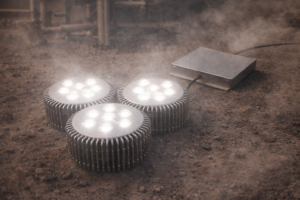
Visual accuracy encompasses the ability to correctly perceive colors, contrasts, and fine details under artificial illumination. In industrial environments, it is not merely about seeing; it is about precise recognition of visual cues critical to operational decisions. For example, identifying subtle color variations in molten metal or detecting minor surface defects in glass panels directly depends on visual accuracy. Lighting systems that fail to maintain consistent chromaticity or color rendering can introduce perceptual errors, leading to costly rework, product defects, or safety hazards.
Color Rendering Index (CRI) and Correlated Color Temperature (CCT) are the primary metrics for assessing visual accuracy. CRI quantifies a light source’s ability to reproduce colors faithfully compared to a natural reference light source. In high-precision industrial applications, a CRI value exceeding 80 is generally preferred to ensure accurate differentiation of colors and materials. CCT measures the perceived “warmth” or “coolness” of the light, influencing worker perception and comfort. Neutral white light in the 4000–5000K range often balances contrast and detail recognition, reducing visual fatigue while maintaining accuracy in task-critical inspections.
Suboptimal lighting can have profound implications for industrial safety and productivity. Misjudgment of material color, surface defects, or component alignment due to inadequate illumination can result in operational errors or compromised product quality. Moreover, inconsistent light distribution or color shifts in high-temperature areas may contribute to eye strain and cognitive fatigue, decreasing alertness and increasing the likelihood of accidents. In industries with high thermal exposure, these challenges are amplified, highlighting the critical need for high-accuracy, heat-tolerant lighting systems.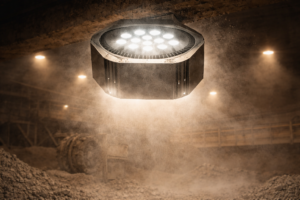
Visual comfort refers to the subjective experience of ease and clarity when performing visual tasks under artificial illumination. In industrial environments, particularly those with elevated temperatures, visual comfort extends beyond adequate brightness to include glare reduction, flicker-free operation, uniformity, and the psychological perception of safety. Ensuring visual comfort improves employee performance, reduces fatigue, and enhances long-term health outcomes. A lighting system that meets visual comfort standards allows operators to maintain focus and precision over extended periods without experiencing eye strain or discomfort.
Glare, flicker, and non-uniform brightness are critical contributors to visual discomfort. High-intensity reflections from molten metals, glass, or polished surfaces can create temporary blindness or strain, reducing reaction time and increasing error probability. Flicker, often caused by thermal-induced fluctuations in LED drivers or power instability, can trigger headaches, dizziness, or subtle decreases in cognitive performance. Overly bright or dim illumination disrupts circadian rhythms and may negatively affect attention span and efficiency. Mitigating these effects requires careful selection of diffusers, beam angles, anti-glare coatings, and drivers with thermal stabilization.
Extended exposure to suboptimal lighting in high-temperature settings can lead to both physiological and psychological stress. Eye strain, blurred vision, and headaches are common physical manifestations, while increased fatigue and decreased alertness represent cognitive consequences. These factors not only impact individual performance but can collectively affect overall plant safety, productivity, and product quality. Ergonomically designed lighting systems that prioritize visual comfort, glare control, and consistent illumination help sustain worker health, morale, and operational efficiency.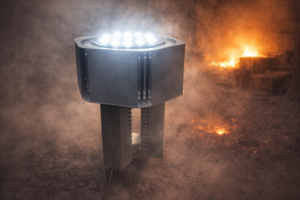
High-temperature industrial environments often exceed the operational limits of conventional lighting technologies. Metal foundries, for instance, routinely expose fixtures to temperatures of 90–200°C, while ceramic kilns and glass manufacturing plants operate at 150–200°C. Industrial ovens, curing chambers, and other thermal processes typically range between 90–150°C. These extreme conditions accelerate the thermal degradation of conventional LEDs, fluorescent tubes, and halogen lamps, causing lumen depreciation, color shifts, and shortened operational lifespan.
Excessive heat can compromise both the physical and optical properties of lighting fixtures. LEDs may experience accelerated lumen decay due to phosphor degradation, while color temperature can drift, affecting CRI and visual accuracy. Fluorescent and halogen lighting solutions suffer from filament or ballast failure under sustained thermal stress. Heat-induced material expansion can also damage housings, lenses, or electronic components, further reducing reliability and safety. Therefore, standard lighting solutions are often unsuitable for high-temperature industrial applications.
Inadequate lighting in high-heat environments can lead to operational inefficiencies and safety risks. Workers may misidentify defects, mishandle materials, or encounter safety hazards due to uneven illumination. Repeated fixture failures increase maintenance costs and downtime, while unreliable visual conditions compromise quality assurance protocols. Addressing these challenges requires the adoption of lighting technologies specifically engineered to withstand elevated temperatures while maintaining visual performance and durability.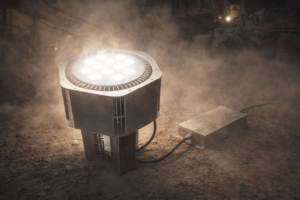
Modern high-temperature LED solutions incorporate thermally robust components such as high-grade aluminum housings, ceramic substrates, and heat-dissipating phosphors. These fixtures maintain high luminous efficacy (up to 160–170 lm/W) even under sustained thermal stress. Benefits include stable color rendering, prolonged lifespan, reduced maintenance cycles, and enhanced operational safety. Unlike traditional lighting, these LEDs are engineered to operate reliably in ambient temperatures exceeding 200°C, making them ideal for metal foundries, glass plants, and high-temperature curing chambers.
Effective thermal management is critical to high-temperature LED performance. Passive heat sinks, active cooling systems, and thermally conductive materials dissipate heat efficiently, preventing thermal accumulation that leads to lumen depreciation. Thermal simulation and fixture placement optimization further enhance heat dissipation. In extreme environments, integrated thermal sensors may adjust LED output dynamically to maintain consistent illumination, balancing visual accuracy and fixture longevity.
Strategic fixture placement ensures uniform illumination while minimizing glare and shadows. Adjustable beam angles, directional lenses, and reflectors allow precise targeting of task areas, enhancing both visual accuracy and worker comfort. High-reflectivity surfaces and diffusers mitigate hot spots, while modular designs enable easy repositioning for process changes. Such design considerations are essential to achieve optimal performance in high-temperature industrial settings.
A German glass manufacturing facility upgraded to high-temperature UFO-style LEDs rated at 160 lm/W, maintaining CRI > 80 under 180°C ambient conditions. The result: defect detection improved by 30%, maintenance frequency reduced by 40%, and worker-reported eye strain decreased significantly. Similar implementations in metal casting plants and ceramic kilns demonstrate the scalability and efficacy of thermally engineered LED lighting in extreme conditions.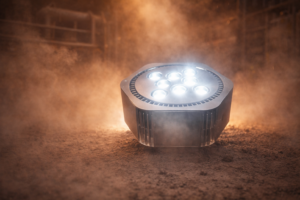
Achieving a balance between visual precision and ergonomic comfort involves selecting the correct combination of CRI, CCT, and illuminance levels. High CRI (>80) ensures accurate color differentiation, while neutral CCT (4000–5000K) minimizes fatigue and enhances visual contrast. Glare mitigation, uniform distribution, and diffused beam optics contribute to comfort without sacrificing detail recognition.
For high-precision industrial applications, maintaining CRI above 80 and CCT within 4000–5000K provides neutral white illumination suitable for inspection, assembly, and quality assurance. Illuminance should meet or exceed industry standards for specific tasks, with uniformity ratios maintained to minimize shadows. Dynamic or zonal lighting strategies can adjust brightness for critical workstations, further improving both accuracy and comfort.
Key principles include minimizing direct line-of-sight exposure to bright sources, utilizing diffusers or anti-glare coatings, and spacing fixtures to reduce hotspots. Reflective surfaces should be accounted for in fixture placement to prevent glare amplification. Uniform illumination is achieved through calculated spacing, overlapping beam patterns, and targeted directional lighting. These strategies ensure that workers can perform visually demanding tasks accurately and comfortably.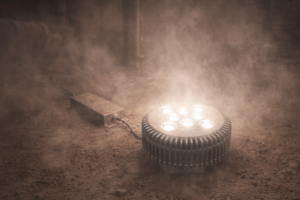
Industrial lighting standards provide critical guidance for safety, visual performance, and comfort. ANSI/IES RP-7 outlines recommended practices for industrial lighting, specifying illuminance levels, glare control, and uniformity. EN 12464-1 addresses workplace lighting requirements, emphasizing adequate visibility for precision tasks. ISO 8995-1 provides guidelines for both natural and artificial lighting in workspaces, highlighting the importance of color rendering and visual comfort.
High-temperature lighting systems must meet strict safety and performance benchmarks, including thermal resilience, electrical safety, and consistent optical output. Lumen maintenance ratings (L70, L80) indicate operational reliability, guiding maintenance schedules and replacement planning. Compliance ensures reduced risk of accidents, consistent visual conditions, and optimal worker productivity.
Routine inspection is essential to detect lumen depreciation, color shifts, or fixture wear in high-temperature environments. Cleaning lenses, verifying thermal management systems, and testing driver stability ensure sustained performance. Predictive maintenance using thermal monitoring or IoT-enabled diagnostics can preempt fixture failure, enhancing operational continuity and safety.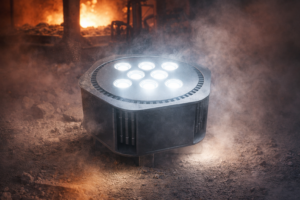
Advancements in High-Temperature Resistant LEDs
Ongoing research is producing LEDs with improved phosphor stability, higher thermal conductivity, and extended operational temperature ranges exceeding 200°C. Innovations include multi-chip designs, ceramic substrates, and active thermal regulation, enabling more precise visual performance in extreme industrial environments.
Smart and Adaptive Lighting Solutions
Intelligent lighting systems integrate sensors that adjust brightness, color temperature, and beam angle based on task requirements, heat load, or ambient light. These adaptive systems optimize energy efficiency, visual comfort, and operational accuracy. In high-temperature facilities, smart LEDs can dynamically compensate for thermal-induced light fluctuations.
Integration with Automation and Industrial IoT
Future high-temperature lighting will be increasingly integrated with Industrial Internet of Things (IIoT) networks. Centralized control platforms can monitor thermal conditions, worker movement, and production schedules to dynamically optimize lighting. Integration enhances visual accuracy, reduces energy costs, and supports predictive maintenance in demanding environments.
Visual accuracy and comfort in high-temperature industrial lighting are not optional—they are essential for maintaining operational excellence, safety, and employee well-being. Advanced LED technologies engineered for extreme heat provide reliable illumination, accurate color rendering, and long-term durability. By combining thermal management, ergonomic design, and adaptive lighting strategies, industrial facilities can achieve optimal productivity while minimizing maintenance costs and health risks. Investing in high-temperature resistant lighting solutions is a strategic step toward safer, more efficient, and higher-quality industrial operations.
–The End–