
Chemical processing facilities operate under some of the most demanding industrial conditions in the world. High temperatures, continuous production cycles, corrosive atmospheres, and strict safety regulations combine to create an environment where even small equipment failures can lead to significant operational disruptions or safety incidents. Within this context, industrial lighting is often underestimated, yet it plays a decisive role in ensuring safe operations, process accuracy, and regulatory compliance.
Stable illumination near high-heat equipment is not merely a matter of visibility. It is a foundational component of operational safety and efficiency. In chemical plants, operators rely on consistent, high-quality lighting to monitor reactions, read instrumentation, perform inspections, and respond rapidly to abnormal conditions. When lighting systems flicker, dim, or fail due to thermal stress, the consequences can range from reduced productivity to serious safety hazards.
Traditional lighting solutions were never designed to withstand prolonged exposure to elevated ambient temperatures commonly found near reactors, furnaces, distillation columns, and thermal processing units. As a result, chemical facilities increasingly face frequent lamp failures, escalating maintenance costs, and inconsistent illumination levels in critical zones. These issues underscore the growing need for lighting systems specifically engineered for high-temperature environments.
This article explores the technical, operational, and economic importance of stable illumination near high-heat equipment in chemical facilities. It examines the limitations of conventional lighting, defines what “stable illumination” truly means in extreme thermal conditions, and explains how advanced high-temperature LED technology is transforming industrial lighting performance in chemical plants.
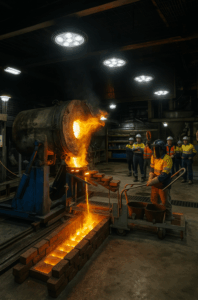
Chemical facilities encompass a wide range of process areas where elevated temperatures are an unavoidable part of production. These high-heat zones are typically concentrated around core processing equipment such as reactors, furnaces, kilns, cracking units, distillation columns, and thermal oxidizers. In many cases, ambient temperatures in these areas can consistently exceed 60°C and, in extreme scenarios, reach or surpass 150°C or even 200°C.
In addition to heat, these environments present a combination of other stress factors that compound the challenge for lighting systems. Chemical vapors, corrosive gases, fine particulate dust, oil mist, and high humidity are commonly present, especially in petrochemical and specialty chemical plants. Mechanical vibration from pumps, compressors, and rotating equipment further accelerates wear on lighting components.
The risks associated with inadequate lighting in such zones are substantial. Poor visibility can lead to misreading of gauges, delayed detection of leaks, or improper execution of maintenance tasks. In emergency situations, unstable illumination can impair evacuation routes or slow down response actions, increasing the likelihood of injury or equipment damage.
Moreover, high-heat zones often operate continuously, leaving little opportunity for frequent maintenance or lighting replacement. Any lighting solution used in these areas must therefore be capable of long-term, stable operation under sustained thermal stress. Failure to address these environmental realities inevitably results in shortened fixture lifespans and increased operational risk.
Traditional industrial lighting technologies such as high-intensity discharge (HID) lamps, metal halide fixtures, high-pressure sodium lamps, and fluorescent systems have long been used in chemical plants. However, their inherent design limitations become apparent when exposed to high-temperature environments.
HID and metal halide lamps are particularly sensitive to heat. Elevated ambient temperatures can cause ballast overheating, reduced arc stability, and accelerated degradation of internal components. This often leads to color shift, lumen depreciation, extended warm-up times, and sudden lamp failure. Fluorescent fixtures, while more energy-efficient than older technologies, suffer from reduced efficacy and shortened lifespan when operated outside their optimal temperature range.
Another critical limitation is maintenance frequency. Conventional lighting systems typically require regular lamp replacement, ballast servicing, and cleaning. In high-heat chemical zones, these maintenance activities are not only costly but also disruptive and potentially hazardous, often requiring production shutdowns or specialized safety procedures.
Energy inefficiency further compounds the problem. As conventional lamps age under thermal stress, their lumen output declines while power consumption remains constant or increases. This results in poor lighting quality and wasted energy, directly impacting operational costs and sustainability goals.
These limitations clearly demonstrate that traditional lighting solutions are ill-suited for high-heat applications in chemical facilities. The demand for a more robust, thermally stable lighting technology has driven the rapid adoption of advanced LED systems specifically engineered for extreme environments.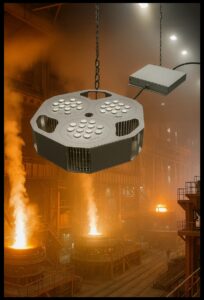
In high-temperature chemical environments, “stable illumination” encompasses far more than simply turning on a light. It refers to the ability of a lighting system to maintain consistent performance over time, regardless of thermal stress or environmental fluctuations.
Key elements of stable illumination include consistent lumen output, minimal lumen depreciation, stable color temperature, and flicker-free operation. For chemical plant operators, these factors directly affect visual comfort, task accuracy, and situational awareness. Inconsistent lighting can cause eye fatigue, misinterpretation of visual cues, and increased risk of human error.
Color stability is particularly important in chemical facilities, where visual inspection often involves identifying subtle changes in fluid color, surface conditions, or indicator lights. A lighting system that shifts color temperature over time can distort perception and compromise inspection accuracy.
Flicker-free performance is equally critical. Flicker, even when imperceptible to the naked eye, can cause discomfort and reduce concentration during long shifts. In control areas and inspection zones near high-heat equipment, lighting stability supports sustained attention and precise monitoring.
Ultimately, stable illumination serves as an enabling factor for safe, efficient, and reliable chemical operations. It ensures that lighting remains a dependable tool rather than a variable risk factor within the production environment.
The evolution of LED technology has fundamentally reshaped industrial lighting, particularly in demanding environments such as chemical plants. Unlike traditional light sources, LEDs generate light through solid-state semiconductor processes, which can be engineered for superior thermal tolerance and long-term stability.
High-temperature LED systems designed for chemical facilities utilize specialized LED chips capable of operating at elevated junction temperatures without rapid degradation. These chips are often paired with advanced thermal packaging materials that protect sensitive components from heat-induced failure.
Another distinguishing feature of high-temperature LED technology is its ability to maintain consistent light output over extended operating periods. Even in ambient temperatures exceeding 90°C or 150°C, properly designed LED fixtures can deliver stable illumination without the dramatic lumen depreciation seen in conventional lamps.
Additionally, LEDs offer instant-on performance, eliminating warm-up delays common with HID systems. This is particularly valuable in emergency situations or during intermittent operations where immediate full illumination is required.
The adaptability of LED technology also allows for customization in terms of wattage, beam angles, color temperature, and mounting configurations. This flexibility makes high-temperature LEDs an ideal solution for diverse lighting requirements within chemical facilities.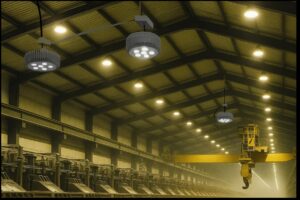
Effective thermal management is the cornerstone of reliable lighting performance in high-temperature environments. Even the most advanced LED chips cannot perform optimally without a well-engineered system for heat dissipation and thermal isolation.
Passive cooling strategies are commonly employed in high-temperature LED fixtures. These include oversized heat sinks, optimized fin structures, and housing designs that promote natural airflow. The use of high-conductivity materials such as aluminum alloys further enhances heat transfer away from critical components.
In extreme environments, fixture design must also account for radiant heat from nearby equipment. Thermal shielding, reflective surfaces, and strategic mounting distances are often incorporated to minimize direct heat exposure.
Another important aspect of thermal management is the separation of the LED light source from the power driver. Drivers are particularly sensitive to heat, and isolating them or using remote driver configurations significantly improves system reliability. High-temperature-rated drivers with reinforced components ensure stable power delivery even under sustained thermal stress.
Through these combined strategies, high-temperature LED lighting systems can maintain performance stability at ambient temperatures of 90°C, 150°C, and even up to 200°C, meeting the rigorous demands of chemical plant operations.
The power supply, or LED driver, is a critical component in any lighting system, and its reliability becomes even more important in high-temperature chemical environments. Under extreme heat, inferior drivers are prone to voltage instability, efficiency loss, and premature failure.
High-quality industrial-grade power supplies are designed with enhanced thermal tolerance, robust internal components, and advanced protection mechanisms. These drivers maintain consistent current output, ensuring steady illumination and preventing flicker or sudden shutdowns.
Premium power supply manufacturers invest heavily in thermal testing and component selection, resulting in drivers that can operate reliably at elevated ambient temperatures for extended periods. Their use significantly reduces the risk of lighting instability and extends overall fixture lifespan.
Stable power delivery also contributes to energy efficiency. By maintaining optimal operating conditions for the LED chips, high-quality drivers minimize energy losses and support consistent lumen output over time.
In chemical facilities where lighting reliability is non-negotiable, investing in thermally resilient power supplies is essential to achieving true stable illumination.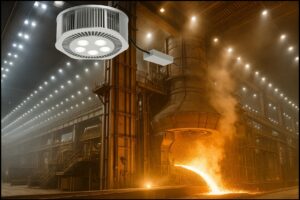
Chemical plants are governed by stringent safety and operational standards designed to protect personnel, equipment, and the environment. Lighting systems play an integral role in meeting these requirements, particularly in high-risk, high-heat zones.
Stable illumination supports compliance by ensuring that work areas, escape routes, and inspection points remain clearly visible at all times. This is especially critical during emergency scenarios, where clear visibility can mean the difference between a controlled response and a serious incident.
Lighting stability also aids routine inspections and audits. Regulators and safety officers rely on accurate visual assessments to verify equipment condition and operational integrity. Inconsistent lighting can compromise these evaluations and increase compliance risk.
By delivering reliable, long-term performance, high-temperature LED lighting systems contribute directly to a safer and more compliant chemical plant environment.
Within chemical facilities, lighting requirements vary significantly depending on process functions, thermal exposure levels, and operational criticality. Certain zones are particularly dependent on stable illumination due to their proximity to high-heat equipment and their importance to safety and production continuity.
Reactor and distillation areas are among the most demanding environments. These zones often operate continuously at elevated temperatures and involve complex chemical reactions that require close monitoring. Operators rely on consistent lighting to observe reaction vessels, monitor pressure indicators, and identify abnormal conditions such as leaks, discoloration, or unexpected material buildup. Any fluctuation in illumination quality can compromise visual judgment and delay corrective actions.
Thermal processing zones, including furnaces, cracking units, and high-temperature conversion systems, represent another critical application area. Ambient temperatures in these locations frequently exceed the tolerance limits of standard industrial lighting. Stable illumination is essential not only for operational monitoring but also for maintenance and inspection tasks performed during scheduled shutdowns or controlled access periods.
Pump rooms and compressor stations located near heat-generating equipment also demand reliable lighting. These areas often experience vibration, oil mist, and elevated temperatures simultaneously. Technicians working in such environments depend on flicker-free, uniform illumination to safely perform adjustments, detect early signs of mechanical wear, and respond promptly to alarms.
Maintenance walkways, inspection platforms, and safety corridors surrounding high-heat equipment form an additional category of critical lighting applications. These transitional spaces are used during routine inspections and emergency responses. Stable illumination in these areas enhances personnel safety, supports efficient movement, and ensures that evacuation routes remain clearly visible under all operating conditions.
Together, these application zones illustrate why lighting near high-heat equipment in chemical facilities must be engineered for durability, consistency, and long-term performance rather than treated as a secondary infrastructure component.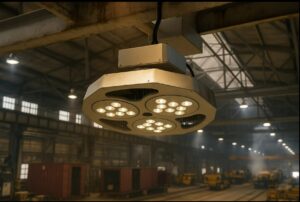
The implementation of stable high-temperature lighting solutions delivers substantial operational and economic advantages for chemical facilities. Unlike conventional lighting systems that degrade rapidly under thermal stress, high-temperature LED lighting is designed to maintain consistent performance throughout its service life.
One of the most immediate benefits is the reduction in maintenance frequency. Traditional lighting systems often require frequent lamp replacements, ballast repairs, and unplanned servicing due to heat-related failures. In contrast, high-temperature LED fixtures offer extended lifespans even in extreme environments, significantly reducing maintenance labor, spare parts inventory, and associated downtime.
Improved visibility directly translates into enhanced operational accuracy and safety. Stable illumination minimizes shadows, flicker, and uneven light distribution, allowing operators to perform tasks with greater confidence and precision. This reduces the likelihood of human error, particularly during critical operations such as startup, shutdown, or emergency intervention.
From an energy efficiency perspective, high-temperature LED lighting provides consistent lumen output with lower power consumption compared to legacy lighting technologies. Even under elevated ambient temperatures, advanced LED systems maintain high efficacy, supporting long-term energy savings and reduced carbon footprint. These benefits align with sustainability objectives increasingly adopted by chemical manufacturers worldwide.
The economic impact extends beyond direct cost savings. Improved lighting reliability contributes to higher overall equipment uptime, fewer production interruptions, and better workforce productivity. Over time, the return on investment from stable high-temperature lighting becomes evident through reduced operational risk, improved safety metrics, and optimized energy performance.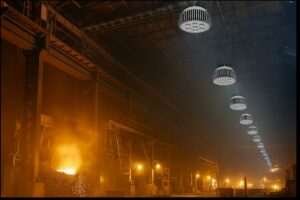
Chemical facilities operating under continuous production conditions place exceptional demands on all infrastructure systems, including lighting. In such environments, lighting failures are not merely inconvenient; they can disrupt critical processes and compromise safety.
Facilities that previously relied on conventional lighting often report recurring issues such as premature lamp burnout, inconsistent brightness, and color degradation. These problems are exacerbated in areas exposed to sustained high temperatures, leading to uneven illumination and frequent maintenance interventions.
After transitioning to high-temperature LED lighting solutions, many chemical plants experience measurable improvements in lighting performance and reliability. Consistent lumen output is maintained over long operating periods, even in zones with ambient temperatures exceeding 90°C or 150°C. This stability enhances operator confidence and supports uninterrupted monitoring of critical processes.
Maintenance teams also benefit from reduced intervention requirements. With fewer lighting-related failures, maintenance schedules become more predictable, and resources can be allocated more efficiently. This is particularly valuable in facilities where access to high-heat zones is restricted or requires extensive safety preparations.
Additionally, improved lighting quality contributes to a better working environment for plant personnel. Reduced flicker, stable color temperature, and uniform illumination improve visual comfort and reduce fatigue during long shifts. These human-factor benefits, while less easily quantified, play an important role in sustaining operational excellence in continuous high-heat chemical operations.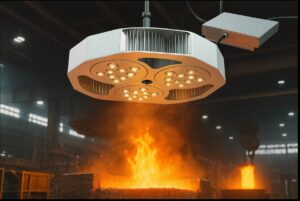
As chemical processing technologies advance, the requirements placed on industrial lighting systems continue to evolve. Future trends in high-heat lighting focus on increased thermal tolerance, intelligent monitoring, and deeper integration with digital plant ecosystems.
Advancements in LED materials and semiconductor packaging are expected to further expand operating temperature limits. Emerging high-temperature LED chips and improved thermal substrates will enable stable illumination in environments previously considered unsuitable for LED technology.
Smart lighting systems represent another significant trend. Integrated sensors and communication modules allow real-time monitoring of temperature, power consumption, and operating status. This data can be used to implement predictive maintenance strategies, reducing the risk of unexpected lighting failures and further optimizing lifecycle costs.
Integration with plant management and safety systems is also gaining importance. Lighting systems that interface with emergency response protocols, automated shutdown systems, and digital twins of chemical facilities enhance situational awareness and operational control.
Finally, regulatory and sustainability pressures will continue to drive demand for energy-efficient, long-lasting lighting solutions. High-temperature LED systems that combine durability, efficiency, and intelligent functionality will play an increasingly central role in the modernization of chemical facilities worldwide.
Stable illumination near high-heat equipment is a critical requirement for modern chemical facilities. Traditional lighting technologies are no longer sufficient to meet the combined challenges of extreme temperatures, continuous operation, and strict safety standards.
High-temperature LED lighting systems, supported by advanced thermal management and robust power supplies, offer a reliable, efficient, and future-ready solution. By investing in stable illumination, chemical plants can enhance safety, reduce costs, and support long-term operational excellence.
–The End–