
Industrial facilities, ranging from steel mills and glass factories to large-scale warehouses, operate in environments that are not only physically demanding but also thermally challenging. Traditional lighting solutions such as metal halide lamps, high-pressure sodium fixtures, and fluorescent tubes often struggle under these extreme conditions. Their susceptibility to heat, dust, and humidity can result in frequent failures, maintenance delays, and compromised operational safety. As industrial operations scale, these challenges are compounded, with lighting becoming both a critical operational requirement and a substantial energy expense.
High-temperature LED lighting emerges as a transformative solution, offering a combination of reliability, efficiency, and adaptability that conventional lighting technologies cannot match. By leveraging advanced thermal management designs, heat-resistant materials, and intelligent control systems, modern LED solutions maintain high lumen output even under elevated ambient temperatures. The adoption of such technologies not only ensures consistent illumination but also reduces energy consumption, minimizes maintenance costs, and extends the operational lifespan of lighting infrastructure.
This article aims to provide industrial stakeholders with a comprehensive understanding of high-temperature LED lighting solutions. It explores the inherent challenges of conventional industrial lighting, the technological innovations enabling LEDs to operate in harsh environments, and strategies for scalable deployment across large facilities. By examining practical applications, case studies, and future trends, this discussion will equip facility managers, engineers, and procurement decision-makers with actionable insights to optimize lighting performance, enhance safety, and achieve measurable energy savings.
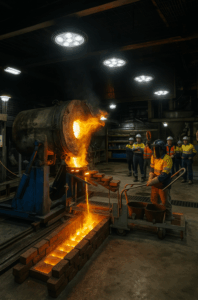
Lighting industrial facilities is far more complex than illuminating standard commercial or residential spaces. Large-scale operations are frequently subjected to extreme environmental conditions, including high ambient temperatures, dust accumulation, corrosive chemicals, and humidity fluctuations. For instance, steel manufacturing plants routinely experience temperatures exceeding 100°C near furnaces, while glass production facilities face radiant heat from molten glass. In such contexts, conventional lighting solutions often underperform, leading to operational inefficiencies and safety risks.
Metal halide and high-pressure sodium lamps, while historically prevalent in industrial settings, are particularly vulnerable to high temperatures. Heat can accelerate the degradation of internal components, causing premature failure and frequent replacement requirements. Fluorescent fixtures, likewise, suffer from reduced lumen output and ballast malfunctions when exposed to prolonged heat exposure. These traditional systems not only require significant maintenance but also increase downtime, which can directly impact productivity in continuous operations.
Beyond equipment limitations, inadequate lighting in high-temperature industrial environments poses serious safety risks. Poor illumination can result in human errors, accidents, and impaired machine operation. In high-risk zones, such as areas surrounding molten metal or chemical processing equipment, even momentary lapses in visibility can lead to catastrophic consequences. Therefore, facility operators are challenged not only by the need for durable and energy-efficient lighting but also by the imperative to maintain consistent visibility across expansive and thermally stressful environments.
Additionally, scalability introduces a further layer of complexity. Large industrial facilities often span tens of thousands of square meters, requiring lighting systems that can maintain uniform brightness across multiple zones while accommodating variations in heat intensity. Legacy lighting solutions lack this flexibility, making them impractical for modern industrial operations. Addressing these challenges necessitates a shift toward innovative high-temperature LED technologies that can deliver reliable performance, longevity, and operational safety at scale.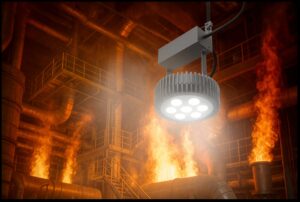
LED technology has evolved significantly over the past decade, enabling its use in environments previously considered hostile to solid-state lighting. High-temperature LED solutions incorporate specialized materials, chip designs, and thermal management strategies to maintain consistent performance in extreme conditions. Unlike traditional lighting systems, LEDs produce less radiant heat and can operate efficiently under elevated ambient temperatures without significant lumen depreciation.
High-temperature LEDs employ advanced semiconductor materials and encapsulants capable of withstanding heat levels exceeding 85°C–100°C. Phosphor coatings and heat-resistant substrates prevent degradation over extended operational periods, ensuring that light quality remains stable. Moreover, innovative thermal management designs, such as high-conductivity heat sinks, active cooling systems, and integrated airflow channels, effectively dissipate heat away from the LED junction. This approach minimizes thermal stress, enhances component longevity, and reduces the risk of catastrophic failure.
In addition to thermal resilience, high-temperature LEDs offer superior energy efficiency. They convert a larger proportion of electrical energy into visible light while minimizing wasted heat, resulting in substantial energy savings over the facility’s operational lifetime. Unlike conventional lamps that dim or flicker under high-temperature conditions, these LEDs maintain a steady lumen output, providing consistent illumination necessary for operational safety and productivity.
Furthermore, high-temperature LED fixtures are designed for durability in harsh industrial environments. Protective housings, high ingress protection (IP) ratings, and corrosion-resistant coatings safeguard against dust, moisture, and chemical exposure. These design innovations make them suitable for extreme applications, from foundries and chemical plants to food processing areas where sterilization procedures demand heat-resistant and moisture-tolerant lighting solutions. Collectively, these features position high-temperature LEDs as the optimal lighting solution for modern industrial facilities, combining robustness, efficiency, and operational consistency.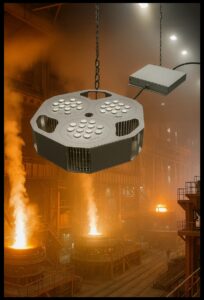
Scaling high-temperature LED solutions across expansive industrial facilities requires a strategic approach that balances performance, cost-efficiency, and operational flexibility. Modular lighting systems provide a foundation for scalability, allowing facility managers to deploy fixtures incrementally based on operational priorities or budgetary constraints. Modular designs facilitate maintenance, enable zone-specific lighting adjustments, and support seamless expansion as facility layouts evolve.
Integration with networked and smart control systems further enhances scalability. Industrial-grade LED systems can be connected to building management systems (BMS) or industrial IoT platforms, enabling automated dimming, scheduling, and occupancy-based lighting adjustments. Smart controls reduce energy consumption during non-peak hours while maintaining compliance with safety standards. Additionally, networked systems allow real-time monitoring of fixture performance, facilitating predictive maintenance and reducing the risk of unexpected outages in critical areas.
Energy efficiency gains scale exponentially in large facilities. When thousands of conventional lamps are replaced with high-temperature LEDs, the cumulative reduction in energy consumption can be substantial. Lifecycle cost analysis often reveals that initial capital expenditures are offset within a few years through savings in electricity, maintenance, and replacement costs. Beyond financial benefits, scalable LED systems enhance operational reliability, enabling facilities to maintain consistent illumination across extensive production floors, high-bay storage areas, and outdoor industrial spaces.
Design flexibility is another critical consideration. High-temperature LED systems are available in a variety of wattages, beam angles, and mounting configurations, enabling customization to specific operational requirements. From focused task lighting near machinery to broad-area illumination in warehouses, these solutions can be deployed strategically to optimize light distribution, minimize glare, and enhance visual comfort for employees. This adaptability makes high-temperature LED lighting a future-proof investment capable of supporting evolving industrial needs.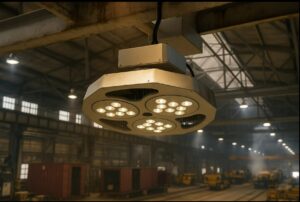
Steel Manufacturing Plants: High-temperature LED fixtures have been successfully implemented in steel production facilities, where extreme radiant heat and molten metal present challenges to conventional lighting. Specialized LEDs, coupled with robust thermal management and protective housings, maintain consistent illumination even in proximity to furnaces and casting lines. The result is improved worker safety, reduced downtime due to lighting failures, and lower maintenance costs compared to legacy systems.
Food Processing Facilities: In industrial kitchens and processing plants, heat-resistant and moisture-tolerant LED fixtures provide reliable illumination in sterilized and high-temperature environments. Unlike conventional lamps, high-temperature LEDs do not suffer from thermal degradation, ensuring consistent lumen output crucial for quality control and worker safety. Additionally, corrosion-resistant housings and high IP ratings protect fixtures from water and chemical exposure during cleaning operations.
Warehouses and Logistics Centers: Large storage and distribution centers benefit from modular high-temperature LED solutions that can scale to cover expansive areas. Networked controls allow lighting zones to operate independently, providing energy savings during off-peak hours. These systems also facilitate gradual deployment across multiple facility sections, enabling managers to balance capital expenditures with operational needs while maintaining consistent illumination throughout the facility.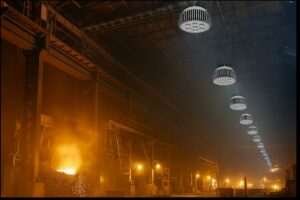
Optimal performance of high-temperature LED systems relies on careful attention to installation and ongoing maintenance. Thermal management is paramount; fixtures should be installed with sufficient clearance for airflow, and heat sinks or active cooling elements should remain unobstructed. Industrial lighting layouts must account for temperature gradients, ensuring that LED junction temperatures remain within manufacturer-specified limits to prevent premature lumen depreciation.
Maintenance practices for high-temperature LEDs differ significantly from traditional lighting. Predictive maintenance strategies, enabled by smart sensors and networked monitoring, allow facility managers to identify potential failures before they impact operations. Unlike metal halide or fluorescent systems, LEDs do not require frequent lamp replacement, reducing labor costs and minimizing production interruptions. Cleaning schedules should account for dust accumulation and ensure that housings and lenses remain clear for optimal light output.
Compliance with industrial safety standards is essential. LED fixtures should meet certifications relevant to the facility’s operational environment, including UL, IEC, or IP ratings for dust and moisture ingress. Additionally, emergency lighting and backup systems should be integrated to maintain compliance with occupational safety regulations. By combining proper installation, proactive maintenance, and adherence to safety protocols, industrial operators can maximize the benefits of high-temperature LED lighting while minimizing operational risks.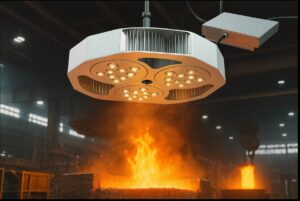
The evolution of high-temperature LED technology is accelerating, driven by advancements in materials science, smart controls, and industrial automation. Emerging semiconductor materials and phosphor technologies promise even higher heat tolerance and improved lumen efficiency. Research in chip designs and encapsulation methods continues to extend operational life while reducing thermal stress in extreme environments.
Integration with IoT and AI platforms is reshaping industrial lighting management. Advanced control systems can automatically adjust illumination levels based on production schedules, occupancy, or ambient light conditions. Predictive algorithms analyze fixture performance data to schedule maintenance proactively, minimizing downtime and operational interruptions. The convergence of lighting and automation technologies enables industrial facilities to optimize energy use while maintaining safety and operational efficiency.
Sustainability remains a critical driver for industrial LED adoption. High-temperature LEDs contribute to reduced carbon footprints by lowering energy consumption and extending fixture lifespans, resulting in fewer replacements and reduced waste. As industries increasingly prioritize sustainable operations, scalable high-temperature LED solutions will become an essential component of energy-efficient and environmentally responsible facility design.
High-temperature LED lighting represents a paradigm shift for industrial facilities operating in thermally demanding environments. By combining durability, energy efficiency, and operational flexibility, these systems overcome the limitations of conventional lighting technologies while enhancing safety and productivity. Scalable deployment strategies, modular designs, and smart control integration enable facilities to achieve uniform illumination across expansive operations while optimizing energy use and minimizing maintenance.
Industrial decision-makers are encouraged to evaluate high-temperature LED solutions not merely as a lighting upgrade but as a strategic investment in operational reliability, energy efficiency, and long-term cost savings. Through careful planning, implementation, and monitoring, facilities can harness the full potential of LED technology to achieve safer, brighter, and more sustainable industrial environments.
–The End–