
In food processing facilities, lighting is not merely an auxiliary utility but a critical operational system directly affecting safety, productivity, and regulatory compliance. This importance becomes even more pronounced in high-heat environments, where elevated ambient temperatures place exceptional stress on electrical and optical components. Baking lines, frying zones, pasteurization chambers, and sterilization tunnels all require lighting systems that can operate continuously under extreme thermal conditions without performance degradation or failure.
Conventional industrial lighting solutions often fail prematurely when exposed to sustained heat, steam, grease, and aggressive sanitation procedures. Such failures lead to frequent maintenance, production interruptions, and increased risk during hygiene audits. As food manufacturers strive to improve operational efficiency while meeting increasingly strict food safety standards, the demand for purpose-engineered high-temperature LED lighting continues to grow.
This article examines the technical, operational, and regulatory dimensions of reliable lighting in high-heat food processing environments. By integrating engineering fundamentals with real-world application insights, it provides both technical professionals and decision-makers with a comprehensive framework for evaluating, specifying, and implementing high-temperature lighting solutions.
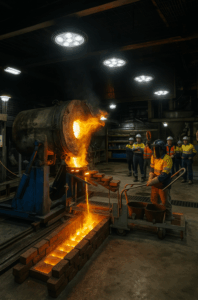
Food processing plants contain multiple process zones where high ambient temperatures are unavoidable due to the nature of thermal food production. Industrial ovens used in baking, roasting, and drying operations generate continuous radiant heat that affects not only the process chamber itself but also adjacent inspection and transfer areas. Similarly, frying and cooking lines expose lighting fixtures to hot oil vapors, airborne grease, and convective heat over prolonged operating cycles.
Drying, curing, and dehydration chambers often operate around the clock, maintaining stable but elevated temperatures for moisture removal and product stabilization. Sterilization and pasteurization zones introduce additional challenges, combining high heat with steam, pressure, and frequent washdowns. Each of these areas imposes distinct thermal and environmental loads on lighting systems, making generalized lighting solutions inadequate.
From an engineering standpoint, understanding the thermal profile of each zone is essential for correct fixture selection. From an operational perspective, recognizing these zones allows facility managers to prioritize lighting investments where reliability has the greatest impact on uptime and food safety.
High-heat food processing environments commonly experience ambient temperatures ranging from 60°C to over 200°C, depending on proximity to heat sources and ventilation effectiveness. Unlike intermittent industrial heat exposure, food processing operations often involve continuous multi-shift production, subjecting lighting systems to sustained thermal stress over thousands of operating hours.
In addition to high temperatures, lighting fixtures must withstand rapid thermal fluctuations caused by washdowns, equipment shutdowns, or line transitions. Moisture, steam, flour dust, sugar particles, and oil aerosols further accelerate material degradation if fixtures are not properly sealed and designed. Cleaning agents and disinfectants introduce chemical exposure that can compromise seals and optical components over time.
These combined conditions demand lighting solutions with validated high-ambient temperature ratings, robust mechanical construction, and chemical-resistant materials. Failure to account for these factors often results in shortened fixture lifespan and unpredictable maintenance cycles.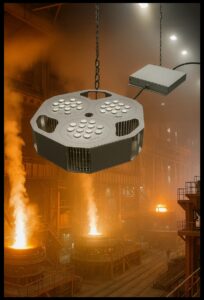
Most standard industrial lighting products are designed for ambient temperatures below 50°C. When deployed in high-heat food processing zones, excessive temperatures rapidly accelerate lumen depreciation and component aging. LED junction temperatures rise beyond optimal limits, leading to reduced luminous efficacy and color shift over time.
Drivers and electronic components are particularly vulnerable. Capacitors, solder joints, and power conversion elements degrade faster under heat, often causing sudden and complete fixture failure rather than gradual dimming. From an engineering perspective, these failures reflect inadequate thermal design and insufficient component derating. From an operational standpoint, they lead to frequent maintenance interventions, often during critical production periods.
Repeated lighting failures also undermine confidence in LED technology when, in reality, the issue lies in improper product selection rather than the technology itself.
Lighting failures in food processing environments introduce risks that extend beyond reduced visibility. Broken lenses, exposed wiring, or falling components can create foreign object contamination hazards, triggering product recalls or line shutdowns. Even when fixtures remain intact, inadequate illumination compromises visual inspection accuracy, increasing the likelihood of undetected defects or sanitation issues.
Food safety standards emphasize adequate and reliable lighting as a prerequisite for hygienic production. Inspectors routinely assess illumination levels, fixture condition, and cleanliness during audits. Poorly designed lighting systems can therefore become a recurring non-conformance item, resulting in corrective actions and operational delays.
For food manufacturers, investing in hygienically designed, heat-resistant lighting is a preventive strategy that supports both compliance and brand protection.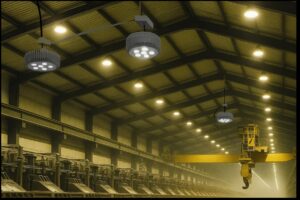
High-temperature food processing lighting must be engineered to operate reliably at elevated ambient temperatures, commonly rated at 90°C, 150°C, or even 200°C. Achieving this requires a comprehensive thermal management strategy, including optimized heat sink geometry, high-conductivity materials, and effective thermal separation between LED modules and drivers.
From an engineering perspective, maintaining stable LED junction temperatures is critical to preserving lumen output, color stability, and service life. Thermal simulations, real-world testing, and component derating are essential elements of reliable product design. From a commercial perspective, clearly defined and validated temperature ratings provide confidence during specification and reduce risk during deployment.
In food processing environments, fixture design must support strict hygiene requirements. Smooth, non-porous housings prevent the accumulation of contaminants, while sealed construction protects internal components from moisture, steam, and cleaning chemicals. High ingress protection ratings are essential in washdown and steam-exposed zones.
These design considerations not only support regulatory compliance but also reduce cleaning time and maintenance effort. For plant operators, hygienic lighting contributes directly to sanitation efficiency and audit readiness.
Reliable lighting performance in high-heat environments requires consistent lumen output, stable color temperature, and adequate color rendering. High CRI lighting improves visual accuracy during inspection, sorting, and quality control tasks. Flicker-free operation enhances worker comfort and reduces fatigue during long shifts.
From an engineering standpoint, maintaining photometric stability under thermal stress is a key indicator of product quality. From a management perspective, improved visibility translates into higher productivity, reduced error rates, and safer working conditions.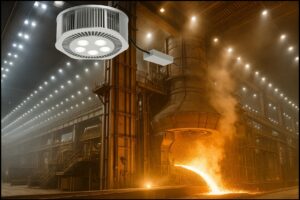
High-temperature LED lighting solutions are purpose-built to withstand continuous exposure to extreme environments. By using heat-resistant components, robust drivers, and advanced thermal management, these fixtures deliver predictable performance over extended lifecycles.
For engineers, this reliability simplifies maintenance planning and reduces unexpected failures. For decision-makers, longer service life improves total cost of ownership and justifies higher initial investment.
Even in extreme conditions, high-temperature LED lighting maintains superior energy efficiency compared to traditional lighting technologies. Reduced power consumption lowers operational costs and minimizes additional heat generation in already hot environments.
From a sustainability perspective, energy-efficient lighting supports ESG objectives, reduces carbon footprint, and aligns with corporate environmental goals.
In high-heat food processing environments, lighting systems play an indirect yet essential role in supporting compliance with HACCP, GMP, and FDA-related guidelines. These frameworks emphasize hazard prevention, sanitation control, and consistent operating conditions, all of which rely on adequate and reliable illumination. Poor lighting can obscure contamination risks, compromise inspection accuracy, and hinder effective cleaning verification, thereby introducing avoidable hazards into the production process.
From a technical perspective, high-temperature lighting must be designed to operate reliably without generating debris, exposed wiring, or degraded optical components. Fixtures that fail under heat stress can become physical contamination risks, directly conflicting with HACCP principles. Hygienic construction, sealed housings, and temperature-rated components therefore contribute not only to durability but also to hazard control strategies embedded in food safety management systems.
From a management and compliance standpoint, lighting solutions aligned with HACCP and GMP requirements reduce audit risk and corrective action frequency. During inspections, auditors often evaluate lighting adequacy as part of environmental controls. Facilities equipped with purpose-designed, high-temperature, hygienic lighting demonstrate proactive compliance, reinforcing confidence in their overall food safety culture.
High-temperature food processing lighting must also meet electrical safety standards applicable at both local and international levels. Elevated ambient temperatures significantly increase electrical risk if fixtures are not properly rated, insulated, and certified. Components such as wiring insulation, drivers, and connectors must be capable of operating safely at high temperatures without degradation or fire risk.
From an engineering standpoint, compliance with IEC, UL, or equivalent standards requires extensive thermal testing and material validation. Certifications confirm that fixtures maintain electrical integrity under rated conditions and provide a measurable benchmark for product reliability. From a procurement and risk management perspective, certified lighting reduces liability exposure and simplifies approval processes within multinational organizations.
Certified, high-temperature lighting solutions provide tangible benefits during audits and third-party inspections. Clearly documented specifications, temperature ratings, and certifications allow facilities to demonstrate compliance without extensive justification or remedial action. This transparency reduces audit duration and minimizes operational disruption.
For plant managers, certified lighting represents a strategic investment in compliance readiness. Rather than reacting to audit findings, facilities equipped with compliant lighting systems position themselves as low-risk operators, improving regulatory relationships and long-term operational stability.
In industrial baking and confectionery facilities, lighting systems are frequently installed near ovens, proofers, and cooling tunnels. These areas experience continuous radiant heat, often exceeding the tolerance of standard industrial fixtures. High-temperature LED lighting provides stable illumination in these zones, enabling accurate inspection of baked goods while withstanding sustained thermal exposure.
From an engineering perspective, fixtures must manage radiant heat and convective airflow without compromising driver performance. From an operational perspective, reliable lighting ensures consistent product quality assessment and reduces downtime caused by frequent lamp replacement.
Protein processing facilities present a combination of high heat, moisture, and aggressive sanitation procedures. Cooking, smoking, and sterilization processes expose lighting fixtures to extreme conditions, including steam and chemical cleaning agents. High-temperature, sealed LED fixtures ensure reliable operation while meeting hygiene requirements.
For quality assurance teams, consistent lighting supports accurate inspection of meat color, texture, and surface condition. For plant managers, durable lighting reduces maintenance frequency in areas where access is limited and downtime is costly.
Pasteurization and thermal treatment zones in dairy and beverage production require lighting systems capable of handling heat and condensation simultaneously. High-temperature LED lighting maintains performance stability in these environments, supporting visual monitoring and sanitation verification.
From a business perspective, reliable lighting in these critical zones supports continuous production and reduces the risk of contamination-related shutdowns.
Accurate assessment of ambient temperature is the foundation of proper lighting selection. Engineers must distinguish between process temperature and actual ambient temperature at the fixture location. Continuous operating hours, proximity to heat sources, and ventilation effectiveness all influence thermal load.
From a planning perspective, underestimating ambient temperature is a common cause of premature lighting failure. Correct assessment ensures that fixtures are selected with appropriate temperature ratings and safety margins.
Beyond thermal rating, lighting selection must consider beam angle, lumen output, mounting configuration, and electrical compatibility. In inspection zones, uniform illumination and glare control are essential. Mechanical robustness ensures fixtures remain secure under vibration and thermal expansion.
From a systems engineering standpoint, these factors must be evaluated holistically. From a commercial standpoint, well-matched specifications improve performance and reduce long-term costs.
High-temperature food processing applications often require customized solutions. Experienced suppliers can adapt wattage, optics, temperature rating, and mounting options to specific site conditions. This expertise reduces risk and ensures optimal performance.
For decision-makers, partnering with a knowledgeable supplier transforms lighting from a commodity purchase into a strategic infrastructure investment.
Proper installation is critical to maximizing lighting performance and lifespan. Fixtures should be positioned to minimize direct radiant heat exposure while maintaining required illumination levels. Appropriate wiring materials and heat-resistant connectors are essential in high-temperature environments.
From an engineering perspective, installation quality directly affects thermal performance. From an operational standpoint, correct installation reduces early failures and maintenance interventions.
Although high-temperature LED lighting requires minimal maintenance, periodic inspections remain essential. Monitoring lumen output, fixture condition, and electrical connections allows potential issues to be identified before failure occurs.
For facility managers, preventive maintenance strategies improve predictability and support long-term operational planning. For engineers, performance data provides feedback for continuous improvement.
Reliable lighting is a fundamental component of safe, efficient, and compliant food processing operations, particularly in high-heat environments. Purpose-engineered high-temperature LED lighting solutions address the limitations of conventional fixtures through advanced thermal management, hygienic design, and certified performance.
From an engineering perspective, these systems provide predictable reliability under extreme conditions. From a business and marketing perspective, they deliver measurable value through reduced downtime, improved safety, and long-term cost efficiency. As food processing facilities continue to modernize, high-temperature LED lighting will remain an essential element of resilient industrial infrastructure.
–The End–