
Industrial environments characterized by elevated ambient temperatures present a uniquely demanding operational context for lighting systems. Facilities such as foundries, glass plants, kiln lines, steel mills, and thermal processing workshops routinely operate under thermal conditions far exceeding standard commercial lighting design thresholds. Conventional luminaires installed in these settings often suffer premature degradation, unstable performance, and frequent failure, which collectively undermine productivity and increase operational expenditures.
Traditional lighting technologies—including high-intensity discharge (HID), halogen, and fluorescent fixtures—are particularly vulnerable to heat stress. Internal electronic components, insulation materials, and optical assemblies deteriorate rapidly when exposed to sustained high temperatures. This leads not only to shortened fixture lifespan but also to escalating maintenance cycles and unplanned production interruptions.
High-temperature industrial LED lighting systems are engineered specifically to address these challenges. By integrating thermally resilient materials, advanced heat dissipation architectures, and temperature-rated electronics, these luminaires maintain performance stability in extreme conditions. From an operational standpoint, they represent not merely a lighting upgrade but a strategic infrastructure investment capable of reducing downtime, lowering energy consumption, and enhancing facility reliability.
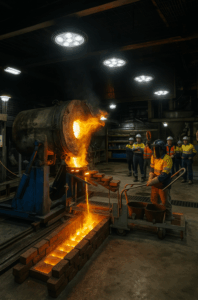
Elevated temperatures accelerate the aging process of electrical and optical components. Electrolytic capacitors experience exponential lifespan reduction as temperature rises, semiconductor junctions degrade faster, insulation loses dielectric strength, and lenses may discolor. These mechanisms collectively reduce both luminous performance and electrical stability. Because industrial heat exposure is often continuous rather than intermittent, degradation accumulates rapidly and results in cascading failures throughout the lighting system.
Standard fixtures typically carry ambient ratings below 50°C. When deployed in facilities exceeding 80°C or 100°C, they operate outside their design limits. Consequently, mean time between failures declines sharply, forcing maintenance teams into reactive replacement cycles. Frequent interventions raise labor costs, increase spare inventory requirements, and disrupt workflow continuity. Over time, maintenance expenditures may surpass the original cost of the lighting equipment itself.
Lighting reliability is directly tied to operational safety and process accuracy. Poor illumination compromises visual inspections, increases accident risk, and reduces worker efficiency. Sudden fixture failure in hazardous areas can create immediate safety threats. Consistent lighting ensures operators can monitor equipment conditions, detect anomalies, and maintain quality standards. Thus, lighting reliability should be considered an integral component of industrial risk mitigation strategy rather than a secondary facility concern.
High-temperature LED fixtures incorporate advanced thermal engineering such as high-conductivity housings, optimized airflow channels, and large-surface heat sinks. These features ensure heat is rapidly transferred away from critical electronic components. Sophisticated simulation tools are often used during development to model thermal distribution and eliminate hotspots, resulting in luminaires capable of stable operation under sustained extreme conditions.
Industrial-grade capacitors, silicone wiring, ceramic substrates, and thermally stable optical materials allow these fixtures to function reliably at elevated temperatures. Each component is selected based on endurance testing under thermal stress, ensuring long-term electrical stability and consistent photometric performance even when exposed to harsh environments for extended durations.
Extreme-heat facilities often also involve vibration, dust, chemical exposure, and thermal cycling. High-temperature luminaires therefore include reinforced housings, corrosion-resistant coatings, sealed enclosures, and vibration-resistant mounting. These features prevent mechanical fatigue and environmental contamination, extending operational lifespan and minimizing failure risk.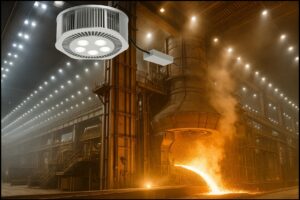
High-temperature LED luminaires are designed so that internal junction temperatures remain within safe limits even when ambient conditions are severe. This thermal stability preserves semiconductor integrity, prevents driver breakdown, and maintains lumen output over time. Unlike conventional lighting systems that experience rapid lumen depreciation under heat stress, specialized LEDs retain their rated performance for tens of thousands of hours. Extended service life directly translates into reduced replacement frequency and improved reliability metrics across industrial operations.
Because heat-resistant LED fixtures operate reliably for extended periods, maintenance requirements shift from reactive to predictive. Facilities can schedule inspections based on operating hours rather than waiting for failures. This approach minimizes emergency repairs, reduces technician overtime, and lowers equipment rental costs for lifts or scaffolding. Over time, maintenance teams can allocate resources more efficiently, focusing on preventive measures instead of repetitive replacements.
Stable illumination is essential for production consistency. High-temperature LEDs maintain uniform light distribution, color stability, and flicker-free output even in thermally demanding environments. This consistency ensures operators always have clear visibility of machinery and materials, which reduces errors and supports quality control. Lighting infrastructure that performs reliably contributes directly to overall plant reliability, supporting uptime targets and operational continuity.
In conventional lighting technologies, efficiency often declines significantly as temperature rises. High ambient heat increases internal resistance, reduces lamp efficacy, and accelerates energy loss in the form of waste heat. High-temperature industrial LEDs are specifically engineered to mitigate these effects through optimized thermal pathways and high-conductivity materials. By maintaining stable junction temperatures, these systems sustain consistent lumen-per-watt performance even in environments exceeding 100°C. This capability ensures that energy efficiency does not deteriorate under real operating conditions, which is critical for facilities where high heat is unavoidable rather than occasional. Sustained efficacy means predictable energy consumption profiles, allowing facility managers to model operating costs accurately and avoid unexpected increases in power demand. Over time, this stability contributes to substantial energy savings compared with traditional lighting systems whose efficiency declines rapidly in extreme temperatures.
Legacy lighting technologies such as HID and halogen lamps require significantly higher wattage to produce comparable illumination levels. Additionally, these systems often suffer from optical losses, ballast inefficiencies, and thermal energy waste. High-temperature LEDs, by contrast, convert a greater proportion of electrical input into visible light rather than heat. Their directional light output further improves utilization efficiency, meaning fewer fixtures are required to achieve the same illumination standard. When deployed across large industrial facilities, these efficiency gains compound into measurable reductions in total electricity usage. Lower power consumption not only reduces operating expenses but also decreases strain on electrical infrastructure, potentially extending the lifespan of wiring systems, transformers, and distribution equipment. The cumulative financial impact of reduced energy demand becomes particularly significant in energy-intensive industries operating continuously.
Traditional lighting technologies emit substantial radiant heat, which raises ambient temperature and increases cooling requirements. In enclosed industrial spaces, this additional heat load forces ventilation or air-conditioning systems to work harder, thereby increasing energy consumption. High-temperature LEDs generate far less waste heat, reducing the thermal burden placed on climate-control systems. This indirect energy saving is often overlooked but can be substantial, especially in facilities that maintain controlled environments for process stability or worker safety. Lower heat emission also improves thermal comfort for personnel and reduces stress on nearby equipment sensitive to temperature fluctuations. By decreasing both direct electrical consumption and secondary cooling demand, high-temperature LEDs deliver a dual-layer efficiency advantage that strengthens overall energy management strategies.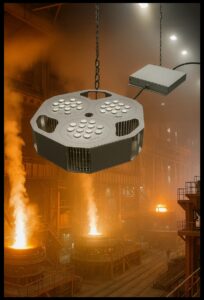
Although high-temperature LED luminaires may involve higher upfront procurement costs than standard fixtures, evaluating lighting solutions solely on purchase price can be misleading. A lifecycle cost perspective reveals that these systems deliver superior financial performance over time. Their extended lifespan, lower failure rates, and consistent efficiency significantly reduce replacement frequency and energy expenditure. When amortized across years of operation, the initial investment becomes a relatively small portion of total cost. Furthermore, stable performance eliminates the need for frequent system upgrades, enabling facilities to maintain lighting infrastructure without repeated capital expenditure. From a financial planning standpoint, predictable long-term savings improve budgeting accuracy and support strategic capital allocation.
Maintenance labor represents one of the most significant hidden costs associated with industrial lighting systems. Replacing fixtures in high-temperature or hazardous environments often requires specialized equipment, safety procedures, and trained personnel. High-temperature LEDs drastically reduce the frequency of these interventions. With fewer failures and longer service intervals, facilities spend less on technician hours, equipment rentals, and spare parts inventory. Reduced maintenance activity also minimizes disruption to production schedules. Over time, the cumulative reduction in labor and logistical expenses can exceed the cost of the fixtures themselves, demonstrating that reliability is a major contributor to cost efficiency.
Production downtime is among the most expensive operational risks in industrial settings. When lighting failures occur in critical zones, processes may need to be halted until illumination is restored. These interruptions can lead to lost output, delayed shipments, and contractual penalties. High-temperature LED systems provide dependable performance that minimizes the likelihood of such disruptions. The financial value of avoided downtime is often substantial, particularly in continuous-process industries such as metal smelting, chemical manufacturing, or power generation. By ensuring uninterrupted lighting availability, facilities protect productivity and maintain operational continuity. In many cases, this single factor justifies the investment in specialized luminaires.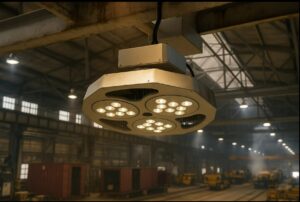
High-temperature industrial LED lighting is deployed across a wide range of sectors where conventional luminaires cannot withstand environmental stress. In metal foundries, fixtures must tolerate radiant heat from furnaces while maintaining stable output for safety and inspection tasks. Glass manufacturing plants require lighting capable of enduring intense thermal radiation near forming lines and annealing chambers. Ceramic production facilities install heat-resistant luminaires around kilns where ambient temperatures remain elevated for extended periods. Industrial baking and curing operations rely on thermally stable lighting inside processing zones to ensure visibility without introducing additional heat load. Power generation facilities, especially those using steam turbines or boilers, also benefit from fixtures capable of operating reliably in high-temperature mechanical rooms. Across all these applications, durability under heat directly correlates with operational reliability, making specialized LED lighting essential infrastructure rather than optional equipment.
Selecting the appropriate luminaire begins with accurately matching its rated ambient temperature to real environmental conditions. Industrial fixtures may be available with ratings such as 90°C, 150°C, or 200°C, each designed for specific operational scenarios. Choosing a fixture with insufficient temperature tolerance can result in rapid component degradation and premature failure. Conversely, selecting a properly rated luminaire ensures stable performance throughout its service life. Conducting thermal measurements within the facility before procurement is therefore essential. Engineers must consider not only average ambient temperature but also localized hotspots, radiant heat sources, and airflow conditions. Proper rating selection prevents costly replacement cycles and ensures long-term reliability.
Ingress Protection ratings indicate a luminaire’s resistance to dust and moisture. High-temperature industrial environments often contain airborne particulates, fumes, or vapors that can infiltrate lighting systems and damage internal components. Fixtures with high IP ratings feature sealed enclosures, gasketed joints, and protective coatings that prevent contamination. This protection preserves electrical integrity, maintains optical clarity, and extends operational lifespan. In facilities with corrosive atmospheres, additional protective treatments may be required to prevent chemical degradation. Selecting luminaires with appropriate environmental protection ensures that lighting systems remain functional despite exposure to challenging industrial conditions.
Industrial lighting equipment must meet recognized safety and performance standards to ensure reliable operation. Certifications such as UL, CE, and RoHS verify that fixtures have undergone rigorous testing for electrical safety, thermal endurance, and material compliance. Compliance not only demonstrates product quality but also ensures compatibility with regulatory requirements and insurance standards. For facility operators, choosing certified luminaires reduces liability risks and guarantees that equipment meets industry benchmarks. Certification also provides assurance that performance claims are validated through standardized testing procedures rather than theoretical specifications.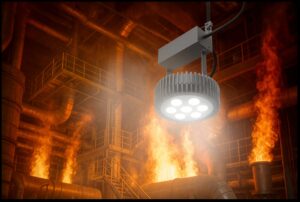
A comprehensive thermal assessment is essential before installing high-temperature lighting systems. Engineers should map temperature distribution across the facility, identifying hotspots, airflow patterns, and radiant heat sources. This analysis allows accurate selection of fixture ratings and placement strategies. Without proper assessment, even high-performance luminaires may be installed in unsuitable locations, leading to avoidable performance issues. Thermal evaluation ensures that lighting systems operate within their intended parameters, maximizing efficiency and lifespan.
Correct positioning of luminaires is critical for effective heat dissipation. Fixtures should be installed where airflow can circulate freely around their heat sinks, avoiding enclosed pockets or stagnant zones where heat may accumulate. Orientation also matters; mounting angles that facilitate convection can significantly improve thermal performance. Additionally, adequate spacing between fixtures prevents localized heat buildup. Careful placement planning ensures that luminaires maintain stable operating temperatures and deliver consistent light output.
Even highly durable lighting systems benefit from structured maintenance planning. Integrating monitoring technologies such as temperature sensors or smart drivers allows facilities to track operating conditions in real time. These systems can detect anomalies—such as unexpected temperature spikes or power fluctuations—before they lead to failure. Predictive maintenance strategies based on monitoring data reduce downtime and optimize service scheduling. Over time, data-driven maintenance improves reliability while minimizing operational costs.
Advancements in materials science and digital control technologies are driving the next generation of high-temperature industrial lighting. Emerging designs incorporate composite heat-sink materials with superior thermal conductivity, enabling fixtures to operate at even higher ambient temperatures without performance degradation. Integration of smart sensors allows luminaires to monitor internal temperature, power consumption, and operating hours, transmitting data to centralized management systems. Artificial intelligence algorithms can analyze this data to optimize energy usage, predict maintenance needs, and adjust light output dynamically according to environmental conditions. Wireless connectivity and industrial Internet-of-Things platforms are also enabling remote diagnostics and system integration with broader facility management networks. These innovations will transform lighting from a passive utility into an intelligent infrastructure component that actively contributes to efficiency, safety, and operational insight.
High-temperature industrial LED lighting represents a transformative solution for facilities operating under extreme thermal conditions. By combining advanced thermal engineering, durable components, and superior energy efficiency, these systems reduce downtime, lower operating costs, and enhance workplace safety. For industrial decision-makers seeking long-term reliability and economic performance, investing in heat-resistant LED infrastructure is a technically sound and financially strategic choice.
–The End–