
Industrial lighting has entered a new era. As LED technology replaces traditional HID, halogen, and fluorescent systems, expectations for efficiency, longevity, and reliability have risen dramatically. However, nowhere are these expectations more difficult to meet than in extreme high-temperature environments. Foundries, metal smelting plants, glass manufacturing lines, ceramic kilns, industrial ovens, power plants, and military facilities all expose lighting systems to sustained temperatures that far exceed typical commercial or warehouse conditions.
In these environments, heat is not an occasional stress factor—it is a constant, dominant force that defines whether a lighting system succeeds or fails. While many LED products claim lifespans of 50,000 or even 100,000 hours, these figures are often based on laboratory conditions at moderate ambient temperatures. When exposed to ambient temperatures of 90°C, 150°C, or even 200°C, most standard LED fixtures experience rapid degradation or catastrophic failure.
This is where high-temperature LED lighting distinguishes itself. Long life in extreme heat is not a matter of marketing claims or isolated component upgrades. It is the result of system-level engineering, where thermal management, electronics design, materials science, optical stability, and mechanical integrity are all optimized to survive and perform reliably under continuous thermal stress.
This white paper explores why heat is the defining challenge for industrial lighting, how high-temperature LEDs achieve superior reliability, and why long life in extreme heat delivers unmatched value across safety, maintenance, and total cost of ownership.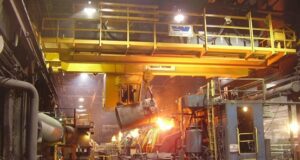
2.1 Junction Temperature vs. Ambient Temperature
One of the most misunderstood aspects of LED performance is the relationship between ambient temperature and LED junction temperature. Ambient temperature refers to the surrounding air temperature, while junction temperature is the temperature at the active semiconductor region inside the LED where light is generated.
In high-temperature environments, ambient temperatures may already exceed 90°C. However, the junction temperature is always higher than ambient due to heat generated by the LED during operation. If this heat cannot be effectively conducted away, the junction temperature rises rapidly, accelerating degradation processes inside the LED.
The thermal path—from LED junction to substrate, to heat sink, to surrounding environment—defines how efficiently heat is removed. Any weakness in this path results in heat accumulation, reduced luminous output, color instability, and ultimately premature failure. In extreme heat applications, controlling junction temperature is the single most critical factor in extending LED life.
2.2 Thermal Acceleration of Failure Mechanisms
Heat accelerates nearly every known failure mechanism in electronic systems. The Arrhenius equation, widely used in reliability engineering, demonstrates that for many materials and components, a temperature increase of just 10°C can double the rate of degradation.
At elevated temperatures, semiconductor materials experience increased defect formation, solder joints weaken, encapsulants harden or crack, and electronic components drift out of specification. For LEDs, prolonged exposure to high junction temperatures leads to:
When ambient temperatures rise to 150°C or higher, these effects are no longer gradual—they become decisive. Only LED systems specifically engineered for such conditions can maintain stable performance over meaningful service lifetimes.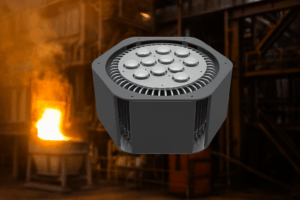
In most LED fixtures, the driver is the weakest link under heat stress. Standard drivers rely heavily on electrolytic capacitors, which are highly sensitive to temperature. As temperatures rise, the electrolyte inside these capacitors evaporates, dramatically shortening their lifespan.
Power transistors, control ICs, and PCB materials also have defined thermal limits. Exceeding these limits causes parameter drift, unstable current regulation, and eventual failure. In extreme heat environments, it is common for standard LED drivers to fail long before the LED light source itself, rendering the entire fixture unusable.
Optical systems are rarely designed with extreme heat in mind. Polycarbonate lenses may yellow, deform, or become brittle. Reflective coatings can oxidize or delaminate. Silicone seals and gaskets may shrink or crack, allowing dust, fumes, and moisture to penetrate the fixture.
These failures not only reduce light output but also compromise safety and IP protection. In industrial settings where airborne contaminants and thermal cycling are common, optical degradation is a major contributor to shortened fixture life.
High temperatures cause materials to expand. When fixtures cycle between operating and non-operating states, repeated expansion and contraction introduce mechanical stress. Over time, this leads to loose fasteners, warped housings, cracked mounts, and loss of structural integrity.
Standard industrial fixtures are rarely tested for prolonged exposure to extreme thermal cycling. As a result, mechanical failure often accompanies electrical and optical degradation.
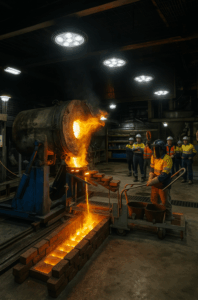
A true high-temperature LED fixture is not defined by a single component rating. Instead, it is defined by continuous, reliable operation at elevated ambient temperatures such as 90°C, 150°C, or even 200°C.
Importantly, there is a difference between surviving high temperatures and operating reliably in them. Many products can tolerate brief exposure to extreme heat but cannot sustain long-term performance. High-temperature LED fixtures are engineered for continuous-duty operation in harsh thermal environments.
High-temperature performance cannot be achieved by simply upgrading one part of a standard fixture. Reinforced LEDs alone are insufficient if the driver, optics, or housing cannot handle the same conditions.
True high-temperature LED systems are designed holistically, with every subsystem—thermal, electrical, optical, and mechanical—optimized for extreme heat. This system-level approach is what separates genuine high-temperature solutions from modified conventional products.
Thermal management is the foundation upon which all high-temperature LED reliability is built. In extreme heat environments, thermal design is no longer a secondary optimization—it is the primary determinant of system survival. Unlike conventional industrial fixtures that rely on moderate ambient conditions, high-temperature LED systems must continuously dissipate both internally generated heat and externally imposed thermal loads.
A critical strategy is the design of advanced heat sink architectures that maximize thermal conductivity while maintaining structural integrity at elevated temperatures. These heat sinks are not decorative fins but engineered thermal pathways, carefully shaped to increase surface area, promote natural convection, and minimize thermal bottlenecks. The geometry, fin spacing, and orientation are optimized based on airflow characteristics within hot industrial zones, where air density and convection behavior differ significantly from standard environments.
Material selection further enhances thermal performance. High-grade aluminum alloys with stable thermal conductivity across wide temperature ranges are commonly used, sometimes supplemented with copper inserts or ceramic elements in localized hot spots. These materials maintain dimensional stability and thermal efficiency even when exposed to sustained temperatures above 150°C.
Equally important is the preference for fully passive cooling systems. Active cooling solutions such as fans or liquid loops introduce failure points that are incompatible with extreme heat, dust, vibration, and long maintenance intervals. Passive systems, when correctly engineered, offer predictable, maintenance-free performance over decades.
Finally, effective thermal management includes thermal isolation between subsystems. Separating LED modules, drivers, and optics prevents heat accumulation and reduces cumulative thermal stress, significantly extending the operational life of the entire fixture.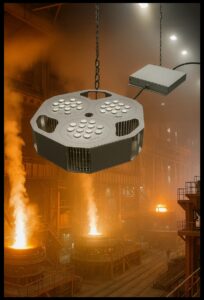
In extreme heat LED systems, the driver is often the most vulnerable component, making its design critical to long-term reliability. Standard LED drivers are typically rated for ambient temperatures no higher than 50–70°C. When exposed to elevated temperatures, their internal components—particularly electrolytic capacitors—experience rapid degradation.
High-temperature LED drivers are fundamentally different. They employ high-temperature-rated components throughout the circuit, including capacitors designed for extended operation at elevated temperatures, resistors with low thermal drift, and semiconductor devices selected for stable electrical behavior under heat stress. Printed circuit boards use high-Tg substrates and enhanced insulation systems to prevent delamination and electrical leakage.
Derating is a central design principle. Components are intentionally operated well below their maximum rated limits to slow aging processes and improve long-term stability. This conservative approach may slightly increase initial cost but dramatically improves service life in extreme conditions.
Electrical stability under thermal stress is equally vital. High temperatures can cause voltage drift, current instability, and thermal runaway if not properly managed. High-temperature drivers incorporate precision current regulation, robust thermal feedback mechanisms, and advanced protection circuits to ensure consistent LED operation regardless of ambient conditions.
In ultra-high-temperature applications, driver relocation is often employed. By remotely mounting the driver in a cooler zone, system reliability is significantly improved while allowing the LED light engine to function safely in extreme heat.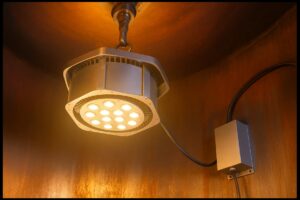
Lumen maintenance is one of the most critical performance indicators for high-temperature LED lighting. In standard applications, metrics such as L70 or L80 are often sufficient to describe expected lifetime. However, in extreme heat environments, these metrics must be reinterpreted through the lens of elevated junction temperatures and accelerated aging.
High temperatures accelerate lumen depreciation by increasing non-radiative recombination within the LED chip and accelerating material degradation. As a result, LED systems not specifically engineered for heat may experience rapid brightness loss, even if they remain electrically functional.
High-temperature LED fixtures address this challenge through optimized thermal management and conservative drive currents. Rather than prioritizing maximum initial efficacy, these systems are designed to maintain stable, usable light output over long durations. In industrial settings, consistent illumination is often more valuable than peak lumen output, particularly where safety and visual clarity are paramount.
Color stability presents a parallel challenge. Elevated temperatures accelerate phosphor aging, leading to color shift, reduced color rendering, and spectral imbalance. In environments such as foundries or glass plants, poor color consistency can impair visual judgment and increase safety risks.
High-temperature LED systems mitigate these effects through advanced phosphor formulations, precise thermal control, and optical designs that minimize localized overheating. The result is consistent color performance throughout the fixture’s service life, supporting both operational safety and process accuracy.
Reliability in extreme heat cannot be assumed—it must be proven through rigorous testing and validation. High-temperature LED fixtures undergo testing protocols that far exceed standard industry requirements, reflecting the severity of their intended operating environments.
Accelerated Life Testing (ALT) is a cornerstone of this process. Fixtures are operated continuously at elevated temperatures for extended periods, allowing engineers to identify failure modes and degradation patterns in a compressed timeframe. Thermal cycling tests simulate repeated heating and cooling, exposing weaknesses in materials, solder joints, and mechanical assemblies.
Thermal shock testing further challenges the system by subjecting it to rapid temperature changes, ensuring that expansion and contraction do not compromise structural or electrical integrity. These tests are particularly important for fixtures installed near furnaces, kilns, or batch processing equipment where temperature fluctuations are common.
Laboratory testing is complemented by real-world field validation. Deployments in foundries, glass factories, and industrial ovens provide invaluable long-term performance data under authentic operating conditions. Feedback from these installations informs iterative design improvements and validates theoretical lifetime models.
Only through this combination of laboratory rigor and field experience can manufacturers confidently claim long-term reliability in extreme heat environments.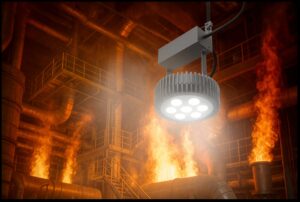
A steel processing facility operating with sustained ambient temperatures approaching 150°C faced chronic lighting failures. Traditional HID fixtures required frequent relamping, exposing maintenance personnel to hazardous conditions and causing repeated production interruptions. Attempts to replace HID systems with standard industrial LEDs resulted in rapid driver failures and unacceptable lumen depreciation.
A high-temperature LED solution engineered for continuous operation at 150°C was implemented. The system featured passive thermal management, high-temperature-rated electronics, and thermally isolated subsystems. Drivers were remotely mounted to reduce thermal stress, while the LED heads were designed to withstand direct exposure to extreme heat.
Over several years of operation, the facility observed a dramatic reduction in maintenance interventions. Light output remained stable, color performance was consistent, and fixture failures were virtually eliminated. The improved lighting quality enhanced worker safety and visibility, while reduced downtime delivered measurable operational savings.
This case demonstrates that long life in extreme heat is not theoretical—it is achievable through purpose-built engineering and validated system design.
In extreme heat environments, total cost of ownership (TCO) is dominated not by purchase price but by maintenance, downtime, and safety considerations. Every lighting failure carries a compounded cost: labor, equipment shutdowns, safety risks, and lost productivity.
High-temperature LED fixtures significantly reduce these costs by extending service intervals and minimizing unplanned maintenance. In environments where access is difficult or hazardous, fewer interventions translate directly into lower operational risk and expense.
While high-temperature LED systems may have a higher initial cost than standard industrial fixtures, their long service life delivers superior long-term value. Reduced replacement frequency, stable performance, and predictable maintenance schedules result in lower lifetime costs and improved return on investment.
Energy efficiency remains important, but in extreme heat, reliability often outweighs marginal gains in efficacy. A slightly less efficient fixture that operates reliably for years is far more economical than a high-efficacy system that fails prematurely.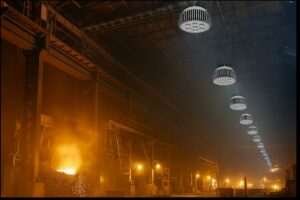
High-temperature LED lighting is essential in industries where heat is inherent to the process. Metal smelting and foundries expose fixtures to radiant heat, airborne contaminants, and thermal cycling. Glass manufacturing involves furnaces and lehrs operating at extreme temperatures for continuous production cycles.
Ceramic kilns, industrial ovens, and curing chambers present similar challenges, requiring lighting that can withstand prolonged exposure without degradation. Power generation facilities and military installations also demand lighting systems capable of operating reliably under harsh thermal and environmental conditions.
In these applications, lighting failure is not merely inconvenient—it can compromise safety, quality, and operational continuity. High-temperature LED reliability is therefore not optional but mission-critical.
The future of high-temperature LED lighting lies in continued advances in materials science, electronics, and system intelligence. Emerging high-temperature semiconductors, ceramic substrates, and advanced thermal interface materials promise further improvements in heat tolerance and longevity.
Smart monitoring technologies are also gaining traction. Integrated temperature sensors, real-time performance diagnostics, and predictive maintenance algorithms will allow operators to monitor fixture health and anticipate issues before failures occur.
As industrial processes evolve and operating temperatures increase, high-temperature LED systems will continue to expand their role. Future designs may exceed current temperature limits while delivering even greater reliability, efficiency, and integration with Industry 4.0 infrastructure.
Extreme heat exposes every weakness in a lighting system. Only through system-level engineering, rigorous testing, and a focus on long-term reliability can LED lighting succeed in these environments.
High-temperature LED fixtures represent a specialized but essential category of industrial lighting—one where long life is not just a specification, but a proven engineering outcome.
–The End–