
In industrial and commercial environments where temperatures soar and operations never pause, lighting is more than a convenience—it’s a critical component of safety, productivity, and operational efficiency. From foundries pouring molten steel to commercial kitchens running 24/7, these environments push lighting systems to their limits. Traditional lighting technologies such as incandescent, halogen, or fluorescent bulbs often fail quickly under continuous high-heat exposure, leading to reduced illumination, frequent maintenance, and even operational hazards.
LEDs, known for their energy efficiency and long lifespan, are widely regarded as a superior lighting solution. However, even standard LEDs are vulnerable to thermal stress. Without proper thermal management, prolonged exposure to high temperatures can lead to significant performance degradation, color shift, and shortened lifespan.
This article explores the emerging class of high-heat-resistant LED lighting, designed specifically for continuous operation in extreme temperature environments. We will examine the science behind LED heat sensitivity, the design innovations that make some LEDs more resilient, and practical strategies for selecting and maintaining lighting solutions that endure under heat stress.
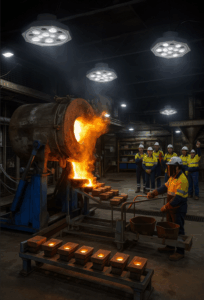
While LEDs are celebrated for their efficiency, they are not immune to the effects of heat. In simple terms, excess heat acts as a silent enemy to LED performance. The semiconductor diodes inside an LED produce light efficiently, but they also generate heat in the process. If this heat is not properly managed, it accumulates, causing the LED junction temperature—the temperature at the core of the diode—to rise.
High junction temperatures accelerate lumen depreciation, meaning the light output diminishes over time. For instance, studies indicate that standard LEDs operating continuously at 60°C can lose as much as 30% of their brightness within a few months. Color quality is also affected; LEDs may shift from pure white to a warmer or bluish hue, impacting visual clarity and consistency. In extreme cases, thermal stress can cause permanent failure of the LED driver or the diode itself, rendering the lighting system useless.
Poor lighting in industrial and commercial settings is more than an inconvenience—it is a safety risk. In high-heat environments, workers already contend with heat-related fatigue, making visibility even more critical. Insufficient or inconsistent lighting increases the likelihood of accidents, from slips and trips to misoperation of machinery.
Operational efficiency is also compromised when lighting fails frequently. For instance, in a steel foundry, replacing incandescent or low-grade LED fixtures requires workers to halt operations and navigate potentially dangerous areas, costing hours of lost productivity. The cumulative cost of frequent replacements—both in terms of labor and parts—can far outweigh the upfront investment in durable, heat-resistant lighting.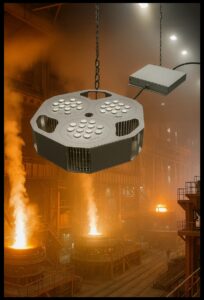
High-heat-resistant LEDs are engineered specifically to thrive in conditions that would cripple standard lighting solutions. Their performance relies on a combination of materials, thermal management designs, and innovative control systems.
One of the most critical aspects of high-heat LED performance is heat dissipation. Unlike conventional LEDs, which rely on basic aluminum housings or passive cooling, high-heat LEDs incorporate sophisticated thermal management systems.
These designs often include:
For example, in a glass manufacturing plant where furnace temperatures regularly exceed 70°C, LEDs with these features can maintain consistent brightness for years, whereas standard LEDs may fail within months.
In addition to effective heat dissipation, high-heat LED fixtures use components specifically rated for elevated temperatures. This includes:
These components collectively ensure that the fixture maintains both structural integrity and optical performance, even under continuous stress.
High-heat operations often coincide with harsh environmental factors such as dust, moisture, or chemical exposure. To protect LEDs under such conditions, many fixtures feature IP-rated enclosures (Ingress Protection), ensuring resistance to particles and water. Some advanced designs also integrate shock-resistant housings, which are crucial in industrial settings with vibrating machinery or heavy equipment.
Some high-heat LED systems incorporate intelligent thermal management, using sensors and control circuits to dynamically adjust light output in response to rising temperatures. For instance, if the junction temperature reaches a critical threshold, the LED driver can slightly reduce current, preventing permanent damage without significantly compromising illumination. This proactive approach extends lifespan and enhances reliability in demanding conditions.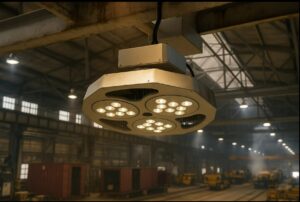
Longevity is perhaps the most compelling advantage of high-heat LEDs. While standard LEDs may last 25,000–50,000 hours under ideal conditions, high-heat LEDs can maintain consistent performance for up to 100,000 hours in extreme environments.
Consider a commercial bakery operating ovens at 250°C: a standard LED fixture may degrade within a few months, whereas a high-heat-rated LED designed with ceramic PCBs and advanced thermal dissipation can last several years, providing uninterrupted illumination without costly replacements.
Maintaining consistent brightness is essential for safety and efficiency. High-heat LEDs are engineered to minimize lumen depreciation, even under prolonged thermal stress. A study by the U.S. Department of Energy found that high-quality heat-resistant LEDs retained over 90% of their initial brightness after 20,000 hours of continuous operation in elevated temperatures, compared to 70% for standard LEDs.
High-heat LED fixtures offer significant energy savings. By converting more electricity into light rather than heat, they outperform halogen or metal-halide lamps, which generate excessive heat as a byproduct. For example, replacing 1,000-watt halogen fixtures with 200-watt high-heat LEDs in a steel workshop can reduce energy consumption by up to 80%, with an added bonus of lower cooling costs in already heat-intensive environments.
Maintenance in high-heat settings is challenging and expensive. Frequent bulb replacement interrupts operations and introduces safety risks. By deploying heat-resistant LEDs, businesses reduce maintenance frequency and labor costs. Some industrial operators report a 50–70% reduction in annual lighting maintenance expenses after transitioning to high-heat LEDs.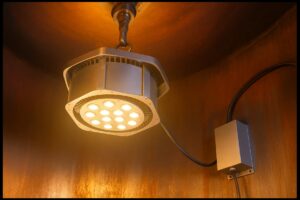
Industries such as steel production, glass manufacturing, and metal foundries are among the most demanding for lighting. Furnaces, molten metal, and high-temperature processes routinely expose fixtures to extreme heat. High-heat LEDs with robust thermal management provide consistent illumination for work areas, conveyors, and inspection points, improving both safety and operational efficiency.
Large-scale commercial kitchens operate ovens, fryers, and steamers continuously. Standard LEDs or fluorescent lights often fail quickly due to heat and humidity. Heat-resistant LED fixtures, with IP-rated housings and high-temperature components, ensure chefs and staff have reliable illumination at all times, reducing downtime and improving food safety standards.
Heat-resistant LEDs are also valuable in harsh outdoor settings, such as oil refineries, desert installations, and sun-exposed facilities. High ambient temperatures combined with UV exposure can degrade conventional lighting. Heat-tolerant LEDs maintain brightness, color consistency, and energy efficiency, providing reliable illumination regardless of weather or temperature extremes.
Choosing the proper LED for high-heat applications requires careful evaluation. Factors to consider include:
By considering these factors, businesses can select fixtures that not only survive but thrive in high-heat operations, ensuring maximum return on investment.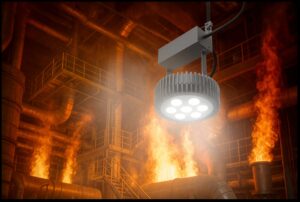
Even the most robust high-heat LEDs require proper installation and maintenance for optimal performance:
Following these practices prolongs LED lifespan, maintains illumination quality, and safeguards workers.
In environments where heat is relentless and operations never stop, lighting must be more than functional—it must endure. High-heat-resistant LEDs offer a compelling solution, combining longevity, consistent performance, energy efficiency, and reduced maintenance costs. By investing in these advanced lighting systems, industrial and commercial operators enhance safety, improve operational efficiency, and achieve significant long-term cost savings.
As LED technology continues to evolve, the potential for high-performance, heat-resistant lighting grows, making it an essential consideration for any high-heat operation. Businesses that prioritize quality lighting in extreme conditions position themselves for safer, more productive, and more efficient operations in the long run.
–The End–