
Industrial environments that operate at elevated temperatures present a unique challenge to conventional lighting solutions. In settings such as foundries, glass kilns, and large-scale baking facilities, lighting systems are subjected to continuous thermal stress, which accelerates material degradation, reduces luminous efficiency, and ultimately compromises operational safety. Reliable illumination in these contexts is not merely a matter of convenience but a critical factor in ensuring worker safety, regulatory compliance, and uninterrupted production.
High-temperature-resistant LED lighting represents a technological advancement specifically engineered to address these challenges. Unlike standard lighting fixtures, which are prone to thermal breakdown or premature failure under extreme heat, industrial-grade high-temperature LEDs maintain optimal performance, providing consistent luminance and operational reliability over prolonged exposure to harsh environments. These solutions integrate robust materials, advanced thermal management systems, and energy-efficient designs to deliver long-term durability.
This article delves into the nature of extreme industrial heat environments, the limitations of standard lighting, and the technological innovations behind high-temperature-resistant LED systems. By exploring real-world applications, material engineering strategies, and operational benefits, industrial stakeholders can better understand how to select and deploy lighting systems that withstand the most demanding conditions, ensuring both productivity and safety in high-heat operations.
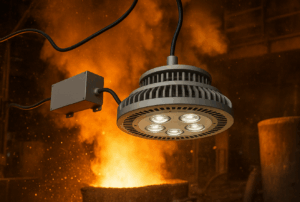
High-heat industrial environments encompass a variety of sectors where elevated temperatures are an inherent part of production processes. Foundries, for instance, operate furnaces at temperatures exceeding 1,200°C to melt and mold metals, creating an ambient environment of intense radiant heat. Glass manufacturing facilities face similar thermal challenges, as molten glass can reach temperatures above 1,500°C, producing high levels of radiant and convective heat that can degrade ordinary lighting systems.
Ceramic and tile kilns also present demanding conditions; repeated firing cycles generate peak temperatures up to 1,300°C, accompanied by rapid thermal fluctuations that induce stress on lighting components. Industrial baking and curing chambers, though operating at comparatively lower temperatures, often maintain constant high-heat environments that exceed the thermal limits of conventional LEDs, particularly in confined spaces with limited airflow. Each of these environments presents a combination of radiant heat, convection currents, and sometimes chemical emissions that challenge the structural integrity of lighting systems.
Understanding the specific thermal profiles of these environments is crucial for selecting appropriate high-temperature LED lighting. Engineers must consider not only peak temperatures but also the duration of exposure, frequency of thermal cycling, and proximity of fixtures to heat sources. Failure to account for these parameters can result in reduced luminous efficacy, material deformation, and safety hazards, underscoring the necessity of specialized thermal-resistant lighting solutions designed for extreme industrial conditions.
In extreme industrial settings, temperatures can fluctuate drastically depending on process stage and proximity to heat sources. For instance, metal casting and glass melting operations generate localized temperatures exceeding 1,200–1,500°C near furnaces, while ambient workspace temperatures may range from 50°C to 90°C, still significantly higher than what standard lighting can withstand. These conditions expose lighting fixtures to both direct radiant heat and ambient thermal stress, leading to accelerated degradation of materials such as plastic housings, lens coatings, and electronic components.
Heat exposure also accelerates chemical and physical reactions within LEDs, including oxidation of metallic components, softening of polymeric parts, and thermal stress on solder joints and wiring. In environments like industrial baking chambers, sustained temperatures of 90–200°C can slowly degrade light output over time, causing flickering or complete fixture failure if standard LEDs are employed. Additionally, high-heat industrial zones often involve dust, smoke, and chemical vapors, which exacerbate thermal stress and contribute to coating discoloration or corrosion, further reducing efficiency and lifespan.
Properly engineered high-temperature LEDs are designed to tolerate these conditions through materials with high thermal thresholds, heat-dissipating designs, and sealed housings resistant to particulate and chemical intrusion. Understanding the environmental parameters allows engineers to calculate required thermal resistance, lifespan expectations, and maintenance schedules, ensuring that lighting solutions remain both safe and cost-effective in extreme heat applications.
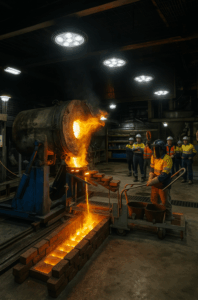
Conventional LEDs and fluorescent lamps are typically rated for ambient temperatures ranging between 25°C and 50°C, which is far below the conditions encountered in industrial heat-intensive operations. When exposed to elevated temperatures, the semiconductor materials within LEDs can experience electron migration and thermal runaway, resulting in significant luminous flux reduction and color shifts. Fluorescent lamps, in contrast, are highly sensitive to heat-induced chemical degradation of phosphors and gas mixtures, often leading to early burnouts and frequent replacements.
The rapid degradation of standard lighting under thermal stress has both safety and financial implications. As luminance diminishes, worker visibility is compromised, increasing the risk of accidents near heavy machinery or molten materials. Maintenance frequency escalates, requiring more labor and operational interruptions. Moreover, the replacement of lamps in high-heat areas often involves specialized equipment or shutdown periods, amplifying costs and disrupting production schedules.
Standard lighting systems also suffer from material fatigue when exposed to heat cycles. Plastic components may warp or discolor, metal parts may expand or corrode, and solder joints within LED assemblies may fracture. These cumulative failures undermine both safety and operational reliability, demonstrating that traditional lighting solutions are ill-suited for extreme industrial heat applications.
One of the most critical issues with using standard lighting in high-heat industrial environments is the risk of overheating. Excessive thermal load can cause LED junction temperatures to rise above safe operating limits, triggering thermal shutdown mechanisms or, in worst-case scenarios, permanent fixture damage. Fluorescent lamps may flicker, or fail to ignite entirely, disrupting workflow and creating safety hazards.
Flickering is not merely a visual nuisance; it can cause eye strain, headaches, and reduced cognitive performance among workers, particularly in precision-driven tasks such as metal fabrication or chemical processing. Repeated fixture failure increases downtime and requires additional labor to replace or repair lighting, which may necessitate temporarily halting production in critical areas.
Furthermore, overheating can compromise the structural integrity of fixtures, including mounting hardware, lenses, and housings. In environments with chemical exposure, high temperatures can accelerate corrosion or discoloration, further reducing fixture reliability. These challenges underscore the necessity of purpose-built, heat-resistant lighting systems that maintain consistent output, protect electronic components, and provide long-term durability in industrial heat conditions.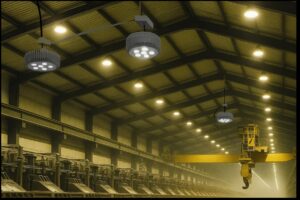
The cumulative effects of thermal stress on conventional lighting directly impact operational efficiency and profitability. High-frequency replacement of burned-out or degraded fixtures incurs both direct costs (materials and labor) and indirect costs (production interruptions, safety risks, and diminished workforce productivity). In industries such as metal smelting or glass manufacturing, even a short period of downtime can result in significant financial losses due to halted production or defective product batches.
Maintenance interventions in high-heat environments are often complex and hazardous. Technicians must navigate elevated ambient temperatures, molten surfaces, or confined spaces, often requiring specialized protective gear and safety protocols. This complexity increases labor costs and operational risk, making standard lighting systems economically and practically inefficient in extreme industrial applications.
By contrast, high-temperature-resistant LED systems offer prolonged operational lifespan, significantly reducing maintenance frequency and associated costs. Their advanced materials and thermal management features ensure reliable light output, even under sustained thermal load, providing both safety and economic advantages for industrial operators.
High-temperature LED solutions are specifically engineered to withstand ambient and radiant heat far beyond standard operating ranges. These fixtures are rated for thermal endurance levels from 90°C to over 200°C, allowing deployment in proximity to furnaces, kilns, and other extreme heat sources. Thermal rating is achieved through careful selection of heat-tolerant semiconductors, solder alloys, and substrate materials that resist thermal expansion and electron migration at elevated temperatures.
Advanced high-heat LED designs incorporate junction-level thermal management, ensuring that heat generated at the semiconductor level is efficiently conducted away from sensitive components. This prevents overheating, preserves luminous efficiency, and maintains color stability over time. In applications such as foundries or metal forging plants, where ambient temperatures can approach 80–90°C, these fixtures operate continuously without degradation, unlike standard LEDs that would fail under similar conditions.
Thermal resistance also encompasses the fixture’s structural integrity. Heat-resistant housings, often constructed from aluminum alloys or thermally stable composites, dissipate heat rapidly while protecting internal electronics. Lenses and optical coatings are designed to resist thermal discoloration or warping, ensuring that light output remains uniform and reliable across the operational lifespan. These features collectively enable industrial facilities to maintain consistent illumination under extreme heat, improving both productivity and safety.
Durability in high-temperature LED lighting relies heavily on material science. Fixture housings are typically fabricated from high-grade aluminum or stainless steel, providing structural strength, corrosion resistance, and efficient thermal conductivity. Lenses and diffusers are made from high-temperature polycarbonate, borosilicate glass, or silicone, which can withstand thermal stress without cracking or yellowing, preserving optical clarity and lumen output.
Electronic circuits are equally critical. Components such as capacitors, resistors, and solder joints are selected for their ability to maintain performance under thermal cycling and high ambient temperatures. Conformal coatings or encapsulation may be applied to protect circuit boards from dust, moisture, and chemical vapors, which are often present in industrial settings. By using thermally robust and chemically resistant materials, these fixtures can survive harsh environments for years, significantly reducing maintenance frequency and extending operational lifespan.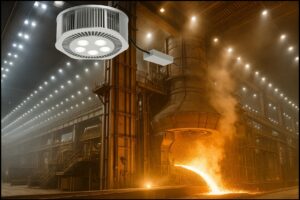
Thermal management is a cornerstone of high-heat LED technology. Passive cooling strategies include heat sinks, fin designs, and thermally conductive substrates that naturally dissipate heat away from the semiconductor. Active cooling mechanisms, such as fans or liquid cooling systems, are used in extreme applications where passive solutions are insufficient. By maintaining optimal junction temperatures, these cooling methods prevent thermal runaway, preserve luminous efficacy, and ensure fixture longevity.
Cooling systems are often designed to operate without introducing additional maintenance burdens. Passive systems, in particular, leverage natural convection and surface area optimization to reduce reliance on moving parts, enhancing reliability in dusty or chemical-laden environments. Properly engineered cooling ensures that even fixtures exposed to radiant heat from furnaces or high-temperature machinery maintain stable light output, reducing operational interruptions and supporting continuous industrial processes.
A key advantage of high-temperature LEDs is their ability to maintain high luminous efficacy under thermal stress. Standard LEDs lose efficiency as junction temperatures rise, but high-heat variants incorporate materials, phosphors, and thermal designs that stabilize light output even in extreme environments. Lumen maintenance ensures that illumination levels remain sufficient for safe and efficient operation, eliminating the need for over-specification or frequent replacement.
Energy efficiency also contributes to operational cost reduction. High-heat LEDs consume less power than traditional incandescent or fluorescent lighting while delivering equivalent or superior illumination, reducing energy expenditure in energy-intensive industrial facilities. This efficiency, combined with long operational lifespans, results in a favorable total cost of ownership, making high-heat LED lighting both technologically superior and economically advantageous.
High-temperature LEDs are engineered for durability, with lifespans often exceeding 50,000 operational hours even in extreme thermal environments. Reduced degradation rates minimize maintenance interventions, eliminating frequent fixture replacements that disrupt industrial processes. Extended service life also ensures consistent illumination quality, critical for precision-dependent operations such as casting, molding, or high-temperature chemical processing.
Longevity is achieved through a combination of thermal management, material selection, and robust electronic design. By maintaining operational stability under continuous heat exposure, these fixtures deliver reliable performance, contributing to both workplace safety and operational efficiency. For industrial operators, investing in high-temperature LED lighting translates into measurable cost savings, reduced labor requirements, and enhanced reliability over traditional lighting solutions.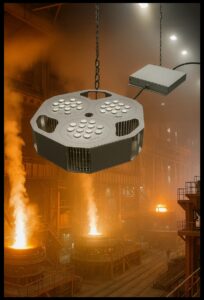
High-temperature LED lighting has been successfully deployed across a wide range of industrial settings. In metal smelting facilities, these fixtures illuminate molten furnaces and casting lines without degradation, providing clear visibility for workers in high-risk zones. Glass manufacturing plants leverage high-heat LEDs near molten glass production, where conventional lighting would fail, ensuring consistent illumination for inspection and handling operations.
Ceramic and tile kilns utilize heat-resistant LEDs to monitor firing processes, maintain quality control, and prevent accidents caused by inadequate lighting. Industrial baking and curing chambers also benefit from these solutions, enabling uniform lighting without affecting temperature-sensitive processes. In all cases, high-heat LEDs provide reliable, long-term illumination, eliminating the operational interruptions and safety risks associated with standard lighting systems.
Industries where thermal stress is a constant operational factor derive significant benefits from high-heat LED lighting. These include:
In these sectors, the combination of high ambient temperatures, radiant heat exposure, and critical safety requirements makes standard lighting solutions impractical. High-temperature LEDs enable reliable illumination, contributing to enhanced worker safety, process efficiency, and reduced maintenance costs.
High-heat LED lighting also supports compliance with industrial safety standards and regulations. Adequate illumination is essential for OSHA, NFPA, and ISO compliance, ensuring that workspaces remain safe and visually accessible even under extreme thermal conditions. By providing consistent, high-quality light, these fixtures reduce the likelihood of accidents, enhance worker visibility, and facilitate proper monitoring of high-temperature operations.
The durability and reliability of high-temperature LEDs also mitigate fire and electrical risks associated with overheating or fixture failure. By integrating robust material design, thermal management, and protective housings, these systems maintain operational safety in environments where ordinary lighting may pose hazards.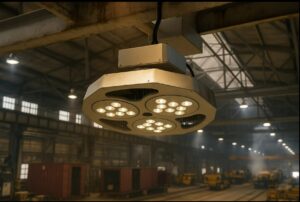
Selecting the correct high-temperature LED requires a thorough understanding of the thermal profile, ambient conditions, and operational demands of the facility. Temperature ratings must match or exceed peak operational temperatures, while housing materials and lenses should resist warping, discoloration, and chemical exposure. Lumen output, beam angle, and color rendering must meet operational and safety standards, ensuring adequate illumination for task-specific requirements.
Critical parameters include:
These factors collectively determine fixture suitability and long-term reliability in extreme heat applications.
High-temperature LED solutions often offer customizable features, including adjustable thermal resistance, specialized lenses for glare reduction, and modular mounting systems. Customization allows engineers to optimize lighting for specific workflows, machine layouts, and safety requirements, ensuring that the system performs reliably in both localized high-heat zones and broader industrial areas.
High-temperature LED lighting provides measurable economic advantages. By reducing maintenance frequency, minimizing downtime, and lowering energy consumption, industrial facilities realize substantial operational savings. Reliable lighting enhances productivity, supports quality control, and reduces safety incidents, directly impacting the facility’s bottom line.
Investing in robust, heat-resistant LED systems delivers both immediate and long-term returns, improving energy efficiency, worker safety, and production reliability. The combination of technological innovation and economic advantage makes these systems an essential component of modern high-heat industrial operations.
Extreme industrial heat presents significant challenges for conventional lighting, from rapid material degradation to frequent failures and maintenance costs. High-temperature-resistant LED lighting overcomes these challenges through thermal management, durable materials, energy efficiency, and long operational lifespans.
By understanding environmental conditions, matching LED specifications, and leveraging advanced industrial lighting solutions, operators can ensure reliable illumination, enhance workplace safety, and reduce operational costs. High-temperature LEDs represent a vital technological solution for industrial facilities seeking durability, efficiency, and long-term performance in high-heat environments.
–The End–