In industrial operations, reliable lighting is more than an amenity—it is a lifeline. From ensuring worker safety to supporting high-precision production processes, the right illumination is indispensable. In challenging environments such as pulp and paper mills, electroplating facilities, wastewater treatment plants, and chemical refineries, lighting systems must contend with two persistent adversaries: humidity and acidic conditions.
High humidity accelerates the risk of condensation inside fixtures, corrodes electrical contacts, and encourages microbial growth. Acidic vapors and aerosols, often unavoidable in certain work environments, can degrade metals, cloud lenses, and rapidly shorten the lifespan of conventional luminaires. When these two factors converge, they create a hostile environment for any electrical equipment—particularly lighting systems that must function continuously, often with limited opportunities for maintenance.
The evolution of LED technology has transformed the industrial lighting landscape. LEDs not only provide energy efficiency and long service life but also open new opportunities for creating robust, sealed, and corrosion-proof luminaires capable of thriving where traditional lighting technologies failed. However, leveraging these advantages requires a comprehensive understanding of engineering design, materials science, and system integration specific to high-humidity and acidic workplaces.
This article explores the core challenges of lighting in these environments, presents engineering solutions that combat corrosion and moisture ingress, showcases real-world applications, and highlights the economic, safety, and sustainability benefits of adopting advanced anti-corrosion LED systems.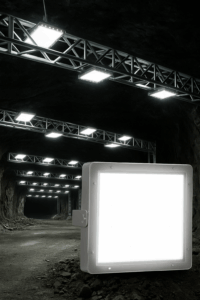
The Impact of High Humidity
Humidity is a ubiquitous challenge in many industrial sites. When relative humidity levels approach or exceed 80–90%, moisture ingress into lighting systems becomes a near certainty unless proper protection is employed. Problems include:
Industries affected: pulp and paper plants (steam-laden environments), food processing (washdown facilities), and wastewater treatment (near-constant exposure to moisture).
The Effects of Acidic and Corrosive Gases
Acidic vapors—such as hydrochloric acid, sulfur dioxide, or hydrogen sulfide—attack metals and polymers alike. The result is accelerated corrosion, pitting, and structural weakening.
Industries most affected: electroplating facilities, galvanizing operations, chemical refineries, pharmaceutical labs, and desalination plants.
Combined Stress Factors
The combination of high humidity and acidic vapors creates a synergistic corrosion environment: humidity acts as the medium that accelerates chemical reactions, while acids provide the aggressive agents that attack fixture surfaces and electronics. Without robust countermeasures, fixture lifespans can shrink from years to mere months.
To survive in high-humidity and acidic worksites, luminaires must be purpose-built with multiple layers of defense.
Ingress Protection (IP) Ratings
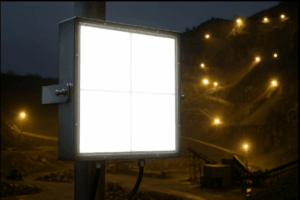
Ingress Protection (IP) ratings measure resistance to dust and water ingress. While IP65 or IP66 may suffice in moderately harsh conditions, IP69 is the gold standard for humid, acidic worksites.
Corrosion-Resistant Materials
Material selection is critical:
Sealants and Gasketing
Silicone gaskets, fluorocarbon seals (e.g., Viton), and advanced epoxy encapsulants ensure long-term durability. Gaskets must withstand repeated thermal cycles without losing elasticity.
Thermal Management
Heat exacerbates corrosion. LEDs produce less heat than traditional lamps, but robust heat sinks are still essential. Materials with both thermal conductivity and corrosion resistance—such as anodized aluminum with protective coatings—are ideal.
Electronics Protection
Moisture-sensitive components require extra safeguards:
Energy Efficiency and Reduced Heat Load
LEDs deliver luminous efficacies of 150–200 lm/W, dramatically reducing energy consumption compared to high-pressure sodium (HPS) or metal halide lamps. Lower power input means reduced heat generation, which lessens stress on seals and materials.
Mechanical Durability
Unlike fluorescent tubes or HID lamps, LEDs are solid-state devices. With no fragile filaments or pressurized gases, they withstand vibration, shock, and thermal cycling far better.
Longevity and Reduced Maintenance
In facilities where accessing fixtures for replacement requires scaffolding, cranes, or full plant shutdowns, longevity is critical. LED lifetimes of 50,000–100,000 hours reduce maintenance cycles dramatically.
Optical and Color Flexibility
LEDs allow tunable CCT (1800–7200K), enabling both safety lighting (higher CCT for alertness) and specialized task lighting (warmer tones to reduce glare). In humid, corrosive environments, controlled optics ensure light reaches critical areas despite vapor and steam.
Smart Controls and Dimming
Integration with sensors allows adaptive lighting: dimming during low-activity periods, daylight harvesting, and predictive maintenance monitoring—all contributing to efficiency and reliability.
Case 1: Paper Mill Facility
Case 2: Electroplating Shop
Case 3: Wastewater Treatment Plant
Case 4: Desalination Facility
Layout Strategies
Mounting Considerations
Fixtures must be positioned to minimize direct contact with acidic splashes or high-concentration vapors. Elevated mounting and angled housings improve drainage and prevent residue buildup.
Maintenance Strategies
Compliance and Safety Standards
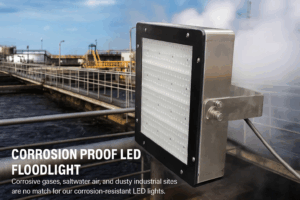
Reduced Downtime
Fixtures designed for high-humidity and acidic environments eliminate frequent breakdowns, avoiding production halts and costly emergency replacements.
Lower Maintenance Costs
Fewer replacements and less frequent cleaning cycles directly reduce operational expenditure.
Improved Worker Safety
Reliable illumination prevents accidents in wet, slippery, and chemical-laden environments. Clear lighting also supports compliance with occupational safety regulations.
Sustainability and Energy Efficiency
High-efficacy LEDs contribute to sustainability goals by reducing energy consumption and associated carbon emissions. Longer fixture lifespans mean less waste generated from replacements.
Smart Lighting and IoT Integration
Predictive analytics will allow fixtures to signal when seals are degrading or lumen output is declining, enabling proactive maintenance.
Advanced Coatings and Nanotechnology
Next-generation anti-corrosion coatings, including graphene-based layers and self-healing polymers, promise extended protection against acidic vapors.
Customizable Optics
As industrial facilities adopt automation, tailored optics will ensure machine-vision systems and workers both have optimal illumination.
Renewable Integration
Solar-powered LED solutions with battery backup will expand adoption in remote facilities where corrosion and humidity are prevalent.
Lighting in high-humidity and acidic worksites demands a unique combination of robust engineering, corrosion-resistant materials, advanced sealing technologies, and smart system integration. Traditional luminaires cannot withstand these punishing environments, but modern LED systems—purpose-built with IP69 protection, marine-grade materials, and intelligent controls—offer a durable and efficient solution.
By investing in specialized lighting, facilities across pulp and paper, electroplating, wastewater treatment, desalination, and chemical production not only safeguard worker safety but also achieve significant cost savings and operational efficiency. More importantly, they future-proof their infrastructure against the escalating demands of modern industry.
Lighting, in these contexts, is no longer just about visibility—it is about safety, productivity, and resilience.
–The end–