
Industrial environments often place extraordinary demands on lighting infrastructure. Facilities such as steel plants, glass manufacturing lines, and heavy processing factories operate under conditions where elevated temperatures, airborne contaminants, vibration, and continuous operations create a highly challenging environment for conventional lighting systems. In these situations, lighting fixtures are expected to perform not only as illumination devices but also as durable industrial equipment capable of withstanding prolonged exposure to extreme thermal stress.
Traditional lighting technologies—including metal halide (MH), high-pressure sodium (HPS), and conventional fluorescent systems—were not originally designed to function efficiently in environments where ambient temperatures can exceed 60 °C. When exposed to excessive heat, their internal components degrade rapidly, leading to reduced luminous output, shortened operational lifespan, and increased failure rates. These failures often result in frequent maintenance interventions and operational disruptions, which can significantly increase operating costs for industrial facilities.
Reliable illumination is a critical factor in maintaining both productivity and workplace safety. In heavy industry, adequate lighting supports precise operations, improves worker visibility, and reduces the likelihood of accidents. When lighting systems fail unexpectedly, production lines may be forced to slow down or shut down, affecting overall operational efficiency.
To address these challenges, modern industrial facilities increasingly rely on high-temperature LED lighting solutions engineered specifically for extreme environments. These systems incorporate advanced thermal management technologies, industrial-grade electronic components, and durable materials designed to maintain stable performance even in high-heat conditions. By combining energy efficiency with exceptional durability, high-temperature LED lighting has become a key component in modern industrial infrastructure.
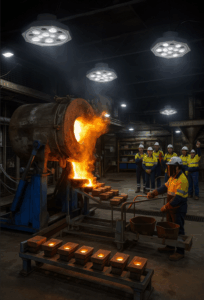
High-temperature environments are common across a wide range of industrial sectors where production processes generate significant heat as a byproduct of manufacturing operations. Steel mills, for example, operate large furnaces and continuous casting equipment that produce extreme radiant heat. Lighting fixtures installed in these areas must remain operational despite constant exposure to elevated temperatures and metallic dust.
Foundries present similar challenges. Molten metal casting processes release intense heat and generate airborne particulates that can infiltrate conventional lighting systems. Fixtures installed in these environments must resist both high thermal loads and contamination from dust and fumes.
Glass manufacturing plants represent another demanding application. Glass melting furnaces operate continuously at extremely high temperatures, and the surrounding environment often maintains elevated ambient heat levels. Lighting systems must maintain stable performance over long periods without degradation.
Power plants, cement factories, and petrochemical facilities also require specialized lighting solutions. Equipment such as turbines, kilns, and industrial reactors generate heat that can affect nearby electrical equipment. In these environments, lighting must remain reliable while withstanding temperature fluctuations, chemical exposure, and continuous operational demands.
These diverse industrial settings share a common requirement: lighting systems must be capable of delivering consistent performance under severe thermal conditions without compromising safety or efficiency.
Industrial lighting systems are exposed to multiple environmental stress factors beyond high temperature alone. One of the most significant challenges is prolonged exposure to elevated ambient temperatures, which can often reach or exceed 60–80 °C in certain areas of heavy industrial facilities.
In addition to heat, dust and airborne particles represent a major concern. Many industrial processes produce fine particulates that can accumulate on lighting fixtures or penetrate poorly sealed housings. Over time, this accumulation can affect thermal dissipation and optical performance.
Vibration is another common stress factor in industrial environments. Heavy machinery, motors, and production lines generate constant mechanical vibration that can gradually loosen internal components or damage electronic circuitry if fixtures are not designed with robust structural integrity.
Continuous operation also plays a significant role in lighting system durability. Many industrial facilities operate around the clock, meaning lighting fixtures must maintain stable performance during extended 24/7 operation cycles. Unlike commercial lighting systems that may experience regular off periods, industrial fixtures must dissipate heat continuously without overheating.
Electrical stress caused by voltage fluctuations or heavy load conditions can further challenge lighting systems. Without proper protection mechanisms, drivers and electronic components may fail prematurely under such conditions.
Understanding these environmental stress factors is essential for designing lighting systems capable of maintaining long-term reliability in demanding industrial settings.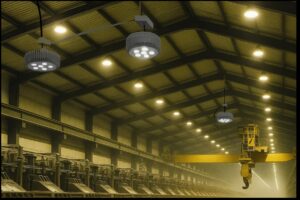
Excessive heat is one of the most destructive factors affecting lighting system longevity. In conventional lighting fixtures, elevated temperatures accelerate the degradation of critical internal components, particularly electronic drivers and LED modules.
LED drivers contain sensitive electronic circuits responsible for regulating current and voltage supplied to the LEDs. When exposed to high ambient temperatures, the internal components of the driver—including capacitors and semiconductors—experience accelerated aging. This often leads to reduced efficiency, instability, or complete driver failure.
LED chips themselves are also sensitive to excessive heat. Although LEDs are more efficient than traditional light sources, they still generate heat during operation. When ambient temperatures are already high, the additional thermal load can push the LED junction temperature beyond optimal operating limits. This results in lumen depreciation, meaning the light output gradually decreases over time.
Material deformation may also occur in poorly designed fixtures. Plastics and low-quality sealing materials can degrade or warp under high temperatures, compromising the structural integrity and protection level of the lighting fixture.
As thermal stress accelerates component degradation, the operational lifespan of standard lighting systems is significantly reduced. Fixtures that are rated for tens of thousands of hours under normal conditions may fail much earlier when exposed to high temperatures.
Frequent failures require regular maintenance interventions, which can become costly and time-consuming. In industrial facilities with high mounting heights or hazardous environments, replacing lighting fixtures may require specialized equipment or scheduled downtime.
Maintenance costs therefore extend beyond the price of replacement fixtures. Labor costs, equipment rental, and production interruptions all contribute to the total cost of maintaining unreliable lighting systems.
Over time, these expenses can far exceed the initial cost savings associated with lower-quality lighting solutions.
Lighting failures in industrial environments can pose significant safety risks. Poor illumination can reduce visibility in critical work areas, increasing the likelihood of accidents or operational errors.
Unexpected lighting outages may also interrupt production processes. In manufacturing facilities where precision and consistency are essential, insufficient lighting can compromise product quality or slow production speeds.
For facilities operating under strict safety regulations, maintaining adequate lighting levels is often a compliance requirement. Therefore, unreliable lighting systems not only affect operational efficiency but may also create regulatory concerns.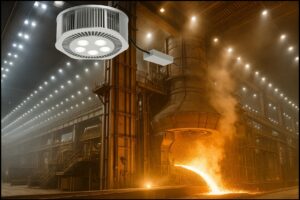
Effective thermal management is the foundation of high-temperature LED lighting design. Since LEDs generate heat during operation, the ability to dissipate this heat efficiently is essential for maintaining stable performance and extending fixture lifespan.
High-performance heat sinks are typically integrated into industrial LED luminaires. These heat sinks are often constructed from high-conductivity aluminum alloys that rapidly transfer heat away from the LED chips and driver components. The increased surface area of finned structures further enhances heat dissipation through natural convection.
In addition to structural heat sinks, advanced thermal conduction materials are often used between components to improve heat transfer efficiency. These materials help reduce thermal resistance between the LED module and the heat sink, ensuring that heat is effectively distributed and released.
Passive cooling structures are particularly valuable in industrial environments because they operate without moving parts. Unlike active cooling systems that rely on fans, passive designs eliminate mechanical failure points and require minimal maintenance.
The LED driver is one of the most critical components in any LED lighting system. In high-temperature environments, drivers must be specifically designed to withstand elevated thermal conditions while maintaining electrical stability.
Industrial-grade LED drivers typically incorporate high-temperature electronic components capable of operating reliably under extreme conditions. Capacitors with extended temperature ratings and robust circuit protection mechanisms are often used to enhance durability.
Isolation techniques may also be applied to protect sensitive electronic components from heat generated by surrounding equipment. Additionally, drivers often include protection features such as over-temperature protection, surge protection, and voltage stabilization.
These design elements ensure that the driver continues to deliver stable power to the LED modules even when ambient temperatures are significantly elevated.
The physical structure of an industrial lighting fixture must also be capable of withstanding high temperatures without degrading. Aluminum alloy housings are commonly used due to their excellent thermal conductivity and mechanical strength.
Specialized surface treatments and high-temperature coatings are often applied to protect the fixture from corrosion and environmental exposure. These coatings also help maintain structural integrity under thermal cycling conditions.
In many industrial facilities, lighting fixtures are exposed to chemical vapors, moisture, and airborne particles. Corrosion-resistant materials ensure that the fixture remains durable even in chemically aggressive environments.
Together, these material and structural considerations contribute to the long-term reliability of high-temperature lighting solutions.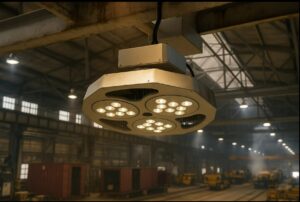
Modern industrial LED lighting systems achieve high luminous efficacy, typically ranging from 150 to 170 lumens per watt. This level of efficiency allows facilities to achieve high illumination levels while minimizing energy consumption.
Compared with traditional lighting technologies such as metal halide lamps, LED systems can deliver equivalent or greater brightness using significantly less electrical power. This reduction in energy consumption contributes directly to lower operating costs.
One of the most important advantages of LED lighting is its extended operational lifespan. Industrial LED fixtures are commonly rated for service lifetimes between 50,000 and 100,000 hours under appropriate operating conditions.
Even in high-temperature environments, well-designed LED systems can maintain stable performance for many years. This extended lifespan significantly reduces the frequency of maintenance interventions.
High-temperature LED lighting systems are engineered to maintain stable luminous output even when ambient temperatures rise significantly. Specialized thermal management designs allow these fixtures to operate reliably at temperatures approaching or exceeding 80 °C.
Resistance to vibration and mechanical stress is also a critical feature. Reinforced housings and secure internal mounting structures help prevent damage caused by continuous industrial vibrations.
Industrial lighting fixtures typically incorporate high ingress protection (IP) ratings to prevent dust and water from entering the enclosure. Ratings such as IP65 or IP66 indicate that the fixture is fully protected against dust and capable of withstanding water jets from multiple directions.
These protection levels ensure reliable operation in environments where dust, moisture, and debris are common.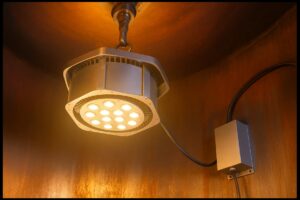
6.1 Steel Mills and Metal Processing Facilities
Steel production facilities operate some of the most thermally demanding environments in modern industry. Lighting fixtures installed near furnaces, rolling mills, and casting lines must withstand extreme radiant heat while maintaining consistent illumination.
High-temperature LED lighting provides reliable visibility for workers performing precision tasks such as inspection, cutting, and equipment maintenance.
6.2 Glass Manufacturing Plants
Glass production involves continuous high-temperature melting processes. Lighting fixtures installed in these facilities must operate reliably in environments where ambient temperatures remain elevated for extended periods.
Heat-resistant LED fixtures ensure consistent illumination across production areas without frequent failures.
6.3 Power Generation Facilities
Power plants contain a wide variety of high-temperature equipment including turbines, boilers, and generators. These installations require durable lighting systems capable of operating reliably in challenging conditions.
6.4 Cement Production Plants
Cement manufacturing processes involve large kilns and heavy industrial equipment that produce dust and heat. Lighting systems must resist both environmental contamination and thermal stress.
6.5 Petrochemical Refineries
Refineries operate under strict safety requirements and harsh environmental conditions. High-temperature LED lighting solutions provide stable illumination for inspection areas, processing equipment, and maintenance zones.
7.1 Reduced Power Consumption
LED lighting systems significantly reduce electricity consumption compared with traditional lighting technologies. Facilities replacing metal halide or high-pressure sodium lamps with LED systems often experience substantial energy savings.
7.2 Lower Maintenance Costs
Because LED fixtures operate for much longer periods without failure, maintenance cycles are greatly reduced. This decreases labor requirements and minimizes operational disruptions.
7.3 Total Cost of Ownership (TCO) Benefits
When energy savings and maintenance reductions are considered together, LED lighting solutions typically deliver a lower total cost of ownership over their operational lifespan.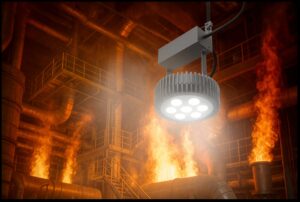
Designing an effective lighting solution for high-temperature industrial environments requires a systematic engineering approach rather than simple fixture replacement. Every industrial site presents unique structural characteristics, operational requirements, and environmental constraints. Therefore, selecting the correct lighting solution involves a detailed evaluation of the facility and careful planning of the lighting layout.
The first step in the design process is a comprehensive site evaluation. Engineers typically analyze the dimensions of the installation area, the mounting height of lighting fixtures, and the required illumination levels according to relevant industrial lighting standards. High-bay areas, production lines, and inspection zones often require different lighting levels. Understanding these requirements ensures that lighting systems provide adequate visibility while avoiding unnecessary energy consumption.
Lighting simulation software plays an important role in modern industrial lighting design. Through computer modeling, engineers can simulate how light will be distributed across the working area before installation. These simulations allow designers to determine the optimal fixture placement, beam angles, and power levels required to achieve uniform illumination. The use of simulation tools reduces the risk of dark spots, glare, or over-lighting within the facility.
Customized lighting layouts are particularly important in complex industrial environments where equipment layout, structural obstacles, and production workflows may affect light distribution. A properly designed layout ensures that lighting supports operational efficiency while minimizing energy waste.
Professional lighting design also helps optimize long-term performance and reliability. By selecting fixtures with appropriate thermal ratings, protection levels, and optical characteristics, engineers can ensure that the lighting system continues to perform reliably under extreme conditions. Ultimately, well-planned lighting design improves workplace safety, enhances productivity, and maximizes the overall value of the lighting investment.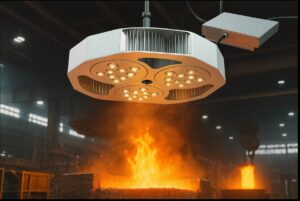
The rapid advancement of LED technology continues to reshape the landscape of industrial lighting, including applications in high-temperature environments. One of the most significant trends is the continuous improvement of LED efficiency and thermal tolerance. New generations of LED chips and driver technologies are capable of delivering higher luminous efficacy while generating less heat, which improves overall system reliability in extreme conditions.
Another major development is the integration of intelligent lighting systems. Smart industrial lighting allows facilities to monitor and control lighting infrastructure through centralized management platforms. Sensors, wireless communication modules, and digital control systems enable real-time monitoring of energy consumption, operating temperatures, and fixture status. Facility managers can quickly identify potential issues before they lead to system failures.
Predictive maintenance is also becoming increasingly important in modern industrial facilities. By integrating lighting systems with industrial monitoring networks, operators can track performance indicators such as driver temperature and power consumption. Data analytics can then be used to predict when components may require maintenance or replacement, allowing proactive maintenance scheduling that reduces unplanned downtime.
Additionally, lighting systems are increasingly being integrated into broader industrial automation and smart factory platforms. In these environments, lighting can respond dynamically to operational conditions—for example by adjusting brightness based on occupancy, production schedules, or safety requirements. This level of integration improves both energy efficiency and operational flexibility.
As Industry 4.0 technologies continue to evolve, high-temperature industrial lighting systems are expected to become more intelligent, efficient, and interconnected. These advancements will further enhance reliability and enable lighting to play a more strategic role in industrial infrastructure.
High-temperature industrial environments demand lighting solutions that go far beyond conventional illumination systems. Extreme heat, dust, vibration, and continuous operation create conditions where standard lighting fixtures often fail prematurely.
High-temperature LED lighting solutions provide a reliable alternative by combining advanced thermal management, durable materials, and energy-efficient performance. These systems not only improve operational reliability but also reduce maintenance costs and energy consumption.
For modern industrial facilities seeking to enhance safety, productivity, and long-term efficiency, investing in specialized high-temperature LED lighting represents a practical and forward-looking solution.
–The End–