
High-temperature industrial environments present a unique and demanding challenge for lighting systems. Facilities such as foundries, steel mills, glass manufacturing plants, and industrial baking lines routinely experience ambient temperatures exceeding 90°C, with localized zones reaching up to 200°C or higher. In such conditions, standard LED lighting solutions often fail prematurely due to thermal stress, component degradation, and insufficient heat dissipation.
Traditional lighting technologies, including metal halide and fluorescent systems, have historically been used in these environments despite their inefficiencies. While LEDs offer superior energy efficiency and longer lifespans, their performance is highly sensitive to temperature—particularly at the semiconductor junction level. Without proper thermal management, even high-quality LEDs can suffer from rapid lumen depreciation, color instability, and catastrophic failure.
The need for LEDs engineered specifically for high-temperature operation is therefore critical. These specialized systems are designed not only to survive but to maintain stable performance under extreme thermal loads. They enable continuous operation in mission-critical environments where lighting failure can disrupt production, compromise safety, and increase operational costs.
Furthermore, industries are increasingly prioritizing energy efficiency, sustainability, and reduced maintenance. High-temperature LED solutions address these priorities by combining robust engineering with advanced materials and thermal management technologies. As industrial processes become more demanding, the adoption of LEDs capable of operating reliably at 90–200°C is no longer optional—it is a strategic necessity.
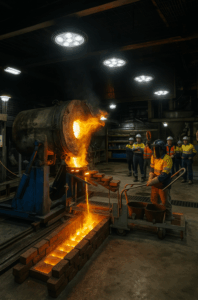
Conventional LED systems are inherently limited by their sensitivity to heat, particularly at the junction where light is generated. The junction temperature (Tj) is a critical parameter that directly influences LED efficiency, lifespan, and optical performance. As Tj increases, luminous efficacy decreases, and the rate of lumen depreciation accelerates significantly. In high-temperature environments, maintaining an acceptable junction temperature becomes increasingly difficult without specialized design.
One of the primary failure mechanisms in standard LEDs is thermal overstress. Excessive heat leads to phosphor degradation, resulting in color shift and reduced light quality. Simultaneously, the semiconductor materials experience increased electron leakage, lowering overall efficiency. Over time, this thermal stress shortens the operational life of the LED, often far below its rated lifespan.
Equally vulnerable are the supporting electronic components, particularly the LED driver. Standard drivers typically rely on electrolytic capacitors, which are highly sensitive to temperature. At ambient temperatures above 70–80°C, capacitor lifespan decreases exponentially, leading to early driver failure. This is often the weakest link in conventional LED fixtures used in high-heat applications.
Additionally, many standard fixtures are not designed for effective heat dissipation. Enclosed housings, inadequate heat sinks, and poor airflow can trap heat within the luminaire, further elevating internal temperatures. In confined or sealed installations, this creates a compounding effect, where both ambient and self-generated heat accelerate system degradation.
These limitations highlight the necessity of purpose-built high-temperature LED systems that address not only the LED chip itself but the entire fixture ecosystem.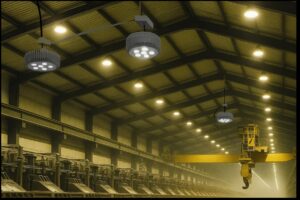
Designing LEDs capable of operating reliably in 90–200°C environments requires a comprehensive engineering approach that integrates advanced thermal management, high-temperature-resistant components, and robust structural design. Unlike conventional lighting, these systems must be optimized to handle both ambient heat and internally generated thermal loads.
A key aspect of this engineering is the implementation of advanced thermal management systems. High-performance heat sinks made from materials such as aluminum alloys or copper composites are commonly used to enhance heat dissipation. These materials offer high thermal conductivity, allowing heat to be rapidly transferred away from the LED junction. In some cases, passive cooling designs are supplemented with convection-enhancing geometries to maximize heat exchange with the surrounding environment.
Component selection is equally critical. High-temperature LEDs often utilize ceramic printed circuit boards (PCBs) instead of standard metal-core PCBs. Ceramic substrates provide superior thermal conductivity and can withstand extreme temperatures without warping or degrading. Similarly, drivers are designed using high-temperature-rated components, including solid-state capacitors and heat-resistant wiring insulation, ensuring stable electrical performance under thermal stress.
Structural integrity is another important consideration. Materials used in the fixture housing must be resistant to thermal expansion and mechanical stress. Aerospace-grade alloys and specialized coatings are often employed to maintain dimensional stability and prevent corrosion in harsh environments. These materials ensure that the fixture can endure repeated thermal cycling without structural failure.
Through the integration of these engineering strategies, high-temperature LEDs achieve a level of durability and reliability that far exceeds conventional solutions.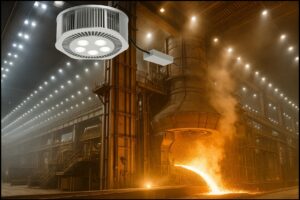
High-temperature LED systems are designed to maintain consistent performance even under extreme thermal conditions. One of the most critical performance indicators is lumen stability. Unlike standard LEDs, which experience significant output loss at elevated temperatures, engineered high-temperature LEDs are optimized to deliver stable luminous flux across a wide temperature range. This is achieved through careful thermal management and the use of temperature-resistant phosphor materials.
Efficiency, measured in lumens per watt (lm/W), is also preserved to a greater extent in these systems. While some level of thermal derating is inevitable, high-temperature LEDs are designed with predictable derating curves, allowing engineers to accurately assess performance under specific operating conditions. This predictability is essential for applications where consistent illumination levels are required.
Lifespan is another key metric. High-temperature LEDs are typically rated using L70 or L90 standards, indicating the time required for light output to degrade to 70% or 90% of its initial value. In extreme environments, maintaining these performance thresholds requires robust design and high-quality components. Mean Time Between Failures (MTBF) is also significantly improved compared to conventional systems, reducing maintenance frequency and operational disruptions.
Durability extends beyond thermal performance. High-temperature LED fixtures are often designed with high ingress protection (IP) ratings, ensuring resistance to dust, moisture, and corrosive gases. In industrial environments where vibration and chemical exposure are common, these additional protections are essential for long-term reliability.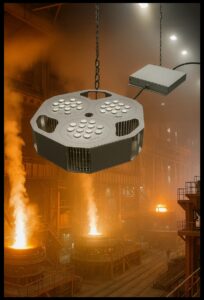
High-temperature LED solutions are not one-size-fits-all; they are typically customized to meet the specific thermal requirements of different applications. Systems designed for 90°C environments differ significantly from those engineered for 150°C or 200°C conditions, both in terms of materials and overall design.
For environments around 90°C, such as general manufacturing facilities or warehouses with elevated ambient temperatures, standard high-temperature LEDs with enhanced heat sinks and upgraded drivers are often sufficient. These systems prioritize energy efficiency and extended lifespan while maintaining cost-effectiveness.
At 150°C, the demands increase substantially. Applications such as steel production and glass manufacturing require more advanced thermal management solutions. Fixtures in this category often incorporate ceramic PCBs, high-temperature drivers, and reinforced housings. The focus shifts toward maintaining reliability under continuous exposure to intense heat and thermal cycling.
For extreme environments reaching 200°C, such as foundries, kilns, and certain military or aerospace applications, the design becomes highly specialized. These systems may include remote driver configurations to isolate sensitive electronics from heat, as well as advanced materials capable of withstanding prolonged exposure to extreme temperatures. Customization at this level often involves close collaboration between manufacturers and end-users to ensure optimal performance.
This tiered approach allows industries to select lighting solutions that precisely match their operational conditions, avoiding over-engineering while ensuring reliability.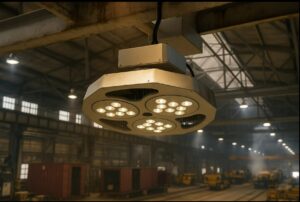
High-temperature LED lighting is essential across a wide range of industries where extreme heat is a constant factor. In metal smelting and foundries, lighting systems must operate reliably in the presence of intense radiant heat and molten materials. These environments demand fixtures that can withstand both high ambient temperatures and localized heat sources without performance degradation.
Glass and ceramic manufacturing facilities also present significant challenges. Furnaces and kilns generate continuous high temperatures, often exceeding 150°C in surrounding areas. Lighting systems must maintain consistent output to ensure visibility and process control, making high-temperature LEDs an ideal solution.
In power generation facilities, particularly in turbine halls and boiler rooms, elevated temperatures are common. Reliable lighting is critical for maintenance and operational safety, and high-temperature LEDs provide the durability required for these demanding conditions.
Food processing and industrial baking operations represent another important application. Ovens and curing chambers create high-temperature environments where standard lighting systems would quickly fail. High-temperature LEDs ensure consistent illumination while meeting hygiene and safety standards.
These applications highlight the versatility and necessity of LEDs engineered for extreme thermal environments.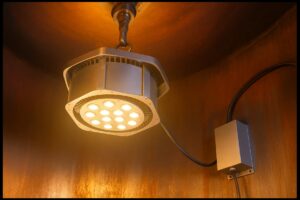
Despite their specialized design, high-temperature LEDs offer significant energy efficiency advantages compared to traditional lighting systems. By delivering high luminous efficacy even under elevated temperatures, these systems reduce overall energy consumption, contributing to lower operational costs.
One of the most significant benefits is the reduction in maintenance and downtime. In high-temperature environments, replacing failed lighting fixtures can be both difficult and costly. High-temperature LEDs are designed for extended service intervals, minimizing the need for frequent replacements and reducing labor costs.
The total cost of ownership (TCO) is therefore substantially lower. While the initial investment may be higher than standard lighting solutions, the long-term savings in energy, maintenance, and operational efficiency more than offset the upfront cost. This makes high-temperature LEDs a financially sound investment for industrial facilities.
Additionally, these systems support sustainability initiatives by reducing energy consumption and waste. Longer lifespans mean fewer discarded fixtures, contributing to environmental conservation efforts.
Proper installation is critical to maximizing the performance and lifespan of high-temperature LED systems. One of the key considerations is fixture placement. Understanding the thermal profile of the facility, including heat sources and airflow patterns, allows for strategic positioning of lighting fixtures to minimize thermal stress.
Electrical infrastructure must also be adapted for high-temperature environments. This includes the use of heat-resistant cables, connectors, and mounting hardware. Ensuring that all components are rated for the operating temperature is essential for system reliability.
Mounting solutions should account for thermal expansion and mechanical stability. Fixtures must be securely installed to withstand vibration and thermal cycling without loosening or misalignment.
Compliance with industry standards and certifications is another important factor. High-temperature LED systems should meet relevant safety and performance standards, such as UL and CE certifications, to ensure reliability and regulatory compliance.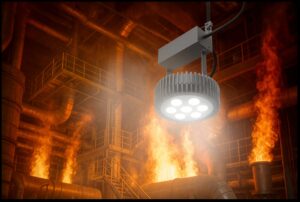
The development of high-temperature LED technology continues to evolve, driven by advances in materials science and digital integration. One emerging trend is the incorporation of smart thermal monitoring systems. These systems use sensors and IoT connectivity to provide real-time data on temperature and performance, enabling predictive maintenance and improved operational efficiency.
Advances in semiconductor materials are also playing a key role. New materials with higher thermal tolerance and improved efficiency are being developed, allowing LEDs to operate reliably at even higher temperatures.
Integration with industrial automation systems is another area of growth. Smart lighting solutions can adapt to changing environmental conditions, optimizing performance and energy usage. This aligns with the broader trend toward Industry 4.0 and the digitalization of manufacturing processes.
Selecting the appropriate high-temperature LED solution requires careful evaluation of several factors, including operating temperature, environmental conditions, and performance requirements. Buyers should consider not only the technical specifications but also the reliability and expertise of the supplier.
Customization is often essential, particularly for extreme environments. Working with a manufacturer that can tailor solutions to specific applications ensures optimal performance and longevity.
Ultimately, high-temperature LEDs represent a critical advancement in industrial lighting technology. By combining durability, efficiency, and reliability, they enable industries to operate safely and efficiently in some of the most challenging environments.
–The End–