Lighting in hazardous environments is not just about brightness — it’s about reliability, safety, and endurance. In coastal ports, offshore platforms, chemical plants, paper mills, and other challenging industrial locations, conventional lighting fixtures often fail due to water ingress, corrosion, or mechanical wear.
To combat these challenges, IP67 waterproof and anti-corrosion LED flood lights have emerged as a reliable solution. These lights are engineered to resist water penetration, prevent material degradation from salt and chemicals, and operate efficiently under extreme environmental stress. By combining robust construction with advanced protective technologies, they ensure uninterrupted illumination where it matters most.
The IP rating — short for Ingress Protection — is a standardized code defined under IEC 60529 to indicate a product’s resistance to dust and water. It consists of two digits:
First digit (Dust protection): Ranges from 0 to 6, with 6 meaning “dust-tight” — complete protection against solid particles.
Second digit (Water protection): Ranges from 0 to 9K, with higher numbers offering stronger resistance against water ingress.
For IP67:
6 → Dust-tight: No dust can enter the fixture.
7 → Waterproof: Can be submerged in water up to 1 meter deep for 30 minutes without damage.
In hazardous areas, IP67 protection is critical because fixtures may face heavy rain, high-pressure cleaning, accidental submersion, or continuous humidity. This rating ensures the light remains fully operational even after prolonged exposure to moisture.
Corrosion occurs when metals react with oxygen, moisture, and corrosive agents such as salt spray, acidic vapors, or industrial chemicals. In coastal and industrial settings, corrosion can rapidly degrade fixture housings, compromise seals, and lead to electrical failures.
Marine-grade aluminum alloys such as ADC12 or 6063-T5 are preferred for their strength, heat dissipation properties, and natural corrosion resistance.
316L stainless steel fasteners and brackets offer superior resistance to chlorides and acidic substances.
Anodizing creates a hard, protective oxide layer that resists oxidation and surface wear.
Powder coating with UV-resistant, salt-resistant formulations provides a durable, weatherproof finish.
Electrophoretic coating (E-coating) allows uniform coverage even on complex shapes, offering extra protection in small cavities.
ASTM B117 Salt Spray Test: Simulates long-term exposure to salty environments, typically tested for 1,000–3,000 hours.
Chemical resistance tests: Verifies tolerance against acidic or alkaline vapors common in industrial processing plants.
Silicone and EPDM gaskets ensure long-term elasticity and prevent water ingress at joints.
Fully potted drivers use resin encapsulation to protect sensitive electronics from moisture and vibration.
IP-rated cable glands prevent leaks where cables enter the housing.
Double sealing at wiring points ensures redundancy in protection.
Tempered glass lenses are secured with compression seals to withstand pressure and impact.
One-piece die-cast housings minimize the number of joints and potential entry points for water.
A challenge in waterproof lighting design is maintaining heat dissipation while keeping the enclosure sealed. Advanced designs use external heat sink fins that are integral to the housing, allowing heat to escape without opening ventilation paths.
Higher luminous efficacy: Modern LEDs deliver 150–180 lm/W, reducing power consumption and heat output.
Chip-on-Board (COB) LEDs provide uniform brightness with minimal glare — ideal for large-area illumination.
Nano-ceramic coatings form an ultra-thin but strong protective barrier against corrosion.
Self-healing coatings contain microcapsules that release protective agents when scratched, repairing minor damage automatically.
Embedded temperature and moisture sensors can send alerts if environmental conditions threaten fixture integrity.
Wireless monitoring systems enable predictive maintenance, reducing downtime in critical facilities.
Swappable LED modules and drivers allow field repairs without compromising the IP seal, lowering lifecycle costs.
Shipyards, cargo docks, and oil platforms where exposure to salt spray and high winds is constant.
Chemical processing plants, paper mills, and steel foundries that emit corrosive gases or operate in high-humidity conditions.
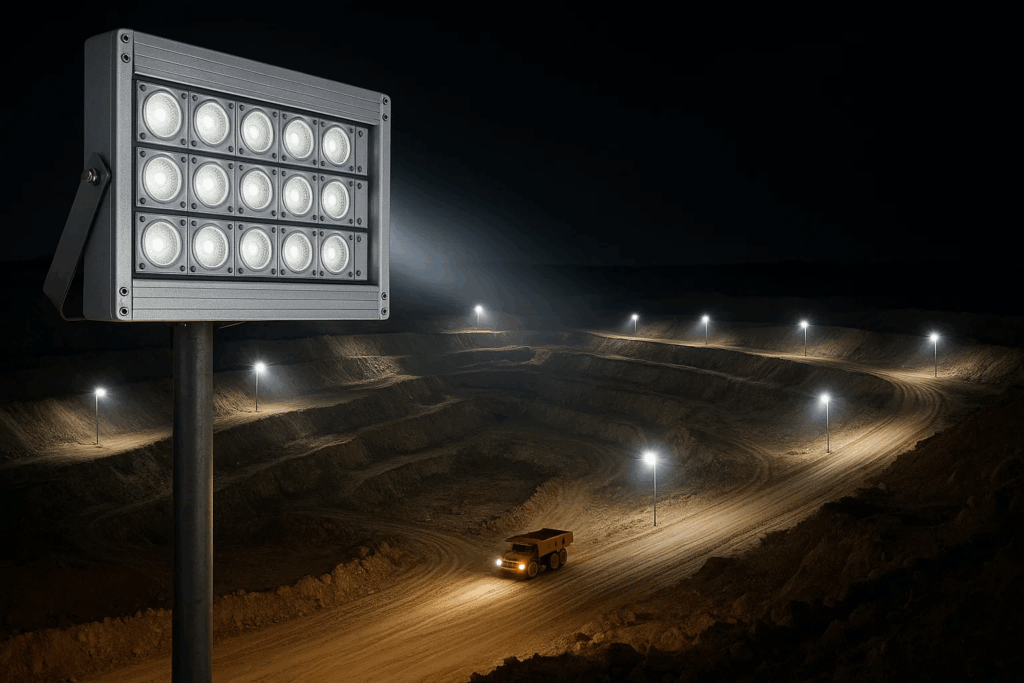
Open-pit mines and refineries with dust, mud, and high-pressure washdowns.
Ports, railway yards, and bridges in humid or coastal climates.
Coastal stadiums, swimming pool complexes, and marina facilities that require bright, resilient lighting.
To ensure safe and reliable operation in hazardous environments, flood lights should comply with:
IEC 60529 — Defines IP rating requirements.
ISO 9227 — Corrosion resistance testing in salt fog environments.
UL / CE certifications — Electrical and safety compliance for international markets.
IECEx / ATEX — Explosion-proof requirements (if the light is intended for explosive gas or dust zones).
In hazardous environments, lighting failures are not just inconvenient — they can be dangerous and costly. IP67 waterproof and anti-corrosion LED flood lights offer a proven, engineered solution that stands up to water, dust, salt, and chemicals without sacrificing performance or efficiency.
Through smart material selection, advanced sealing techniques, and continuous innovation, these lights deliver long-term reliability, lower maintenance costs, and consistent illumination in the toughest conditions. Whether installed on an offshore oil rig, a chemical plant, or a coastal sports arena, they are built to keep shining where others fail.
Need a solution for your hazardous environment? Contact us for a technical consultation and customized lighting design.