
Industrial facilities often operate under extreme conditions that challenge conventional lighting systems. High concentrations of dust, dirt, and airborne particles are common in manufacturing plants, warehouses, and processing facilities, creating a layer of contamination on light fixtures. Over time, this dust buildup diminishes luminous efficiency and accelerates the degradation of lighting components. At the same time, high-temperature operations from machinery, kilns, furnaces, or heat-emitting equipment introduce thermal stress that can cause premature LED failure, color shifts, flickering, or uneven illumination.
Facility managers, engineers, and safety officers require lighting solutions that are durable, reliable, and energy-efficient under these harsh conditions. IP65-rated high-temperature LEDs are designed to meet these rigorous industrial requirements. By combining dust-proof enclosures, water resistance, and thermal management, these LEDs maintain consistent light output, improve safety, and reduce operational downtime. Investing in such lighting solutions not only ensures continuous production but also lowers maintenance costs and extends the lifecycle of the lighting system.
This article examines the core benefits, technological features, and practical applications of IP65 high-temperature LEDs, highlighting why they are essential for industrial environments where dust, moisture, and heat challenge conventional lighting solutions. The goal is to guide industrial decision-makers in selecting lighting systems that maximize performance, safety, and cost-efficiency.
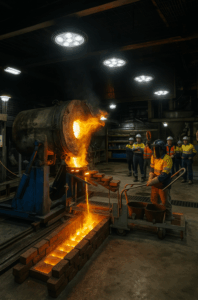
The Ingress Protection (IP) rating system is an internationally recognized standard for classifying the level of protection offered by enclosures against the intrusion of solid particles and liquids. In industrial environments, where dust, debris, and moisture are constant threats, understanding IP ratings is crucial for selecting durable lighting solutions. IP65, one of the most robust ratings for industrial fixtures, ensures that equipment is both dust-tight and resistant to water jets.
Breaking down the IP65 rating: the first digit, “6,” signifies complete protection against dust. Unlike lower-rated fixtures, IP6X-rated LEDs prevent any particulate matter from entering the housing, maintaining internal electronic integrity and optimal optical performance. In environments such as woodworking shops, cement plants, or metal fabrication facilities, dust can accumulate rapidly on lenses and reflectors, reducing luminous efficiency and necessitating frequent cleaning. By using IP65-rated LEDs, facilities can minimize maintenance costs and avoid disruptions caused by cleaning or fixture replacement.
The second digit, “5,” indicates that the fixture is protected against low-pressure water jets from any direction. While not fully waterproof, this rating ensures safety in industrial scenarios where accidental splashes, spray cleaning, or condensation might occur. For example, food processing plants or chemical manufacturing facilities frequently expose lighting to moisture during daily operations. IP65 fixtures prevent water ingress that could damage electronics, drivers, or LED chips, reducing the risk of electrical failures, short circuits, and fire hazards. Overall, IP65 protection guarantees that LED lighting remains fully operational, efficient, and safe in dusty, damp, or moderately wet industrial environments.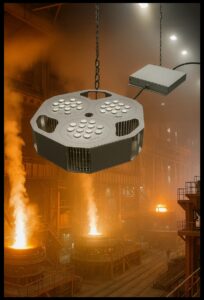
Industrial processes often produce ambient temperatures that exceed the safe operating range of standard LED fixtures. Heat can drastically affect performance, accelerating lumen depreciation, color shift, and component degradation. In facilities such as foundries, metal fabrication shops, or areas with high-powered machinery, thermal stress is a primary cause of reduced LED lifespan and maintenance headaches.
High-temperature LEDs are specifically engineered to operate reliably under these conditions. Their design incorporates thermally conductive materials, such as aluminum or copper heat sinks, that efficiently transfer heat away from the LED chip. Silicone lenses and coatings resist thermal deformation, while advanced driver electronics maintain stable current and voltage despite fluctuations in temperature. Some high-temperature LEDs even integrate active thermal management solutions to monitor heat and prevent overheating.
By maintaining consistent lumen output and color temperature, high-temperature LEDs ensure safety and visual clarity across industrial workspaces. Workers can perform tasks accurately without shadows or flickering that could compromise precision and productivity. Furthermore, these LEDs reduce the frequency of maintenance interventions and replacement cycles, leading to significant cost savings over the fixture’s lifespan. For industrial managers, the reliability of high-temperature LEDs translates to uninterrupted operations, reduced energy waste, and improved operational efficiency in some of the harshest environments found in industry today.
In dusty industrial environments, dust accumulation can cause serious performance degradation in conventional lighting. Over time, layers of dust reduce luminous efficacy, scatter light unevenly, and can even insulate heat, exacerbating thermal stress on the LED. IP65-rated high-temperature LEDs solve this problem by incorporating fully sealed enclosures that prevent dust and particulate matter from entering the fixture. The dust-tight design maintains optical clarity and ensures consistent light output throughout the LED’s lifespan.
This durability significantly reduces operational interruptions caused by maintenance or cleaning schedules. For industries such as cement production, woodworking, and metallurgy, where airborne particles are pervasive, the difference is substantial. Not only does the fixture continue to provide bright, even illumination, but facility managers also avoid labor-intensive and frequent cleaning of lighting systems. The result is a more reliable, low-maintenance lighting solution that performs effectively in environments where conventional LEDs would quickly fail or require constant upkeep.
Industrial facilities frequently encounter moisture, whether from cleaning processes, accidental splashes, condensation, or environmental exposure. Traditional lighting solutions can fail when water or liquids penetrate the housing, leading to short circuits, corrosion, and electrical hazards. IP65-rated LEDs are engineered to withstand low-pressure water jets from any direction, providing a robust shield against accidental moisture exposure.
This water-resistant capability ensures that lighting remains operational during routine cleaning or unexpected exposure to liquids. Food processing facilities, breweries, chemical plants, and washdown areas benefit particularly from IP65 fixtures, as they can be sanitized or cleaned without the risk of damaging the lighting system. Additionally, water-resistant LEDs reduce downtime and replacement costs caused by liquid-related failures, contributing to a safer and more cost-efficient industrial environment. By combining dust-proofing and water resistance, IP65 high-temperature LEDs are ideal for facilities that face simultaneous exposure to particles and moisture, maintaining both performance and safety under challenging conditions.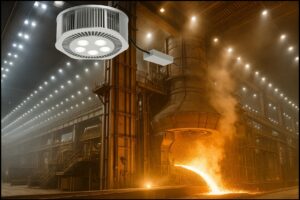
Factories and manufacturing plants present some of the harshest lighting conditions. High-powered machinery generates heat, airborne particles, and constant vibrations that can shorten the lifespan of standard LEDs. IP65 high-temperature LEDs are particularly well-suited to these settings, where reliable illumination is critical for operational safety and productivity. The sealed housings prevent dust accumulation, while advanced thermal management systems ensure consistent lumen output despite elevated temperatures.
Reliable lighting improves worker visibility, reduces accidents, and enhances operational precision. Maintenance schedules are simplified, as fixtures require minimal cleaning or replacement. The robust construction ensures longevity, while energy efficiency remains high, delivering cost savings and improved ROI over time. In large-scale manufacturing plants, deploying IP65 high-temperature LEDs can transform lighting from a maintenance concern into a long-term productivity asset.
Warehouses often face constant dust from stored materials, packaging processes, and forklift movement. Conventional lighting quickly loses efficiency in such environments, resulting in dim or uneven illumination. IP65-rated LEDs provide a practical solution by preventing dust ingress while maintaining optimal light output.
These fixtures improve visibility, enhance safety for staff, and reduce energy consumption by sustaining efficiency over time. Facilities also benefit from extended maintenance cycles, as the sealed design minimizes cleaning requirements. In warehouses where lighting must remain consistent for inventory management, inspection tasks, or 24/7 operations, IP65 high-temperature LEDs are a durable, energy-efficient, and reliable choice.
In food processing environments, hygiene and sanitation are paramount. Regular cleaning, water sprays, and chemical agents are applied to maintain compliance with health standards. Standard LED fixtures often cannot withstand frequent exposure to water and chemicals, leading to frequent failures and increased operational costs. IP65-rated LEDs, however, resist moisture and spray, providing consistent illumination even in washdown conditions.
These fixtures are also dust-tight, preventing contamination from airborne particles and ensuring compliance with food safety regulations. The combination of high-temperature tolerance, dust-proofing, and water resistance allows facilities to maintain productivity while reducing downtime caused by lighting maintenance. IP65 high-temperature LEDs ultimately create safer, cleaner, and more efficient industrial operations.
Facilities such as foundries, glass manufacturing plants, and metalworks generate extremely high ambient temperatures, often beyond the safe operating range of standard LEDs. High-temperature IP65 LEDs are engineered to maintain performance under these conditions. Advanced thermal management dissipates heat effectively, preventing lumen depreciation and fixture failure.
Workers benefit from uniform, high-quality illumination that supports safety and precision in hazardous zones. Maintenance costs are reduced, and energy efficiency is preserved, even in environments where heat and dust would normally compromise standard lighting. This makes IP65 high-temperature LEDs indispensable in high-heat industrial zones where reliability, safety, and operational continuity are non-negotiable.
Outdoor industrial environments, such as loading docks, storage yards, and construction zones, are exposed to dust, rain, and mechanical abrasion. IP65 high-temperature LEDs excel in these settings by providing both dust-tight protection and resistance to low-pressure water jets.
These fixtures maintain consistent illumination, reduce maintenance frequency, and improve worker safety in environments subject to varying weather conditions. By combining robust construction, thermal resilience, and water/dust protection, IP65 LEDs offer long-term reliability and efficiency, ensuring that outdoor industrial lighting remains effective under challenging conditions.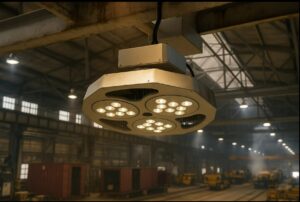
Key Specifications to Consider
Selecting the correct IP65 high-temperature LED requires careful consideration of several critical factors. Lumen output and efficacy are essential to ensure that the fixture provides sufficient brightness while remaining energy-efficient. Industrial areas often require high-intensity lighting to maintain safety, productivity, and operational precision.
Operating temperature range is another crucial factor. High-temperature LEDs should be compatible with the maximum ambient temperature of the industrial environment. Proper thermal management, including heat sinks, conductive substrates, and silicone encapsulation, ensures that the LED maintains stable performance under prolonged heat exposure.
The housing material and construction affect durability and thermal dissipation. Aluminum or other metal housings with corrosion-resistant coatings extend the lifespan of the fixture. Silicone lenses resist deformation under heat while maintaining optical clarity. Certifications such as CE, RoHS, and UL provide additional assurance of safety, quality, and regulatory compliance.
Finally, facility managers should consider the installation environment, including spacing, orientation, and power driver compatibility. Correct installation ensures optimal heat dissipation and reduces the risk of fixture failure. By carefully evaluating these specifications, industrial managers can select IP65 high-temperature LEDs that deliver long-term performance, safety, and energy efficiency tailored to their specific operational needs.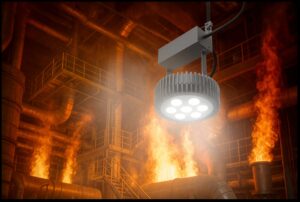
A mid-sized metal fabrication facility faced challenges with its conventional LED fixtures. Dust accumulation, thermal stress from nearby furnaces, and exposure to occasional water spray resulted in flickering lights, reduced lumen output, and frequent maintenance interventions. Downtime for cleaning and replacement disrupted workflow, increased labor costs, and compromised operational efficiency.
After switching to IP65-rated high-temperature LEDs, the facility observed significant improvements. Dust-proof enclosures prevented particulate buildup, while thermal management ensured consistent illumination near high-heat machinery. Fixtures resisted water exposure from cleaning processes, eliminating short circuits or corrosion risks. Maintenance intervals were extended, and overall energy consumption decreased due to higher lumen efficiency. Workers experienced improved visibility and safety, and the facility achieved measurable cost savings.
This example demonstrates how investing in IP65 high-temperature LEDs transforms industrial lighting from a maintenance burden into a reliable, energy-efficient solution capable of withstanding harsh conditions while supporting operational efficiency.
Industrial lighting is a critical component of safety, productivity, and operational efficiency. IP65-rated high-temperature LEDs provide a durable, energy-efficient, and safe solution for harsh industrial environments, including dusty warehouses, high-heat manufacturing zones, and areas exposed to moisture. By combining dust-tight enclosures, water resistance, and advanced thermal management, these LEDs maintain consistent performance, reduce maintenance, and lower long-term costs.
Facility managers and engineers can leverage these fixtures to improve worker safety, comply with industrial standards, and ensure uninterrupted operations. Upgrading to IP65 high-temperature LEDs is not merely a lighting improvement—it is a strategic investment in industrial efficiency, reliability, and operational excellence.
–The End–