
In high-temperature industrial environments, lighting is more than just a convenience—it is a critical component of operational efficiency and worker safety. Industries such as metal forging, glass manufacturing, chemical processing, and high-temperature kiln operations demand lighting solutions that maintain their performance even when ambient temperatures consistently exceed 90°C, 150°C, or even 200°C. Traditional lighting technologies, including standard fluorescent and low-cost LED fixtures, often fail prematurely in these conditions due to thermal degradation, leading to safety risks, unplanned downtime, and increased maintenance costs.
The need for durable, high-performance lighting in these settings has given rise to a specialized category of industrial LEDs designed to operate reliably under extreme thermal stress. These lighting solutions combine advanced materials, optimized thermal management, and high-efficiency electronic drivers to withstand heat without compromising light quality or longevity. This article will explore the challenges of high-temperature industrial environments, the technological innovations behind heat-resistant LED lighting, and practical applications that demonstrate how these solutions enhance safety, energy efficiency, and operational reliability. By understanding these factors, facility managers and industrial engineers can make informed decisions when selecting lighting for extreme environments.
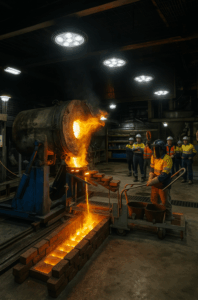
High-temperature industrial environments encompass a diverse array of processes, each generating sustained heat levels that challenge conventional lighting solutions. Metal smelting, forging operations, and glass production frequently expose fixtures to temperatures exceeding 150°C, with localized peaks that can surpass 200°C. Even industries such as food processing, chemical plants, or thermal curing facilities present sustained elevated temperatures in enclosed or semi-enclosed spaces. The combination of radiative heat from furnaces, convective heat from hot equipment, and reflected thermal energy from metallic surfaces creates a hostile environment where traditional lighting cannot maintain performance or reliability. Lighting in such environments must therefore be engineered not only to survive these temperatures but also to maintain consistent luminous output, color temperature stability, and structural integrity over time.
Standard lighting solutions often fail in high-heat environments due to the inherent limitations of their materials and electronics. Fluorescent lamps, for example, rely on delicate phosphor coatings and glass tubes that degrade or warp under sustained heat. Conventional LEDs may exhibit premature driver failure, solder joint deterioration, or degradation of encapsulating materials, resulting in reduced light output or complete fixture failure. These failures compromise worker visibility, create potential safety hazards, and necessitate frequent maintenance, increasing operational costs. Additionally, the thermal stress can accelerate aging in luminaire housings and diffusers, causing discoloration, cracking, or deformation that further reduces efficiency. For facility managers, these issues translate into unplanned downtime, higher replacement costs, and potential compliance risks with workplace safety regulations.
The consequences of inadequate lighting in high-temperature industrial settings extend beyond fixture failure. Poor illumination impairs worker performance, leading to errors in processes that require precision, such as welding, casting, or chemical monitoring. Safety risks increase when dim or inconsistent lighting prevents workers from clearly identifying hazards, resulting in slips, trips, or misoperation of equipment. From an energy perspective, lighting failures force facilities to rely on temporary solutions, often less efficient and more expensive. Moreover, frequent replacements increase the environmental footprint of the facility, as older, failed fixtures contribute to electronic waste. Therefore, high-performance, heat-resistant lighting is not simply a technological upgrade; it is a strategic investment in operational continuity, workplace safety, and sustainable energy management.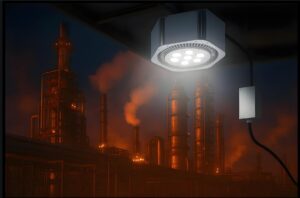
High-temperature industrial LEDs incorporate heat-resistant materials in every critical component to ensure long-term reliability. Fixtures often utilize specialized alloys, ceramics, or reinforced polymers that maintain structural integrity at temperatures far exceeding the rated ambient conditions. Advanced thermal management is central to this design: heat sinks with high thermal conductivity, strategically designed fins, and optimized airflow paths dissipate heat away from sensitive electronic components. Some fixtures employ active cooling methods, such as integrated fans or liquid-cooled channels, to maintain junction temperatures within safe operating limits. Additionally, the LED chips themselves are selected for thermal stability, minimizing lumen depreciation under prolonged exposure to high temperatures. This holistic approach to heat management ensures that both the structural and electronic elements of the luminaire perform reliably in environments where traditional lighting would fail within weeks or months.
Heat-resistant industrial LEDs are available in a wide range of power ratings, from compact 50W fixtures to high-output 400W systems. Lower-wattage units are ideal for targeted task lighting or confined spaces, providing precise illumination without excessive heat generation. Mid-range fixtures, such as 100W–200W LEDs, are commonly deployed in general industrial zones, offering a balance between luminous efficacy and thermal resilience. High-power options, including 300W and 400W models, are specifically engineered for expansive high-temperature areas such as foundries, large ovens, and production lines requiring intense, uniform lighting. Each power rating is carefully calibrated to ensure that the thermal load is managed effectively, preserving fixture longevity while maintaining consistent light output. These versatile options allow facility managers to design tailored lighting schemes that match the specific demands of their industrial processes.
Industrial operations demand not only high intensity but also precise color rendering to ensure visibility, safety, and accuracy. Heat-resistant LEDs offer a wide spectrum of color temperatures, typically ranging from 3000K to 5600K, enabling facility managers to select lighting that best suits the task and environment. Warm white light (around 3000K) is often used in areas where visual comfort is critical, such as inspection zones or control rooms, whereas neutral or daylight-balanced light (4000K–5600K) enhances color distinction and detail in production areas. Importantly, these LEDs maintain color consistency even under extreme thermal stress, preventing the shifts in hue or color temperature that can occur in conventional fixtures exposed to high heat. This stability ensures reliable visual conditions for workers, reducing errors and improving operational efficiency.
Industrial environments often expose lighting to dust, moisture, chemical vapors, and mechanical impacts in addition to high heat. Heat-resistant LED fixtures are therefore designed with robust enclosures that comply with international protection standards, such as IP65 or higher. These ratings guarantee resistance to ingress of dust and water, ensuring continued operation in harsh environments. Specialized coatings and gaskets provide additional protection against corrosive atmospheres, while impact-resistant lenses guard against accidental mechanical damage. By combining thermal resilience with environmental protection, these fixtures deliver consistent performance across the full spectrum of industrial hazards, reducing maintenance requirements and extending service life in conditions that would quickly degrade standard lighting solutions.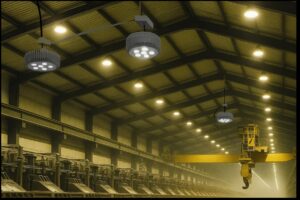
Metal smelting and forging operations expose facilities to extreme temperatures due to molten metals and high-temperature furnaces. Lighting in these areas must withstand radiant heat exceeding 200°C while providing uniform, glare-free illumination to support precision operations. Heat-resistant LEDs in these environments are typically mounted at elevated positions, designed to avoid direct exposure to molten splashes, and equipped with high-efficiency thermal management systems. By maintaining consistent light output and color quality, these fixtures allow workers to monitor material quality, detect surface defects, and safely navigate production zones, all while reducing energy consumption compared to conventional high-intensity discharge lamps. The durability and performance of these LEDs contribute directly to operational efficiency and workplace safety in one of the most thermally demanding industrial sectors.
Industries such as ceramics, glass, and advanced materials often rely on kilns and thermal processing chambers, which operate continuously at high temperatures. Conventional lighting solutions are prone to rapid degradation in these environments, leading to frequent maintenance cycles and potential disruptions. Heat-resistant industrial LEDs are engineered to endure these extreme conditions, providing stable illumination that facilitates accurate monitoring of kiln contents and processes. Fixtures may include directional optics to optimize light distribution, reducing shadows and glare in critical observation points. The combination of thermal resilience, energy efficiency, and precise illumination enhances productivity and ensures process consistency, enabling manufacturers to achieve high-quality outcomes without compromising operational continuity.
Industrial ovens used in metal treatment, powder coating, or food processing require reliable lighting that can withstand sustained temperatures and harsh environmental conditions. Heat-resistant LEDs offer a solution by maintaining luminous efficacy and color stability even under prolonged exposure to elevated heat. Fixtures can be installed inside or near ovens, in heat-tolerant enclosures, to provide task-specific illumination for inspection and quality control. By eliminating the frequent replacement cycles associated with traditional lighting, these LEDs reduce downtime and maintenance costs while ensuring that workers can clearly monitor processes, detect defects, and adhere to strict operational standards. The long-term reliability of these lighting systems supports both efficiency and safety in temperature-intensive industrial operations.
Foundries and casting operations involve molten metals, intense radiant heat, and complex mechanical workflows. Proper lighting is essential for monitoring material flow, checking molds, and ensuring operator safety. Heat-resistant industrial LEDs are specifically designed to operate in these high-stress conditions, often incorporating reflective housings and advanced thermal dissipation techniques to minimize fixture degradation. The combination of high-lumen output, consistent color rendering, and environmental protection ensures that critical casting processes are visible and safe, while reducing energy consumption and fixture maintenance compared to traditional high-intensity lamps. These lighting systems are crucial for supporting production continuity and safeguarding workers in one of the most demanding industrial environments.
Even industrial storage areas and warehouses may experience localized high temperatures due to proximity to heat-generating equipment or solar exposure in enclosed structures. Heat-resistant LEDs installed in these spaces maintain illumination quality without premature failure, ensuring safe navigation, inventory management, and equipment operation. Fixtures can be strategically positioned to optimize coverage, minimize shadows, and provide consistent lighting throughout the facility. By combining thermal resilience with energy efficiency, these lighting solutions reduce operational costs and maintenance cycles, enabling facility managers to maintain a safe and productive environment even in areas subjected to sustained elevated temperatures.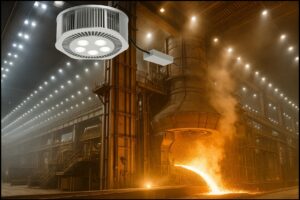
Heat-resistant industrial LEDs are engineered for high luminous efficacy, often exceeding 150–170 lumens per watt. Compared to traditional high-intensity discharge or halogen lamps, these fixtures consume significantly less power while delivering equivalent or superior illumination. The energy savings translate directly into lower operational costs for industrial facilities, particularly in applications where lighting operates continuously. Reduced energy consumption also lessens the load on HVAC systems, as LEDs generate less radiative heat than traditional sources, contributing to further cost reductions. Over the lifespan of the fixture, these energy savings can offset the higher upfront investment in heat-resistant LED technology, making it a financially advantageous solution for high-temperature industrial operations.
One of the most compelling advantages of high-temperature industrial LEDs is their extended service life. While conventional lighting often fails within months under sustained heat exposure, these LEDs are designed to operate reliably for 50,000 hours or more, even in challenging thermal conditions. The integration of advanced thermal management, durable materials, and high-quality electronic drivers minimizes lumen depreciation and prevents premature fixture failure. This extended lifespan reduces the frequency of replacements, minimizing operational disruption and lowering total cost of ownership. For facilities with limited maintenance access or critical operational schedules, the reliability of heat-resistant LEDs is a decisive factor in maintaining uninterrupted production.
Maintaining consistent luminous output and color temperature under extreme heat is essential for industrial efficiency and safety. Heat-resistant LEDs are designed to stabilize the junction temperature of the diodes, preventing the fluctuations in light intensity and color shift that occur in conventional lighting. This consistency ensures that workers experience uniform illumination, enhancing visibility for precision tasks and reducing eye strain. Additionally, reliable light output supports automated systems, such as vision-guided robots or optical sensors, which require stable lighting to function correctly. By delivering predictable performance under heat stress, these LEDs contribute directly to operational accuracy and workplace safety.
High-quality illumination is fundamental to industrial safety. Heat-resistant LEDs provide uniform, shadow-free lighting that enables workers to clearly identify hazards, navigate complex equipment layouts, and perform detailed inspections. Improved visibility reduces the risk of accidents, enhances situational awareness, and supports compliance with occupational safety regulations. By combining thermal resilience with optimal light distribution and color rendering, these fixtures create safer work environments that protect personnel while facilitating efficient operations. This enhanced safety profile is particularly important in high-temperature environments, where poor lighting could exacerbate the already elevated risks associated with heat, molten materials, or moving machinery.
The robust design of heat-resistant industrial LEDs minimizes the need for routine maintenance, even under extreme thermal stress. Unlike conventional fixtures that degrade rapidly, these LEDs retain structural and electronic integrity over extended periods, reducing the frequency of inspections, replacements, and labor-intensive maintenance cycles. The combination of long operational life, consistent performance, and environmental protection makes them ideal for hard-to-access areas, such as high ceilings above furnaces or kilns. This reliability not only decreases downtime but also improves the overall efficiency of facility management, allowing resources to be focused on core production tasks rather than lighting upkeep.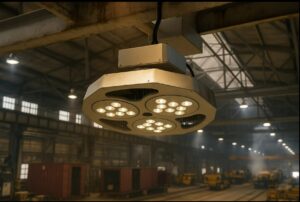
A steel production facility faced frequent lighting failures in its furnace hall due to ambient temperatures exceeding 180°C. Traditional high-intensity discharge lamps required replacement every 4–6 months, causing operational interruptions and maintenance costs to escalate. By retrofitting with 200W heat-resistant industrial LEDs, the facility achieved stable illumination throughout the hall. Thermal management technology ensured diodes remained within safe operating temperatures, while high IP ratings protected fixtures from dust and metallic particulates. Within the first year, the facility reported a 40% reduction in energy consumption and virtually eliminated unplanned lighting maintenance, demonstrating the practical advantages of heat-resistant LEDs in extreme environments.
A foundry specializing in aluminum casting experienced poor visibility around molten metal handling areas, compromising both safety and product quality. Installing a combination of 300W and 400W heat-resistant LED fixtures provided consistent, glare-free illumination. The fixtures’ advanced thermal dissipation and durable housings allowed them to withstand radiant heat exceeding 200°C. Post-installation, workers reported enhanced visibility, reduced eye strain, and improved precision during critical casting processes. The facility also observed a significant decrease in fixture replacements, lowering operational costs and downtime, while maintaining compliance with occupational safety standards.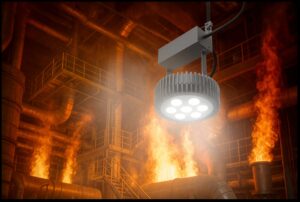
Selecting the appropriate lighting for high-temperature industrial environments requires careful consideration of several technical factors. Heat tolerance is paramount, as fixtures must be rated for the specific ambient temperatures of the facility. Lumen output and color temperature should be matched to the visual requirements of each workspace, balancing brightness, contrast, and comfort. Environmental ratings, such as IP and IK, must align with exposure to dust, moisture, chemical vapors, or mechanical impact. Installation and maintenance requirements should also be considered, particularly for areas with restricted access or high operational risk. By evaluating these parameters holistically, facility managers can ensure that the selected fixtures deliver reliable, efficient, and safe lighting for the long term.
Due to the complex interplay of thermal, optical, and environmental factors, consultation with lighting specialists is highly recommended for high-temperature industrial projects. Specialists can conduct detailed site assessments, simulate thermal and luminous performance, and propose fixture layouts that optimize energy efficiency and safety. Custom solutions, including fixture orientation, wattage selection, and protective housing designs, can be tailored to the unique conditions of each facility. Engaging experienced consultants ensures that the lighting system meets both operational and regulatory requirements, delivering a solution that enhances productivity while minimizing long-term costs and maintenance challenges.
Heat-resistant industrial LED lighting represents a technological advancement that addresses the unique challenges of high-temperature environments. By combining durable materials, advanced thermal management, and precise optical engineering, these fixtures deliver consistent performance, enhanced safety, and energy efficiency in conditions that would degrade conventional lighting rapidly. Industries ranging from metal forging to kiln operations benefit from reduced maintenance, lower energy costs, and improved worker visibility, making heat-resistant LEDs a strategic investment for operational reliability. Facilities seeking long-term performance under constant heat should prioritize high-temperature industrial LEDs to safeguard both productivity and personnel.
–The End–