
Fishing has always been a blend of skill, patience, and the right equipment. In recent years, underwater LED fishing lights have emerged as a game-changing tool for both recreational and professional anglers. Designed to attract fish by simulating natural feeding conditions, these specialized lights operate in fresh water and sea water, reaching depths of up to 20 meters. With robust IP68 protection, they are built to perform reliably in demanding aquatic environments.
Underwater fishing lights rely on high-efficiency LEDs, which produce intense illumination while consuming minimal power. The most popular choice among anglers is green light, as it penetrates water effectively and has been shown to attract baitfish, squid, and larger predator fish.
Green light wavelengths (around 520–530nm) cut through water with less scattering, making them visible from greater distances underwater. This creates a luminous zone that draws plankton, which in turn attracts baitfish, creating a feeding chain that brings in target species.
An IP68 rating ensures complete dust protection and resistance to continuous immersion in water. For fishing, this means the light remains fully functional even when submerged up to 20 meters. Materials such as marine-grade aluminum, polycarbonate lenses, and corrosion-resistant seals ensure durability in both saltwater and freshwater conditions.
LED fishing lights are designed for low power draw, making them ideal for use with boat batteries or portable power banks. Many models use DC power inputs for easy connection to marine electrical systems.
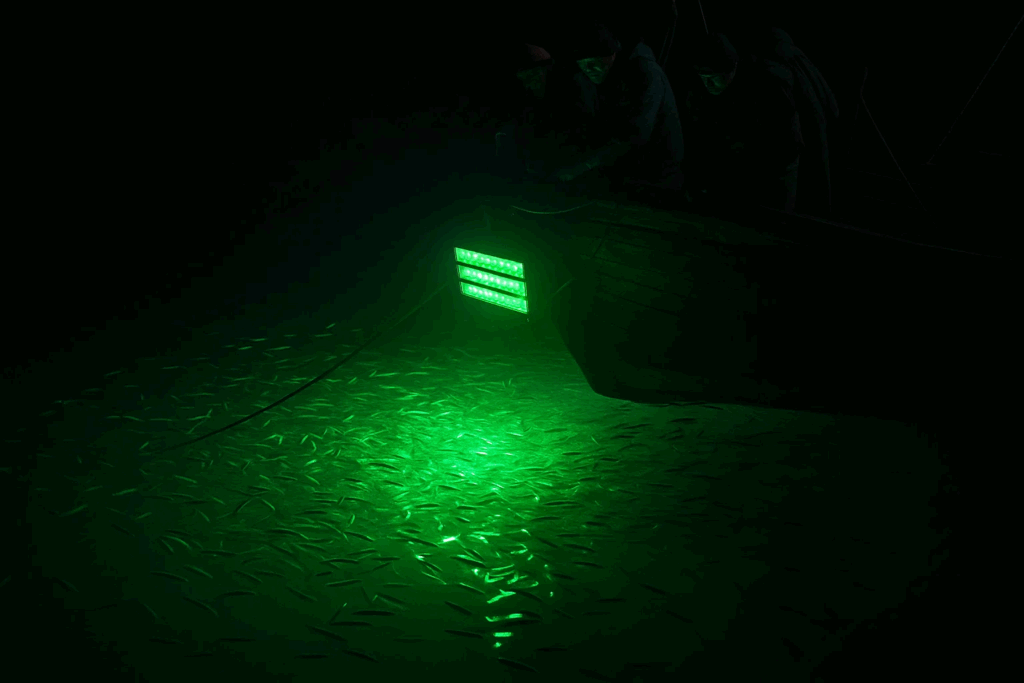
When the light is submerged and switched on, the following chain reaction occurs:
Light Penetration: The green LED illumination travels through the water column.
Plankton Attraction: Microscopic plankton are drawn toward the light source, sensing it as an indicator of feeding activity.
Baitfish Gathering: Small fish that feed on plankton congregate around the illuminated area.
Predator Fish Arrival: Larger predator species—such as bass, snook, mackerel, or squid—are lured by the abundance of smaller prey.
This biological attraction cycle is the core principle that makes LED fishing lights effective for night fishing.
Choose a fishing spot known for fish activity, ideally in calm waters.
Ensure the power source (boat battery or portable battery pack) is fully charged.
Attach the light to a weighted line to keep it submerged vertically.
Lower the light to the desired depth—usually between 1 to 5 meters below the surface for optimal visibility.
In deeper waters or during offshore fishing, deploy multiple lights at varying depths to maximize attraction.
Turn on the light at least 15–20 minutes before you start fishing to allow the attraction chain to establish.
Lights can be operated for several hours without significant battery drain, thanks to LED efficiency.
Avoid looking directly at the light underwater—it can be extremely bright and may affect your vision.
Always retrieve the light carefully to prevent damage to the cable or housing.
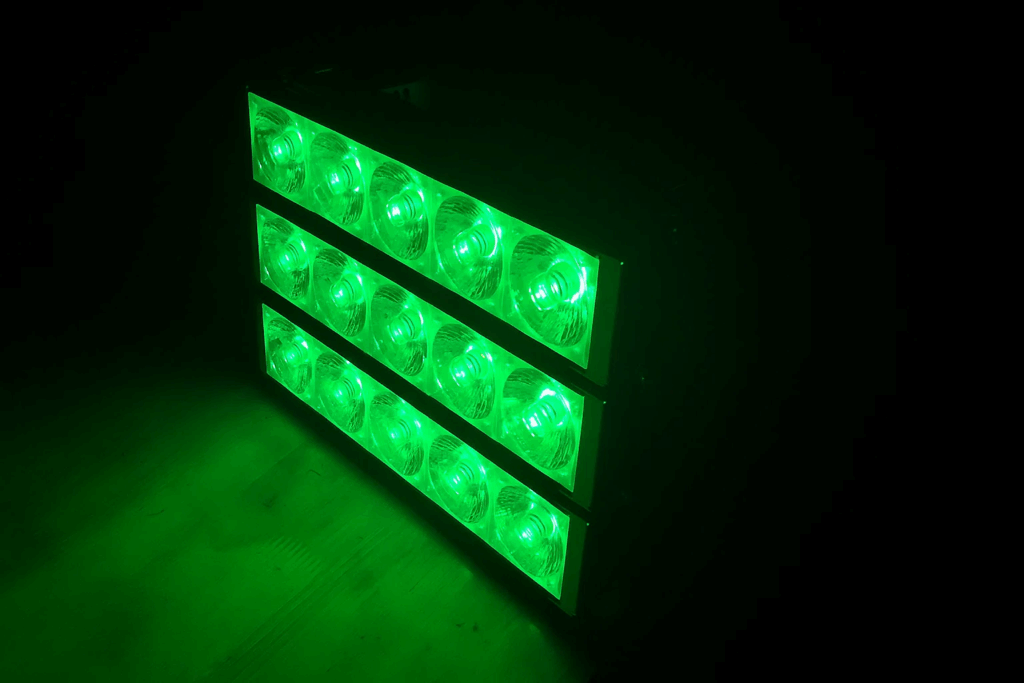
Night anglers use these lights to increase their catch rate for species like crappie, walleye, striped bass, and squid.
Fishermen working in large-scale operations deploy LED lights to attract schools of baitfish and squid for harvesting.
Special waterproof LED fishing lights are lowered through ice holes to draw fish beneath the frozen surface.
Marine biologists and hobbyists use underwater fishing lights for observing aquatic life and conducting nighttime studies.
Better Penetration: Travels farther in water compared to blue or white light.
Stronger Attraction: Proven effectiveness in attracting plankton and baitfish.
Energy Efficiency: LEDs provide high brightness with low energy consumption.
Reduced Glare: Creates a natural underwater glow without startling fish.
Underwater LED fishing lights have transformed night fishing by making it easier to attract fish to a specific area. With their IP68 rating, suitability for both fresh and saltwater, and the ability to operate at depths up to 20 meters, these lights are a must-have for serious anglers. Whether you’re fishing in a calm lake, along the coast, or in the open sea, a well-placed green LED fishing light can turn a quiet night into a rewarding catch.