Extreme industrial environments are the backbone of the modern global economy. From offshore oil platforms and deep-shaft mining sites to chemical refineries and power plants, these operations work around the clock under punishing conditions. High temperatures, corrosive atmospheres, vibration, dust, explosive gases, and saltwater exposure all combine to test the durability of both machinery and personnel. In such environments, safety and productivity are not simply operational targets—they are existential necessities.
Lighting, although often overlooked, plays a central role in this balance. It determines visibility, accuracy, morale, and even the likelihood of accidents. Traditional lighting systems—whether incandescent, fluorescent, or HID—have long struggled to meet the rigorous demands of these sectors. Frequent bulb failures, heat emissions, and maintenance downtime compromise both efficiency and worker safety.
The rise of LED technology has completely transformed this landscape. No longer confined to offices or residential applications, advanced industrial LEDs have evolved into precision-engineered systems that not only survive extreme conditions but actively enhance safety and performance within them. Today’s high-efficiency, corrosion-resistant, and smart-controlled LED fixtures are redefining what’s possible in lighting for hazardous or high-stress environments.
This article explores how modern LED innovation—exemplified by LedsMaster’s IP69-rated anti-corrosion series (30W / 100W / 250W)—is reshaping the way extreme industries approach illumination. By combining material science, photometric precision, and intelligent control, these lighting solutions are enabling operations that are safer, more efficient, and more sustainable than ever before.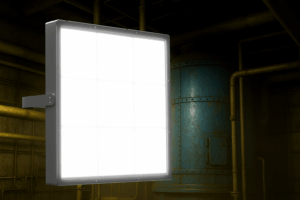
For decades, industrial lighting was viewed purely as a functional necessity—a way to make the workspace visible. Early facilities relied on incandescent lamps that provided minimal efficiency and generated excessive heat. Fluorescent and HID lamps later introduced higher lumen outputs, but at the cost of fragility, delayed warm-up times, and frequent maintenance requirements.
The result was predictable: poor visibility, unpredictable maintenance schedules, and significant operational disruption. Lighting was treated as a cost center rather than an opportunity for value creation.
The LED revolution began in earnest in the early 2000s, driven by rapid advances in semiconductor efficiency and optical design. The leap from 60 lm/W in early models to more than 200 lm/W in today’s industrial-grade solutions represented not just a technological shift—but an economic and strategic one. LEDs consume far less energy, last tens of thousands of hours, and can be engineered for specific industrial conditions.
In industries where every shutdown minute is costly, lighting has now evolved from a background utility to a strategic asset. It influences safety compliance, operational uptime, and even ESG (Environmental, Social, Governance) performance metrics. Modern facilities are integrating LEDs as part of holistic digital infrastructures—systems capable of intelligent monitoring, automation, and predictive maintenance.
In hazardous areas such as refineries, grain silos, and gas platforms, even a small spark can have catastrophic consequences. Explosion-proof LED fixtures are engineered to contain any internal ignition and prevent external combustion. LedsMaster’s IP69 anti-corrosion series employs hermetically sealed housings, electrostatically applied coatings, and high-impact lenses to achieve maximum safety performance.
These luminaires comply with leading certification standards (including ATEX and IECEx equivalents) and feature specialized anti-static materials to prevent electrical discharge. The IP69 enclosure rating guarantees total protection against dust ingress and high-pressure water jets, making these lights suitable for oil rigs, ship decks, and chemical washdown facilities where safety cannot be compromised.
High-quality illumination directly translates to fewer accidents and better situational awareness. LEDs offer superior color rendering (CRI up to 90+), allowing workers to distinguish wiring colors, fluid leaks, or chemical labels with accuracy. This minimizes human error—one of the leading causes of industrial accidents.
The LedsMaster LED series delivers uniform, flicker-free illumination that prevents the visual fatigue commonly caused by traditional discharge lamps. Workers in refineries and offshore platforms report significantly improved precision in inspection and maintenance tasks after switching to LED systems.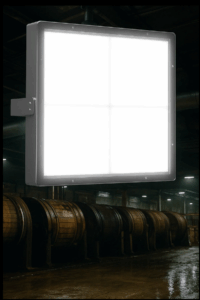
Heat is a silent hazard in many industrial spaces. LEDs operate at much lower surface temperatures than metal halide or halogen lamps, reducing fire risk in volatile environments. LedsMaster’s fixtures incorporate advanced heat-sink geometries and aerospace-grade aluminum alloys to ensure consistent thermal dissipation even when ambient temperatures exceed 60°C (140°F).
This stable temperature management not only prolongs LED lifespan but also ensures safety in zones where explosive vapors are present.
Modern LED systems can be integrated with smart control circuits for emergency illumination. Backup batteries and fail-safe power supplies guarantee light continuity during blackouts—crucial for evacuation and hazard containment.
In facilities that operate 24/7, redundancy lighting ensures no dark spots even in case of partial system failure. LEDs thus become part of the safety architecture, not merely a lighting solution.
Unlike HID lamps that require minutes to reach full brightness, LEDs achieve instant illumination. For industries that depend on continuous operation—mining, smelting, and shipping—this translates into measurable gains in uptime. A conveyor belt restart or emergency inspection can begin immediately, avoiding critical delays.
LedsMaster’s industrial LED fixtures respond instantly even after voltage fluctuations, ensuring continuous workflow and reducing downtime incidents.
LED optics can be precisely engineered to direct light exactly where it’s needed. This eliminates wasted energy and enhances task visibility. In welding bays, inspection tunnels, or underwater maintenance zones, directed LED beams improve accuracy and reduce rework.
LedsMaster’s customizable beam angles—from narrow spot to wide flood—allow facilities to optimize each workspace, ensuring maximum lumen efficiency and operator precision.
Maintenance is costly and risky in extreme industries. Changing a lamp on a 50-meter refinery tower or submerged dock requires specialized equipment and safety procedures. The 50,000–100,000-hour lifespan of industrial LEDs reduces maintenance intervals from monthly to multi-year cycles.
For instance, a LedsMaster 100W anti-corrosion LED fixture operating 12 hours per day can run for over 11 years before replacement. This not only saves labor costs but also minimizes worker exposure to dangerous maintenance environments.
Next-generation LED systems now function as intelligent nodes in industrial IoT (IIoT) networks. Integrated sensors can monitor occupancy, ambient light, and temperature, automatically adjusting brightness to conserve energy.
LedsMaster’s smart control options support DALI and wireless protocols, enabling remote diagnostics and predictive maintenance. Facilities can identify underperforming fixtures before failure occurs, further increasing operational reliability.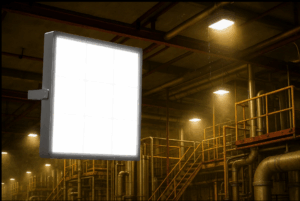
Few challenges are as relentless as corrosion, especially in marine, chemical, or wastewater environments. Salt, moisture, and reactive gases can degrade fixtures rapidly. LedsMaster’s IP69 anti-corrosion LED series is specifically engineered for these conditions.
Each unit features marine-grade aluminum or stainless steel housings coated with multi-layer epoxy and polyester powders that resist acids, alkalis, and salt spray. The series has undergone 1,000-hour ASTM B117 salt-spray testing with no visible corrosion—proving its durability in offshore and chemical plant deployments.
Available in 30W, 100W, and 250W models, these fixtures deliver up to 200 lm/W luminous efficacy while maintaining structural integrity against the most corrosive agents.
Extreme heat and mechanical vibration can compromise lesser luminaires. The LedsMaster series employs solid-state components, vibration-resistant brackets, and silicone-sealed optics designed to handle constant machinery resonance or ocean motion.
Each heat sink is precision-machined for maximum convection and conduction, keeping junction temperatures low even in ambient heat exceeding 70°C (158°F). The result is consistent light output and extended service life under extreme thermal stress.
Ingress protection defines a fixture’s resilience against water, dust, and particulates. IP69 represents the highest level achievable, ensuring total sealing against high-pressure, high-temperature water jets.
In environments such as mining tunnels or ship engine rooms, this level of sealing guarantees zero compromise in optical or electrical performance. Pressure equalization valves balance internal and external atmospheres, preventing vacuum deformation or gasket fatigue during deep-mine or subsea use.
In one case study, a marine engineering company replaced conventional floodlights with LedsMaster 250W IP69 anti-corrosion LEDs across a coastal repair dock. The results included a 45% reduction in energy use, elimination of monthly maintenance cycles, and improved safety compliance under IEC marine lighting standards.
Similarly, a smelting facility in Southeast Asia reported improved visibility and reduced heat load after replacing HPS lamps with LedsMaster 100W fixtures, confirming superior performance in high-temperature, corrosive atmospheres.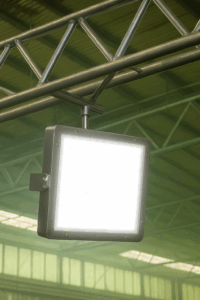
Industrial productivity depends as much on human factors as it does on machinery. Poor lighting contributes to fatigue, decreased alertness, and errors. Human-centric LED design focuses on delivering light that supports biological and psychological well-being.
LEDs can be tuned to mimic natural daylight spectra, stabilizing circadian rhythms for workers on rotating shifts. Properly balanced color temperature reduces eye strain and increases alertness, especially in enclosed facilities with limited natural light.
LedsMaster’s tunable white and RGBWW configurations allow facilities to adjust light color and intensity throughout the day, creating a more comfortable and focused work environment. Studies consistently show that improved lighting quality boosts worker satisfaction and reduces error rates—translating directly into higher productivity and fewer accidents.
Modern industry faces increasing pressure to reduce environmental impact while maintaining performance. LEDs contribute directly to sustainability objectives through energy efficiency, material longevity, and recyclability.
The IP69 anti-corrosion series aligns perfectly with ESG frameworks by combining high optical efficiency with long service life. For industries transitioning toward net-zero goals, these LEDs represent not just a technical upgrade but a measurable sustainability milestone.
LED implementation delivers a quantifiable return on investment across multiple fronts.
A recent example from a chemical processing facility shows how converting to LedsMaster 100W anti-corrosion LEDs cut lighting-related downtime by 80% and reduced CO₂ emissions by over 60 tons annually. The resulting energy savings funded further facility upgrades—demonstrating that safety and profitability can indeed coexist.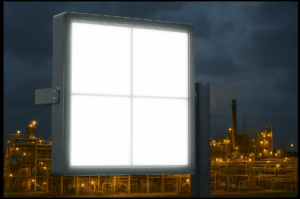
The pace of LED innovation continues to accelerate. Future-ready systems are moving beyond illumination into integrated sensing and intelligent data analytics.
Graphene coatings, nano-ceramic layers, and self-healing polymers are emerging to further enhance corrosion and abrasion resistance. These materials will extend fixture longevity well beyond 100,000 hours, even in the most aggressive chemical atmospheres.
By integrating computer vision and AI algorithms, LEDs can act as sensors—detecting leaks, motion, or smoke in real time. This predictive capability will transform lighting into an active safety monitoring system.
Future LED systems will feature modular optical engines and wireless connectivity for seamless scalability. Maintenance will become plug-and-play, with fixture modules swapped in minutes rather than hours.
LedsMaster continues to lead the frontier with its IP69 anti-corrosion product line. The company’s R&D pipeline includes next-generation smart modules with integrated diagnostics and adaptive optics for varying operational conditions. This commitment to continuous innovation ensures that industrial partners can rely on lighting solutions engineered for the future of extreme operations.
The transformation of industrial lighting from a consumable product into a strategic performance enabler marks a defining moment for extreme industries. Safety and productivity—once competing priorities—are now mutually reinforced through advanced LED technology.
By delivering precise, reliable, and intelligent illumination, LEDs reduce accidents, cut energy costs, and enhance operational continuity even in the harshest environments. The success of solutions like LedsMaster’s IP69 anti-corrosion LED series demonstrates that lighting can be both rugged and refined, blending engineering resilience with digital intelligence.
As industries evolve toward smarter, more sustainable models, one truth remains constant: visibility is the foundation of safety, and clarity is the engine of productivity. Through continued innovation in materials, design, and control, LEDs are not merely lighting the workspace—they are illuminating the future of industrial excellence.
–The End–