
Light-emitting diodes (LEDs) have revolutionized lighting technology over the past two decades, offering unparalleled energy efficiency, long service life, and versatile applications. Their advantages have led to widespread adoption in industrial facilities, commercial spaces, automotive systems, outdoor infrastructure, and even aerospace applications. However, one challenge continues to limit the performance and longevity of LEDs: high operating temperatures.
Heat is an unavoidable byproduct of electrical energy conversion. In environments such as industrial furnaces, vehicle engine compartments, desert landscapes, or aerospace components, temperatures can soar well beyond what standard LEDs can tolerate. If not properly managed, excessive heat accelerates lumen depreciation, causes color shift, and can dramatically reduce the operational lifespan of LEDs.
This article explores how high-temperature LEDs are designed and engineered to perform reliably under extreme heat. We will examine the challenges heat poses, advanced materials and thermal management strategies, rigorous testing and certifications, real-world applications, and emerging technologies that promise even better performance in the future.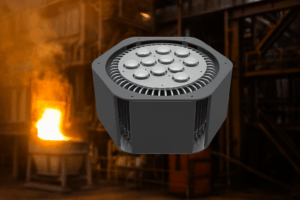
At the heart of an LED is a semiconductor chip, typically composed of gallium nitride (GaN) or aluminum gallium indium phosphide (AlGaInP). When electrical current passes through this chip, it emits light—a process known as electroluminescence. However, not all electrical energy is converted to visible light; a significant portion becomes heat.
High junction temperatures—the temperature at the core of the LED chip—directly impact its efficiency and stability. For every 10°C increase above the recommended junction temperature, the light output can decrease by 5–10%, a phenomenon known as thermal droop. In addition, elevated temperatures accelerate the degradation of phosphors, the materials responsible for converting blue light into white or colored light, which can lead to visible color shifts. Over time, sustained high temperatures drastically shorten LED lifespan, often leading to premature failure.
Standard LEDs are generally designed to operate reliably up to a junction temperature of approximately 85°C. Exceeding this threshold risks efficiency loss and accelerated aging. In contrast, high-temperature LEDs are engineered to operate consistently at junction temperatures of 125°C or even 150°C, maintaining stable light output and chromaticity. These LEDs bridge the gap between standard illumination and extreme environmental applications, making them indispensable in high-heat industries.
The importance of high-temperature LEDs becomes evident when examining real-world conditions. Industrial ovens and metal processing facilities routinely expose lighting to temperatures exceeding 100°C. In automotive applications, under-hood temperatures can easily reach 120°C, particularly near engines and exhaust systems. Outdoor floodlights installed in desert regions face both high ambient temperatures and intense solar radiation, often pushing LED systems to extreme thermal limits. Aerospace and defense applications also demand LEDs that function reliably under high temperatures, high altitudes, and intense vibration. In each case, managing heat is not merely a technical concern—it is a requirement for safety, efficiency, and reliability.
Material innovation is the foundation of high-temperature LED performance. Traditional LED chips often use standard GaN-on-sapphire substrates, which can degrade quickly under prolonged high temperatures. High-temperature LEDs typically utilize more robust semiconductor materials, such as GaN-on-silicon carbide (SiC) or AlGaInP, which offer higher thermal conductivity and stability.
Phosphors, the materials used to convert blue LED light to white light, also play a critical role. Standard phosphors can yellow or crack under prolonged heat, altering the color of the emitted light. High-temperature LEDs use phosphor formulations that resist thermal quenching, ensuring consistent light quality even when operating in extreme environments.
Even the most heat-resistant LED chip cannot function optimally without proper thermal management. Heat sinks are the primary mechanism for dissipating heat away from the LED junction. High-temperature LEDs employ heat sinks made from materials with high thermal conductivity, such as copper or aluminum alloys. Their design often features fins, pins, or microchannels that maximize surface area, allowing heat to transfer efficiently to the surrounding environment.
Thermal interface materials (TIMs) are equally critical. These substances, typically high-conductivity greases, pads, or adhesives, bridge the gap between the LED and the heat sink, reducing thermal resistance. Proper TIM application ensures that heat flows seamlessly away from the LED chip, preventing localized overheating.
PCB design also contributes significantly to thermal performance. Standard FR4 PCBs begin to soften and degrade above 130°C, whereas high-temperature LEDs often use metal-core PCBs (MCPCBs) or high-Tg FR4 substrates. These materials provide a stable thermal path, reducing junction temperatures and maintaining consistent performance.
The lens and encapsulation materials surrounding an LED affect not only its optical performance but also its thermal resilience. Standard epoxy lenses can yellow or crack under prolonged heat, reducing light output and altering color quality. High-temperature LEDs often employ silicone lenses, which resist thermal degradation while maintaining optical clarity. Some designs incorporate heat-resistant coatings or encapsulants that prevent moisture ingress and chemical reactions, further enhancing durability.
Optical design also contributes to thermal management. Lenses and reflectors can be shaped to allow heat to radiate away from the LED, rather than trapping it within the fixture. This approach is particularly valuable in high-density LED arrays, where collective heat can become substantial.
LED drivers regulate electrical current, ensuring consistent light output. High-temperature LEDs require drivers capable of operating in the same extreme conditions as the LEDs themselves. These drivers often include thermal protection features, such as over-temperature shutdown or current derating, to prevent damage during heat spikes.
Advanced systems may also employ dynamic dimming. By reducing current in response to high temperatures, LEDs can continue operating without reaching damaging junction temperatures. Such intelligent thermal management extends both efficiency and lifespan, especially in fluctuating environmental conditions.
To ensure reliability, high-temperature LEDs undergo thermal cycling tests. These tests simulate repeated temperature swings, mimicking real-world conditions such as day-night cycles in outdoor lighting or rapid heat-up and cool-down in industrial machinery. LEDs are subjected to hundreds or thousands of cycles, allowing engineers to identify potential failure modes, such as solder joint cracking, phosphor degradation, or lens discoloration.
HTOL testing evaluates how LEDs perform under sustained high temperatures over extended periods. LEDs are powered continuously at elevated junction temperatures, often exceeding 125°C, and monitored for lumen output, color shift, and electrical stability. These tests provide predictive data for lifespan and maintenance intervals, ensuring that products meet rigorous performance standards before deployment.
Several industry standards guide the evaluation of high-temperature LED performance. JEDEC standards, such as JESD22-A104 and JESD22-A108, outline temperature cycling and operating life tests. LM-80 and TM-21 protocols specifically measure lumen maintenance and predict long-term performance. UL certification and other regulatory approvals verify that LEDs meet safety and thermal performance requirements. Compliance with these standards ensures that high-temperature LEDs deliver reliable, predictable performance in demanding environments.
Automotive lighting is one of the most demanding applications for high-temperature LEDs. Headlights, brake lights, and turn signals must operate near engines and exhaust systems, where ambient temperatures can exceed 120°C. High-temperature LEDs provide consistent illumination, resist color shift, and maintain long-term reliability, even under constant vibration and thermal stress. For example, premium automotive manufacturers use GaN-on-SiC LEDs in engine bay lighting, achieving both high brightness and exceptional thermal stability.
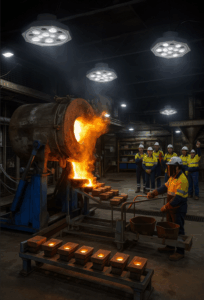
Industrial facilities, such as metal foundries or glass manufacturing plants, expose lighting systems to extreme heat and harsh conditions. High-temperature LEDs are installed in these environments to replace traditional incandescent or fluorescent fixtures, offering energy savings and extended service life. In one case study, a steel plant replaced high-bay metal halide lamps with high-temperature LEDs rated for 150°C junction temperatures, reducing energy consumption by 40% while maintaining stable light output despite furnace proximity.
Desert solar farms, airport runways, and stadiums present unique thermal challenges. High daytime temperatures, combined with solar radiation, can push LED junction temperatures beyond standard limits. High-temperature LEDs with advanced heat sinks, silicone lenses, and thermal monitoring systems maintain consistent illumination throughout the day. For instance, a desert solar farm in Arizona installed high-temperature LEDs for its maintenance pathways and achieved over 50,000 hours of operation without performance degradation.
Aerospace applications require LEDs that can withstand extreme temperature ranges, high altitude, vibration, and shock. High-temperature LEDs are used in cockpit displays, cabin lighting, and instrument panels. Their ability to resist color shift and lumen depreciation ensures critical information is accurately displayed under all operating conditions. Similarly, military vehicles and defense infrastructure rely on high-temperature LEDs for rugged, reliable performance in harsh environments.
Emerging materials and architectures promise even greater heat resilience. GaN-on-diamond substrates offer superior thermal conductivity, rapidly dissipating heat away from the junction. Advanced phosphor blends maintain color stability at temperatures exceeding 150°C. Researchers are also exploring micro-LED arrays, which distribute heat more effectively and improve overall efficiency.
Innovative thermal management solutions, including liquid cooling, microchannel heat sinks, and phase-change materials, are gaining traction. These technologies allow high-power LEDs to operate at higher brightness levels without exceeding safe thermal limits. Active thermal regulation, combined with intelligent driver electronics, enables dynamic responses to fluctuating environmental conditions.
The integration of IoT-enabled sensors and adaptive controls allows real-time monitoring of LED temperature, current, and lumen output. Smart systems can automatically adjust brightness or trigger cooling mechanisms, ensuring optimal performance while minimizing energy waste. These innovations represent a new frontier in high-temperature LED reliability, particularly for large-scale industrial and infrastructure applications.
High-temperature LEDs represent a critical evolution in lighting technology, allowing illumination systems to function reliably in environments previously considered too harsh. By combining advanced semiconductor materials, robust phosphors, innovative thermal management, resilient encapsulation, and intelligent driver electronics, these LEDs maintain performance under extreme heat while providing energy efficiency, safety, and longevity.
As industries and applications continue to demand higher brightness, longer lifespan, and more extreme operational conditions, high-temperature LEDs will remain at the forefront of innovation. Advances in materials, cooling technologies, and smart monitoring systems promise a future where LEDs can thrive in virtually any environment, from the depths of industrial furnaces to the scorching deserts and beyond.
–The End–