
Industrial operations in high-temperature environments have always posed significant challenges to both equipment and personnel. Industries such as metal smelting, glass manufacturing, ceramics production, power generation, and heavy industrial processing routinely operate in extreme thermal conditions where conventional infrastructure, including lighting systems, is often pushed beyond its intended limits. Historically, lighting in such environments has relied on traditional technologies such as high-intensity discharge (HID) lamps, halogen fixtures, or fluorescent lighting. While these solutions provided basic illumination, they were never truly optimized for prolonged exposure to high temperatures, corrosive atmospheres, or heavy industrial stress.
In recent years, the rapid advancement of light-emitting diode (LED) technology has transformed industrial lighting solutions. However, standard LEDs are typically designed for moderate operating temperatures and can degrade or fail when exposed to excessive heat. This limitation led to the development of high-temperature LED lighting systems specifically engineered to function reliably in environments reaching 90°C, 150°C, or even 200°C. These specialized luminaires incorporate advanced thermal management, heat-resistant materials, and robust electronic components that allow them to maintain performance under extreme conditions.
The safety implications of this technological evolution are profound. Lighting is not merely a matter of visibility; it is a critical component of industrial safety infrastructure. Poor lighting can lead to misjudgments, accidents, equipment mishandling, and increased risk of injury or fatalities. Traditional lighting systems in high-heat environments often flicker, dim, overheat, or fail unexpectedly, creating hazardous conditions for workers and equipment alike.
High-temperature LED lighting addresses these risks by offering stable illumination, superior durability, reduced maintenance requirements, and enhanced thermal resilience. This article explores in depth how these lighting systems contribute to safer industrial operations, examining their technical characteristics, operational benefits, and real-world applications across multiple industries. Ultimately, high-temperature LED lighting is not just an efficiency upgrade—it is a fundamental enhancement to workplace safety in extreme environments.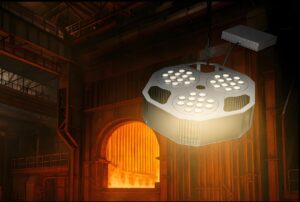
High-temperature industrial environments are characterized by continuous or intermittent exposure to extreme heat, radiant thermal energy, and often harsh atmospheric conditions. These settings are common in heavy industries where processes such as melting, forging, firing, curing, or combustion are integral to production. Unlike standard manufacturing facilities, these environments place extraordinary stress on all equipment, including lighting systems.
Typical high-temperature workplaces include foundries and metal smelting plants, where molten metal can exceed temperatures of 1,000°C. In such settings, ambient temperatures near furnaces or casting lines can reach or exceed 100°C, making conventional lighting solutions impractical. Glass manufacturing plants also operate at extremely high temperatures, with furnaces and kilns generating intense radiant heat that can damage nearby equipment. Similarly, ceramic and tile production facilities rely on high-temperature kilns that create sustained thermal exposure.
Industrial baking and curing chambers, commonly used in coatings, automotive paint lines, and composite material processing, often maintain temperatures between 150°C and 250°C for extended periods. In power plants and heavy manufacturing sites, high-temperature zones exist near boilers, turbines, and exhaust systems. In all these environments, lighting must function reliably despite continuous heat exposure.
The risks associated with these environments are multifaceted. One major concern is heat damage to equipment, which can lead to electrical failures, material degradation, or mechanical breakdowns. Lighting fixtures that are not designed for high temperatures may experience premature failure, cracked housings, or melted components. This not only increases maintenance costs but also creates potential safety hazards.
Fire risk is another critical issue. Traditional lighting technologies such as halogen or HID lamps generate significant heat themselves, sometimes reaching surface temperatures high enough to ignite flammable materials. In environments where dust, chemicals, or combustible gases may be present, this represents a serious safety concern.
Poor visibility is also a common problem in high-temperature industrial settings. Heat-induced flickering, dimming, or inconsistent light output can impair workers’ ability to perform tasks accurately and safely. In environments where precision and awareness are crucial—such as near molten metal or heavy machinery—this can lead to severe accidents.
Finally, frequent lighting failures in high-heat zones pose both operational and safety risks. When a light fixture fails unexpectedly, workers may be forced to enter dangerous areas to replace it, exposing them to extreme temperatures, hazardous materials, or moving machinery. Therefore, lighting reliability is not merely a convenience—it is a critical safety requirement.
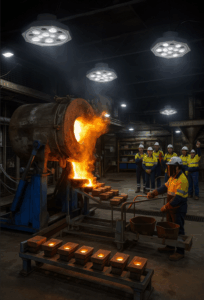
One of the most significant advantages of high-temperature LED lighting is its ability to operate safely and reliably in extreme thermal conditions. Unlike conventional LEDs, which typically perform best below 60°C, high-temperature LEDs are specifically engineered to withstand ambient temperatures of 90°C, 150°C, and even up to 200°C in specialized industrial applications.
This capability is achieved through a combination of advanced material science and thermal engineering. High-temperature LED luminaires are constructed using heat-resistant metals such as aluminum alloys or stainless steel, which can endure prolonged exposure to elevated temperatures without deforming or losing structural integrity. The housing is often designed with enhanced heat dissipation features, including finned heat sinks or passive cooling structures that allow excess thermal energy to dissipate efficiently.
Internally, the electronic components—particularly the LED drivers and circuit boards—are built using materials rated for high thermal stability. Standard LED drivers can fail when exposed to excessive heat, leading to flickering or complete shutdown. High-temperature drivers, however, are designed to maintain stable performance even under extreme conditions, reducing the risk of electrical malfunction or short circuits.
Compared to traditional lighting technologies, high-temperature LEDs produce significantly less radiant heat. HID and halogen lamps convert a large portion of electrical energy into heat rather than light, making them inherently inefficient and potentially dangerous in hot environments. In contrast, LEDs are far more energy-efficient, converting most of their power into visible light rather than thermal radiation. This reduction in heat output lowers the risk of igniting nearby materials and reduces the overall thermal burden on the facility.
By minimizing overheating, material degradation, and electrical instability, high-temperature LED lighting plays a direct role in reducing fire hazards and protecting industrial equipment. This makes it a safer and more reliable alternative to legacy lighting technologies in extreme environments.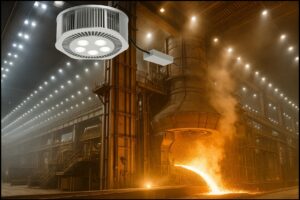
Visibility is a fundamental component of workplace safety, particularly in high-risk industrial settings where workers must operate heavy machinery, handle hazardous materials, or work in proximity to extreme heat. High-temperature LED lighting provides consistent, high-quality illumination that remains stable even under fluctuating thermal conditions.
Unlike traditional lighting systems that may flicker or dim as they heat up, high-temperature LEDs are designed to maintain a steady light output throughout their operational lifespan. This stability is crucial for preventing visual fatigue, reducing eye strain, and ensuring that workers can clearly see their surroundings at all times.
Flickering light is more than just a nuisance—it can impair depth perception, create optical illusions, and increase the likelihood of mistakes. In environments such as foundries or glass plants, where workers must monitor molten materials or delicate processes, even minor visual distortions can have serious consequences. High-temperature LEDs eliminate these issues by providing flicker-free illumination, enhancing both comfort and safety.
Furthermore, the superior color rendering capabilities of modern industrial LEDs allow workers to distinguish objects, surfaces, and materials more accurately. This is particularly important in quality control, inspection tasks, and precision operations. Improved visibility leads to better decision-making, fewer errors, and a reduced risk of workplace accidents.
By delivering reliable and uniform lighting, high-temperature LEDs contribute directly to safer working conditions and more efficient industrial operations.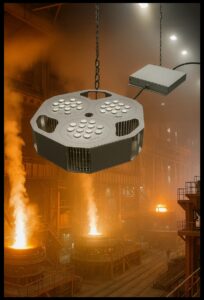
High-temperature industrial environments are not only hot but also often dusty, humid, corrosive, or subject to vibration and mechanical shock. As a result, lighting systems must be robust enough to withstand multiple environmental stress factors simultaneously.
High-temperature LED luminaires are typically designed with rugged, industrial-grade construction. The outer housing is often sealed to achieve high ingress protection (IP) ratings, such as IP65, IP66, or even IP67, meaning they are resistant to dust and water penetration. This is particularly important in environments like foundries or manufacturing plants, where airborne particles, metal dust, or chemical fumes are common.
In addition to environmental sealing, these fixtures are built to resist mechanical vibration and impact. Heavy industrial machinery, conveyor systems, and large-scale production equipment can generate constant vibrations that would quickly degrade conventional lighting systems. High-temperature LEDs are engineered with reinforced mounting brackets, shock-resistant components, and durable internal structures to ensure long-term stability.
The durability of these luminaires also reduces the risk of physical failure, such as cracked housings or loose components that could fall and injure workers below. In hazardous environments, even small falling debris can cause serious injuries, making the structural integrity of lighting fixtures a critical safety consideration.
Overall, the robust design of high-temperature LED lighting ensures that it can endure the harshest industrial conditions while maintaining both performance and safety.
One of the most significant safety benefits of high-temperature LED lighting is its exceptional reliability and long operational lifespan. Traditional lighting systems in high-heat environments often require frequent replacement due to thermal degradation, filament burnout, or driver failure. Each replacement involves sending maintenance personnel into potentially dangerous areas.
High-temperature LEDs, by contrast, are designed for extended service life, often exceeding 50,000 hours of operation under proper conditions. This dramatically reduces the frequency of maintenance interventions, minimizing worker exposure to hazardous zones such as furnace areas, elevated platforms, or confined spaces.
Reduced maintenance also means fewer shutdowns and less disruption to industrial operations. Unplanned lighting failures can create sudden dark zones in critical work areas, increasing the risk of accidents. With reliable high-temperature LEDs, facilities can maintain consistent illumination and avoid unexpected safety hazards.
Additionally, many high-temperature LED systems are designed with modular components that can be easily serviced or replaced without removing the entire fixture. This further enhances safety by simplifying maintenance procedures and reducing the time workers spend in high-risk environments.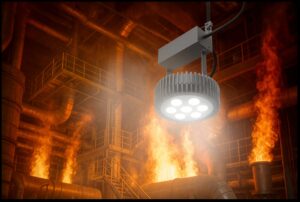
Beyond safety, high-temperature LED lighting offers significant energy efficiency advantages that indirectly contribute to safer industrial operations. LEDs consume far less electricity than traditional lighting technologies while delivering equal or superior brightness.
Lower energy consumption reduces the strain on industrial electrical systems, minimizing the risk of overheating cables, transformers, or power distribution units. This is particularly important in older facilities where electrical infrastructure may already be operating near capacity.
Moreover, because LEDs generate less waste heat, they help maintain a more stable thermal environment within the facility. In high-temperature industrial settings, even small reductions in additional heat load can improve overall working conditions and reduce stress on cooling systems.
Effective thermal management in LED luminaires also prevents localized overheating, which could otherwise damage surrounding materials or equipment. By integrating advanced heat dissipation technologies, high-temperature LEDs contribute to both operational efficiency and workplace safety.
The safety advantages of high-temperature LED lighting vary depending on the specific industrial application.
In foundries and metal smelting plants, clear and stable illumination is essential for workers handling molten metal. High-temperature LEDs provide consistent visibility near furnaces and casting lines, reducing the likelihood of accidents caused by poor lighting or sudden fixture failure.
In glass manufacturing facilities, where extreme radiant heat is present, high-temperature LEDs ensure reliable lighting without degrading under thermal stress. This allows workers to monitor production processes accurately and safely.
In ceramic and tile plants, where kilns operate continuously at high temperatures, durable LED lighting ensures uninterrupted illumination throughout the firing process. This enhances both safety and quality control.
In industrial baking and curing chambers, high-temperature LEDs can function directly within heated environments, providing clear visibility for inspection and monitoring without the need for additional protective enclosures.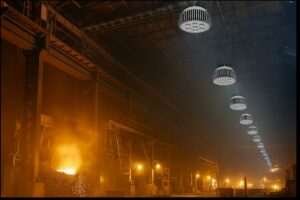
In many industrial facilities that have transitioned from traditional lighting to high-temperature LED systems, significant safety improvements have been reported. For example, a metal foundry that replaced its aging HID fixtures with high-temperature LEDs experienced fewer lighting failures, reduced maintenance interventions, and improved worker visibility near critical heat zones.
Similarly, a glass manufacturing plant reported a decrease in workplace incidents after upgrading to high-temperature LEDs, citing better illumination and fewer sudden lighting outages. These real-world examples demonstrate the tangible safety benefits of adopting advanced LED technology in extreme environments.
High-temperature LED lighting represents a major advancement in industrial safety and efficiency. By combining superior thermal resistance, stable illumination, robust construction, and long-term reliability, these lighting systems address many of the risks associated with traditional lighting in extreme environments.
They reduce fire hazards, improve worker visibility, minimize maintenance-related dangers, and enhance overall operational stability. As industries continue to prioritize safety and efficiency, high-temperature LED lighting will play an increasingly critical role in creating safer, more sustainable industrial workplaces.
–The End–