
In contemporary industrial environments, lighting is far more than a basic utility; it is a critical enabler of safety, productivity, and operational reliability. Facilities such as steel mills, glass furnaces, chemical processing plants, and kilns frequently operate under ambient temperatures that exceed the safe thresholds of conventional lighting solutions. Standard incandescent or LED fixtures often fail under such thermal stress due to degradation of sensitive components, leading to frequent replacements, unplanned downtime, and elevated operational costs.
High-temperature LEDs (HT-LEDs) have emerged as purpose-engineered lighting solutions capable of withstanding extreme heat while delivering consistent, reliable illumination. Unlike standard LEDs, HT-LEDs utilize advanced materials and thermal management systems to resist heat-induced degradation. Their implementation allows industrial facilities to maintain optimal visibility in high-temperature zones, ensuring worker safety, operational precision, and uninterrupted production.
Beyond resilience, HT-LEDs contribute to energy efficiency and sustainability goals. By maintaining luminous efficacy under extreme temperatures, they reduce electricity consumption relative to traditional lamps, while their extended operational lifespan minimizes environmental waste. The combination of durability, performance, and energy efficiency positions high-temperature LEDs as a strategic investment for industries operating in environments that challenge conventional lighting technologies.
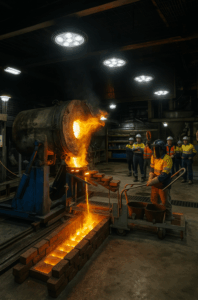
Industrial operations such as metal smelting, glass production, cement manufacturing, and chemical processing often involve ambient temperatures exceeding 90°C, with localized heat sources surpassing 200°C. Steel mills, for instance, feature molten metal furnaces producing intense radiant heat, affecting not only personnel but also lighting and electrical infrastructure. Similarly, glass kilns and ceramics firing processes subject lighting systems to prolonged high-temperature exposure, which standard fixtures cannot reliably endure.
Under these conditions, conventional fixtures experience accelerated material fatigue, lens yellowing, and component failure. Dust, moisture, and chemical contaminants further exacerbate degradation, leading to operational inefficiencies, safety hazards, and increased maintenance burdens. In these scenarios, lighting systems must be engineered specifically to maintain performance in extreme environments, as standard solutions are prone to early failure and pose both financial and operational risks.
High temperatures directly impact conventional lighting technologies. Standard LEDs typically have junction temperature limits around 85°C; exceeding these limits accelerates lumen depreciation, phosphor degradation, and potential driver failure. Fluorescent and metal-halide lamps are even more vulnerable, with shortened lifespans and significant light output decline under thermal stress.
Thermal expansion can compromise fixture housings, causing cracks or lens deformation, which creates safety hazards. Performance variability in high-heat environments affects operator visibility, potentially impairing productivity and safety. Additionally, frequent lamp replacements and emergency maintenance increase operational costs and the likelihood of downtime. These challenges underscore the necessity for purpose-built high-temperature LEDs that can reliably maintain both performance and safety standards in extreme industrial environments.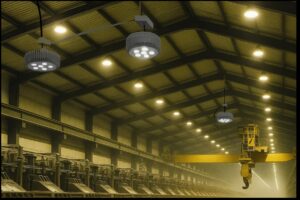
High-temperature LEDs are engineered with materials specifically chosen to withstand prolonged thermal stress. Printed circuit boards (PCBs) are fabricated from high-temperature substrates such as ceramic or metal-core PCBs, which maintain structural integrity and thermal conductivity even at elevated temperatures. LED chips incorporate thermally stable encapsulants and phosphors that resist color shift and lumen depreciation, preserving optical performance over time.
Optical components such as lenses and diffusers are crafted from heat-resistant polymers or borosilicate glass, preventing yellowing, warping, or cracking. Fixture housings utilize high-strength aluminum alloys or stainless steel to provide mechanical durability and corrosion resistance. Collectively, these design elements ensure that HT-LEDs maintain reliable performance and consistent illumination in environments that would quickly degrade standard lighting technologies.
HT-LEDs are available across a broad spectrum of power ratings, typically from 50W to 400W, allowing operators to tailor lighting solutions to specific industrial needs. Each variant is engineered to function efficiently within defined ambient temperature ranges, such as 90°C, 150°C, or 200°C. Robust driver electronics are designed to manage high thermal loads, ensuring continuous operation without risk of overheating or failure. This adaptability allows industrial operators to balance energy efficiency, light output, and reliability according to the precise requirements of their facilities.
HT-LEDs provide a flexible range of color temperatures, spanning from 3000K (warm white) to 5600K (daylight). Warm white light reduces glare and visual fatigue in high-temperature workspaces where reflective surfaces may intensify brightness, improving operator comfort and safety. Cooler daylight tones enhance contrast and clarity for precision tasks such as inspection, assembly, or material handling. This flexibility allows industrial facilities to optimize lighting for both human factors and operational efficiency, ensuring that elevated temperatures do not compromise performance.
Industrial environments frequently combine heat with dust, moisture, and chemical exposure. HT-LED fixtures typically carry IP65 or higher ratings, offering comprehensive protection against particulate ingress and water exposure. Seals, gaskets, and protective coatings prevent corrosion and component degradation, ensuring long-term reliability. These protective measures make HT-LEDs suitable for installation in high-heat areas such as foundries, chemical processing units, and outdoor storage facilities, extending lifespan and reducing maintenance frequency compared to standard lighting solutions.
Efficient thermal management is critical to HT-LED design. Advanced heat sinks, often integrated into the fixture body, leverage high-conductivity metals to dissipate heat rapidly. Passive cooling methods reduce reliance on fans or active systems, lowering the risk of mechanical failure in high-temperature settings. Some designs incorporate specialized fin geometries or liquid cooling channels to manage localized hotspots effectively. These thermal control strategies maintain LED junction temperatures within safe limits, preserving both performance and longevity under extreme operational conditions.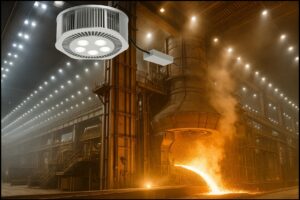
High-temperature LEDs deliver multiple advantages over conventional lighting. First, their extended operational lifespan—frequently exceeding 50,000 hours—minimizes maintenance cycles and operational interruptions. The durable design reduces unplanned downtime, delivering cost savings and improved process continuity.
Second, HT-LEDs maintain consistent luminous output and color fidelity under extreme temperatures. Unlike standard LEDs, which experience rapid lumen depreciation, these fixtures preserve brightness and color stability, ensuring adequate illumination for precision and safety-critical tasks.
Energy efficiency represents another significant benefit. HT-LEDs convert a larger portion of electrical energy into usable light, reducing power consumption while minimizing greenhouse gas emissions.
Finally, HT-LEDs improve workplace safety by providing reliable illumination in environments where thermal processes can create hazardous conditions. Their combination of durability, performance, and efficiency offers a compelling return on investment, making them a strategic choice for modern industrial facilities.
Steel mills, foundries, and smelting facilities operate with furnaces generating temperatures that can exceed 1,500°C. In such environments, conventional lighting systems fail quickly due to thermal degradation and radiant heat exposure. HT-LEDs, with heat-resistant housings, PCBs, and optics, offer a reliable alternative capable of maintaining illumination even in proximity to molten metal.
Reliable lighting is essential for worker safety, as personnel navigate high-temperature zones with heavy machinery and molten materials. HT-LEDs enhance visibility for tasks such as material handling, welding, and quality inspection, reducing the risk of accidents and ensuring compliance with industrial safety standards. In addition, these LEDs provide consistent color rendering, enabling operators to accurately monitor material conditions and surface finishes, which is critical in metallurgical processes. The combination of durability, energy efficiency, and performance makes HT-LEDs an indispensable tool in modern steel production facilities.
Glass manufacturing and ceramic production involve prolonged exposure to radiant heat, often in enclosed or semi-enclosed high-temperature chambers. Conventional LEDs degrade quickly under such conditions, compromising illumination and operational reliability. Purpose-built HT-LEDs provide consistent light output, color stability, and mechanical durability, ensuring that operators can perform inspection, quality control, and maintenance tasks safely.
In glass production, where molten material requires precise monitoring, HT-LEDs enable accurate observation of color, clarity, and defects. Similarly, in ceramics firing, operators rely on high-temperature lighting to detect cracks, warping, or uneven heating. HT-LEDs’ thermal resilience reduces downtime, minimizes replacement costs, and improves operational efficiency. Additionally, the ability to tailor color temperature ensures optimal visual contrast for delicate, detail-oriented processes, reinforcing workplace safety and productivity.
Petrochemical and chemical processing environments combine elevated temperatures, corrosive gases, and moisture exposure. Standard lighting often fails due to heat-induced degradation or chemical corrosion. HT-LEDs, engineered with high IP ratings and chemically resistant housings, maintain consistent illumination in these harsh conditions.
Reliable lighting is essential for monitoring reaction vessels, pipelines, and control panels. Inaccurate or dim lighting could lead to operational errors, safety incidents, or environmental hazards. HT-LEDs ensure that operators can visually monitor processes accurately, identify leaks or spills promptly, and maintain continuous operation without compromising safety. Their combination of heat resistance, chemical tolerance, and energy efficiency positions HT-LEDs as a critical infrastructure component in high-temperature industrial chemical applications.
Automotive and aerospace manufacturing processes frequently involve high-temperature operations such as engine testing, metal forging, and aerospace component fabrication. HT-LEDs provide consistent, high-intensity illumination that enables precise assembly, inspection, and testing under extreme thermal conditions.
Conventional lighting often suffers from rapid degradation when exposed to localized heat from engines, furnaces, or welding operations. HT-LEDs, however, maintain their optical performance and color rendering capabilities, allowing quality assurance teams to detect micro-defects, alignment issues, or surface irregularities. Furthermore, their energy efficiency reduces operational costs, while long-term reliability minimizes maintenance interruptions, ensuring continuous production and adherence to stringent quality standards.
High-temperature storage facilities, such as those handling asphalt, molten products, or heat-sensitive materials, require lighting that can maintain performance in elevated ambient temperatures. HT-LEDs provide durable, reliable illumination to ensure operational efficiency and safety in these challenging environments.
Proper lighting enhances worker safety during material handling, equipment operation, and inspection tasks. In addition, consistent illumination prevents accidents caused by poor visibility in large, high-temperature spaces. HT-LEDs’ extended lifespan and energy efficiency reduce maintenance frequency and electricity costs, providing a sustainable and reliable solution for industrial warehousing and storage operations. Their ability to operate continuously without thermal degradation makes them a cost-effective alternative to traditional lighting solutions in these extreme conditions.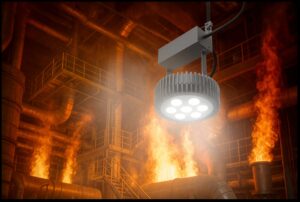
A leading steel manufacturer in Europe replaced conventional high-bay fixtures near molten furnaces with HT-LEDs rated for 200°C ambient temperature. Within six months, maintenance frequency decreased by over 70%, while energy consumption dropped by 35%. Workers reported improved visibility near furnace lines, enhancing safety and operational efficiency. The HT-LEDs maintained consistent color rendering, allowing quality control inspectors to detect defects in steel output more accurately.
A glass manufacturing plant in North America retrofitted its kiln inspection zones with 150W HT-LED fixtures. Over one year, the facility observed zero lamp failures, compared to previous quarterly replacements of standard LEDs. The LEDs’ daylight color temperature improved contrast when inspecting molten glass, enabling more precise quality control. Operational downtime for lighting maintenance was eliminated, contributing to a smoother production schedule and reduced labor costs.
In a petrochemical facility handling high-temperature reactions, HT-LEDs replaced traditional fluorescent lighting near reactors and control stations. With IP66-rated housings and heat-resistant drivers, the LEDs withstood both thermal and chemical stress. Operators reported better illumination consistency and improved visibility for monitoring reaction vessels. Maintenance costs dropped significantly, and energy usage decreased by 25%, demonstrating both operational and financial benefits.
High-temperature LEDs provide a resilient, energy-efficient, and long-lasting solution for industrial facilities facing extreme heat conditions. Their purpose-built design—including heat-resistant components, thermal management systems, and high ingress protection—ensures reliable illumination in environments that challenge conventional lighting. By adopting HT-LEDs, industries can improve worker safety, reduce operational costs, enhance energy efficiency, and maintain continuous production. For any facility operating under extreme temperatures, HT-LEDs represent a strategic investment in both performance and sustainability.
–The End–