
High-temperature LEDs represent a significant advancement in industrial and outdoor lighting technology, designed specifically to withstand extreme thermal conditions that standard LEDs cannot tolerate. As the industrial landscape evolves, environments such as metal foundries, chemical plants, desert solar farms, and high-ceiling warehouses require lighting systems that maintain performance under severe heat stress. Standard LEDs, while energy-efficient and long-lasting under typical operating conditions, can suffer substantial lumen depreciation, accelerated degradation, and driver failures when exposed to prolonged high temperatures. High-temperature LEDs address these challenges by integrating advanced materials, thermal management systems, and driver electronics designed to operate reliably even in extreme thermal scenarios.
Industrial engineers, facility managers, and procurement professionals often face the dilemma of selecting lighting solutions that balance energy efficiency, durability, and cost-effectiveness. High-temperature LED technology enables these stakeholders to achieve reliable illumination without frequent maintenance, reducing downtime and ensuring operational safety. Moreover, in critical applications such as arenas or automotive testing facilities, where precise lighting is crucial, high-temperature LEDs provide consistent light output even under thermal stress. This article explores the characteristics, benefits, applications, and selection criteria for high-temperature LEDs, offering practical insights for industrial buyers seeking sustainable, high-performance lighting solutions.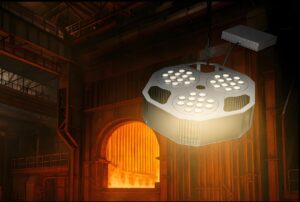
LED performance is intrinsically linked to thermal conditions, as excessive heat can significantly impact both luminous efficacy and operational lifespan. Unlike traditional lighting technologies, LEDs are highly sensitive to junction temperature—the temperature at the point where the semiconductor emits light. When junction temperatures exceed the designed threshold, typically around 85°C for conventional LEDs, lumen output decreases sharply, leading to insufficient illumination for critical industrial tasks. Prolonged exposure to high thermal stress accelerates material degradation in phosphors, encapsulants, and circuit boards, potentially causing color shifts, flickering, and premature failure. Furthermore, thermal stress can compromise driver circuitry, leading to erratic operation or total device failure. Understanding these thermal limitations is crucial for engineers specifying lighting for extreme environments, as ignoring heat effects can result in costly downtime, increased maintenance, and safety hazards.
High-temperature LEDs are essential in environments where conventional lighting cannot reliably operate. Industrial settings such as steel mills, smelting plants, glass manufacturing facilities, and chemical processing areas routinely experience temperatures that surpass the safe operating limits of standard LEDs. In outdoor contexts, regions with high ambient temperatures, such as deserts, demand lighting solutions that maintain performance despite solar heat gain and elevated ambient air temperatures. Specialized applications—including automotive testing chambers, high-ceiling arenas, and desert-based solar farms—further require LEDs that deliver stable illumination under extreme heat and varying humidity. Selecting an LED designed for these conditions ensures consistent light output, prevents frequent replacements, and supports operational safety, making thermal resilience a primary criterion in the selection process.
High-temperature LEDs incorporate multiple engineering innovations to ensure thermal resilience and long-term performance. Advanced semiconductor materials are specifically selected to withstand elevated junction temperatures without efficiency loss or degradation. Thermal management is enhanced through high-conductivity heat sinks, optimized fin structures, and high-performance thermal interface materials, all of which facilitate rapid heat dissipation from the LED junction to the external environment. Protective housings, often constructed from thermally stable metals or polymers with high thermal conductivity, safeguard internal components against heat-induced mechanical stress. In addition, specialized coatings can provide UV and corrosion resistance while further enhancing heat tolerance. The driver electronics of high-temperature LEDs are also engineered to operate reliably under high ambient temperatures, maintaining stable current regulation to prevent overheating. Collectively, these features allow high-temperature LEDs to operate efficiently in conditions that would cause standard LEDs to fail.
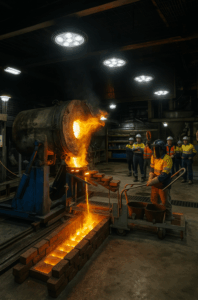
Evaluating high-temperature LEDs requires careful consideration of critical performance metrics. Operating temperature ranges are a fundamental specification, with many high-temperature LEDs capable of functioning reliably between -40°C and 85°C, or even higher for specialized applications. Lumen maintenance at elevated temperatures is another crucial factor; high-temperature LEDs are engineered to sustain over 90% of their rated lumen output under prolonged thermal stress, ensuring consistent illumination. Additionally, ingress protection (IP) ratings determine environmental resistance, including dust, moisture, and chemical exposure, which can exacerbate heat-related failures. Metrics such as color rendering index (CRI) and correlated color temperature (CCT) are also affected by temperature; high-temperature LEDs are optimized to maintain consistent light quality even under extreme heat. These parameters collectively provide a comprehensive framework for specifying LEDs in challenging environments, guiding engineers and procurement managers toward solutions that maximize both performance and reliability.
High-temperature LEDs ensure consistent illumination in environments that experience prolonged or sudden heat surges. Unlike standard LEDs, which suffer performance loss and early failure under thermal stress, high-temperature LEDs maintain stable light output, protecting operational continuity in industrial facilities, outdoor installations, and specialized arenas. Reliability extends beyond mere lighting; it encompasses safety, productivity, and reduced operational risk. For industries where proper illumination is critical—such as steel manufacturing, chemical processing, or automotive testing—maintaining reliable lighting reduces accidents and enhances efficiency. High-temperature LEDs deliver consistent photometric performance, ensuring that work areas, machinery, and critical zones remain properly illuminated, even under challenging thermal conditions.
By resisting heat-induced degradation, high-temperature LEDs dramatically reduce maintenance frequency and associated costs. In industrial and outdoor settings, frequent replacement of conventional LEDs can result in operational downtime, labor expenses, and potential safety hazards. High-temperature LEDs, designed for long-term thermal resilience, minimize these disruptions, providing multi-year service life even in extreme heat. The extended lifespan reduces both direct and indirect costs associated with lighting systems, delivering a more predictable and sustainable total cost of ownership (TCO) for facility managers and procurement teams. These savings are particularly impactful in large-scale installations, where hundreds or thousands of fixtures are deployed.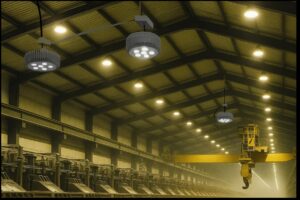
High-temperature LEDs combine energy efficiency with resilience under extreme thermal conditions. Standard LEDs often experience decreased efficacy as operating temperatures rise, consuming more energy per lumen and generating additional heat. In contrast, high-temperature LEDs maintain luminous efficacy—often exceeding 150–170 lm/W—while operating under thermal stress. This sustained efficiency not only reduces energy consumption but also limits additional heat generation, further protecting the fixture and surrounding environment. Energy-efficient, thermally stable lighting translates into lower utility costs and a reduced environmental footprint, aligning with sustainability goals for industrial operations.
Heat-resistant LEDs contribute significantly to workplace safety. Poor or inconsistent lighting can lead to accidents, misalignment of machinery, or operational errors in industrial settings. High-temperature LEDs mitigate these risks by ensuring uniform illumination even in extreme thermal conditions, improving visibility and operational precision. The robust design of high-temperature fixtures also reduces the likelihood of electrical or thermal failures, decreasing fire hazards and supporting compliance with industrial safety regulations. By integrating high-temperature LED solutions, facility managers can protect both personnel and equipment while optimizing operational efficiency.
Investing in high-temperature LEDs offers measurable long-term returns. Although initial costs may be higher than standard LEDs, the reduction in maintenance, replacement, and energy costs creates a favorable ROI over the product lifecycle. Industrial and outdoor installations particularly benefit from reduced downtime and predictable performance, ensuring that lighting infrastructure remains reliable for years. For procurement managers and industrial engineers, high-temperature LEDs represent a strategic investment that balances upfront expenditure with operational efficiency, energy savings, and enhanced workplace safety.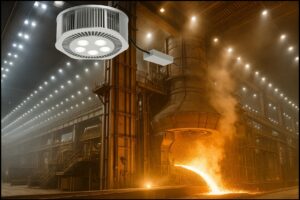
Industrial facilities often involve high-heat operations, such as steel mills, foundries, glass manufacturing, and chemical processing plants. In these environments, lighting must withstand heat radiated from furnaces, molten metals, and machinery while maintaining uniform illumination. High-temperature LEDs are ideal for such applications, delivering consistent lumen output, long service life, and thermal stability. They reduce operational risks, prevent frequent fixture replacement, and support energy efficiency goals. Additionally, these LEDs can be customized for ceiling heights, fixture spacing, and light intensity, ensuring optimal lighting coverage even in complex industrial layouts.
High-temperature LEDs are equally important for outdoor installations exposed to extreme solar heat, such as parking lots, stadiums, highways, and desert-based infrastructure. Elevated ambient temperatures combined with direct sunlight create conditions that would cause standard LEDs to suffer premature degradation or lumen loss. High-temperature LEDs, designed with robust heat dissipation and thermally stable materials, maintain performance under these conditions. Their resilience ensures consistent illumination, reduces maintenance cycles, and improves safety for both workers and the public.
Specialized environments such as arenas, automotive testing chambers, and solar farms require high-performance lighting capable of operating in thermally challenging scenarios. In arenas and sports facilities, high-temperature LEDs prevent glare, maintain color consistency, and sustain performance under high ambient temperatures generated by crowds and equipment. Automotive testing chambers simulate extreme environmental conditions, necessitating LEDs that maintain accurate light output for testing precision. Solar farms in desert regions also require lighting capable of withstanding prolonged heat exposure while maximizing energy efficiency. High-temperature LEDs meet these specialized demands with consistent performance and durability.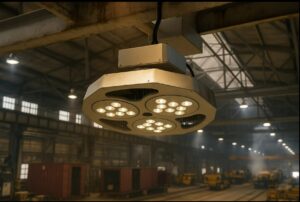
Selecting the correct lumen output is critical for ensuring sufficient illumination under extreme heat conditions. Engineers must consider both ambient temperature and installation height when determining the necessary lumen intensity. High-temperature LEDs offer stable lumen maintenance, but accurate initial specification is essential to achieve desired light levels. For industrial applications, lumen calculations must account for potential obstructions, reflective surfaces, and heat-induced photometric changes. Proper specification ensures that high-temperature LEDs deliver uniform lighting, reducing shadowing, glare, and uneven illumination that can affect operational safety and productivity.
Power and wattage selection are influenced by the intended application, thermal environment, and fixture design. High-temperature LEDs are available in a range of wattages from 50W to 500W, each optimized for specific mounting heights, coverage areas, and operational conditions. Engineers must balance energy consumption, heat dissipation, and illumination requirements to ensure reliable operation. Selecting an LED with appropriate wattage prevents thermal overload, maintains lumen efficacy, and maximizes energy efficiency. Additionally, advanced high-temperature LEDs often incorporate intelligent drivers that adapt to thermal conditions, enhancing performance across varying environmental conditions.
Industrial and outdoor installations must meet regulatory and safety standards. High-temperature LEDs often carry certifications such as UL, DLC, CE, and IP ratings, indicating compliance with safety, thermal, and environmental requirements. These certifications ensure that LEDs can operate reliably under extreme temperatures while maintaining electrical and mechanical safety. Procurement managers should verify certifications and compliance documentation to mitigate liability, ensure quality, and support long-term performance in demanding environments.
Selecting a reputable vendor is critical for sourcing high-temperature LEDs tailored to specific industrial or outdoor needs. Customization options may include fixture design, lumen output, color temperature, mounting configurations, and driver specifications. Vendors that provide technical support, lighting layout design, and post-installation guidance add significant value to the procurement process. Partnering with knowledgeable suppliers ensures that high-temperature LED solutions meet operational requirements, withstand extreme thermal stress, and deliver predictable long-term performance.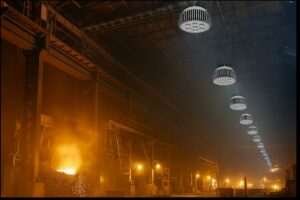
A steel manufacturing facility operating furnaces at temperatures exceeding 700°C faced frequent LED failures using standard lighting. By implementing 100W high-temperature LEDs with advanced heat sinks and thermally robust drivers, the facility achieved stable illumination across production floors. Lumen maintenance exceeded 95% under continuous operation, reducing fixture replacement and maintenance downtime by over 60%. The installation improved worker safety and operational efficiency, demonstrating the critical importance of high-temperature lighting in industrial environments.
A desert solar farm installation required reliable nighttime illumination for equipment maintenance. Standard LEDs failed to maintain performance under high ambient temperatures exceeding 45°C and intense solar exposure during the day. High-temperature LEDs with 160 lm/W efficiency, thermally optimized housings, and IP65-rated protection delivered consistent illumination throughout the installation. Energy savings and reduced maintenance further validated the use of high-temperature LEDs, ensuring long-term operational reliability and cost-effectiveness.
High-temperature LEDs represent a transformative solution for environments challenged by extreme heat. Their advanced thermal management, durable materials, and optimized driver electronics ensure consistent performance, energy efficiency, and reduced maintenance, even under the harshest conditions. Industrial, outdoor, and specialty applications benefit from improved operational safety, reliable illumination, and long-term cost savings. For procurement managers, engineers, and industrial buyers, investing in high-temperature LEDs provides a sustainable, high-performance lighting solution that meets the rigorous demands of modern industry. Engaging with reputable suppliers and carefully specifying fixture requirements ensures maximum ROI, reliability, and efficiency in thermally demanding applications.
–The End–