
Industrial operations often expose lighting equipment to extreme thermal conditions that far exceed the tolerance of conventional LEDs. Environments such as steel production facilities, glass manufacturing plants, and petrochemical refineries routinely operate at temperatures ranging from 90°C to over 200°C. In these high-heat zones, standard lighting systems experience accelerated thermal degradation, driver failures, and reduced lumen output, creating significant maintenance challenges and operational downtime.
High-temperature LED lighting has emerged as a critical solution, engineered specifically to withstand these extreme conditions while maintaining high performance and reliability. These advanced systems combine optimized thermal management, industrial-grade components, and robust protection materials to deliver continuous illumination where standard solutions would fail. In sectors where operational continuity and safety are paramount, the adoption of high-temperature LED solutions ensures both energy efficiency and reduced lifecycle costs, offering a strategic advantage for industrial operators.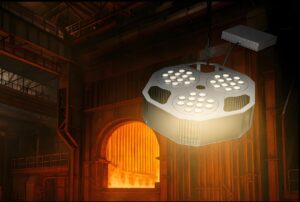
2.1 Typical High-Heat Applications
Industrial sectors present a diverse range of thermal challenges. In steel mills and foundries, furnaces operating above 1,200°C generate localized heat zones that can compromise conventional LED performance. Glass manufacturing facilities encounter similar high-heat stress from molten glass processes, while cement plants involve kiln operations that radiate intense heat. Power generation stations, especially those using thermal or gas turbines, expose lighting fixtures to prolonged elevated temperatures. Petrochemical refineries, with their heat exchangers and processing units, create continuous thermal cycles that accelerate material fatigue in standard lighting systems. Even commercial kitchens and food processing plants can experience consistent high-heat zones near ovens, stoves, and boiling equipment, demonstrating that high-temperature lighting requirements are not limited to heavy industry. Each of these applications demands LEDs specifically engineered to resist thermal stress, maintain lumen output, and ensure long-term operational reliability.
2.2 Temperature Classifications
High-temperature environments are typically categorized based on sustained ambient temperature exposure. Moderate zones around 90°C present challenges primarily to driver electronics and thermal interfaces. Severe conditions around 150°C demand specialized thermal management and heat-resistant materials to prevent accelerated lumen depreciation. Extreme zones exceeding 200°C require the most robust solutions, including advanced heat dissipation technologies, high-temperature chip packages, and industrial-grade driver circuitry. Understanding these classifications is essential for selecting the appropriate LED fixtures, as performance, lifespan, and safety depend on matching product specifications to specific thermal conditions.
3.1 Thermal Degradation of LED Chips
Conventional LEDs are sensitive to temperature. Elevated heat accelerates chemical and structural degradation of semiconductor materials, reducing efficiency and causing premature failure. Standard chips exposed to high temperatures often exhibit rapid lumen depreciation, resulting in insufficient light output and inconsistent color temperatures. Without specialized thermal management, the junction temperature of the LED can exceed safe operating limits, compromising performance and reliability.
3.2 Driver Electronics Breakdown
LED drivers, which regulate current and voltage, are critical to long-term operation. In high-heat environments, capacitors and other electronic components degrade more rapidly, leading to early failures and potential safety hazards. Driver failures not only necessitate frequent maintenance but also increase operational costs due to unplanned downtime and replacement requirements.
3.3 Accelerated Lumen Depreciation
Heat significantly impacts lumen maintenance. Standard LEDs exposed to high temperatures can experience a 20–50% reduction in light output over a few thousand hours of operation. This lumen loss compromises industrial safety and operational efficiency, as poorly lit areas can impede productivity and increase the risk of accidents.
3.4 Seal & Gasket Failure
Elevated temperatures cause traditional silicone or rubber seals to harden or crack, allowing dust, moisture, and corrosive substances to penetrate the fixture. These breaches exacerbate electronic failures and reduce overall fixture reliability. High-temperature LED solutions incorporate advanced gaskets and sealing materials that maintain integrity under sustained thermal stress.
3.5 Reduced Lifespan & Increased Maintenance
The cumulative effects of thermal degradation, driver failures, and compromised seals drastically shorten the operational lifespan of standard LEDs. In industrial environments, this results in frequent maintenance cycles, increased labor costs, and operational disruptions. High-temperature LEDs mitigate these issues by combining durable materials, advanced thermal management, and optimized electronics to extend service life and reduce total cost of ownership.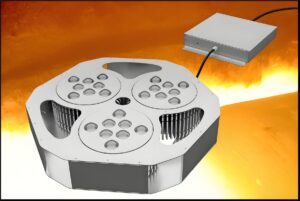
4.1 Advanced Thermal Management Systems
Effective thermal management is the cornerstone of high-temperature LED performance. Industrial-grade fixtures incorporate oversized heat sinks fabricated from high-conductivity aluminum alloys to dissipate heat efficiently. Some designs employ heat pipe technology to transport thermal energy away from sensitive components. Passive cooling strategies, including optimized fin geometries and convection airflow, ensure the LED junction remains within safe operating limits even under sustained heat exposure.
4.2 High-Temperature Rated LED Chips
LED chips designed for high-temperature applications feature specialized packaging to withstand thermal stress. Low thermal resistance designs and high-grade phosphors maintain lumen output and color consistency under elevated temperatures. These chips minimize junction temperature rise, extending operational life and ensuring stable performance across the fixture’s lifespan.
4.3 Industrial-Grade Drivers
Drivers in high-temperature LEDs are built to tolerate extended thermal exposure. Remote driver configurations allow sensitive electronics to be positioned away from extreme heat zones. Components such as high-temperature capacitors and thermal protection circuits prevent overheating, ensuring reliable operation in continuous industrial duty cycles. Robust drivers reduce failure rates and minimize maintenance requirements.
4.4 High-Temperature Resistant Materials
Fixtures designed for extreme conditions use advanced materials to maintain structural integrity. Silicone gaskets remain pliable under thermal stress, while tempered glass and ceramic components resist heat-induced deformation. High-grade wiring insulation prevents electrical failures, ensuring both safety and long-term reliability in challenging industrial environments.
5.1 Wattage Options
High-temperature LED solutions are available across a wide power range, from 50W for localized task lighting to 400W for large-scale industrial illumination. This flexibility enables tailored solutions for diverse applications, whether illuminating walkways in a glass plant or providing general lighting across a steel foundry floor.
5.2 Luminous Efficacy
Despite harsh thermal conditions, high-temperature LEDs achieve luminous efficacy ranging from 150–170 lm/W. This ensures that even under elevated ambient temperatures, energy efficiency is maximized, reducing operational energy costs without compromising illumination quality.
5.3 Color Temperature Options
Industrial lighting demands precise color rendering to support safety and operational efficiency. High-temperature LEDs offer color temperatures from 3000K (warm white) for general comfort, 4000K for neutral task lighting, and 5000–5600K for daylight-level illumination required in high-precision industrial processes. Color consistency is maintained across the fixture’s lifespan, ensuring reliable visual performance in critical environments.
5.4 Protection Ratings
Robust ingress protection (IP65/IP66) safeguards fixtures from dust, moisture, and corrosive elements. Corrosion-resistant coatings and reinforced housings further enhance durability, ensuring high-temperature LED lights maintain performance in the harshest industrial settings.
5.5 Lifespan Expectations in High Heat
Engineered high-temperature LEDs achieve L70 lifespan ratings even in extreme ambient temperatures, maintaining at least 70% of initial light output over thousands of operating hours. Real-world testing demonstrates that these fixtures outperform conventional LEDs by a significant margin, reducing maintenance cycles and improving operational reliability.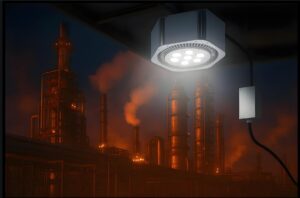
High-temperature LED systems adhere to rigorous safety and performance standards. UL and ETL certifications confirm electrical safety, while CE compliance ensures compatibility with international industrial regulations. RoHS compliance guarantees environmentally responsible manufacturing. In specialized applications, explosion-proof and thermal testing certifications provide additional assurance of fixture safety and reliability under extreme conditions, aligning with industry safety protocols.
7.1 Reduced Maintenance Downtime
By resisting thermal degradation, high-temperature LEDs minimize fixture failures, reducing maintenance frequency and labor costs. Facilities can operate without unplanned interruptions, improving overall productivity.
7.2 Energy Efficiency Under Extreme Heat
High-temperature LEDs maintain their luminous efficacy even under thermal stress, ensuring that industrial operations remain energy-efficient. This results in lower electricity costs compared to traditional lighting solutions.
7.3 Stable Light Output and Color Consistency
Specialized chip designs and advanced thermal management ensure consistent lumen output and color rendering, critical for safety and precision in industrial workflows.
7.4 Improved Workplace Safety
Reliable illumination reduces dark zones and improves visibility in hazardous areas. High-temperature LEDs contribute directly to worker safety, reducing the risk of accidents and operational errors.
7.5 Lower Total Cost of Ownership (TCO)
Longer lifespan, reduced energy consumption, and minimized maintenance translate into significant total cost savings over the fixture’s lifecycle, making high-temperature LED lighting a strategic investment for industrial operators.
|
Feature |
High-Temp LED |
Metal Halide |
HPS |
|
Heat Resistance |
Excellent |
Poor |
Moderate |
|
Warm-Up Time |
Instant |
10–15 min |
5–10 min |
|
Energy Efficiency |
High |
Low |
Moderate |
|
Maintenance |
Low |
High |
High |
|
Lifespan in Heat |
Long |
Short |
Moderate |
High-temperature LEDs outperform traditional lighting technologies in every critical performance metric. Their superior heat resistance, instant start-up, high efficiency, and long operational life make them indispensable in demanding industrial applications.
High-temperature LED lighting systems are not one-size-fits-all solutions; industrial operations vary widely in layout, workflow, and thermal environment. Customization ensures that lighting not only survives extreme conditions but also optimally supports the operational requirements of the facility. One key aspect of customization is beam angle configuration. Narrow beams can focus light on specific machinery or workstations, maximizing visibility where precision is critical, while wide beams provide uniform illumination across large production areas, reducing shadows and improving overall safety. Selecting the appropriate beam angle is crucial in environments such as glass furnaces or steel rolling mills, where misaligned illumination can compromise both productivity and worker safety.
Mounting flexibility is another important consideration. High-temperature LEDs can be installed using adjustable brackets, suspended from trusses, mounted on poles, or affixed directly to walls and ceilings. This versatility allows lighting to be positioned away from direct heat sources, improving thermal management and extending fixture lifespan. Some industrial projects require modular designs where multiple fixtures can be interconnected or rearranged as production layouts change. This modularity supports evolving operational needs without additional capital expenditure.
Integration with smart controls and dimming systems represents another layer of customization. Dimmable high-temperature LEDs allow energy usage to be optimized according to workflow cycles, peak production times, or natural light availability. Advanced lighting controls can be integrated with industrial building management systems (BMS), enabling automated schedules, remote monitoring, and predictive maintenance alerts. In facilities with fluctuating production loads, such intelligent lighting systems can reduce energy consumption significantly while ensuring consistent visibility.
Finally, driver configuration and thermal isolation are customized to match the thermal profile of the environment. Remote driver installations or insulated driver compartments allow sensitive electronics to operate safely away from extreme heat. High-temperature-rated wiring and connectors further ensure that the electrical integrity of the system is maintained, even in corrosive or high-humidity industrial zones. This level of customization ensures that the lighting system not only withstands the environment but enhances operational efficiency, safety, and long-term reliability, tailored to the exact specifications of each industrial project.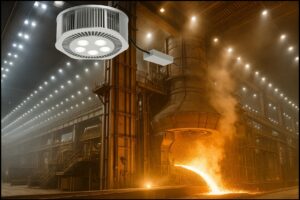
Installing high-temperature LED systems in extreme industrial environments requires meticulous planning and adherence to thermal and electrical safety principles. Proper installation ensures not only the longevity of the fixture but also the safety of personnel and uninterrupted operational performance. A primary consideration is proximity to heat sources. Fixtures should be mounted at a sufficient distance from furnaces, boilers, or other heat-emitting machinery to prevent direct thermal exposure. Where unavoidable, thermal shields or reflective barriers can be installed to redirect heat away from sensitive components.
Ventilation and airflow management are critical. Even high-performance heat sinks rely on adequate air movement to dissipate thermal energy. When installing fixtures in enclosed or poorly ventilated areas, engineers must consider supplementary cooling mechanisms or optimized spacing between fixtures to prevent hotspots. In some cases, angled installation can enhance natural convection, allowing hot air to rise away from the LED housing and improve overall thermal performance.
Mounting height and orientation are equally important. High-temperature LED lights must be positioned to maximize illumination coverage while maintaining optimal thermal performance. Taller mounting positions reduce exposure to radiated heat at floor level but may require higher-lumen output to achieve the desired illumination intensity. Orientation of the fixture affects both light distribution and heat dissipation; horizontal or downward-facing installations often improve airflow across the heat sink, maintaining junction temperature within safe limits.
Electrical protection and wiring integrity are also essential. Surge protection devices, high-temperature cabling, and secure junction boxes prevent electrical faults in environments prone to thermal stress, vibration, or dust accumulation. Regular inspection and maintenance protocols, although reduced due to the durability of high-temperature LEDs, should still be scheduled to ensure long-term operational safety. By carefully considering these factors during installation, facilities can maximize fixture longevity, efficiency, and the safety of personnel operating in extreme heat zones.
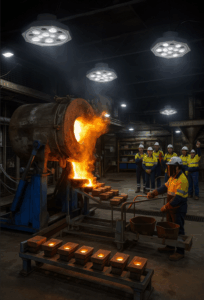
Consider a steel production facility where conventional LED lighting repeatedly failed in zones exceeding 150°C. Prior to adopting high-temperature LEDs, the plant experienced frequent outages, lumen depreciation, and driver failures, leading to an estimated 25% reduction in operational efficiency. The lighting failures not only caused maintenance bottlenecks but also created safety hazards for workers operating in poorly illuminated areas near molten metal and heavy machinery.
Upon installation of purpose-built high-temperature LED fixtures, several key improvements were observed. The LED chips, engineered for sustained high temperatures, maintained consistent lumen output and color temperature, ensuring reliable visibility across workstations. The industrial-grade drivers, some positioned remotely to minimize thermal stress, exhibited zero failures over a 12-month monitoring period. Advanced heat sinks and optimized airflow prevented junction temperature spikes, extending the expected operational life to over 50,000 hours even in continuous 24/7 production cycles.
The modular design allowed installation flexibility, enabling the facility to reconfigure lighting layouts as production lines were modified. The integration of dimming controls and predictive monitoring enabled energy optimization during low-activity periods, reducing electricity consumption by approximately 30%. Overall, the facility reported a 70% reduction in maintenance interventions, improved worker safety, and measurable cost savings in both labor and energy.
This case exemplifies how high-temperature LED lighting transforms industrial operations. By addressing thermal, electrical, and material challenges through engineered solutions, the facility achieved continuous operational reliability, minimized downtime, and created a safer, more efficient work environment. It underscores the tangible benefits of investing in lighting systems designed for the most demanding industrial conditions.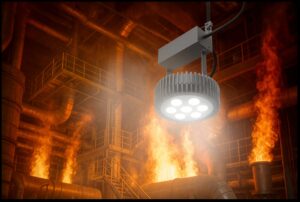
The evolution of high-temperature LED technology continues to accelerate, driven by increasing industrial demand for energy-efficient, durable, and intelligent lighting systems. One significant trend is the development of higher-lumen efficacy under extreme thermal stress. Advances in chip design, phosphor technology, and thermal management materials allow LEDs to maintain or even improve luminous output at elevated ambient temperatures, providing brighter and more efficient lighting in challenging environments.
Another key trend is integration with smart monitoring systems. Industrial operators increasingly require lighting systems capable of real-time performance tracking, fault detection, and predictive maintenance alerts. IoT-enabled high-temperature LEDs can communicate operational data, including junction temperature, driver voltage, and lumen output, to centralized management platforms. This capability allows facility managers to preemptively address potential issues, reducing unexpected downtime and enhancing operational safety.
Industry 4.0 compatibility is also shaping the future. High-temperature LEDs are being incorporated into automated industrial ecosystems where lighting interacts with sensors, machinery, and building management systems. Adaptive lighting responds dynamically to occupancy, workflow requirements, or ambient natural light, optimizing both visibility and energy efficiency.
Finally, there is a growing emphasis on eco-friendly materials and sustainability. Manufacturers are exploring recyclable heat sinks, low-thermal-resistance ceramics, and high-durability silicone compounds to reduce environmental impact without compromising performance. These trends collectively indicate a future in which industrial high-temperature LED systems are not only more robust but also smarter, greener, and fully integrated into advanced operational workflows, providing a competitive edge for forward-thinking industrial operators.
High-temperature LED lighting represents a paradigm shift for industrial illumination. By combining advanced thermal management, high-temperature rated components, and industrial-grade materials, these fixtures deliver reliable performance, energy efficiency, and long-term durability. For industrial operators seeking to reduce maintenance, improve safety, and lower total cost of ownership, high-temperature LEDs provide a resilient solution engineered to thrive where conventional lighting cannot.
–The End–