
Steel mills and metal foundries operate in some of the most demanding industrial environments. The processes involved—melting, forging, casting, rolling, and finishing metals—are inherently hazardous and require precision, efficiency, and utmost safety. Proper lighting plays a critical role in ensuring that these facilities function smoothly. Insufficient or inconsistent illumination can compromise worker safety, reduce productivity, and increase the likelihood of costly errors. Historically, industrial facilities relied on incandescent, fluorescent, or metal halide lamps to illuminate these challenging workspaces. While these traditional lighting solutions were adequate in some respects, they are increasingly outclassed by modern high-temperature LED lighting, particularly in extreme conditions.
Conventional lighting systems face multiple limitations in steel mills and foundries. High ambient temperatures, airborne metal particles, humidity, and mechanical vibrations drastically reduce the lifespan of traditional lamps. Metal halide and high-intensity discharge (HID) lamps, for instance, often require frequent replacement and generate substantial heat themselves, compounding the already high temperatures of industrial environments. Their inefficiency, high energy consumption, and environmental drawbacks have driven the need for more advanced lighting solutions.
High-temperature LED lighting has emerged as a game-changer for these industrial settings. By offering superior thermal management, long operational life, and consistent light output under extreme conditions, high-temperature LEDs address the critical pain points of steel and metal production facilities. Beyond operational efficiency, these lights enhance safety, improve working conditions, and provide an energy-efficient solution aligned with modern industrial sustainability goals. In this article, we will explore the technical features, applications, and benefits of high-temperature LED lighting for steel mills and metal foundries, demonstrating why they are increasingly considered an indispensable component of modern industrial operations.
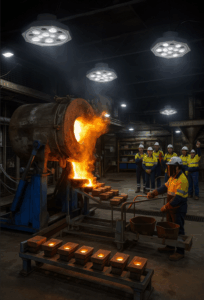
To appreciate the necessity of high-temperature LED lighting, it is crucial to understand the extreme operating conditions within steel mills and metal foundries. These facilities are characterized by processes that generate immense heat, dust, and airborne particles. Furnaces reach temperatures well above 1,500°C, casting lines handle molten metal in excess of 1,200°C, and forging presses generate intense localized heat. Even in areas adjacent to these processes, ambient temperatures frequently surpass 90°C, 150°C, or 200°C. Such conditions place severe demands on any lighting solution, particularly in terms of heat tolerance and durability.
Beyond temperature, these environments are often harsh and abrasive. Steel and metal production involves particulate matter such as dust, slag, and metallic debris suspended in the air. Lighting fixtures must resist not only high heat but also corrosion and mechanical damage caused by airborne particles. Moisture, steam, and occasional water exposure add another layer of complexity. High-pressure cleaning, condensation, and occasional spills are routine in these settings, and any lighting solution must be robust enough to withstand these conditions without performance degradation.
Mechanical stress is another critical factor. Steel mills and foundries are bustling environments with heavy machinery, forklifts, cranes, and conveyor systems operating continuously. Vibrations, shocks, and accidental impacts are commonplace, further challenging the durability of lighting systems. In summary, industrial lighting in these environments must withstand high temperatures, resist dust and moisture, and endure mechanical stress while maintaining consistent light output. Standard lighting solutions simply cannot meet these combined demands, creating a compelling case for high-temperature LED technology.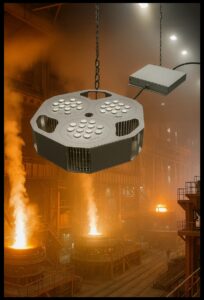
Standard LEDs, while efficient under normal conditions, are not designed to withstand the extreme heat typical of steel mills and foundries. Exposure to high temperatures accelerates lumen depreciation, reduces lifespan, and can cause driver failure, leading to operational inefficiencies and increased maintenance costs. In addition, poorly designed LEDs may suffer from thermal runaway, where heat accumulation further degrades components, eventually causing complete failure. These limitations make conventional LEDs unsuitable for high-temperature industrial applications.
High-temperature LEDs, however, are specifically engineered to overcome these challenges. Advanced thermal management systems, such as integrated heat sinks and high-temperature-rated drivers, allow the LEDs to maintain optimal performance even in extreme environments. The PCB materials and solder used in these fixtures are designed to withstand sustained heat without warping or degradation. Additionally, high-temperature LEDs often feature IP65 or higher ingress protection, ensuring that dust, moisture, and other environmental contaminants do not compromise performance.
The benefits of using high-temperature LEDs extend beyond durability. By providing consistent light output under extreme conditions, these LEDs enhance workplace safety, reduce maintenance downtime, and increase operational efficiency. The extended lifespan of high-temperature LEDs means fewer replacements, which translates to cost savings and less disruption to production schedules. In environments where safety and precision are paramount, the reliability of high-temperature LED lighting is indispensable. In essence, high-temperature LEDs are not merely a convenience; they are a necessity for modern steel and metal production facilities.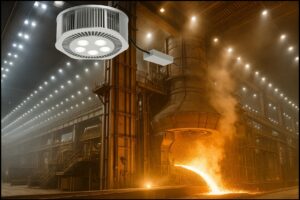
High-temperature LED lighting is designed with specific features to meet the rigorous demands of steel mills and foundries. One of the primary features is temperature resistance. These fixtures can operate reliably at ambient temperatures of 90°C, 150°C, or even 200°C, depending on the product specification. This capability ensures that lighting remains consistent and functional, even in areas immediately adjacent to furnaces or molten metal handling zones.
Another critical feature is high luminous efficacy. High-temperature LEDs typically provide 150–170 lumens per watt (lm/W), far exceeding the efficiency of traditional HID and incandescent lighting. This not only reduces energy consumption but also provides high-quality illumination that improves visibility for workers performing detailed and potentially dangerous tasks. Energy efficiency is especially important in industrial settings where lighting is required 24/7, as operational costs can be significantly reduced by switching to LEDs.
Robust construction is another hallmark of high-temperature LEDs. Fixtures are commonly made from durable aluminum housing, tempered glass, and vibration-resistant components to withstand mechanical impacts and high-temperature cycling. Additionally, these fixtures are designed to resist dust, moisture, and corrosion, ensuring long-term performance in challenging industrial conditions. Color temperature options ranging from 3000K to 5600K allow facility managers to optimize lighting for worker comfort, visual acuity, and task-specific requirements. The combination of these features—heat resistance, high luminous efficacy, rugged construction, and adaptable color temperature—makes high-temperature LEDs uniquely suited to steel mills and foundries.
High-temperature LED lighting has a wide range of applications within steel mills and metal foundries. One of the primary areas of application is in molten metal handling zones. These include overhead furnaces, ladles, casting lines, and crucibles where molten metal is poured and shaped. In these zones, lighting must maintain high brightness and clarity to allow operators to monitor material flow safely. High-temperature LEDs provide consistent illumination, which helps reduce accidents and ensures precise handling of molten metal.
Production floors are another critical application. Forging presses, rolling mills, and assembly lines require uniform and high-intensity lighting for quality control and operational efficiency. Shadows, flickering, or uneven illumination can lead to errors, material defects, and safety hazards. High-temperature LEDs ensure reliable lighting in these dynamic and often dusty environments, enabling workers to perform their tasks effectively and safely.
Storage and loading zones in steel and metal facilities also benefit from LED lighting. Warehouses, rail yards, and material handling areas often involve heavy equipment operation and the movement of large, potentially dangerous objects. Proper lighting reduces the risk of accidents and improves the efficiency of loading and unloading processes.
Maintenance and inspection zones are equally critical. Tasks such as equipment repair, mold inspection, and quality testing require bright, stable illumination to ensure accuracy. High-temperature LEDs provide the necessary light intensity without generating additional heat that could compromise worker safety or the integrity of materials being inspected. Across all these applications, high-temperature LEDs enhance operational efficiency, safety, and cost-effectiveness.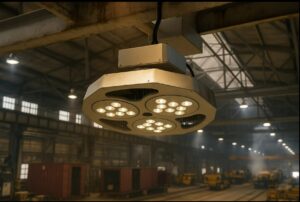
The practical benefits of high-temperature LED lighting are best illustrated through real-world examples. In a major steel mill in the Midwest, traditional metal halide lamps were replaced with 200W to 400W high-temperature LED fixtures. The facility reported a 35% reduction in energy consumption and a marked decrease in lamp replacements and maintenance downtime. Workers noted improved visibility in furnace-adjacent areas, enhancing safety and operational efficiency. The LED installation also reduced the heat contribution from lighting itself, providing a more comfortable working environment.
In a metal foundry specializing in aluminum and brass casting, 150°C-rated LEDs were installed near multiple casting lines. The facility had previously experienced frequent failures of conventional lighting due to heat and dust exposure. After upgrading to high-temperature LEDs, the foundry observed extended fixture lifespans of over five years, consistent light output, and improved safety conditions. Additionally, the LED lighting allowed for better color differentiation of metals and improved accuracy in pouring and mold inspections.
These case studies highlight the tangible advantages of high-temperature LED lighting: energy savings, reduced maintenance, enhanced safety, and improved operational efficiency. They demonstrate that the initial investment in high-temperature LEDs can yield significant long-term returns for industrial facilities operating in extreme conditions.
Installing high-temperature LED lighting in steel mills and foundries requires careful planning to maximize performance and longevity. Mounting solutions must account for high ceilings, heavy machinery, and dynamic production layouts. Overhead lighting should provide uniform illumination without creating shadows or glare, while mobile lighting towers can offer flexibility for temporary or task-specific lighting needs.
Electrical and thermal considerations are equally important. High-temperature LEDs must be compatible with existing power supplies, and wiring should accommodate the high ambient temperatures. Proper ventilation and heat dissipation mechanisms should be in place to prevent thermal stress and maintain the efficiency of the fixtures. This includes ensuring that heat sinks are not obstructed and that ambient airflow is sufficient to carry heat away from sensitive components.
Maintenance advantages are a significant benefit of high-temperature LEDs. Unlike conventional lighting that may require frequent replacement, high-temperature LEDs have lifespans of up to 50,000 hours or more, reducing labor and material costs associated with maintenance. Predictive maintenance strategies, such as periodic inspections for dust accumulation and mechanical damage, further enhance the reliability of LED installations. By combining thoughtful installation with robust fixtures, facilities can achieve consistent illumination and minimize operational disruptions.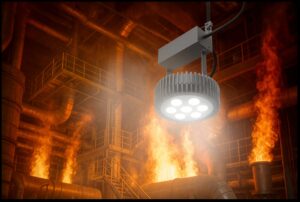
One of the most compelling arguments for high-temperature LED lighting is the return on investment. While the upfront cost of LED fixtures may exceed that of traditional lighting, the long-term savings are substantial. Energy consumption is typically reduced by 30–50%, which can translate into significant cost savings in facilities that operate 24/7. Additionally, the reduced frequency of replacements and lower maintenance labor costs provide further financial benefits.
Operational efficiency is also enhanced. Reliable lighting minimizes downtime and improves worker productivity, directly impacting the bottom line. High-quality illumination reduces errors, material waste, and workplace accidents, all of which have associated costs. Furthermore, high-temperature LEDs produce less heat than HID or incandescent lamps, which reduces the load on facility cooling systems and improves worker comfort.
Environmental benefits further strengthen the ROI case. LEDs consume less power, have a smaller carbon footprint, and contain no hazardous materials such as mercury, unlike fluorescent or metal halide lamps. Facilities that adopt high-temperature LED lighting contribute to sustainability goals and may benefit from energy efficiency incentives or certifications. Overall, the cost-benefit analysis demonstrates that high-temperature LEDs provide significant economic, operational, and environmental returns, making them a strategic investment for steel mills and metal foundries.
High-temperature LED lighting represents a transformative solution for steel mills and metal foundries operating under extreme conditions. By addressing the challenges of heat, dust, moisture, and mechanical stress, these LEDs provide consistent illumination, enhance worker safety, and improve operational efficiency. Their robust construction, high luminous efficacy, and adaptability make them ideal for demanding industrial environments where traditional lighting fails.
The long-term benefits of high-temperature LEDs extend beyond energy savings and reduced maintenance. They enable precise and safe operations, reduce operational disruptions, and support environmental sustainability initiatives. For industrial decision-makers, investing in high-temperature LED lighting is not merely an upgrade; it is a strategic move to enhance productivity, safety, and competitiveness. As steel and metal production facilities continue to modernize, high-temperature LED lighting is poised to become an indispensable component of industrial infrastructure.
–The End–