
Ceramic production and powder metallurgy are among the most thermally demanding industrial manufacturing processes. From continuous tunnel kilns and batch firing furnaces in ceramic plants to sintering ovens and heat treatment lines in powder metallurgy facilities, lighting systems are exposed to operating environments far beyond the tolerance limits of conventional industrial luminaires. Ambient temperatures frequently exceed 80 °C and, in many critical zones, can reach 150 °C or even 200 °C due to radiant heat from kilns, furnaces, and hot product flow.
In such environments, lighting is not merely an auxiliary facility system. It is a critical production infrastructure that directly affects operator safety, process monitoring accuracy, product quality inspection, and overall plant efficiency. Insufficient or unreliable illumination increases the risk of workplace accidents, causes inspection errors, and leads to costly downtime during maintenance or lamp replacement.
Traditional lighting technologies such as metal halide, high-pressure sodium, halogen, and even standard industrial LEDs were never designed for sustained exposure to extreme heat, fine particulate contamination, and corrosive off-gassing typical of ceramic and powder metallurgy plants. As a result, premature failure, rapid lumen depreciation, color shift, and electrical instability are common problems.
High-temperature LED luminaires engineered for 90 °C, 150 °C, and 200 °C ambient conditions represent a new generation of industrial lighting solutions. These systems combine specialized thermal management, high-temperature-rated electronic components, sealed IP65 housings, and robust mechanical design to deliver stable illumination in environments once considered unsuitable for LED technology.
This article provides a comprehensive technical and application-focused analysis of high-temperature LED lighting in ceramic and powder metallurgy plants, explaining environmental challenges, design requirements, application zones, performance characteristics, and the long-term operational value of adopting purpose-built high-temperature LED solutions.
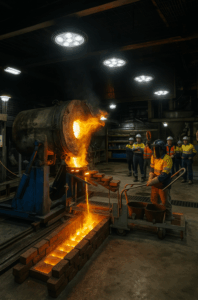
Ceramic manufacturing relies heavily on thermal processes such as drying, glazing, and firing. Tunnel kilns often operate continuously at internal temperatures exceeding 1,000 °C, while the surrounding ambient temperature in loading, unloading, and firing zones typically ranges between 80 °C and 200 °C. Radiant heat from kiln openings, hot product flow, and refractory structures creates localized thermal hotspots that can severely stress lighting fixtures.
Similarly, powder metallurgy plants utilize sintering furnaces, debinding ovens, and heat treatment lines that expose nearby lighting to sustained high ambient temperatures. Even when luminaires are installed outside direct furnace chambers, accumulated radiant heat and insufficient ventilation often push ambient conditions beyond the limits of standard industrial LEDs.
High-temperature LED luminaires designed for 90 °C, 150 °C, or 200 °C ambient operation are engineered to maintain electrical stability and optical performance under continuous thermal stress, ensuring consistent illumination where conventional fixtures fail.
Both ceramic and powder metallurgy processes generate significant airborne particulates. Ceramic plants produce clay dust, glaze particles, silica, and abrasive residues, while powder metallurgy facilities handle fine metal powders such as iron, copper, stainless steel, and alloy compounds.
These particulates can penetrate poorly sealed luminaires, contaminating LED optics, degrading driver electronics, and accelerating corrosion. High-temperature LED fixtures with IP65-rated sealed housings effectively prevent dust ingress, protecting internal components and maintaining long-term reliability.
In ceramic firing and powder metallurgy debinding processes, organic binders and additives release chemical vapors during thermal decomposition. These gases may include acidic compounds, oxidation byproducts, and volatile residues that attack conventional lighting materials.
High-temperature LED luminaires use corrosion-resistant housings, high-temperature silicone seals, and chemically stable coatings to withstand prolonged exposure to aggressive industrial atmospheres.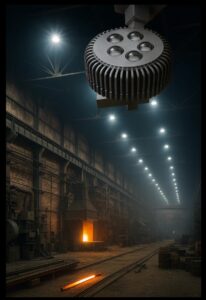
Conventional industrial lighting technologies are inherently incompatible with sustained high-temperature environments.
Metal halide and high-pressure sodium lamps suffer from accelerated electrode degradation, ballast failure, and severe lumen depreciation when exposed to elevated ambient temperatures. Halogen lamps generate additional heat, further exacerbating thermal stress and increasing fire risk.
Standard industrial LEDs, while more efficient, are typically rated for maximum ambient temperatures of 40 °C to 60 °C. When installed in high-heat zones, their drivers overheat, electrolytic capacitors degrade rapidly, and LED junction temperatures rise beyond safe limits. This results in:
In ceramic and powder metallurgy plants, these failures translate into frequent maintenance interventions, unsafe working conditions, and costly production interruptions.
High-temperature LED luminaires overcome these limitations through purpose-built thermal engineering, high-temperature-rated electronics, and robust mechanical design, enabling reliable operation in environments previously considered unsuitable for LED lighting.
Thermal management is the defining factor in high-temperature LED design. Unlike conventional fixtures, high-temperature LED luminaires must dissipate not only the heat generated by the LED itself but also withstand external ambient heat.
Advanced designs utilize oversized aluminum heat sinks, optimized fin geometry, and passive convection pathways to maximize heat dissipation without relying on fans or active cooling systems that would fail in dusty, high-temperature environments.
In higher temperature classes (150 °C and 200 °C), thermal separation between the LED module and the driver is critical. Drivers may be remotely mounted or housed in thermally isolated compartments to protect sensitive electronic components.
Every component within a high-temperature LED luminaire must be carefully selected and tested. This includes:
Fixtures designed for 90 °C, 150 °C, and 200 °C operation ensure component integrity and performance stability under sustained thermal exposure.
Industrial environments expose lighting fixtures to vibration from machinery, conveyors, presses, and kiln movement systems. High-temperature LED luminaires feature reinforced housings, heavy-duty mounting brackets, and vibration-resistant fasteners to maintain structural stability over long service life.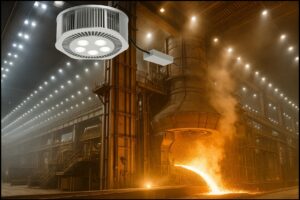
Kiln loading and unloading zones are among the most thermally challenging areas in ceramic plants. Workers must visually inspect products immediately after firing, often while exposed to intense radiant heat.
High-temperature LED floodlights in the 100W–400W range, rated for 150 °C or 200 °C, provide high-output, stable illumination while maintaining reliability near kiln openings. Their sealed IP65 design prevents dust accumulation and ensures long-term optical clarity.
Tunnel kilns extend hundreds of meters and operate continuously. Lighting systems must deliver uniform illumination along the entire firing line while withstanding elevated ambient temperatures and airborne particulates.
High-temperature linear or flood-style LED luminaires, mounted at strategic distances from kiln walls, provide consistent lighting for monitoring product flow and detecting defects without frequent maintenance interruptions.
Although these zones operate at lower temperatures than firing areas, they still experience elevated heat, humidity, and chemical exposure. 90 °C-rated high-temperature LED luminaires offer an optimal balance of efficiency, durability, and cost-effectiveness in these transitional process zones.
Powder metallurgy plants present a complex and demanding lighting environment due to the combination of high temperatures, fine metal powders, mechanical vibration, and continuous production cycles. Unlike conventional metalworking facilities, powder metallurgy operations require lighting solutions that can withstand not only elevated ambient temperatures but also persistent dust exposure and localized radiant heat from sintering furnaces and heat treatment equipment.
In powder preparation and mixing areas, lighting must remain sealed and stable to prevent dust ingress that could compromise both luminaire performance and workplace safety. High-temperature LED luminaires with IP65 protection are particularly well suited for these zones, as they prevent fine metal powders from penetrating the housing while maintaining consistent optical output. Fixtures rated for 90°C operation are typically sufficient in these upstream process areas, offering a balance between durability and energy efficiency.
Compaction and pressing stations demand higher illuminance levels and excellent color rendering to support precision tooling and quality control. Here, high-temperature LED fixtures in the 50W to 200W range provide focused, glare-controlled lighting while resisting vibration and mechanical shock from presses and automated equipment. Stable illumination directly improves operator accuracy and reduces defect rates.
The most thermally extreme zones are sintering furnaces and heat treatment lines. Ambient temperatures near furnace exits can exceed 150°C, with short-term peaks approaching 200°C due to radiant heat. High-temperature LED floodlights engineered for 150°C or 200°C operation ensure long-term reliability in these zones. Their robust thermal management systems prevent lumen depreciation and driver failure, enabling continuous operation without frequent maintenance interruptions. As a result, lighting becomes a dependable component of the production process rather than a recurring failure point.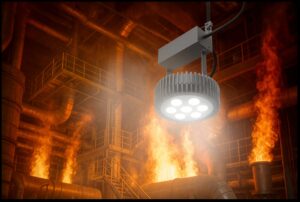
Optical stability is a critical performance requirement for lighting systems operating in high-temperature industrial environments. In ceramic and powder metallurgy plants, lighting fixtures are often exposed to sustained heat levels that would rapidly degrade the optical components of standard luminaires. High-temperature LED systems are specifically engineered to maintain lumen output, color consistency, and beam control even when operating at ambient temperatures of 90°C, 150°C, or 200°C.
One of the primary challenges under high heat is lumen depreciation caused by elevated LED junction temperatures. High-temperature LED luminaires address this issue through advanced thermal management designs that efficiently dissipate heat away from the LED chip. As a result, these systems maintain stable luminous flux over time, ensuring consistent visibility for operators and inspectors. This stability is especially important in quality inspection zones where visual accuracy directly affects product acceptance rates.
Color temperature stability is another key consideration. In high-temperature environments, conventional LEDs often experience color shift, making it difficult to distinguish surface defects or material inconsistencies. High-temperature LED luminaires are available in color temperatures ranging from 3000K to 5600K, allowing facilities to select warm or neutral white light based on operational needs. Importantly, these fixtures maintain chromatic stability even under prolonged thermal stress.
Optical materials also play a decisive role. Tempered glass lenses are used instead of polymer optics, as they retain transparency and structural integrity at elevated temperatures. Combined with precision-engineered reflectors, these optics deliver uniform light distribution and controlled glare, enhancing visual comfort and safety across high-heat industrial zones.
Safety is a paramount concern in ceramic and powder metallurgy plants, where high temperatures, heavy machinery, and hazardous materials coexist. Lighting systems must not only provide sufficient illumination but also operate reliably under extreme conditions without introducing additional risks. High-temperature LED luminaires are designed with safety and compliance as core engineering principles.
IP65-rated enclosures are essential in these environments, as they provide complete protection against dust ingress and resistance to water jets commonly encountered during cleaning or cooling operations. This level of sealing ensures that internal electronic components remain isolated from contaminants, reducing the risk of electrical faults or short circuits. In powder metallurgy facilities, where fine metal dust can pose explosion hazards, sealed luminaires significantly enhance operational safety.
Electrical safety is further enhanced through high-temperature-rated insulation materials, reinforced grounding systems, and stable driver designs. These features ensure consistent performance even when exposed to thermal cycling and voltage fluctuations common in heavy industrial plants. By minimizing flicker, sudden shutdowns, or catastrophic failures, high-temperature LED lighting supports a safer working environment for operators.
From a compliance perspective, high-temperature LED luminaires are designed to meet or exceed relevant industrial and electrical safety standards. Their robust construction and predictable performance help facilities comply with occupational safety regulations related to visibility, equipment reliability, and hazard mitigation. Ultimately, reliable lighting reduces accident risk, supports safe workflows, and contributes to a culture of operational discipline in high-temperature manufacturing plants.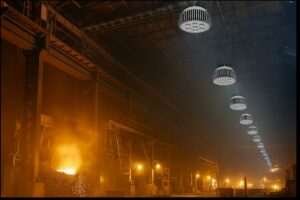
Energy efficiency is a critical economic driver for ceramic and powder metallurgy plants, where energy consumption is already dominated by kilns, furnaces, and thermal processing equipment. Lighting systems that consume excessive power or require frequent replacement add unnecessary operational costs. High-temperature LED luminaires offer a compelling solution by combining thermal resilience with superior energy performance.
Compared to metal halide or halogen lighting, high-temperature LEDs deliver significantly higher luminous efficacy, even when operating in elevated ambient temperatures. Fixtures ranging from 50W to 400W can replace higher-wattage conventional lamps while delivering equal or improved illumination levels. This results in immediate reductions in lighting-related energy consumption.
Beyond direct energy savings, high-temperature LED lighting reduces indirect operational costs. Long service life minimizes the frequency of lamp replacement, which is particularly valuable in high-heat zones where maintenance interventions require production shutdowns or specialized safety procedures. Reduced maintenance translates into lower labor costs, fewer spare parts, and less disruption to production schedules.
Additionally, stable LED operation generates less waste heat compared to traditional lighting technologies. While the ambient environment remains hot, lower luminaire heat output reduces localized thermal buildup and marginally eases cooling demands in enclosed spaces. Over the full lifecycle of the installation, these combined benefits deliver a strong return on investment, making high-temperature LED lighting a financially sound choice for energy-intensive industrial facilities.
Proper installation and maintenance are essential to fully realize the benefits of high-temperature LED lighting in ceramic and powder metallurgy plants. Even the most robust luminaire can underperform if installed without consideration of thermal exposure, airflow, and mechanical stress.
Installation planning should begin with an assessment of ambient temperature zones. Fixtures rated for 90°C, 150°C, or 200°C must be matched to actual operating conditions, with appropriate safety margins. Maintaining adequate distance from direct radiant heat sources such as kiln openings or furnace doors helps extend luminaire lifespan and ensures stable performance. Where extreme heat is unavoidable, remote driver configurations can further protect sensitive electronics.
Mounting hardware should be heat-resistant and mechanically robust, capable of withstanding vibration and thermal expansion. Adjustable brackets allow precise aiming while accommodating structural movement caused by temperature fluctuations. Electrical cabling must also be rated for high temperatures to prevent insulation degradation.
Maintenance strategies for high-temperature LED systems differ significantly from conventional lighting. Rather than frequent lamp replacement, maintenance focuses on periodic visual inspection, cleaning of external surfaces, and verification of mechanical integrity. Because high-temperature LEDs offer long service life and stable output, maintenance intervals can be extended, reducing exposure of personnel to hazardous environments and improving overall plant efficiency.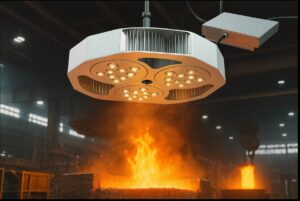
Real-world deployments highlight the practical value of high-temperature LED lighting in ceramic and powder metallurgy plants. In one ceramic tile manufacturing facility, metal halide fixtures installed near tunnel kiln exits were failing every few months due to extreme heat and dust exposure. The facility replaced these fixtures with 300W high-temperature LED floodlights rated for 200°C operation and IP65 protection.
Following installation, the plant observed a dramatic improvement in lighting stability and visibility. Maintenance frequency was reduced by more than 70%, and operators reported improved safety and ease of inspection during kiln unloading operations. Energy consumption associated with lighting was also reduced, contributing to lower operating costs.
In a powder metallurgy sintering plant, lighting near furnace exits suffered from rapid lumen depreciation and frequent driver failures. The facility implemented 200W high-temperature LED luminaires rated for 150°C ambient operation. These fixtures maintained consistent illumination despite continuous thermal exposure and airborne metal powders. Over multiple years of operation, the lighting system demonstrated reliable performance with minimal maintenance intervention, validating the suitability of high-temperature LED solutions for extreme industrial environments.
The evolution of high-temperature LED lighting continues to accelerate as materials science and electronic design advance. New generations of LED packages are being developed with higher junction temperature tolerance, enabling even greater resilience in extreme industrial environments. Improvements in thermal interface materials and heat sink design further enhance heat dissipation efficiency.
Another emerging trend is the integration of intelligent monitoring capabilities. While smart lighting is often associated with commercial buildings, industrial applications are beginning to adopt sensors that monitor temperature, operating hours, and electrical performance. In high-temperature environments, such data enables predictive maintenance, allowing facilities to identify potential issues before failure occurs.
Customization is also becoming increasingly important. Manufacturers now offer high-temperature LED luminaires with configurable power levels, beam angles, and temperature ratings, allowing precise alignment with specific application zones. As ceramic and powder metallurgy plants continue to modernize, high-temperature LED lighting will play a central role in improving safety, efficiency, and operational resilience.
In ceramic and powder metallurgy plants, lighting reliability is not a convenience—it is a critical production asset. High-temperature LED luminaires engineered for 90 °C, 150 °C, and 200 °C environments, with IP65 protection and 50W–400W power options, provide a durable, efficient, and safe lighting solution for some of the harshest industrial environments.
By investing in purpose-built high-temperature LED lighting, manufacturers can enhance safety, improve operational efficiency, reduce maintenance costs, and support long-term production stability.
–The End–