Furnaces and kilns are fundamental to a wide range of heavy industries, including steel production, glass manufacturing, ceramics processing, and cement production. These systems operate continuously at extremely high temperatures, often exceeding 1000°C internally, while surrounding ambient temperatures in operational zones can still reach 80°C to 200°C or higher. Lighting systems installed in these environments must function reliably despite constant exposure to radiant heat, airborne particulates, and mechanical stress.
In such facilities, lighting is not merely a convenience—it is essential for operational safety, quality control, and maintenance efficiency. Poor visibility can directly impact inspection accuracy, worker safety, and production uptime.
Conventional lighting solutions, such as standard LED fixtures or legacy HID lamps, are not designed to withstand extreme thermal conditions. Elevated temperatures accelerate lumen depreciation, reduce driver lifespan, and cause premature failure of electronic components. Heat buildup within enclosed fixtures can lead to catastrophic damage, including burnt circuits and cracked housings.
Additionally, traditional lighting systems often suffer from delayed startup times and reduced efficiency in high-temperature environments, making them unsuitable for critical industrial applications.
To address these challenges, high-temperature lighting systems are engineered with specialized components and materials. These fixtures are designed to maintain performance stability under continuous thermal stress while minimizing maintenance requirements. By deploying purpose-built high-heat luminaires, facilities can significantly improve operational reliability, reduce downtime, and enhance worker safety.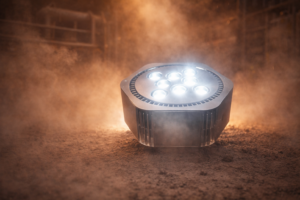
One of the most significant challenges in furnace and kiln environments is the sustained high ambient temperature. Even when fixtures are installed outside the main combustion chamber, radiant heat and poor ventilation can push temperatures well beyond the limits of standard lighting systems. Continuous exposure to temperatures above 80°C can degrade LED chips and drivers, while environments exceeding 150°C demand highly specialized thermal-resistant designs.
Industrial furnace operations generate large quantities of dust, ash, and airborne particulates. These contaminants can accumulate on optical lenses, reducing light output and efficiency. Additionally, fine particles may infiltrate poorly sealed fixtures, damaging internal components and impairing heat dissipation mechanisms.
Frequent heating and cooling cycles introduce thermal shock, which can cause material fatigue and structural failure. Lighting fixtures must be capable of withstanding rapid temperature changes without cracking, warping, or losing sealing integrity.
Combustion processes often release corrosive gases such as sulfur oxides and other chemical compounds. These substances can degrade metal housings, seals, and optical components over time, leading to reduced lifespan and potential safety hazards.
High-heat lighting fixtures must be designed with elevated ambient temperature ratings (Ta), often ranging from 80°C to 200°C or higher. This requires the use of high-temperature LED chips, specialized drivers, and heat-resistant wiring materials that can maintain performance under extreme conditions.
Effective thermal management is critical to ensuring long-term reliability. Passive cooling systems, including oversized heat sinks and optimized airflow channels, help dissipate heat efficiently. In more extreme environments, remote driver configurations are used to isolate sensitive electronic components from high-temperature zones.
Durability is essential in harsh industrial settings. High-quality aluminum alloys and stainless steel housings provide excellent thermal conductivity and corrosion resistance. Advanced surface treatments, such as anti-corrosion coatings, further enhance durability.
Ingress Protection (IP) ratings such as IP65 or IP66 are necessary to prevent dust and moisture from entering the fixture. Sealed optical chambers and high-performance gaskets ensure that internal components remain protected in contaminated environments.
Heavy industrial environments often involve significant vibration and mechanical impact. Fixtures must meet high IK ratings and incorporate reinforced structural designs to withstand these stresses without compromising performance.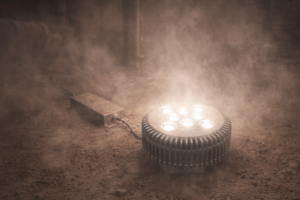
LED performance is highly temperature-dependent. As temperature increases, luminous efficacy decreases. High-temperature lighting solutions utilize specially selected LED chips and driver systems that maintain stable output even under elevated thermal conditions.
Proper optical design is essential for ensuring visibility and safety. Narrow beam angles are often used to focus light on specific work areas, while wider distributions may be required for general illumination. Anti-glare lenses help reduce visual discomfort in environments with reflective surfaces such as molten metal or glass.
Accurate color rendering is crucial for inspection tasks and quality control. High CRI (Color Rendering Index) lighting enables workers to detect defects and irregularities more effectively. Neutral white color temperatures (4000K–5700K) are typically preferred for industrial applications.
These fixtures are commonly used in large industrial spaces with high ceilings. They provide powerful, uniform illumination and are engineered to operate reliably in elevated ambient temperatures.
In environments where combustible dust or gases are present, explosion-proof lighting is required. These fixtures are designed to prevent ignition sources and comply with strict safety standards.
Maintenance activities often require portable lighting solutions. High-temperature-rated inspection lights provide flexibility and durability for use in confined or hard-to-reach areas.
Outdoor areas surrounding furnaces also require robust lighting solutions. High-power LED floodlights ensure adequate visibility while withstanding radiant heat and environmental exposure.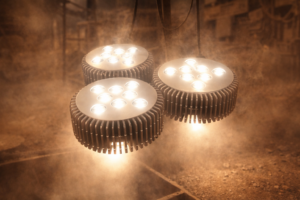
Proper installation is critical to maximizing fixture lifespan. Maintaining safe distances from direct heat sources helps reduce thermal stress and prolongs operational life.
Heat shields and reflective barriers can be used to protect lighting fixtures from direct radiant heat. These measures significantly improve thermal performance and reliability.
High-temperature environments require specialized cabling with heat-resistant insulation. Protective conduits further safeguard electrical connections from damage.
Retrofitting existing facilities requires careful planning to ensure compatibility with current mounting systems and electrical layouts. Custom solutions may be necessary for optimal performance.
LED lighting offers significant advantages over traditional high-pressure sodium (HPS) and metal halide lamps, including higher energy efficiency, instant startup, and reduced heat generation.
High-temperature LED fixtures are designed for extended lifespans, even in harsh environments. This reduces the frequency of replacements and minimizes maintenance downtime.
Although the initial investment may be higher, the long-term savings in energy and maintenance costs result in a favorable return on investment. Many facilities achieve payback within a relatively short period.
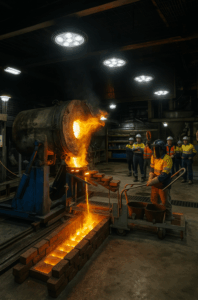
Industrial lighting deployed in high-heat furnace and kiln environments must comply with internationally recognized standards to ensure safety, durability, and performance consistency. Certifications such as IEC (International Electrotechnical Commission), UL (Underwriters Laboratories), and CE (Conformité Européenne) are critical benchmarks that validate the design, electrical safety, and environmental resilience of lighting fixtures. These standards are not merely formalities; they provide a structured framework that ensures luminaires can withstand extreme thermal conditions, voltage fluctuations, and prolonged operational stress.
For example, IEC standards define requirements for luminaire construction, insulation, and thermal endurance, ensuring that fixtures maintain safe operating temperatures even under continuous exposure to elevated ambient heat. UL certification, widely required in North America, verifies electrical safety and fire resistance, which are especially important in environments where high temperatures and combustible materials coexist. CE marking, on the other hand, ensures conformity with European safety, health, and environmental protection directives, making it essential for global projects.
Compliance with these standards also facilitates smoother project approvals and inspections, particularly in large-scale industrial installations. Engineering consultants and procurement teams often prioritize certified products to minimize liability risks and ensure long-term operational reliability. Additionally, certified lighting systems are typically subjected to rigorous laboratory testing, including thermal cycling, ingress protection validation, and mechanical stress tests, which further guarantees their suitability for furnace and kiln applications.
Ultimately, adherence to industrial lighting standards is a foundational requirement that supports safe operations, reduces risk exposure, and enhances the credibility of both manufacturers and facility operators.
In furnace and kiln environments, lighting systems are frequently exposed not only to extreme heat but also to potentially hazardous atmospheres. These may include combustible dust, flammable gases, or volatile chemical vapors generated during industrial processes. As a result, lighting fixtures must meet specialized certifications such as ATEX (Atmosphères Explosibles) and Class I, II, and III Division ratings as defined by the National Electrical Code (NEC) in the United States.
ATEX certification is mandatory in many international markets and ensures that equipment used in explosive atmospheres is designed to prevent ignition sources. This involves strict control over surface temperatures, electrical arcs, and enclosure integrity. Similarly, Class I ratings apply to environments with flammable gases, Class II to combustible dust, and Class III to ignitable fibers. Each classification requires specific design considerations, including explosion-proof housings, sealed enclosures, and reinforced cable entries.
High-temperature ratings are equally important, as fixtures must maintain safe external surface temperatures even when operating in ambient conditions exceeding 100°C or more. This often requires advanced thermal isolation techniques, such as separating heat-sensitive components or using specialized materials that can withstand both high temperatures and pressure differentials.
Failure to comply with these standards can lead to catastrophic consequences, including fire hazards, explosions, and equipment failure. Therefore, facility operators must carefully evaluate both thermal and hazardous location ratings when selecting lighting solutions. Proper certification not only ensures regulatory compliance but also provides peace of mind that the lighting system will perform safely under the most demanding conditions.
Adequate lighting is a fundamental component of workplace safety, particularly in high-risk environments such as furnaces and kilns. Regulatory bodies such as OSHA (Occupational Safety and Health Administration) establish minimum illumination levels for industrial workplaces to ensure that employees can perform tasks safely and efficiently. These requirements are especially critical in areas involving high temperatures, moving machinery, and hazardous materials.
Proper illumination reduces the likelihood of accidents by improving visibility, enabling workers to identify potential hazards, read instruments accurately, and perform detailed inspections. In furnace environments, where glare from molten materials or reflective surfaces can impair vision, lighting design must carefully balance brightness and glare control. This often involves the use of diffused optics, anti-glare lenses, and strategically positioned fixtures to minimize visual discomfort.
Emergency lighting is another essential aspect of workplace safety. In the event of power failure or system malfunction, backup lighting systems must provide sufficient illumination for safe evacuation and emergency response. These systems must also be capable of operating reliably under high-temperature conditions, which adds another layer of complexity to their design.
Furthermore, consistent lighting levels across work areas help prevent eye strain and fatigue, which can negatively impact worker performance and increase the risk of errors. Uniformity in illumination is particularly important in inspection zones, where precise visual assessment is required.
In summary, compliance with workplace safety lighting requirements is not only a regulatory obligation but also a critical factor in protecting personnel, maintaining productivity, and ensuring overall operational safety in furnace and kiln facilities.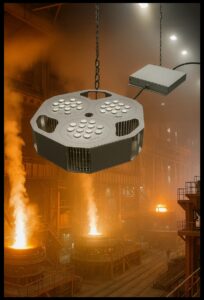
Steel mills and foundries represent some of the most demanding environments for industrial lighting systems. These facilities operate under extreme conditions, with ambient temperatures often exceeding 100°C and localized hotspots reaching even higher levels due to molten metal processing. In addition to thermal stress, lighting fixtures must withstand heavy vibration, mechanical shock, and exposure to metallic dust and slag particles.
In such environments, high-temperature LED lighting systems have demonstrated significant advantages over traditional lighting technologies. For instance, LED high bay fixtures designed with advanced thermal management systems can maintain stable luminous output even when exposed to continuous radiant heat. Their solid-state construction also makes them more resistant to vibration compared to fragile arc-based lighting systems like metal halide lamps.
A typical case involves the replacement of legacy high-intensity discharge (HID) lighting in a steel rolling mill. By upgrading to high-temperature LED fixtures with remote drivers, the facility was able to reduce fixture failure rates significantly while improving illumination levels across the production floor. This not only enhanced worker safety but also reduced maintenance frequency, which is particularly important in areas where access is difficult and downtime is costly.
Additionally, the use of high-CRI LED lighting has improved visual clarity during quality inspections, allowing operators to detect surface defects more accurately. This contributes to higher product quality and reduced waste.
Overall, the adoption of specialized high-heat LED lighting in steel mills and foundries has proven to be a highly effective strategy for improving operational efficiency, safety, and long-term cost performance.
Glass manufacturing plants present a unique set of challenges for lighting systems due to the intense radiant heat generated by furnaces and the highly reflective nature of glass surfaces. These environments often involve continuous high-temperature operations, with ambient conditions that can rapidly degrade standard lighting fixtures.
One of the primary challenges in glass plants is managing glare. Molten glass and polished surfaces can reflect light intensely, creating visual discomfort and reducing visibility for operators. To address this, lighting systems must incorporate advanced optical designs, including anti-glare lenses and carefully selected beam angles that minimize direct and reflected glare.
High-temperature LED fixtures are particularly well-suited for these applications due to their ability to maintain consistent light output under elevated temperatures. Their directional lighting capability also allows for precise illumination of work areas, reducing wasted light and improving energy efficiency.
In a typical float glass production facility, the transition from traditional lighting to high-temperature LED systems resulted in improved illumination uniformity and reduced energy consumption. The new lighting setup provided better visibility for monitoring glass quality, detecting imperfections, and ensuring process consistency.
Moreover, the durability of LED fixtures in high-heat environments has led to a significant reduction in maintenance interventions. This is especially valuable in glass plants, where lighting fixtures are often installed in hard-to-reach locations above production lines.
In conclusion, high-performance LED lighting solutions play a critical role in enhancing visibility, safety, and efficiency in glass manufacturing environments.
Ceramic and brick kiln operations are characterized by prolonged exposure to high temperatures and significant levels of dust and particulate matter. These environments require lighting systems that can operate reliably over extended periods without degradation in performance.
Kiln facilities often involve continuous production cycles, meaning that lighting fixtures are subjected to sustained thermal stress with minimal opportunities for cooling. In addition, airborne dust generated from raw materials and finished products can accumulate on lighting fixtures, reducing light output and impairing heat dissipation.
High-temperature LED lighting systems designed for kiln applications typically feature sealed enclosures with high IP ratings, preventing dust ingress and protecting internal components. Their robust construction ensures resistance to thermal expansion and contraction, which is critical in environments with fluctuating temperatures.
In one example, a ceramic manufacturing plant upgraded its lighting system to high-temperature LED fixtures with corrosion-resistant coatings. This resulted in improved illumination levels and a noticeable reduction in maintenance requirements. Workers reported better visibility during inspection and handling processes, contributing to improved product quality.
Another key advantage of LED lighting in kiln environments is energy efficiency. Compared to traditional lighting systems, LEDs consume less power while delivering higher luminous efficacy, resulting in lower operating costs.
Overall, the implementation of specialized lighting solutions in ceramic and brick kiln facilities enhances operational reliability, reduces maintenance burden, and supports consistent production quality.
Cement production facilities combine some of the most challenging environmental conditions found in industrial settings, including high temperatures, heavy dust, and continuous mechanical activity. Lighting systems in these environments must be exceptionally durable and capable of maintaining performance despite constant exposure to abrasive particles and thermal stress.
Dust is a particularly significant issue in cement plants, as fine particulate matter can quickly accumulate on lighting fixtures, reducing light output and potentially causing overheating. To address this, high-temperature LED fixtures used in these facilities are typically designed with sealed optical chambers and self-cleaning or easy-to-maintain surfaces.
Thermal management is another critical factor, as lighting fixtures are often installed near kilns, clinker coolers, and other high-heat equipment. Advanced heat sink designs and high-temperature-resistant components ensure that fixtures can operate reliably even under these conditions.
In a real-world application, a cement plant replaced its outdated lighting system with high-efficiency LED fixtures designed for high-temperature environments. The upgrade resulted in improved visibility across the facility, reduced energy consumption, and a significant decrease in maintenance frequency.
Furthermore, the improved lighting conditions enhanced worker safety by providing clearer visibility in areas with moving equipment and heavy machinery. This contributed to a reduction in workplace incidents and improved overall operational efficiency.
In summary, high-performance LED lighting systems are essential for addressing the unique challenges of cement production facilities, delivering both operational and safety benefits.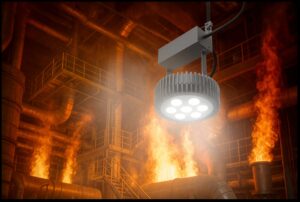
The integration of smart lighting technologies is transforming the way industrial facilities manage illumination systems, particularly in high-heat environments such as furnaces and kilns. Smart lighting systems incorporate sensors, wireless communication modules, and centralized control platforms that enable real-time monitoring and adaptive control of lighting performance.
In high-temperature applications, smart lighting can provide valuable insights into fixture operating conditions, including temperature, power consumption, and runtime. This data can be used to implement predictive maintenance strategies, identifying potential failures before they occur and reducing unplanned downtime.
Additionally, smart lighting systems can adjust illumination levels based on operational needs, occupancy, or time of day. For example, lighting intensity can be reduced during non-operational periods to conserve energy, while maintaining sufficient illumination for safety.
Integration with industrial automation systems further enhances efficiency, allowing lighting to respond dynamically to production processes. This not only improves energy efficiency but also contributes to a more intelligent and responsive industrial environment.
Advancements in materials science are playing a crucial role in improving the performance and durability of lighting systems in high-heat environments. Traditional materials are being replaced or enhanced with advanced alloys, ceramics, and nano-coatings that offer superior thermal resistance and corrosion protection.
Ceramic-based components, for example, provide excellent thermal stability and can withstand extreme temperatures without deformation. Similarly, nano-coatings can enhance surface properties, making fixtures more resistant to corrosion, dust accumulation, and chemical exposure.
These innovations extend the lifespan of lighting fixtures and reduce maintenance requirements, making them particularly valuable in harsh industrial environments where access is limited and downtime is costly.
Continuous improvements in LED technology are driving higher levels of efficiency and thermal tolerance. Modern LED chips are capable of delivering higher luminous efficacy while generating less heat, which is critical for maintaining performance in high-temperature environments.
Enhanced chip designs also offer improved resistance to thermal degradation, ensuring consistent light output over extended periods. This not only improves energy efficiency but also reduces the frequency of replacements, contributing to lower total cost of ownership.
As LED technology continues to evolve, future lighting systems are expected to deliver even greater performance, reliability, and efficiency, further solidifying their role in high-heat industrial applications.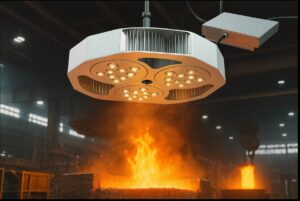
High-heat furnace and kiln environments present some of the most challenging conditions for industrial lighting systems. Extreme temperatures, dust, vibration, and corrosive elements all contribute to the rapid degradation of conventional lighting solutions. As a result, specialized high-temperature LED lighting systems are essential for ensuring reliable and efficient illumination.
These advanced lighting solutions incorporate robust materials, effective thermal management systems, and high-performance optical designs to maintain stability under harsh conditions. In addition to improving visibility and safety, they offer significant energy savings and reduced maintenance requirements.
Selecting the right lighting supplier is a critical decision that can significantly impact the success of a project. A reputable supplier should offer proven expertise in high-temperature lighting applications, supported by relevant certifications and successful case studies.
Customization capabilities are also important, as different industrial environments may require tailored solutions. Factors such as ambient temperature, mounting conditions, and exposure to contaminants must be carefully considered in the design process.
Ultimately, partnering with an experienced supplier ensures that lighting systems are not only compliant with industry standards but also optimized for long-term performance and reliability.
–The End–