
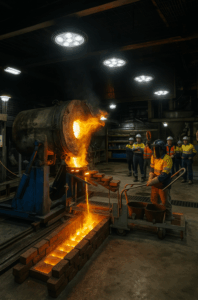
Industrial facilities operating under extreme thermal conditions face a unique set of challenges when selecting reliable and efficient lighting systems. Environments such as metal foundries, glass manufacturing plants, ceramics kilns, power generation stations, and heavy processing zones frequently expose lighting fixtures to ambient temperatures far beyond standard commercial specifications. In many cases, localized temperatures around furnaces or processing equipment can exceed 150 °C, creating conditions that quickly degrade conventional lighting technologies.
Traditional luminaires—including high-pressure sodium (HPS), metal halide (MH), and halogen lamps—were not designed for prolonged exposure to high thermal loads. Elevated ambient temperatures accelerate material fatigue, increase driver failure rates, and reduce luminous output stability. These effects translate into frequent maintenance cycles, unplanned downtime, and compromised illumination levels that may affect operational safety.
Simultaneously, global energy prices continue to rise, and industries are under increasing pressure to reduce operating expenses while meeting environmental and regulatory standards. As a result, there is a growing demand for lighting technologies capable of maintaining high efficiency, durability, and output consistency in extreme heat conditions. High-temperature-rated LED systems have emerged as a solution that addresses these requirements while offering measurable economic value.
LED performance is intrinsically linked to junction temperature—the temperature at the semiconductor junction where light is generated. As junction temperature increases, photon generation efficiency declines due to increased non-radiative recombination. This results in reduced luminous efficacy and accelerated lumen depreciation.
Purpose-built high-temperature LED systems are engineered to maintain stable junction temperatures even when ambient conditions are extreme. Optimized thermal pathways efficiently transfer heat away from critical components, preserving performance stability.
High-temperature LED luminaires incorporate thermally robust chips, industrial-grade drivers, advanced heat sinks, conductive housings, and heat-resistant seals. These elements collectively ensure durability and efficiency under prolonged thermal stress.
Typical classifications include 90 °C, 150 °C, and 200 °C ambient ratings verified through rigorous thermal testing and compliance certification.
Specialized LEDs can sustain efficacy above 150 lm/W even under heat stress, while conventional lamps may fall below half their rated output.
2. Power Consumption Stability
Constant-current drivers ensure predictable energy consumption and consistent output.
3. Reduced Cooling Load
Low radiant heat emission reduces HVAC demand and delivers indirect energy savings.
Lifecycle cost models consistently favor high-temperature LEDs due to long service life and lower energy use.
2. Maintenance Cost Reduction
Extended replacement intervals dramatically reduce labor and downtime expenses.
3. ROI Modeling
Typical industrial payback periods range from 12–30 months depending on operating hours and electricity rates.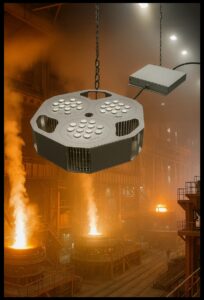
Thermal stress resistance is one of the most critical design characteristics of lighting systems intended for extreme heat environments. In conventional luminaires, repeated heating and cooling cycles cause expansion and contraction of internal components, gradually weakening solder joints, degrading insulation, and increasing the likelihood of electrical failure. High-temperature LED fixtures are specifically engineered to withstand these stresses through the use of thermally compatible materials with matched expansion coefficients. This reduces mechanical strain and prevents premature component fatigue.
Advanced alloys used in high-temperature housings maintain structural rigidity even when exposed to prolonged heat, while high-temperature silicone or ceramic encapsulants protect sensitive semiconductor components from oxidation and thermal shock. In addition, industrial-grade driver circuits employ capacitors and resistors rated for extreme temperatures, ensuring electrical stability when standard components would fail.
Another important factor is resistance to thermal aging. Materials exposed to elevated temperatures over long periods may experience molecular degradation that reduces mechanical strength or optical clarity. High-temperature luminaires incorporate stabilized polymers and coated metal surfaces that resist oxidation, corrosion, and UV-induced breakdown. This preserves both mechanical durability and photometric performance throughout the product lifecycle.
By combining materials science, mechanical engineering, and electronic design optimization, high-temperature LED systems achieve long-term resilience in conditions that would quickly destroy traditional lighting. This durability translates directly into operational reliability, making them indispensable for mission-critical industrial environments where lighting failure is not merely inconvenient but potentially hazardous or financially damaging.
Consistent illumination is essential in industrial settings where visibility directly affects worker safety, product quality, and process precision. In environments such as steel casting lines, chemical processing facilities, or heavy machinery assembly areas, even minor fluctuations in light output can impair depth perception, color recognition, and visual accuracy. Conventional lighting technologies often struggle to maintain stable output when exposed to elevated temperatures because heat alters gas pressure, electrode performance, or filament resistance. These variations can produce flicker, color shift, or sudden brightness reduction.
High-temperature LED systems are engineered to provide stable photometric performance regardless of ambient heat conditions. Precision constant-current drivers regulate electrical flow to the LED chips, preventing brightness fluctuations caused by temperature-induced voltage changes. Additionally, high-quality phosphor coatings and optical components maintain consistent color rendering and correlated color temperature even during prolonged high-heat operation.
Reliable lighting also supports compliance with occupational safety standards, which frequently specify minimum illumination levels for industrial workspaces. Failure to meet these standards can result in regulatory penalties or increased accident liability. By maintaining stable luminous output, high-temperature LEDs ensure that facilities consistently meet required lighting thresholds.
Furthermore, consistent illumination reduces visual fatigue among workers. Fluctuating light levels force the human eye to constantly readjust, which can cause strain and reduce concentration over time. Stable lighting conditions improve comfort, enhance productivity, and lower the risk of operational errors. In safety-critical environments, these benefits translate into fewer accidents, improved workflow efficiency, and stronger overall operational performance.
In high-temperature industrial environments, lighting reliability is directly tied to production continuity. When a luminaire fails in a standard commercial space, replacement is typically quick and inexpensive. In contrast, when lighting fails in heavy industry settings such as refineries, foundries, or high-bay manufacturing facilities, replacement often requires specialized equipment, safety shutdown procedures, and trained personnel. The resulting downtime can halt production lines, delay schedules, and generate significant financial losses.
High-temperature LED lighting minimizes this risk by delivering exceptionally long operational lifespans even under harsh thermal conditions. Because these luminaires are designed to maintain stable internal temperatures and resist component degradation, they are far less likely to fail unexpectedly. This reliability reduces the frequency of maintenance interventions and allows facility managers to plan service schedules proactively rather than reactively.
Preventing unscheduled outages is particularly important in continuous-process industries, where production runs around the clock and shutdowns can disrupt entire supply chains. A single lighting failure in a critical inspection zone or safety corridor may require temporary shutdown until visibility is restored. By ensuring consistent performance, high-temperature LEDs help maintain uninterrupted operations and protect productivity.
From an economic perspective, the value of avoided downtime often exceeds the direct energy savings of efficient lighting. Lost production time, equipment restart costs, and labor inefficiencies can accumulate rapidly. Investing in reliable lighting infrastructure therefore represents not only a maintenance decision but a strategic operational investment that safeguards revenue and strengthens facility resilience.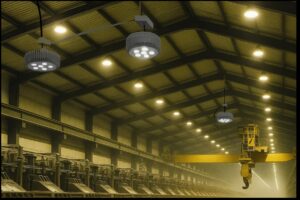
Thermal management is the cornerstone of high-temperature lighting system design because the long-term performance of LEDs depends heavily on controlling heat flow. Unlike conventional light sources that dissipate heat primarily through radiation, LEDs conduct heat internally from the semiconductor junction outward through the package and housing. If this heat is not efficiently removed, junction temperatures rise and reduce luminous efficiency and lifespan.
Passive cooling strategies are generally preferred in extreme environments because they avoid mechanical components that could fail. Large-surface-area heat sinks, finned housings, and high-conductivity alloys enhance convection and conduction. Some fixtures incorporate heat pipes or phase-change materials that rapidly transfer thermal energy away from sensitive electronics. These technologies distribute heat evenly, preventing localized hotspots that could damage internal components.
Thermal isolation is another important design principle. Drivers and optical assemblies may be separated within the luminaire housing so that heat generated by one component does not affect another. Reflective barriers and ceramic insulators can also be used to shield electronics from external radiant heat sources.
Engineers must also consider airflow conditions within the installation environment. Even small amounts of natural convection can significantly improve heat dissipation. Computational fluid dynamics (CFD) simulations are often employed during product development to predict airflow patterns and optimize heat sink geometry.
Ultimately, effective thermal management ensures that high-temperature LEDs maintain stable junction temperatures even when ambient conditions are extreme. This stability preserves luminous efficacy, prevents premature aging, and guarantees long-term reliability, making thermal engineering one of the most critical aspects of industrial lighting design.
Proper installation planning plays a decisive role in determining how well a high-temperature lighting system performs in real-world conditions. Even the most advanced luminaire can underperform if it is installed too close to intense heat sources or in areas with restricted airflow. Strategic placement ensures that fixtures operate within their rated temperature range and maintain optimal efficiency throughout their service life.
Engineers typically begin by conducting a thermal mapping analysis of the facility. This process identifies zones with varying temperature gradients, airflow patterns, and radiant heat exposure. Fixtures can then be positioned in locations where ambient conditions remain within acceptable limits while still providing adequate illumination coverage. In environments with localized heat sources such as furnaces or kilns, mounting distances and angles must be carefully calculated to prevent excessive heat buildup.
Mounting orientation also influences thermal performance. Vertical mounting may enhance natural convection, while horizontal placement might trap heat around the fixture housing. Adjustable brackets and specialized mounting hardware allow installers to fine-tune positioning for optimal heat dissipation.
Cable routing and electrical connections must also be designed to withstand high temperatures. Heat-resistant wiring, insulated conduits, and properly rated connectors prevent degradation that could compromise electrical safety. In addition, maintenance accessibility should be considered during installation planning so that fixtures can be serviced without interrupting operations.
By integrating environmental analysis, mechanical design, and electrical planning, installation engineers can maximize the performance and longevity of high-temperature LED systems. Thoughtful placement not only enhances efficiency but also protects the investment by ensuring that fixtures operate under conditions aligned with their design specifications.
Industrial facilities rarely share identical operating environments, which makes customization an essential aspect of high-temperature lighting design. Factors such as ambient temperature range, presence of corrosive gases, vibration levels, mounting height, and illumination requirements all influence the optimal configuration of a lighting system. A standardized fixture may perform adequately in one facility but fail prematurely in another with more demanding conditions.
Customization begins with photometric design. Engineers analyze required illumination levels, beam distribution, and uniformity to determine appropriate wattage and optics. Narrow beam angles may be selected for high-bay installations to concentrate light on work surfaces, while wide distributions may be used for general area illumination. Lens materials can also be tailored to withstand high temperatures or resist chemical exposure.
Electrical specifications may be modified to match facility power infrastructure. Options such as different input voltage ranges, surge protection levels, or dimming interfaces allow integration with existing electrical systems. In facilities with unstable power supply, reinforced drivers and protective circuitry ensure stable operation despite voltage fluctuations.
Mechanical customization is equally important. Mounting brackets, suspension systems, and protective guards can be adapted to accommodate structural constraints or safety requirements. In extreme environments, additional heat shields or protective coatings may be applied to extend durability.
The ability to tailor lighting systems to specific operational conditions ensures optimal performance, longevity, and efficiency. Customized high-temperature LED solutions provide facilities with precisely engineered illumination that aligns with their unique environmental and operational demands, maximizing both technical effectiveness and economic return.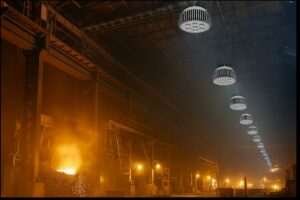
Metal smelting facilities represent some of the most thermally demanding industrial environments. Furnaces operating at extremely high temperatures generate intense radiant heat, airborne particulates, and corrosive gases that can rapidly degrade standard lighting fixtures. In these conditions, conventional luminaires often fail within months, leading to frequent replacements and increased maintenance risk for personnel working at elevated heights.
High-temperature LED systems installed in smelting plants demonstrate significant performance advantages. Their thermally stable components allow them to maintain consistent luminous output even when ambient temperatures approach their rated limits. Because these fixtures are engineered with sealed housings and heat-resistant materials, they resist contamination from dust and fumes that would otherwise impair optical performance.
Facilities that have adopted high-temperature LEDs report reduced maintenance frequency and improved operational visibility. Reliable illumination enables workers to monitor molten metal flow, inspect equipment, and maintain safe working conditions. Over time, the reduction in replacement cycles translates into lower operational costs and improved safety compliance.
Ceramic manufacturing facilities operate large kilns that maintain high temperatures for extended production cycles. Lighting installed near kiln openings must tolerate continuous heat exposure without experiencing thermal degradation or electrical instability. Conventional lighting technologies struggle in these environments, often suffering from shortened lifespan and fluctuating brightness.
High-temperature LED luminaires provide a durable alternative because they are specifically designed to handle sustained high ambient temperatures. Their advanced thermal management systems prevent internal overheating, while heat-resistant optical components maintain clarity and light transmission. This ensures consistent illumination for workers overseeing firing processes and inspecting finished products.
Stable lighting conditions also improve product quality control. Accurate color perception and visual clarity are essential when evaluating glaze finishes and surface textures. By delivering consistent color rendering and brightness, high-temperature LEDs support precise inspection and reduce the likelihood of production defects.
Petrochemical refineries combine elevated temperatures with hazardous atmospheres containing flammable gases and chemical vapors. Lighting systems in these environments must meet stringent safety and durability requirements. Failures can pose serious risks, including fire hazards or operational shutdowns.
High-temperature LED fixtures designed for refinery use typically incorporate explosion-resistant housings, corrosion-resistant coatings, and sealed electrical compartments. These features protect internal components from chemical exposure and prevent sparks or electrical faults. Because LEDs generate less radiant heat than traditional lamps, they also reduce the risk of igniting volatile substances.
Refineries benefit from the long lifespan and reliability of these systems. Reduced maintenance means fewer interventions in hazardous areas, lowering risk for technicians. Additionally, stable illumination enhances visibility for monitoring pipelines, valves, and processing equipment, contributing to safer and more efficient operations.
Infrastructure projects in desert climates face extreme environmental stressors including high ambient temperatures, intense solar radiation, and large daily temperature fluctuations. Lighting systems installed in these regions must withstand continuous exposure to heat while maintaining reliable performance at night.
High-temperature LED luminaires are well suited to such conditions because they are designed to tolerate elevated temperatures without thermal shutdown. Durable housings and UV-resistant materials protect against sunlight degradation, while efficient thermal pathways prevent overheating even when daytime temperatures remain high.
For roadway lighting, industrial compounds, or remote facilities, reliability is especially important because maintenance access may be limited. Long-life LED systems reduce service frequency and ensure continuous illumination for safety and security. Over time, the combination of energy efficiency and durability makes high-temperature LEDs the most practical solution for harsh outdoor environments.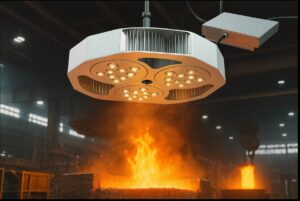
Energy-efficient lighting plays a vital role in reducing industrial carbon emissions. Because lighting systems often operate for extended hours, even small improvements in efficiency can produce significant reductions in electricity consumption. High-temperature LEDs deliver high luminous efficacy while maintaining stable performance under heat stress, allowing facilities to achieve required illumination levels with less power.
Lower electricity usage directly translates into reduced greenhouse gas emissions associated with power generation. For large industrial complexes, lighting upgrades can represent a measurable contribution toward corporate sustainability targets and environmental reporting goals. Organizations seeking certification under environmental standards often find that energy-efficient lighting retrofits provide one of the fastest and most cost-effective pathways to emission reduction.
Beyond direct energy savings, reduced cooling requirements further decrease overall facility energy demand. Because LEDs emit less radiant heat than traditional lamps, they help limit temperature increases in enclosed spaces, reducing the load on ventilation or air-conditioning systems. This secondary efficiency effect amplifies environmental benefits.
Product lifespan is a major factor influencing environmental impact. Lighting systems that fail frequently generate significant material waste, including glass, metal, and electronic components. Manufacturing replacement fixtures also consumes energy and raw materials, increasing the overall ecological footprint.
High-temperature LED luminaires are designed for extended operational life, often lasting many times longer than conventional lighting technologies. Their durable construction and resistance to thermal degradation reduce replacement frequency, which in turn lowers waste generation. Over the lifetime of a facility, this reduction can represent a substantial decrease in discarded materials.
Longer service intervals also reduce packaging waste and transportation emissions associated with replacement products. Fewer shipments mean lower fuel consumption and reduced logistical impact. In this way, durability contributes not only to economic efficiency but also to environmental sustainability.
Governments and regulatory bodies worldwide continue to implement stricter energy efficiency standards for industrial equipment. Facilities that fail to meet these requirements may face penalties, operational restrictions, or increased taxation. High-temperature LED lighting helps organizations comply with these regulations by delivering superior efficiency compared to traditional lighting technologies.
Many jurisdictions also offer incentives for adopting energy-saving equipment, such as tax credits or rebates. Installing efficient lighting systems can therefore provide financial benefits beyond operational savings. In addition, compliance with recognized standards enhances corporate reputation by demonstrating commitment to environmental responsibility.
Meeting regulatory requirements is particularly important for multinational corporations operating across multiple regions with varying efficiency mandates. Standardizing on high-efficiency lighting simplifies compliance management and ensures consistent performance across facilities. In this context, high-temperature LEDs serve not only as a technical upgrade but also as a strategic tool for regulatory alignment and corporate sustainability planning.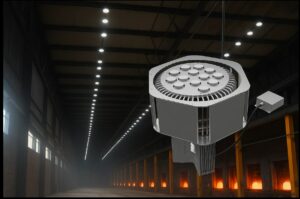
The future of high-temperature LED technology is closely tied to advances in materials science and semiconductor engineering. Researchers are developing new substrate materials with higher thermal conductivity, allowing heat to dissipate more efficiently from the LED junction. Improved phosphor formulations and encapsulation compounds are also being designed to maintain optical performance at elevated temperatures without discoloration or degradation.
Wide-bandgap semiconductor materials such as gallium nitride derivatives are enabling LEDs to operate efficiently at higher temperatures and voltages. These materials exhibit superior thermal stability and electrical characteristics, making them ideal for extreme industrial applications. As manufacturing techniques improve and costs decline, these advanced semiconductors are expected to become more widely adopted in commercial high-temperature lighting products.
Nanotechnology is another area of innovation. Nanostructured heat-spreading layers and coatings can enhance thermal conductivity while maintaining lightweight construction. These developments may allow future luminaires to operate reliably in environments that exceed current temperature limits.
Integration of sensors and intelligent control systems is transforming industrial lighting into a data-driven infrastructure component. Modern high-temperature LED fixtures can incorporate temperature sensors, power monitors, and communication modules that transmit real-time performance data to centralized management platforms. This enables facility operators to track operating conditions and identify potential issues before failures occur.
Predictive maintenance algorithms analyze sensor data to detect abnormal trends such as rising internal temperatures or power fluctuations. When early warning signs appear, maintenance teams can intervene proactively, preventing unexpected outages. This approach reduces downtime, extends equipment lifespan, and improves overall operational efficiency.
Smart monitoring also supports energy optimization. By analyzing usage patterns and environmental conditions, intelligent lighting systems can adjust output levels dynamically, delivering light only where and when it is needed. Such adaptive operation further enhances energy savings and contributes to sustainability goals.
Rapid industrialization in developing regions is creating strong demand for durable and efficient lighting solutions capable of operating in challenging environments. Many emerging markets experience high ambient temperatures, unstable power infrastructure, and limited maintenance resources. High-temperature LED systems are particularly well suited to these conditions because they combine efficiency, durability, and reliability.
As global awareness of energy efficiency grows, governments in developing economies are introducing regulations and incentive programs encouraging adoption of advanced lighting technologies. Infrastructure expansion projects—including transportation networks, manufacturing facilities, and energy plants—are increasingly specifying LED systems as standard equipment.
Cost reductions resulting from technological advancements and large-scale production are making high-temperature LEDs more accessible to a broader range of industries. As adoption accelerates, economies of scale will further reduce prices, reinforcing market growth. This expansion is expected to drive continued innovation and establish high-temperature LED lighting as a global industry standard for extreme-environment illumination.
Extreme heat environments present demanding challenges that conventional lighting technologies cannot reliably withstand. High-temperature LED systems address these challenges through advanced thermal engineering, durable materials, and stable electrical performance. Their ability to maintain efficiency and reliability under harsh conditions makes them uniquely suited for industrial applications where lighting failure can disrupt operations or compromise safety.
From a financial standpoint, the advantages extend far beyond energy savings. Reduced maintenance, minimized downtime, and extended service life create substantial long-term economic value. When evaluated through lifecycle cost analysis, high-temperature LEDs consistently outperform traditional lighting solutions.
As industries continue to prioritize sustainability, efficiency, and operational resilience, the adoption of high-temperature LED lighting is poised to expand. Organizations that invest in this technology gain not only immediate performance improvements but also a strategic advantage in long-term cost control and environmental responsibility.
–The End–