
Industrial facilities operating in extreme thermal environments present one of the most challenging contexts for lighting system design. High ambient temperatures, radiant heat sources, airborne particulates, and mechanical vibration create a convergence of stress factors that rapidly degrade conventional luminaires. Traditional lighting technologies such as metal halide, fluorescent, or high-pressure sodium lamps suffer from shortened service life, unstable output, and excessive maintenance requirements when deployed near furnaces, kilns, or high-temperature production lines.
Modern solid-state lighting, particularly industrial-grade LEDs, has emerged as the dominant solution due to its intrinsic efficiency, directional light control, and mechanical robustness. However, the assumption that LEDs are universally heat-resistant is misleading. While LEDs generate less radiant heat than legacy sources, their semiconductor junctions remain highly sensitive to temperature fluctuations. Designing LED luminaires for extreme heat zones therefore requires a multidisciplinary engineering approach that integrates thermal physics, materials science, optical engineering, and industrial compliance standards.
This article provides a comprehensive engineering framework for designing high-temperature LED lighting systems tailored to industrial facilities. It examines environmental constraints, thermal management principles, structural design strategies, certification requirements, and performance optimization techniques. By synthesizing these domains, engineers and facility planners can develop lighting infrastructures that maintain luminous stability, safety, and operational longevity even in ambient temperatures exceeding 150 °C.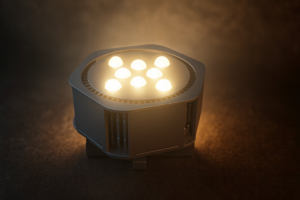
High-temperature industrial environments are characterized by sustained or intermittent exposure to elevated thermal loads generated by manufacturing processes. Foundries, steel mills, and aluminum smelting plants represent some of the most thermally aggressive settings, where molten metal operations can radiate temperatures well above 1,000 °C. In these facilities, lighting fixtures are often mounted at ceiling heights that still experience ambient air temperatures exceeding 70 °C, which is far beyond the design tolerance of commercial lighting products.
Glass manufacturing plants present another demanding application. Continuous furnaces used for glass melting operate at extreme temperatures for extended production cycles, creating persistent radiant heat zones. Lighting systems installed above production lines must withstand not only high heat but also thermal stratification, where temperature gradients vary significantly between floor level and ceiling structures.
Ceramic firing plants and kiln-based manufacturing facilities impose similar constraints. These environments combine prolonged heat exposure with airborne particulates such as silica dust and combustion byproducts. Such contaminants can accumulate on optical surfaces, reducing luminous output and accelerating thermal insulation around the luminaire housing.
Chemical processing plants represent a unique category of high-temperature environments because thermal stress is often combined with corrosive atmospheres. Lighting systems deployed in these facilities must resist both heat and chemical degradation, requiring specialized materials and sealing technologies.
Heavy machinery zones, such as forging presses or industrial baking chambers, also produce localized thermal hotspots. In these applications, lighting fixtures may be exposed to cyclical heat pulses rather than constant temperatures, creating repeated expansion-contraction stress cycles that can compromise mechanical integrity. Designing for such applications requires a thorough understanding of the operational thermal profile rather than relying solely on nominal ambient temperature specifications.
High-temperature industrial environments impose a combination of stress factors that extend beyond simple thermal exposure. One of the most critical variables is ambient temperature range. In many facilities, ambient temperatures fluctuate between 50 °C and 200 °C depending on production cycles, ventilation efficiency, and proximity to heat-generating equipment. Such variations create dynamic thermal loads that challenge both electronic stability and mechanical reliability.
Dust and airborne particulates represent another significant stress factor. In facilities such as cement plants or metal processing operations, microscopic particles remain suspended in the air and gradually accumulate on luminaire surfaces. This accumulation acts as a thermal insulating layer, reducing the effectiveness of heat dissipation structures and increasing internal junction temperatures. Over time, this can accelerate lumen depreciation and shorten component lifespan.
Mechanical vibration is also common in heavy industrial facilities. Large rotating equipment, stamping machines, and conveyor systems transmit vibrations through building structures, which can loosen electrical connections or induce microfractures in solder joints. When combined with elevated temperatures, vibration accelerates material fatigue and increases the likelihood of premature failure.
Humidity and corrosive gases further complicate the environmental profile. Facilities involved in chemical processing, wastewater treatment, or food manufacturing often generate moisture-laden air containing reactive compounds. High humidity can infiltrate poorly sealed luminaires, while corrosive gases may degrade metal housings, reflectors, and electrical contacts.
Thermal cycling is another critical stress mechanism. In many industrial settings, equipment operates in shifts, causing ambient temperatures to rise during production and fall during downtime. Repeated expansion and contraction of materials under such cycles can lead to seal failure, lens cracking, or driver malfunction. Therefore, understanding these environmental stress factors is essential for designing lighting systems that maintain reliability under real-world operating conditions.
High-temperature environments directly affect the performance and longevity of lighting systems through multiple degradation mechanisms. One of the most immediate impacts is material deterioration. Plastics used in conventional luminaires may soften, discolor, or deform when exposed to sustained temperatures above their thermal rating. Even metals can experience accelerated oxidation or structural weakening if not properly treated or alloyed for heat resistance.
Electrical instability is another major consequence. Electronic drivers, capacitors, and control circuits are particularly sensitive to temperature. Elevated ambient conditions increase internal component temperatures, which can cause voltage drift, reduced efficiency, or sudden driver failure. Electrolytic capacitors, commonly used in LED drivers, are especially vulnerable because their lifespan decreases exponentially with temperature rise.
Lumen depreciation is a critical performance issue. LED chips operate optimally within a defined junction temperature range. When this threshold is exceeded, luminous efficacy declines, and the spectral characteristics of the emitted light may shift. This can compromise visibility, color rendering, and worker safety, especially in facilities requiring precise visual inspection tasks.
Seal integrity is also affected. Gaskets and sealing compounds designed for standard industrial temperatures may harden or crack when subjected to extreme heat. Once seals fail, dust and moisture can enter the luminaire enclosure, accelerating internal contamination and thermal buildup.
Finally, maintenance frequency increases dramatically when lighting systems are not engineered for high-temperature operation. Frequent fixture replacement not only raises operational costs but also introduces safety risks, as maintenance personnel must access elevated or hazardous areas more often. For these reasons, understanding how extreme heat affects lighting systems is fundamental to engineering solutions that deliver consistent performance and long service life.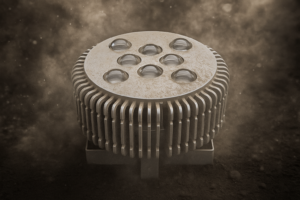
Although LEDs are widely recognized for their energy efficiency, they are not heat-free devices. In fact, a significant portion of the electrical energy supplied to an LED is converted into heat rather than visible light. This heat is generated primarily at the semiconductor junction, where electron-hole recombination occurs. The junction temperature, commonly denoted as Tj, is the most critical parameter influencing LED performance, efficiency, and lifespan.
The relationship between electrical input power and heat generation is governed by semiconductor physics. Only a fraction of input energy is emitted as photons; the remainder becomes thermal energy that must be dissipated through the device’s thermal pathway. If this heat is not effectively conducted away from the junction, the temperature rises rapidly, leading to efficiency droop and accelerated material degradation.
Thermal resistance is a key concept in understanding LED heat behavior. The total thermal resistance from junction to ambient consists of multiple components: junction-to-case, case-to-heatsink, and heatsink-to-ambient. Each segment contributes to the overall temperature rise. Engineers must therefore optimize every stage of the thermal path to maintain safe operating conditions.
In high-temperature industrial environments, the challenge is intensified because ambient air is already hot. Even a well-designed LED may struggle to dissipate heat if the surrounding air cannot absorb it effectively. This makes advanced thermal engineering not merely beneficial but essential.
Understanding heat generation at the semiconductor level allows designers to select appropriate LED chips, packaging technologies, and substrate materials. High-power LEDs intended for extreme environments often incorporate ceramic substrates, advanced phosphor coatings, and optimized electrode structures to minimize thermal resistance and improve heat conduction away from the junction.
Effective heat dissipation is the cornerstone of reliable LED lighting design, particularly in high-temperature industrial applications. The relationship between temperature and LED performance is nonlinear, meaning that even modest increases in junction temperature can significantly reduce luminous output and device lifespan. For example, a 10 °C rise in junction temperature can decrease LED lifetime by up to 50 % depending on chip architecture and materials.
Heat dissipation influences luminous efficiency because elevated temperatures reduce quantum efficiency within the semiconductor. As temperature increases, non-radiative recombination processes become more dominant, converting electrical energy into heat rather than light. This not only lowers brightness but also increases internal thermal load, creating a feedback loop that can accelerate degradation.
Driver performance is also closely tied to thermal conditions. Electronic drivers contain components such as MOSFETs, inductors, and capacitors that generate heat during operation. If heat is not effectively dissipated, component temperatures may exceed rated limits, causing electrical instability or failure. In high-temperature environments, the margin for safe operation is already narrow, making efficient thermal design imperative.
Another critical aspect is color stability. LED phosphor materials are sensitive to temperature, and excessive heat can alter their emission characteristics. This results in color shift, which may be unacceptable in applications requiring accurate color rendering, such as quality inspection or precision assembly.
Therefore, thermal management must be integrated into every stage of luminaire design, from chip selection and circuit layout to housing geometry and mounting position. Proper heat dissipation not only preserves performance but also ensures compliance with industrial safety standards and reduces long-term maintenance costs.
Cooling strategies for LED luminaires operating in high-temperature environments can be broadly categorized into passive and active methods, although passive approaches are generally preferred in industrial settings due to their reliability and low maintenance requirements. Passive cooling relies on conduction, convection, and radiation to transfer heat away from the LED junction and into the surrounding environment.
One of the most common passive cooling components is the heatsink. Heatsinks are typically constructed from high-thermal-conductivity materials such as aluminum or copper. Their geometry is carefully engineered to maximize surface area, allowing more heat to dissipate into the air. Fin spacing, thickness, and orientation all influence airflow patterns and thermal performance. In high-temperature facilities, designers often use oversized or specialized heatsinks to compensate for reduced temperature gradients between the luminaire and ambient air.
Thermal interface materials (TIMs) play a crucial role in improving heat transfer between components. TIMs fill microscopic air gaps between surfaces, reducing thermal resistance and enhancing conduction. Advanced TIMs used in industrial luminaires may include graphite sheets, phase-change materials, or ceramic-based compounds capable of withstanding extreme temperatures without degradation.
Active cooling methods, such as fans or liquid cooling systems, are less common but may be employed in exceptionally demanding environments. While these systems can dramatically improve heat dissipation, they introduce moving parts that may fail under harsh industrial conditions. Dust accumulation, vibration, and mechanical wear can compromise active cooling systems, making them less suitable for facilities where reliability is paramount.
Hybrid cooling approaches are sometimes used, combining passive heat conduction with structural design features that promote natural convection. For instance, luminaire housings may be shaped to channel rising hot air away from sensitive components. By integrating multiple cooling strategies, engineers can create lighting systems capable of maintaining stable operating temperatures even in environments where ambient heat is extreme.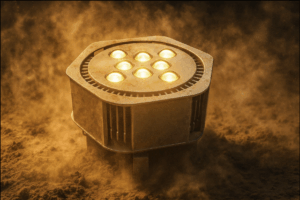
Material selection is a critical determinant of both the reliability and safety of high-temperature LED lighting systems. Housing materials must withstand prolonged exposure to elevated temperatures without deformation, discoloration, or structural compromise. Metals such as aluminum alloys, stainless steel, and certain high-temperature copper composites are frequently chosen for their superior thermal conductivity and mechanical strength. Aluminum, in particular, is popular due to its excellent heat dissipation properties and relatively low density, which simplifies installation in elevated areas.
Optical components also require careful material consideration. Traditional acrylic or polycarbonate lenses degrade rapidly under high heat, leading to yellowing, cracking, or loss of transparency. High-temperature glass or silicone-based lenses offer better thermal resilience while maintaining optical clarity and light diffusion characteristics. The coefficient of thermal expansion must also be matched with surrounding components to avoid stress fractures or seal failure.
Electrical insulation materials are equally important. Conductors, connectors, and wire coatings must be rated for temperatures exceeding the maximum ambient environment to prevent short-circuits or insulation breakdown. Fluoropolymer coatings, silicone-insulated cables, and ceramic-based terminal blocks are commonly used in extreme industrial applications.
Furthermore, gaskets and sealing compounds must maintain elasticity under thermal cycling to preserve IP-rated enclosures. High-temperature silicone gaskets and specialized polymer O-rings are often employed to ensure long-term environmental protection, preventing ingress of dust, moisture, and chemical contaminants. Selecting materials that balance thermal conductivity, chemical resistance, and mechanical resilience is essential for achieving a robust high-temperature lighting solution.
Optical design in high-temperature industrial LED lighting is more than aesthetic—it directly influences safety, efficiency, and operational performance. High-temperature lenses must retain their optical properties despite prolonged exposure to radiant heat. Glass and silicone materials are preferred for their minimal thermal deformation and high light transmission efficiency, ensuring consistent illumination over time.
Beam angle optimization is crucial in industrial applications. Narrow beam patterns may be ideal for targeted task lighting, while wide-angle optics are necessary for general ambient illumination in large halls or production areas. Proper optical distribution reduces the number of fixtures required, improving energy efficiency and minimizing thermal load within the facility.
Glare control is another essential consideration. Workers operating in environments with reflective surfaces, molten metals, or glass require lighting that minimizes visual discomfort and prevents accidents. Anti-glare coatings, diffusers, and louvered optics are often incorporated to soften light output while maintaining sufficient brightness and color rendering.
Optical components must also be robust against thermal expansion and contraction. Misalignment of lenses or reflectors due to thermal stress can distort light distribution, creating uneven illumination zones or shadowing. Designing mechanical mounts with expansion allowances or using flexible optical supports helps preserve beam consistency.
The LED driver, responsible for regulating current and voltage to the light-emitting diode, is highly susceptible to thermal stress. In high-temperature industrial environments, standard drivers may experience accelerated degradation, leading to flickering, voltage instability, or complete failure. Selecting high-temperature-rated drivers is therefore essential, including those with wide operational temperature ranges and components engineered for thermal endurance.
Remote driver configurations offer an effective solution in extreme heat applications. By relocating sensitive electronic components away from the primary heat zone, the luminaire’s semiconductor junctions can operate at safer temperatures. This approach also simplifies maintenance, as the driver can be accessed without interrupting high-temperature production processes.
Encapsulation and sealing technologies further protect electronics from dust, moisture, and corrosive gases. Potting compounds, silicone gels, and thermally conductive encapsulants maintain heat transfer while creating a barrier against environmental contaminants. Properly sealed drivers also contribute to IP-rated enclosures, ensuring longevity and compliance with industrial standards.
Additionally, redundancy and surge protection features are often integrated to prevent single-point failures. In facilities with heavy machinery or transient voltage events, these safeguards enhance operational reliability and reduce downtime. High-temperature LED systems combine mechanical, thermal, and electrical strategies to ensure driver and electronics longevity in challenging environments.
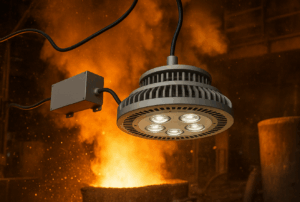
Ingress Protection (IP) ratings are critical in high-temperature industrial lighting, as they indicate the enclosure’s ability to resist solid particles and liquids. Facilities with dust-laden atmospheres, such as foundries or cement plants, require luminaires with high IP ratings (IP65 or above) to prevent particulate intrusion. Dust accumulation can impede heat dissipation, degrade optics, and shorten LED lifespan, making proper sealing essential.
Water ingress is another concern in industrial operations where steam, condensation, or accidental splashes occur. Sealed housings, gaskets, and compliant lens assemblies protect sensitive internal components while preserving optical performance. Additionally, IP-rated luminaires facilitate safer cleaning and maintenance, allowing high-pressure washing or environmental decontamination without compromising the fixture.
Designing for IP compliance requires integrated considerations of materials, mechanical seals, and assembly tolerances. Even small imperfections in gasket placement or screw torque can compromise IP performance under high-temperature conditions. Manufacturers often perform rigorous environmental testing, simulating dust storms, steam exposure, and thermal cycling to validate enclosure integrity.
Certain industrial environments pose not only thermal but explosive hazards, such as chemical plants, grain silos, or paint manufacturing facilities. Luminaires deployed in these zones must comply with ATEX or IECEx standards to prevent ignition of flammable gases, vapors, or dust. LED fixtures designed for hazardous areas incorporate intrinsically safe electrical circuits, flameproof housings, and robust sealing mechanisms.
Explosion-proof design includes reinforced enclosures capable of containing internal explosions without propagating flames to the surrounding atmosphere. Junction boxes, conduit entries, and cable glands are engineered to minimize gaps or sparks. High-temperature compatibility is crucial because elevated ambient heat can compromise material strength or exacerbate ignition risks if not properly accounted for in the certification process.
Hazardous-area LED lighting systems integrate multiple safety strategies, including thermal monitoring, current limiting, and fail-safe circuitry. By adhering to recognized industrial standards, these luminaires allow facilities to operate safely under extreme heat while mitigating the risk of catastrophic incidents.
Compliance with thermal certification standards ensures that high-temperature LED luminaires perform safely and predictably in industrial conditions. UL, CE, and other region-specific standards provide guidance on maximum ambient temperatures, thermal endurance, and mechanical integrity. Accelerated heat tests simulate prolonged exposure to high-temperature environments, verifying that both optics and electronics maintain functionality without degradation.
Thermal certification also addresses material performance under repetitive thermal cycling. Seals, gaskets, and adhesives must demonstrate resistance to expansion, contraction, and potential mechanical failure. Certified luminaires undergo rigorous testing to ensure long-term reliability, reduce maintenance costs, and safeguard worker safety.
In industrial applications, thermal certification is often a prerequisite for facility insurance and regulatory approval. Facilities integrating high-temperature LED systems benefit from documented compliance, mitigating operational risk and providing assurance of performance under extreme environmental stress.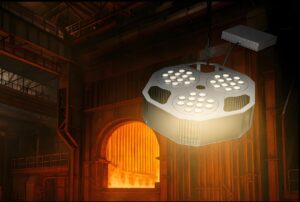
In high-temperature industrial applications, there exists an inherent trade-off between luminous efficiency and heat tolerance. LED chips optimized for maximum efficacy often operate at higher current densities, which increases junction temperature and exacerbates thermal stress. Conversely, chips designed for heat endurance may sacrifice peak luminous output to maintain stable operation under extreme ambient conditions. Selecting the optimal chip therefore requires a careful evaluation of operational priorities, including illumination levels, energy efficiency, and longevity.
Phosphor stability is a critical factor in this balance. High-temperature environments accelerate phosphor degradation, which can shift the correlated color temperature (CCT) and reduce color rendering accuracy over time. Engineers mitigate this by choosing phosphor materials with enhanced thermal stability and employing multi-layer phosphor designs that distribute heat more evenly.
Thermal management strategies, including heatsink design, TIM selection, and passive airflow optimization, directly influence luminous efficiency. By maintaining junction temperature within the ideal operating range, designers can sustain luminous output without compromising component integrity. Furthermore, proper optical alignment ensures that efficiency gains at the chip level translate into effective illumination across the target area.
Advanced simulation tools enable predictive modeling of LED performance under combined thermal and electrical stress. Computational fluid dynamics (CFD) and thermal finite element analysis (FEA) allow engineers to anticipate heat accumulation, optimize heat sink geometry, and evaluate phosphor performance under operational scenarios. This integrated approach ensures that the final system maintains both brightness and color fidelity over extended periods of high-temperature exposure.
Reliability engineering is central to designing LED systems capable of surviving extreme industrial conditions. Metrics such as Mean Time Between Failures (MTBF) and lumen maintenance (L70, L80) provide quantifiable indicators of expected system lifespan under sustained heat stress. Predictive models incorporate thermal cycling, vibration, chemical exposure, and particulate accumulation to provide a holistic view of system durability.
Accelerated aging tests are a key tool in reliability engineering. LED assemblies are subjected to elevated temperatures and humidity levels to simulate years of operational stress within a compressed timeframe. These tests reveal potential failure modes in drivers, solder joints, phosphors, and housing materials, allowing engineers to refine designs before deployment.
Component redundancy and modularity further enhance reliability. For instance, multiple LED arrays with independent driver circuits can maintain partial operation even if a single module fails. Modular designs also simplify maintenance, reducing downtime and the need for extensive disassembly in high-temperature environments.
Reliability also extends to the integration of monitoring and diagnostic capabilities. Smart industrial LED systems may incorporate thermal sensors, current monitors, and predictive maintenance algorithms. By continuously tracking operating parameters, these systems can alert facility managers to deviations in performance, enabling proactive intervention before catastrophic failures occur.
Maintenance reduction is a key objective in industrial LED design, as accessing high-temperature zones for fixture replacement can pose safety risks and operational interruptions. Strategies to minimize maintenance include the use of long-life components, such as high-quality semiconductors, capacitors rated for extreme temperatures, and phosphors with superior thermal endurance.
Modular replacement design is another effective approach. By allowing critical components to be replaced without disassembling the entire luminaire, maintenance teams can quickly address performance issues while minimizing exposure to high-heat zones. This reduces labor costs and ensures continuous operation of essential lighting systems.
Predictive maintenance leveraging IoT sensors and AI analytics further reduces maintenance needs. Thermal monitoring, vibration sensing, and luminous flux tracking provide real-time insights into system health, allowing facility managers to schedule maintenance based on condition rather than time intervals. This approach extends fixture lifespan, optimizes replacement cycles, and prevents unexpected failures.
Finally, proper installation techniques contribute to long-term maintenance efficiency. Fixtures mounted with adequate spacing from heat sources, using heat-reflective barriers or shields, experience lower thermal stress, which reduces wear and prolongs service intervals. The combination of robust design, modularity, and smart monitoring establishes a maintenance-efficient LED system suitable for the harshest industrial environments.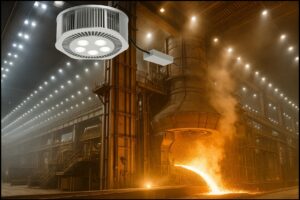
The installation location of high-temperature LED luminaires significantly impacts their thermal performance and operational reliability. Mounting fixtures too close to radiant heat sources can dramatically increase junction temperature, even in well-engineered systems. Optimal placement involves analyzing heat radiation patterns, airflow pathways, and proximity to machinery.
High-temperature zones often feature vertical temperature gradients, with air near ceilings significantly hotter than at floor level. Mounting fixtures at intermediate positions or using reflective shields can mitigate the effects of direct radiant heat. Angled mounts may also help disperse heat away from critical luminaire components.
Mechanical supports must accommodate thermal expansion to prevent deformation or stress fractures in housings and brackets. Vibration damping elements may be incorporated to counteract machinery-induced oscillations, further safeguarding fixture integrity. Proper mounting strategies ensure that luminaires operate within their designed thermal parameters while delivering consistent illumination across industrial spaces.
Integrating LED systems into high-heat industrial electrical infrastructure requires careful attention to wiring, conduit, and protective components. Conductors must be rated for both elevated ambient temperatures and transient thermal spikes. Silicone-insulated cables, high-temperature-rated connectors, and reinforced conduits are standard practices in extreme environments.
Surge protection is essential in industrial facilities with heavy machinery and inductive loads. Transient voltage events can degrade LED drivers and electronics, particularly under elevated temperatures. Proper grounding and dedicated surge suppression devices help maintain system stability.
Electrical integration also involves considering driver placement and access for maintenance. Remote driver setups, coupled with high-temperature-rated cabling, allow critical electronics to be positioned in cooler zones while still supplying regulated power to LED modules exposed to extreme heat. This configuration enhances reliability and simplifies routine inspection procedures.
Industrial lighting installations must adhere to strict safety standards to protect workers and meet regulatory requirements. High-temperature LED systems should be evaluated for thermal radiation exposure, glare control, and emergency egress illumination.
Worker safety includes minimizing direct contact with hot fixture surfaces and ensuring that mounting structures prevent accidental dislodgment. Compliance with electrical codes, IP ratings, and hazardous area certifications ensures that installations meet both national and international safety mandates.
Emergency lighting integration is another consideration. High-temperature areas often require backup illumination in case of power loss. LED systems must maintain operational capability even under extreme thermal stress, ensuring safe evacuation and continued operational visibility.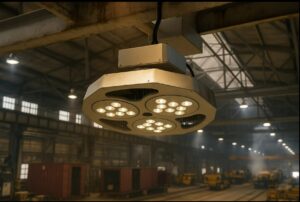
High-temperature LED systems offer compelling long-term benefits despite higher upfront investment. Energy savings compared to legacy lighting can exceed 50%, particularly when considering high-efficiency chips and advanced thermal management that reduce power loss. Reduced maintenance costs further amplify ROI, as high-temperature-rated LEDs significantly extend service intervals compared to metal halide or fluorescent fixtures.
Lifecycle analysis demonstrates that the total cost of ownership for engineered LED systems is lower than traditional solutions. Savings include reduced replacement frequency, lower labor costs, and decreased downtime. Additionally, the operational reliability of LED systems enhances production consistency, indirectly contributing to facility profitability.
High-temperature LED systems also offer environmental benefits, including lower heat emissions and reduced carbon footprint. By minimizing the energy lost as heat, facility HVAC loads can be reduced, further enhancing efficiency. The combined financial and operational advantages make LED systems a strategic investment for industrial facilities operating in extreme thermal environments.
Steel Mill Retrofit: A major steel plant replaced high-pressure sodium fixtures with high-temperature-rated LED luminaires. The installation reduced energy consumption by 45%, decreased maintenance visits from quarterly to annually, and improved illumination uniformity on the production floor, enhancing both worker safety and operational efficiency.
Glass Manufacturing Facility: In a glass melting plant, silicone-lens LED fixtures with remote drivers were installed above continuous furnaces. The system maintained consistent CCT and brightness despite ambient temperatures exceeding 90 °C, and the modular design allowed maintenance without shutting down production lines.
Ceramic Kiln Plant: A ceramics manufacturing operation implemented modular LED arrays with advanced passive cooling and predictive thermal monitoring. The system withstood repeated thermal cycling, reduced energy costs by 40%, and minimized downtime due to maintenance, demonstrating the durability of properly engineered high-temperature LEDs.
Emerging materials and advanced thermal management techniques will further enhance high-temperature LED reliability. Ceramic and graphite-based heatsinks, coupled with phase-change materials, allow for more efficient heat dissipation. Smart lighting solutions with IoT connectivity enable predictive maintenance and real-time performance monitoring.
Artificial intelligence can optimize luminaire operation based on environmental data, reducing power consumption while maintaining optimal illumination. Additionally, hybrid cooling approaches combining passive, active, and thermal interface innovations promise to extend LED lifespan in even the harshest conditions.
These technological trends indicate that future industrial lighting will be smarter, more resilient, and increasingly tailored to extreme operational environments, ensuring safety, efficiency, and reduced operational costs.
Designing LED lighting systems for high-temperature industrial facilities requires a holistic approach encompassing thermal management, material science, optical design, driver protection, and compliance with environmental standards. Properly engineered systems improve safety, reduce maintenance, enhance luminous stability, and lower long-term operational costs. By integrating advanced thermal technologies, modular designs, and predictive maintenance strategies, industrial facilities can achieve reliable illumination in the most challenging heat-intensive environments.
–The End–