
High-temperature industrial environments present a uniquely demanding challenge for lighting systems. Facilities such as foundries, glass plants, and high-temperature processing workshops often operate under ambient conditions that far exceed the thermal tolerance of conventional lighting technologies. In these environments, temperatures may consistently range from 70°C to over 200°C, placing continuous thermal stress on luminaires, drivers, and optical components.
Traditional lighting solutions, including HID and fluorescent systems, are particularly vulnerable to such conditions. Elevated temperatures accelerate material degradation, reduce luminous efficacy, and significantly shorten operational lifespan. Moreover, thermal instability often leads to inconsistent light output, flickering, or complete system failure, all of which can compromise operational continuity.
Maintaining consistent illumination in high-heat zones is not merely a matter of visibility; it is a critical factor in ensuring workplace safety, maintaining production accuracy, and minimizing costly downtime. Modern high-temperature LED technologies have emerged as a robust solution, offering improved thermal resilience, stable lumen output, and enhanced energy efficiency. This article explores the engineering principles, performance metrics, and application strategies required to achieve reliable and consistent lighting in extreme heat environments.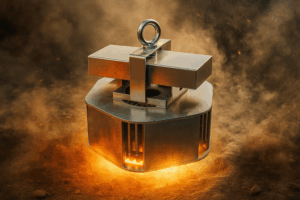
High-heat environments are prevalent across a wide range of heavy industrial sectors, each with distinct operational characteristics and thermal profiles. Metal smelting and foundry operations, for instance, involve furnaces and molten materials that generate intense radiant and convective heat. Ambient temperatures in these facilities can fluctuate rapidly, often exceeding 150°C near critical processing zones.
Glass manufacturing plants represent another challenging application. The continuous operation of furnaces at extremely high temperatures, often above 1000°C internally, results in surrounding ambient conditions that can degrade conventional lighting systems. Similarly, ceramic production facilities and kiln operations expose lighting fixtures to prolonged high-temperature cycles, as well as airborne particulates that can further impair performance.
Industrial baking and curing environments, such as those used in food processing or coatings applications, also demand specialized lighting solutions. These environments often combine elevated temperatures with humidity and chemical exposure, creating a multi-factor stress scenario. In all these applications, lighting systems must maintain stable output despite thermal fluctuations, mechanical vibrations, and environmental contaminants.
The classification of high-temperature environments is essential for selecting appropriate lighting solutions. Moderate high-heat zones, typically ranging from 50°C to 90°C, already exceed the safe operating limits of many standard luminaires. In these conditions, lumen depreciation accelerates, and electronic components may begin to fail prematurely.
Severe environments, defined by temperatures between 90°C and 150°C, require specialized high-temperature-rated fixtures. At this level, standard driver electronics are particularly susceptible to thermal breakdown, necessitating the use of remote drivers or high-temperature-resistant components. Thermal expansion of materials also becomes a significant concern, potentially affecting sealing integrity and mechanical stability.
Extreme thermal conditions, exceeding 150°C and reaching up to 200°C or more, represent the most demanding scenarios. In such environments, only purpose-engineered lighting systems with advanced thermal management, high-grade materials, and robust sealing can ensure consistent performance. Failure to match the lighting solution to the thermal classification can result in catastrophic system failure, safety hazards, and increased operational costs.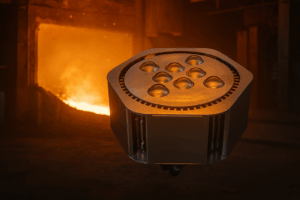
Consistent lighting is a fundamental requirement for maintaining safety in industrial environments, particularly in high-heat zones where hazards are inherently elevated. Workers operating near furnaces, heavy machinery, or high-temperature processing lines rely on stable illumination to accurately perceive their surroundings. Any fluctuation in light output, such as flickering or dimming, can significantly impair visual acuity and increase the risk of accidents.
Inconsistent lighting conditions may lead to misjudgment of distances, improper handling of tools, or delayed reaction times in emergency situations. Moreover, high-heat environments often involve reflective surfaces, airborne particles, and heat-induced visual distortions, all of which can further complicate visibility. A stable and uniform lighting system helps mitigate these challenges by providing reliable visual cues.
From a safety engineering perspective, consistent illumination also supports compliance with occupational safety standards. Regulatory bodies often specify minimum lux levels and uniformity ratios for industrial workspaces. Failure to maintain these standards due to lighting instability can expose operators to legal liabilities and compromise worker protection.
Beyond safety, consistent lighting plays a critical role in maintaining operational efficiency. Many industrial processes require precision, whether in quality inspection, assembly, or monitoring of production lines. Variations in light intensity can affect the accuracy of visual inspections, leading to defects, rework, or product rejection.
In automated environments, lighting consistency is equally important for machine vision systems. Cameras and sensors rely on stable illumination to accurately detect features, measure dimensions, and identify defects. Fluctuating light levels can disrupt these systems, resulting in errors and reduced throughput.
Furthermore, reliable lighting reduces downtime associated with maintenance and replacement. In high-heat environments, accessing lighting fixtures can be challenging and may require temporary shutdowns of critical operations. By ensuring consistent performance over extended periods, high-temperature LED systems contribute to uninterrupted production and improved overall efficiency.
Industrial lighting systems must adhere to a range of regulatory standards designed to ensure safety, performance, and environmental compliance. These standards often specify minimum illumination levels, uniformity requirements, and energy efficiency benchmarks. In high-heat environments, maintaining compliance can be particularly challenging due to the impact of temperature on lighting performance.
Consistent light output is essential for meeting these requirements over time. Lumen depreciation caused by thermal stress can result in illumination levels falling below mandated thresholds, potentially leading to non-compliance. Regular monitoring and maintenance may mitigate this issue, but it also increases operational costs.
Additionally, certain industries, such as food processing or pharmaceuticals, impose strict hygiene and safety standards that extend to lighting systems. Fixtures must not only provide consistent illumination but also resist contamination and withstand cleaning processes. High-temperature LED solutions designed with appropriate materials and sealing technologies can help facilities meet these stringent requirements while ensuring long-term reliability.
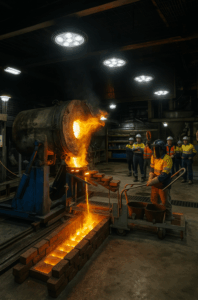
High-Intensity Discharge (HID) and fluorescent lighting systems have historically been deployed in industrial environments due to their high lumen output and relatively mature technology base. However, their performance deteriorates significantly under high-temperature conditions. HID lamps, including metal halide and high-pressure sodium variants, are particularly sensitive to ambient heat. Elevated temperatures can disrupt the internal arc stability, leading to reduced luminous efficacy and color instability.
Fluorescent lighting systems are even more vulnerable. Their operation depends on optimal mercury vapor pressure, which is directly influenced by temperature. In high-heat environments, excessive vapor pressure reduces light output and accelerates phosphor degradation. Additionally, ballasts—whether magnetic or electronic—are highly susceptible to thermal stress, often becoming the first point of failure in these systems.
Another major limitation is the long warm-up and restrike time associated with HID lamps. In the event of a power interruption, these systems may require several minutes to return to full brightness, which is unacceptable in critical industrial operations. Frequent on-off cycling further exacerbates wear and reduces lifespan, making HID and fluorescent technologies unsuitable for environments requiring stable and responsive illumination.
Thermal degradation is a primary failure mechanism in traditional lighting systems operating under high temperatures. Prolonged exposure to heat accelerates the aging of materials such as plastics, seals, and electrical insulation. This degradation can lead to cracking, discoloration, and eventual mechanical failure, compromising both performance and safety.
Electronic components, including capacitors and drivers, are particularly vulnerable. Elevated temperatures increase the rate of chemical reactions within these components, shortening their operational life and increasing the likelihood of sudden failure. In extreme cases, overheating may result in electrical hazards such as short circuits or fire risks.
Furthermore, repeated thermal cycling—where temperatures fluctuate between high and moderate levels—induces mechanical stress due to expansion and contraction of materials. This can weaken structural integrity, loosen connections, and degrade sealing performance, allowing dust or moisture ingress. Collectively, these factors contribute to inconsistent light output, increased maintenance frequency, and higher total cost of ownership.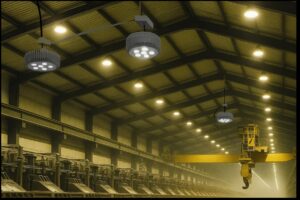
High-temperature LED technology represents a significant advancement in industrial lighting design, specifically engineered to address the challenges posed by extreme thermal environments. Unlike traditional lighting systems, LEDs are solid-state devices that offer greater resilience to temperature variations when properly designed. High-temperature LEDs utilize specialized semiconductor materials and packaging techniques that maintain stable electrical and optical performance even under elevated ambient conditions.
A key advantage of these systems is their ability to deliver consistent lumen output across a wide temperature range. Advanced driver circuits are designed with high-temperature-rated components, ensuring stable current regulation and minimizing fluctuations in light output. Additionally, many high-temperature LED systems incorporate remote driver configurations, isolating sensitive electronics from the hottest zones.
Another important consideration is color stability. In industrial settings where visual accuracy is critical, maintaining consistent correlated color temperature (CCT) and color rendering index (CRI) is essential. High-quality LED solutions are engineered to minimize color shift over time, even under continuous thermal stress, ensuring reliable visual conditions for operators and inspection systems.
Effective thermal management is the cornerstone of any high-performance lighting solution in extreme environments. High-temperature LED luminaires are designed with integrated thermal management systems that efficiently dissipate heat away from critical components. This is typically achieved through the use of high-conductivity materials such as aluminum alloys, combined with optimized heat sink geometries.
Heat sinks are engineered to maximize surface area and promote convective heat transfer, allowing excess thermal energy to be dissipated into the surrounding environment. In some designs, airflow channels are incorporated to enhance natural convection, while others may utilize active cooling mechanisms in particularly demanding applications.
Thermal interface materials (TIMs) also play a crucial role in ensuring efficient heat transfer between components. By minimizing thermal resistance at critical junctions, TIMs help maintain lower operating temperatures for LEDs and drivers, thereby preserving performance and extending lifespan. Overall, a well-designed thermal management system ensures that the luminaire operates within safe temperature limits, even in extreme conditions.
The reliability of a lighting system in high-heat environments depends heavily on the quality and durability of its individual components. High-temperature-rated luminaires are constructed using materials specifically selected for their thermal stability and resistance to degradation. This includes high-grade wiring insulation, heat-resistant gaskets, and robust housing materials capable of withstanding prolonged exposure to extreme temperatures.
Sealing technologies are particularly important in preventing ingress of dust, moisture, and corrosive substances. High-performance seals must maintain their elasticity and integrity despite repeated thermal cycling. Similarly, optical components such as lenses and reflectors are manufactured from materials that resist yellowing and deformation under heat exposure.
Mechanical design considerations also play a role. Fixtures must accommodate thermal expansion without compromising structural integrity or alignment. By integrating high-temperature-rated components throughout the system, manufacturers can ensure consistent performance, reduced maintenance, and long-term reliability in even the most demanding industrial applications.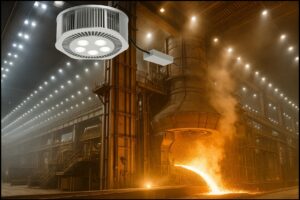
Lumen maintenance is a critical metric for evaluating the long-term performance of lighting systems, particularly in high-temperature environments. It refers to the ability of a light source to maintain its initial luminous output over time. Industry standards such as L70 and L80 indicate the point at which the light output has declined to 70% or 80% of its original value, respectively.
In high-heat conditions, lumen depreciation occurs more rapidly due to increased thermal stress on LED chips and phosphor materials. Therefore, selecting luminaires with high L70 or L80 ratings is essential for ensuring consistent illumination throughout the product’s lifespan. Advanced LED systems are often tested under elevated temperatures to simulate real-world conditions and validate their performance.
Reliable lumen maintenance not only ensures visual consistency but also reduces the need for frequent replacements and maintenance. This is particularly important in industrial environments where access to lighting fixtures may be difficult and costly.
Thermal resistance ratings define the maximum ambient temperature at which a lighting fixture can operate reliably. These ratings are typically categorized into levels such as 90°C, 150°C, and 200°C, corresponding to different industrial applications. Selecting a luminaire with an appropriate thermal rating is crucial for ensuring safe and consistent operation.
A higher thermal resistance rating indicates that the fixture has been engineered with advanced materials and thermal management systems capable of withstanding extreme conditions. It also provides a margin of safety, ensuring that the system continues to perform reliably even during temperature spikes.
Understanding these ratings allows engineers and procurement managers to match lighting solutions to specific environmental conditions, minimizing the risk of failure and optimizing performance.
Ingress Protection (IP) ratings are used to classify the degree of protection provided by a lighting fixture against solid particles and liquids. In high-heat environments, dust, smoke, and moisture can further complicate operating conditions, making robust environmental protection essential.
High IP ratings, such as IP65 or IP66, indicate that the fixture is sealed against dust ingress and protected against water jets. This is particularly important in industries where airborne particulates or cleaning processes are common. Effective sealing not only protects internal components but also helps maintain consistent optical performance by preventing contamination of lenses and reflectors.
Energy efficiency is a key consideration in industrial lighting, but it can be significantly affected by high temperatures. Many lighting technologies experience reduced efficacy as temperature increases, leading to higher energy consumption for the same level of illumination.
High-quality LED systems are designed to maintain stable luminous efficacy (lm/W) even under thermal stress. This is achieved through optimized driver design, efficient thermal management, and high-performance LED chips. Maintaining energy efficiency in high-heat environments not only reduces operational costs but also supports sustainability goals and regulatory compliance.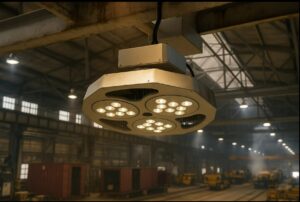
Strategic placement of lighting fixtures is essential for minimizing thermal exposure and maximizing performance. Whenever possible, luminaires should be installed at a distance from direct heat sources such as furnaces, kilns, or high-temperature machinery. Even small increases in distance can significantly reduce ambient temperature exposure.
In some cases, shielding or reflective barriers may be used to protect fixtures from radiant heat. Proper mounting height and orientation also play a role in optimizing heat dissipation and maintaining uniform illumination.
Optical design is critical for achieving consistent and uniform lighting in industrial environments. Beam angle selection, lens design, and reflector geometry must be carefully optimized to ensure even light distribution across the სამუშაო area.
In high-heat zones, where visibility may already be compromised by environmental factors, uniform illumination helps reduce shadows and glare, improving visual comfort and accuracy. Advanced optical systems can also enhance efficiency by directing light precisely where it is needed, minimizing waste.
In critical industrial applications, lighting failure is not an option. Redundancy strategies, such as installing additional fixtures or incorporating backup systems, can help ensure continuous illumination in the event of a failure.
Reliability planning also includes selecting high-quality components, implementing regular maintenance schedules, and monitoring system performance. By adopting a proactive approach, facilities can minimize downtime and maintain consistent lighting under all conditions.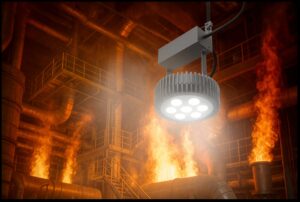
Consistent and reliable lighting systems significantly reduce maintenance requirements in high-heat environments. Traditional lighting technologies often require frequent replacement due to thermal degradation, resulting in increased labor costs and operational disruptions.
High-temperature LED systems, with their extended lifespan and robust design, minimize the need for maintenance interventions. This is particularly beneficial in facilities where access to lighting fixtures is difficult or hazardous.
Stable and high-quality illumination directly impacts worker productivity. Clear visibility enables workers to perform tasks more efficiently and with greater accuracy, reducing errors and improving overall output.
In high-heat environments, where physical conditions are already challenging, reliable lighting contributes to a more comfortable and effective working environment.
Consistent lighting reduces the likelihood of accidents by providing reliable visual conditions. Workers can better identify hazards, navigate complex სამუშაო areas, and respond quickly to changing .
By minimizing lighting-related risks, facilities can improve overall safety performance and reduce the incidence of workplace injuries.
The integration of smart technologies into industrial lighting systems is transforming the way facilities manage performance and maintenance. Thermal sensors and monitoring systems can provide real-time data on temperature, light output, and system health.
This information enables predictive maintenance, allowing operators to address potential issues before they result in failure.
Advances in materials science are driving the development of next-generation lighting solutions. High-performance alloys, ceramics, and coatings are being used to improve thermal resistance and durability.
These innovations enable lighting systems to operate reliably in even more extreme environments, expanding the range of potential applications.
Industrial Internet of Things (IIoT) integration allows lighting systems to become part of a broader network of connected devices. This enables centralized control, data analysis, and automation, improving efficiency and decision-making.
In high-heat environments, IIoT-enabled lighting systems can provide valuable insights into operating conditions and support advanced optimization strategies.
Consistent lighting in high-heat zones is a critical requirement for ensuring safety, efficiency, and reliability in industrial operations. Traditional lighting technologies are often unable to withstand the challenges posed by extreme temperatures, leading to performance degradation and increased maintenance costs.
Modern high-temperature LED solutions, with their advanced thermal management, robust materials, and stable performance characteristics, offer a compelling alternative. By carefully selecting and designing lighting systems based on environmental conditions and operational requirements, facilities can achieve reliable illumination even in the most demanding environments.
As technology continues to evolve, the integration of smart systems and advanced materials will further enhance the capabilities of industrial lighting, ensuring consistent performance and long-term value.
–The End–