
In modern industrial environments, visibility is not a luxury—it is a fundamental requirement for safety, productivity, and operational precision. However, in facilities where ambient temperatures regularly exceed the limits of conventional lighting systems, maintaining stable and reliable illumination becomes a serious technical challenge. High heat accelerates material degradation, destabilizes electronic components, and rapidly shortens the lifespan of standard LED and HID fixtures. As a result, lighting failures in extreme heat environments are not merely inconvenient; they can compromise worker safety, interrupt production, and lead to costly downtime.
Industries such as metal smelting, glass manufacturing, ceramic firing, and industrial heat treatment operate continuously under temperatures ranging from 90°C to over 200°C. In these conditions, ordinary lighting solutions struggle to survive, let alone perform consistently. Flickering, lumen depreciation, color shift, and sudden blackout are common symptoms of thermal stress on traditional luminaires. This reality has driven the development of a specialized category of illumination technology: high-temperature LED lighting.
High-temperature LEDs are engineered specifically to deliver stable, high-quality illumination in environments where extreme heat is unavoidable. By combining advanced thermal management, heat-resistant materials, and optimized electronic architecture, these lighting systems ensure clear visibility where standard solutions fail. This article explores the critical role high-temperature LEDs play in extreme industrial environments, examining their design principles, performance advantages, and long-term value for high-heat applications.
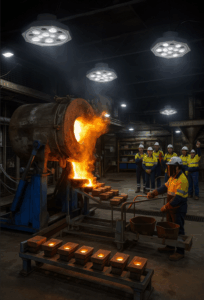
Extreme heat environments are defined not only by elevated ambient temperatures but also by continuous exposure to radiant heat, thermal cycling, airborne contaminants, and mechanical stress. Unlike short-term heat exposure, industrial high-temperature zones operate around the clock, placing relentless strain on lighting equipment. Understanding these conditions is essential for selecting and designing appropriate illumination solutions.
In many industrial facilities, temperature zones are classified into three primary ranges. Moderate high-temperature environments typically reach up to 90°C and are commonly found near industrial ovens, drying tunnels, or equipment rooms housing high-power machinery. Severe heat zones, ranging up to 150°C, are prevalent in metal processing plants, glass forming areas, and ceramic kilns. At the extreme end, environments exceeding 200°C are encountered near furnaces, smelting lines, continuous casting platforms, and heat-treatment chambers.
Beyond ambient temperature, these environments are characterized by additional stress factors. Airborne dust, metallic particles, oil vapors, and chemical residues can infiltrate lighting fixtures, accelerating corrosion and reducing optical performance. Thermal shock caused by rapid heating and cooling cycles further stresses seals, drivers, and LED packages. In such conditions, lighting systems must not only tolerate heat but also maintain structural integrity, electrical stability, and optical clarity over long operating periods.
High-temperature LEDs are specifically designed with these harsh realities in mind. Their purpose is not simply to survive extreme heat, but to provide consistent, high-quality illumination that supports industrial operations without interruption.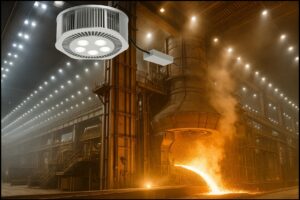
Conventional lighting technologies are fundamentally unsuited for prolonged operation in high-temperature environments. Even standard industrial-grade LED fixtures, while efficient under normal conditions, experience rapid performance degradation when exposed to excessive heat. The root cause lies in the thermal sensitivity of LED components and electronic drivers.
At elevated temperatures, LED junction temperatures rise significantly, leading to accelerated lumen depreciation. Light output declines rapidly, often long before the rated lifespan is reached. Simultaneously, phosphor materials degrade, causing noticeable color shift that affects visual accuracy and inspection reliability. Drivers, which are typically the most heat-sensitive components, suffer from capacitor aging, voltage instability, and eventual failure.
In addition to performance issues, standard lighting fixtures pose safety risks in extreme heat environments. Sudden fixture failure can leave work areas inadequately lit, increasing the likelihood of accidents. Maintenance personnel may be forced to replace failed fixtures frequently, often in hazardous zones near furnaces or hot machinery. The cumulative effect is increased operational risk, higher maintenance costs, and reduced overall efficiency.
Traditional HID lighting systems fare no better. While they can tolerate higher temperatures than some LEDs, they suffer from long warm-up times, lower energy efficiency, and limited control over light distribution. In environments demanding instant illumination, precise visibility, and energy optimization, HID solutions are increasingly obsolete.
These limitations underscore the necessity for purpose-built high-temperature LED solutions that address thermal challenges at every level of design.
High-temperature LED lighting systems are distinguished by their comprehensive thermal engineering approach. Unlike standard fixtures that rely on passive cooling alone, high-temperature LEDs are designed from the ground up to manage heat effectively and protect sensitive components from thermal damage.
One of the most critical differences lies in LED chip selection. High-temperature LEDs utilize chips specifically rated for elevated junction temperatures, ensuring stable performance even when ambient conditions exceed conventional limits. These chips are paired with advanced substrates that enhance heat transfer away from the LED junction, reducing thermal stress.
Driver architecture is another key differentiator. In many high-temperature designs, drivers are either thermally isolated or remotely mounted away from heat sources. This separation significantly extends driver lifespan and improves electrical stability. Where integrated drivers are required, high-temperature-rated electronic components and reinforced insulation materials are used to withstand sustained heat exposure.
Mechanical design also plays a vital role. High-grade aluminum alloys with excellent thermal conductivity form the backbone of high-temperature LED housings. These materials efficiently dissipate heat while maintaining structural integrity under thermal expansion. Optical components, including lenses and covers, are fabricated from heat-resistant materials that resist yellowing, cracking, or deformation.
Sealing systems are equally critical. High-temperature LEDs often feature reinforced gaskets and IP65-rated enclosures that protect internal components from dust, moisture, and industrial contaminants. The result is a lighting system capable of delivering stable illumination under conditions that would rapidly destroy conventional fixtures.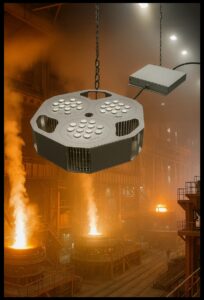
Clear visibility in high-temperature industrial environments is essential for both safety and operational accuracy. Poor lighting can obscure hazards, distort visual perception, and compromise quality control processes. High-temperature LEDs are engineered to maintain consistent light output and color stability, even under sustained thermal stress.
One of the most significant advantages of high-temperature LEDs is their ability to deliver stable lumen output over time. Unlike standard fixtures that experience rapid brightness loss in hot conditions, high-temperature LEDs are designed to minimize thermal-induced lumen depreciation. This ensures that workspaces remain adequately illuminated throughout the fixture’s operational life.
Color stability is equally important. In industrial settings where visual inspection is critical, accurate color rendering and consistent color temperature are essential. High-temperature LEDs are available in a wide range of color temperatures, typically from 3000K to 5600K, allowing facilities to tailor lighting to specific tasks. Warm white light enhances visibility in dusty or smoky environments, while neutral and cool white light supports precision inspection and detail-oriented work.
Glare control and uniformity further contribute to visual clarity. Advanced optical design ensures even light distribution, reducing harsh shadows and minimizing eye strain for workers operating near high-heat equipment. By maintaining clear and comfortable visibility, high-temperature LEDs directly support safer working conditions and improved productivity.
The performance benefits of high-temperature LED lighting extend well beyond heat resistance. These systems are designed to deliver reliable, energy-efficient illumination under conditions that challenge conventional technologies.
One of the most compelling advantages is extended lifespan. Even when operating at ambient temperatures up to 200°C, high-temperature LEDs can achieve significantly longer service life compared to standard fixtures in similar conditions. This longevity reduces maintenance frequency, minimizes downtime, and lowers overall operational costs.
Energy efficiency remains a key advantage. Despite operating in extreme heat, high-temperature LEDs maintain high luminous efficacy, delivering more usable light per watt consumed. This efficiency translates into reduced energy consumption and lower operating expenses, particularly in facilities where lighting operates continuously.
Environmental protection is another critical factor. With IP65-rated enclosures, high-temperature LEDs are resistant to dust ingress and water jets, making them suitable for harsh industrial environments. This protection ensures reliable operation even in facilities exposed to heavy contamination or aggressive cleaning processes.
When evaluated over their entire lifecycle, high-temperature LEDs offer a lower total cost of ownership compared to traditional lighting solutions. Reduced maintenance, improved energy efficiency, and enhanced reliability combine to deliver long-term value for industrial operators.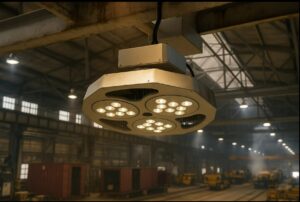
High-temperature LED lighting is deployed across a wide range of industrial applications where extreme heat is a constant challenge. In metal smelting and foundry operations, these fixtures provide critical illumination near furnaces, tapping floors, and casting lines, where ambient temperatures routinely exceed safe limits for standard lighting.
In glass manufacturing plants, high-temperature LEDs are used around melting tanks, forming machines, and annealing lehrs. The ability to withstand radiant heat while maintaining clear visibility supports precise process control and quality assurance.
Ceramic and tile firing plants rely on high-temperature LEDs to illuminate kiln areas and firing zones. These environments demand lighting solutions capable of operating reliably during long production cycles without frequent replacement.
Industrial baking, drying, and curing chambers also benefit from high-temperature LED technology. In these applications, consistent illumination supports process monitoring and equipment inspection, even in enclosed spaces with elevated temperatures.
Across all these scenarios, high-temperature LEDs enable safer, more efficient operations by delivering reliable illumination where it is most needed.
Choosing the appropriate high-temperature LED lighting solution requires careful consideration of environmental conditions, application requirements, and installation constraints. The first and most critical factor is accurate assessment of ambient temperature. Selecting a fixture with a temperature rating that matches or exceeds actual operating conditions is essential for long-term reliability.
Wattage selection is equally important. High-temperature LEDs are available in a wide power range, typically from 50W to 400W, allowing customization based on mounting height, area size, and required illuminance levels. Proper optical design ensures efficient light distribution, reducing the number of fixtures needed.
Professional thermal testing and certification provide additional assurance of performance. Reputable manufacturers conduct rigorous testing to validate thermal resistance, electrical stability, and optical performance under extreme conditions. Customization options, including remote drivers and specialized mounting solutions, further enhance adaptability to challenging industrial environments.
By working with experienced lighting specialists, facilities can ensure that selected solutions deliver optimal performance and long-term value.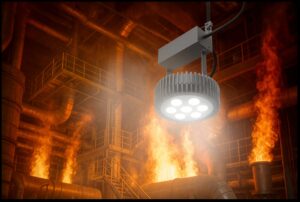
In high-risk industrial environments, lighting reliability is directly linked to safety. High-temperature LEDs contribute to safer workplaces by providing consistent illumination that reduces accident risk and supports compliance with industrial safety standards.
Reliable lighting minimizes the need for frequent maintenance in hazardous areas, reducing worker exposure to extreme heat. Compliance with relevant industrial protection and ingress standards ensures that fixtures perform reliably under harsh conditions.
By integrating high-temperature LED lighting into safety planning, facilities can enhance operational resilience and protect both personnel and assets.
As industrial processes become increasingly automated and data-driven, demand for reliable high-temperature lighting solutions continues to grow. Advances in materials science, LED packaging, and thermal management are driving further improvements in performance and efficiency.
Future high-temperature LED systems are expected to integrate intelligent monitoring features, enabling predictive maintenance and real-time performance tracking. These innovations will further enhance reliability and reduce operational risk in extreme heat environments.
High-temperature LED lighting represents a critical advancement in industrial illumination technology. By addressing the challenges posed by extreme heat through advanced engineering and materials, these systems deliver clear, reliable visibility where conventional lighting fails.
For industries operating under harsh thermal conditions, investing in high-temperature LED lighting is not merely an upgrade—it is a strategic decision that enhances safety, efficiency, and long-term operational stability. As industrial environments continue to evolve, high-temperature LEDs will remain an essential component of resilient and future-ready facilities.
–The End–