
In industrial, commercial, and outdoor lighting applications, lighting reliability is more than a convenience—it is a necessity. Frequent LED failures can result in significant operational disruptions, elevated maintenance costs, and potential safety hazards. For facility managers and engineers, ensuring continuous, high-quality illumination is critical to maintaining productivity, safety standards, and operational efficiency.
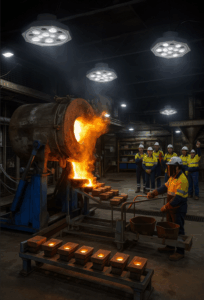
Traditional LEDs, while energy-efficient and long-lasting under standard conditions, are often challenged in high-temperature environments. Heat is the silent adversary of LED performance, gradually degrading light output, color quality, and overall lifespan. In high-heat applications—such as manufacturing plants, commercial kitchens, foundries, or outdoor sports facilities—standard LEDs can fail far sooner than anticipated, demanding more frequent replacements and maintenance interventions.
High-temperature LEDs represent a transformative solution to these challenges. Engineered specifically to operate in elevated temperatures without compromising performance, these LEDs extend maintenance cycles, reduce operational costs, and deliver long-term reliability. This article explores the science behind high-temperature LEDs, their technological innovations, practical applications, and the financial rationale for investing in them.
LEDs, or light-emitting diodes, are solid-state lighting devices known for their energy efficiency, durability, and long operational life. However, they are not immune to degradation. Over time, LEDs experience lumen depreciation, where the light output gradually diminishes, and color shift, where the emitted light changes in color temperature. These effects, while subtle at first, can significantly compromise illumination quality and uniformity in critical applications.
Several environmental and electrical factors influence LED lifespan:
Among these factors, temperature is the most insidious. The junction temperature—the temperature at the point where the LED chip emits light—directly correlates with degradation rates. Each 10°C increase in junction temperature can significantly reduce the expected lifespan of an LED. For instance, a standard LED rated for 50,000 hours at 25°C may fail in less than 30,000 hours if exposed consistently to 60°C.
Excessive heat also affects ancillary components such as the LED driver, solder joints, and phosphor layers. Drivers may fail prematurely, solder connections can weaken, and phosphors can discolor, all contributing to reduced efficiency and reliability.
The operational consequences of heat-induced degradation are clear: facilities with high-temperature applications often face frequent maintenance interventions, including component replacement, fixture cleaning, and performance verification. The labor, downtime, and logistical overhead associated with these tasks can quickly outweigh the energy savings from standard LED installation. In such contexts, prolonging maintenance cycles is not merely a convenience—it is a strategic imperative.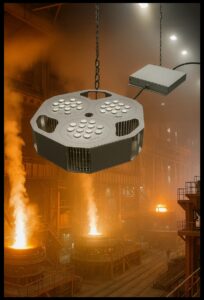
High-temperature LEDs are specifically designed to withstand elevated operating conditions without compromising light output, color stability, or longevity. Unlike standard LEDs, which typically operate efficiently up to 40–50°C, high-temperature LEDs maintain performance even at junction temperatures exceeding 85°C.
These LEDs are engineered for demanding environments, including:
By ensuring stable performance under extreme conditions, high-temperature LEDs mitigate the rapid degradation that plagues conventional lighting solutions.
High-temperature LEDs achieve resilience through several technological innovations:
Manufacturers of high-temperature LEDs conduct rigorous testing to ensure reliability. These tests often include:
The result is a product with predictable, long-term performance, enabling facility managers to plan maintenance cycles with confidence.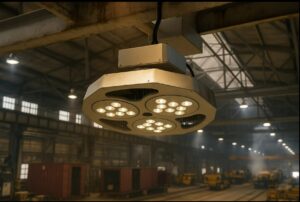
High-temperature LEDs offer a profound impact on operational management, primarily by extending maintenance cycles. This improvement is multi-faceted, influencing labor planning, operational continuity, inventory management, and overall reliability.
By maintaining performance under high temperatures, high-temperature LEDs significantly reduce the need for frequent replacements. Facilities that previously required LED interventions every 12–18 months may extend this cycle to 3–5 years, depending on environmental conditions.
For example, an industrial food processing plant operating in ambient temperatures of 50–60°C found that standard LEDs required replacement almost annually. After retrofitting with high-temperature LEDs, the replacement interval extended to 4 years, resulting in a 75% reduction in labor-intensive maintenance activities.
Extended maintenance cycles translate into measurable operational benefits:
By extending maintenance cycles, high-temperature LEDs directly contribute to operational stability, workforce efficiency, and a safer working environment.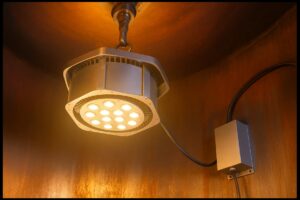
While high-temperature LEDs may come with a higher upfront cost, the total cost of ownership (TCO) over the operational lifespan often justifies the investment. A detailed cost-benefit analysis illustrates why these LEDs are not just a technical upgrade but a strategic financial decision.
High-temperature LEDs generally carry a 15–40% premium over standard LEDs due to specialized materials, advanced thermal management, and high-reliability drivers. However, these costs are offset over time by:
For instance, a warehouse requiring 200 LEDs may incur the following costs:
Even with a 30% higher initial investment, the warehouse achieves a net savings of approximately $59,500 over 5 years, highlighting the economic advantage.
| Parameter | Standard LEDs | High-Temperature LEDs | Notes |
| Initial Cost | $50,000 | $65,000 | 30% higher for high-temp LEDs |
| Maintenance Labor | $15,000/year | $5,000/year | Reduced interventions |
| Replacement Cost | $10,000/year | $3,000/year | Fewer replacements needed |
| Downtime Cost | $8,000/year | $2,500/year | Less disruption |
| 5-Year TCO | $145,000 | $85,500 | Net savings $59,500 |
Additionally, indirect benefits such as increased staff productivity, reduced emergency interventions, and improved lighting quality contribute further to ROI. By evaluating TCO rather than upfront cost alone, high-temperature LEDs emerge as a cost-effective, long-term lighting solution.
Beyond quantifiable savings, high-temperature LEDs offer less tangible but equally valuable benefits:
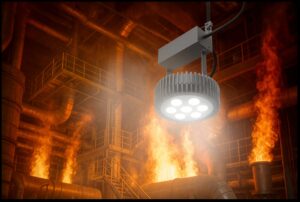
Selecting high-temperature LEDs requires careful evaluation of operational conditions, fixture compatibility, and manufacturer reliability. A well-planned selection ensures maximum return on investment and operational efficiency.
By carefully selecting and deploying high-temperature LEDs, organizations can optimize reliability, reduce costs, and maintain operational efficiency for years.
High-temperature LEDs offer a reliable, long-lasting solution for lighting in harsh environments. By maintaining consistent light output and color quality under elevated temperatures, these LEDs extend maintenance cycles, reduce operational costs, and minimize downtime. Facilities across industrial, commercial, and outdoor applications benefit from operational efficiencies, reduced labor, and a lower total cost of ownership.
For facility managers and engineers, adopting high-temperature LEDs is not just a technological upgrade—it is a strategic investment in reliability, efficiency, and operational excellence. By prioritizing thermal resilience in LED lighting solutions, organizations can achieve sustainable, high-performance illumination while lowering long-term operational risks and expenses.
–The End–