
Industrial facilities operate under a diverse range of environmental conditions—some of which are particularly harsh on electrical and mechanical systems. Among these challenges, corrosion stands out as one of the most persistent and damaging factors affecting lighting systems. Facilities such as chemical plants, wastewater treatment stations, food and beverage processing plants, fertilizer production lines, and marine docks all share one characteristic: a constant presence of moisture, salt, or chemical agents that accelerate material degradation.
Lighting systems installed in such environments face continuous exposure to corrosive elements that can erode fixtures, degrade seals, and compromise both performance and safety. When lighting fails, operations can slow or halt, maintenance costs rise, and worker safety may be jeopardized.
LED technology has rapidly become the preferred lighting solution for industrial environments, offering superior efficiency, longevity, and durability compared to traditional fluorescent or HID systems. However, the benefits of LED lighting are fully realized only when the fixtures are designed for corrosion resistance and installed correctly.
Improper installation—even with premium IP69-rated fixtures—can lead to premature failure, water ingress, and expensive downtime. This article provides a detailed guide to the best practices for installing LED fixtures in corrosive industrial environments, helping facilities maximize lifespan, minimize maintenance, and ensure reliable, energy-efficient illumination for years to come.
Before addressing how to install LED fixtures effectively, it’s crucial to understand the problem we are combating: corrosion.
Corrosion is not limited to one cause—it manifests differently across industries depending on the surrounding atmosphere and chemicals in use. Common corrosive agents include:
These agents attack metal surfaces, polymer seals, and coatings, compromising fixture integrity over time.
Corrosion occurs primarily through electrochemical reactions, where metal atoms lose electrons to corrosive agents such as water and oxygen. Over time, this leads to rust, pitting, and material loss. In environments with multiple metals, galvanic corrosion can occur, where dissimilar metals in electrical contact corrode at different rates.
For lighting systems, corrosion also affects non-metal components. Chemical vapors can cloud lenses, degrade rubber seals, and embrittle plastics. As seals weaken, moisture ingress can damage LED boards, drivers, and circuitry.
The practical consequences of corrosion on LED fixtures include:
The result is shorter fixture lifespan, increased maintenance, and potential non-compliance with workplace lighting standards. Understanding these risks emphasizes the importance of both robust fixture selection and meticulous installation.
Installation begins long before mounting the first fixture—it starts with selecting the right product. The best installation practices are only as good as the fixtures chosen for the environment.
Material durability is the first line of defense against corrosion. Industrial LED fixtures for corrosive environments should employ materials and coatings designed to resist chemical attack:
Avoid fixtures made from untreated steel or thin aluminum, which can quickly corrode and compromise the fixture’s sealing.
In corrosive environments, IP rating is a vital performance indicator. While IP65 or IP67 fixtures protect against water jets and temporary immersion, IP69 fixtures offer the highest level of protection, tested against high-pressure, high-temperature water jets and complete dust ingress.
Facilities that perform frequent sanitation, such as food processing plants, should insist on IP69-rated luminaires.
Additionally, certifications such as NEMA 4X, ATEX, or IECEx ensure that the product meets safety standards for explosive or chemical-laden atmospheres.
Lighting performance must not degrade under chemical exposure. Fixtures should employ UV- and chemical-resistant lenses—such as tempered glass or PMMA—to prevent discoloration. Optical design should also provide uniform coverage to minimize shadows in operational zones, improving visibility and worker safety.
LED efficiency depends on thermal stability. Corrosive environments often feature high humidity or poor ventilation, which can trap heat. Select fixtures with efficient heat dissipation designs and corrosion-resistant heat sinks to maintain performance and prevent LED degradation.
Industrial sites vary widely in structure—ceilings, catwalks, and pipe networks. Choose luminaires with adjustable, corrosion-resistant brackets that allow multiple mounting orientations while minimizing contact between the fixture and corrosive surfaces.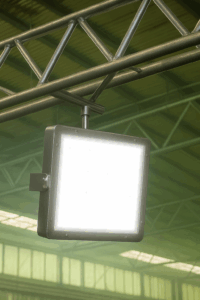
A successful installation begins with a thorough understanding of the environment. Pre-installation planning ensures that fixtures perform as designed and remain maintainable throughout their service life.
Step 1: Environmental Analysis
Start with an in-depth evaluation of the installation area:
This analysis helps determine fixture placement, IP requirements, and materials needed for each zone.
Step 2: Layout and Illumination Design
Lighting layout should balance illumination levels, energy efficiency, and fixture longevity.
Strategic layout design reduces fixture count while maintaining required brightness and minimizing maintenance access difficulty.
Step 3: Power Infrastructure Review
Power lines and junction boxes are also vulnerable to corrosion. Use tinned copper wiring and chemical-resistant insulation. Ensure conduit systems are sealed with IP-rated fittings. Surge protection devices should be installed to guard against electrical transients caused by industrial machinery.
Step 4: Safety and Compliance
Ensure all installation work aligns with local and international electrical safety standards. In high-risk areas, explosion-proof (Ex-rated) fixtures may be mandatory. Documentation should confirm conformity with IEC, UL, or EN standards, and all workers should be trained on safe installation procedures.
The installation stage determines whether the LED system will deliver its full lifespan. Below are best practices that experienced contractors and facility managers should follow.
Proper installation is only half the story. Long-term reliability depends on proactive maintenance designed to prevent small issues from becoming major failures.
Routine inspections—monthly or quarterly depending on exposure—help detect early signs of corrosion, discoloration, or gasket wear. Periodic re-tightening of mounting bolts and checking cable seals ensures long-term protection.
Regular cleaning removes residues that may corrode metal or cloud lenses. Use neutral pH detergents and soft brushes or cloths. Avoid acidic or caustic cleaners that could strip protective coatings. Never use high-pressure jets directly on seals or cable entries.
Integrate smart lighting controls or IoT-based monitoring to track fixture temperature, power draw, and lumen output. Such systems provide data-driven maintenance alerts and allow for predictive servicing rather than reactive repairs.
Replace gaskets, seals, or lenses as part of scheduled maintenance, even if they appear intact. Proactive replacement prevents unexpected downtime and ensures consistent lighting performance.
Example 1: Seafood Processing Facility
A seafood processing plant installed IP69-rated corrosion-resistant LED luminaires across production zones. The fixtures, constructed from marine-grade aluminum with silicone seals, resisted saline vapor corrosion and sustained 200 lm/W efficiency for over five years. The company reported a 75% reduction in maintenance interventions compared to previous fluorescent fixtures.
Example 2: Chemical Manufacturing Site
In a chemical blending plant, stainless steel fixtures with coated mounts were installed using isolation pads. Despite continuous acid vapor exposure, no corrosion or discoloration occurred after four years, validating the importance of material compatibility and mounting isolation.
Example 3: Wastewater Treatment Plant
A municipal wastewater plant replaced aging sodium lamps with IP68-rated LEDs featuring sealed driver compartments. The result was improved illumination, reduced energy use by 60%, and near-elimination of annual maintenance cycles, saving thousands in operational costs.
Even experienced contractors can overlook critical details that compromise fixture longevity. Common errors include:
Avoiding these mistakes ensures maximum return on investment and avoids early fixture replacement.
A properly installed corrosion-resistant LED system is more than just a lighting solution—it’s a long-term infrastructure investment. Facilities that adhere to best installation practices realize multiple benefits:
When viewed over a decade-long lifecycle, correct installation practices can save companies tens of thousands of dollars while ensuring safe, productive operations.
Corrosive industrial environments present one of the toughest challenges for lighting systems. But with today’s advances in LED technology, IP69-rated protection, and high-quality materials, facilities can achieve reliable, energy-efficient illumination even under the harshest conditions.
Yet, technology alone is not enough. The success of an LED lighting system ultimately depends on how it is installed, protected, and maintained. From careful material selection and site analysis to precision sealing, orientation, and preventive care, each step contributes to the system’s longevity and performance.
By following these best practices, industrial operators not only safeguard their lighting investments but also reinforce operational reliability, worker safety, and energy sustainability. In corrosive environments where every detail counts, disciplined installation is the foundation of lighting excellence.
-The End–