Anti-Corrosion LEDs vs. Conventional Lighting: A Lifecycle Cost Analysis
I. Introduction
Industrial environments such as chemical refineries, wastewater treatment plants, coastal facilities, and power stations operate under some of the harshest conditions on Earth. These locations are frequently characterized by high humidity, airborne chemicals, saline exposure, and temperature fluctuations that accelerate corrosion and degrade most conventional equipment — lighting systems included. Reliable illumination is not only essential for productivity but also for safety and regulatory compliance.
However, lighting infrastructure in such environments has historically suffered from short service lives and high maintenance costs. Conventional high-pressure sodium (HPS), metal halide (MH), and fluorescent systems deteriorate quickly under corrosive exposure, leading to frequent replacements and costly shutdowns.
In recent years, anti-corrosion LED technology has emerged as a transformative solution. These luminaires are specifically engineered with corrosion-resistant housings, sealed optics, and robust electrical protection. They offer exceptional efficiency — often exceeding 200 lumens per watt — and long service life, making them ideal for harsh environments.
This white paper presents a comprehensive lifecycle cost analysis (LCCA) comparing anti-corrosion LED lighting with conventional technologies, quantifying economic advantages over a typical 10-year operational period. It draws upon materials engineering, photometric performance, and financial modeling to demonstrate why corrosion-proof LEDs represent not only a technical upgrade but a strategic investment in operational resilience.
II. Corrosive Environments and Lighting Vulnerability
Types of Corrosive Conditions
Industrial lighting is exposed to a variety of degradation mechanisms:
Chemical corrosion: Exposure to acids, alkalis, and oxidizing gases such as SO₂, H₂S, and Cl₂ attacks metallic components and coatings.
Salt corrosion: Sodium chloride from marine or coastal atmospheres accelerates pitting and galvanic reactions.
Humidity and condensation: Moisture ingress causes short-circuiting, insulation breakdown, and fixture fogging.
Temperature variation: Rapid cycling between hot and cold conditions stresses seals and coatings.
Consequences for Lighting Systems
These factors degrade lighting in multiple ways:
Corrosion of metal housings and reflectors.
Optical lens discoloration reducing luminous output by up to 30–40% within a year.
Moisture infiltration causing driver failures or electrical arcing.
Mounting hardware seizing or corroding, complicating maintenance.
The net result is a dramatic reduction in useful lifespan, often to less than two years in severely corrosive settings. For industries operating 24/7, the maintenance downtime cost can exceed the value of the fixtures themselves.
III. Conventional Lighting in Harsh Environments
High-Pressure Sodium (HPS)
Luminous efficacy: 90–110 lm/W.
Color rendering (CRI): 20–25 (poor).
Typical lifespan: 15,000–20,000 hours.
Weaknesses: Glass envelopes and reflectors quickly degrade; metallic components corrode; warm-up times and color shifts reduce usability.
In corrosive environments, fixture life rarely exceeds 18 months, necessitating frequent replacement and generating high maintenance costs.
Metal Halide (MH)
Efficacy: 80–100 lm/W.
CRI: 60–70 (better than HPS).
Typical life: 12,000–15,000 hours, with lumen depreciation >40%.
Weaknesses: High internal temperatures accelerate corrosion and gasket failure.
Fluorescent and CFL Fixtures
Efficacy: 60–90 lm/W.
CRI: 70–85.
Weaknesses: Ballasts and electrodes are highly sensitive to humidity; fixture sealing is poor; cold starts problematic below 5°C.
Common Lifecycle Challenges
Parameter
HPS
MH
Fluorescent
Typical fixture life in corrosive environment
1.5–2 years
1–1.5 years
2–3 years
Maintenance frequency
High
High
Moderate
Lumen depreciation after 2 years
40–50%
50–60%
35–40%
Reliability under high humidity (>95%)
Poor
Poor
Low
Corrosion resistance
Weak
Weak
Weak
The cumulative effect of these weaknesses leads to increased total ownership costs far beyond initial purchase price.
IV. Anti-Corrosion LED Technology: Design and Engineering
Materials and Construction
Anti-corrosion LED luminaires are built with marine-grade materials and advanced coatings:
Housing: ADC12 or LM6 aluminum alloy with epoxy-polyester powder coating; some designs use 316 stainless steel or fiber-reinforced polymer (FRP).
Surface protection: Multi-layer anti-corrosion coating with >1000-hour salt spray resistance (ASTM B117).
Fasteners: Stainless steel (A4/316) or polymer composite.
Sealing and Ingress Protection
IP69K-certified luminaires withstand high-pressure, high-temperature water jets (80–100 bar at 80°C).
Silicone or fluororubber gaskets maintain elasticity under thermal cycling.
Fully potted LED drivers prevent moisture and chemical ingress.
Optical and Thermal Design
Lens: Tempered glass or UV-stabilized polycarbonate with anti-acid coating.
Heat management: Die-cast housing with integrated fins ensures junction temperatures <70°C, preserving LED longevity.
Electrical Reliability
Surge protection (4–6 kV).
Wide voltage tolerance (AC 90–305V).
Driver efficiency >93%.
Performance
Luminous efficacy: Up to 200 lm/W.
Rated life: 100,000 hours (L70).
Operating temperature: -40°C to +50°C.
Color temperature: 1800K–7200K.
CRI: >80.
The engineering emphasis on corrosion prevention and thermal stability ensures continuous performance with minimal degradation.
Challenge: High sulfuric vapor and temperature fluctuations.
Solution: Installed 250W anti-corrosion LED floodlights (200 lm/W).
Result:
Reduced maintenance frequency by 80%.
Improved illumination uniformity from 0.6 to 0.9 average uniformity ratio.
Payback achieved in 22 months.
Case 3: Wastewater Treatment Plant
Challenge: Constant humidity (>95%) and ammonia gases.
Solution: LED luminaires with potted drivers and PTFE-coated optics.
Result:
Power consumption reduced from 90,000 kWh/year to 40,000 kWh/year.
No replacements for 5 years.
Lighting quality improved safety compliance.
VIII. Environmental and Regulatory Benefits
Reduced Waste
Conventional lamps generate frequent waste due to re-lamping cycles. Over 10 years:
HPS: 5 lamps × 600 fixtures = 3,000 units disposed.
LED: Zero lamp replacements.
Compliance and Standards
Anti-corrosion LEDs typically meet:
RoHS: Restricts hazardous materials.
REACH: Limits chemical emissions.
IP69K / ISO 20653: High ingress protection.
IEC 60068: Corrosion and vibration resistance.
Carbon Footprint Reduction
Each kWh saved prevents ~0.7 kg CO₂.
For 3.6 million kWh saved → 2,520,000 kg CO₂ avoided over 10 years — equivalent to removing 550 passenger cars from service for a year.
Contribution to ESG Goals
Energy-efficient, low-maintenance systems contribute directly to corporate Sustainability Reporting (GRI 302 and 305 indicators) and ISO 50001 Energy Management compliance.
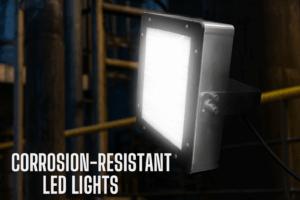
corrosion resistant led light
IX. ROI and Payback Analysis
ROI Calculation
ROI = (Total Savings – Investment) / Investment × 100%
→ Even with conservative assumptions, anti-corrosion LEDs remain financially dominant.
X. Strategic Considerations for Implementation
Selecting Proper Specifications
Ingress Protection: Minimum IP68, ideally IP69K for high-pressure cleaning areas.
Material: Marine-grade aluminum with epoxy coating or 316 stainless steel.
Thermal Design: Ensure operating junction temperature <80°C.
Optics: Chemically resistant tempered glass or coated polycarbonate.
Evaluating Total Cost, Not Initial Price
Procurement decisions should shift from lowest bid to lowest lifecycle cost. A marginally higher purchase price is offset by multi-fold operational savings.
Integration with Smart Controls
Anti-corrosion LEDs can integrate with:
Occupancy or daylight sensors.
Smart dimming (0–10V, DALI, or Zigbee).
Predictive maintenance monitoring.
Additional 15–20% energy savings achievable through control automation.
Vendor Qualification
Key selection criteria:
Proven salt spray and chemical resistance test results (≥1000 hours).
LM-80 and TM-21 lifetime certification.
Field performance references in similar industries.
Availability of 5–10 year warranty with replacement assurance.
XI. Conclusion
Lighting infrastructure in corrosive industrial environments must be viewed through the lens of lifecycle economics, not upfront cost. The data presented demonstrates that while anti-corrosion LED luminaires may cost twice as much initially, they reduce total ownership costs by more than 70% over a decade.
Key conclusions include:
Energy efficiency: Up to 60% savings due to 200 lm/W performance.
Maintenance-free reliability: 10× longer lifespan minimizes human exposure to hazardous maintenance tasks.
Operational resilience: Resistance to humidity, salt, and chemicals ensures consistent illumination and safety.
Financial return: ROI exceeding 1,200% and payback within a single fiscal year.
Environmental benefits: Substantial CO₂ reduction, waste minimization, and regulatory compliance.
Anti-corrosion LEDs are not merely lighting devices; they represent a strategic asset in industrial risk mitigation, operational continuity, and sustainability performance. For facilities operating in corrosive environments, their adoption is a technical and economic imperative — delivering illumination engineered to endure.