Industrial lighting is no longer evaluated solely on brightness, wattage, or initial purchase price. In modern production facilities, warehouses, foundries, logistics hubs, and outdoor utility sites, the most important question is often much more practical: How long will the lighting system continue to perform reliably under real operating conditions? In environments where machinery runs for long shifts, ceilings are high, maintenance access is difficult, and lighting downtime can affect both safety and productivity, fixture longevity becomes a strategic operational concern rather than a simple product feature.
This is precisely why long-life LED lighting has become increasingly important across industrial sectors. A properly engineered industrial LED luminaire can do far more than reduce electricity consumption. It can significantly cut maintenance frequency, lower replacement labor costs, reduce disruptions to operations, and provide more stable illumination over many years of service. However, not all LED products are built to deliver that level of durability. A fixture marketed as “high efficiency” is not automatically suitable for harsh industrial use, and a long rated lifespan on paper does not always translate into dependable field performance.
For industrial buyers, engineers, and facility managers, understanding what truly defines a long-life LED system is essential. Fixture longevity depends on a combination of factors including thermal management, driver quality, sealing, housing design, environmental compatibility, and system-level engineering. Choosing the right lighting solution therefore requires looking beyond headline lumen output and examining how the product is designed to survive in demanding conditions.
This article explores the key technical and operational principles behind long-life industrial LEDs, explains why they outperform conventional lighting in harsh applications, and outlines how industrial organizations can use durable LED systems to improve uptime, safety, and total cost efficiency over the long term.
In industrial facilities, lighting is not simply an overhead utility—it is a core part of the operating infrastructure. From assembly lines and storage aisles to loading docks and machine service areas, illumination supports worker safety, task accuracy, equipment handling, and operational continuity. When lighting systems fail prematurely, the consequences often extend far beyond the cost of replacing a fixture. A single lighting outage in a high-bay production area may require lift equipment, scheduled maintenance labor, temporary work disruption, and in some cases, partial shutdown of a work zone until visibility is restored.
Because of this, service life has become one of the most critical performance indicators in industrial lighting selection. In environments where fixtures operate for 10, 12, or even 24 hours per day, the cumulative effect of maintenance becomes substantial. Facilities with dozens or hundreds of luminaires may spend significant resources each year replacing failed lamps, drivers, or complete fixtures if the lighting system was not designed for long-term industrial use. This issue becomes even more pronounced in high-ceiling or hazardous locations where access is difficult, safety procedures are strict, or environmental exposure accelerates component degradation.
Traditional lighting technologies such as metal halide, high-pressure sodium, and fluorescent systems often struggle to deliver the consistency and longevity required in these conditions. Frequent lumen depreciation, thermal sensitivity, ballast or lamp failure, and high maintenance demands have made them increasingly unsuitable for modern industrial environments. In contrast, well-designed LED systems provide a fundamentally different lifecycle profile. They offer better energy efficiency, longer operating life, faster start-up, more stable light quality, and significantly lower maintenance frequency.
However, the true value of industrial LEDs is not simply that they “last longer” in a general sense. Their real advantage lies in their ability to maintain useful light output and system reliability over extended periods in challenging operating conditions. For industrial decision-makers, this translates directly into reduced operating costs, improved reliability, and greater confidence in the facility’s lighting infrastructure. In this context, service life is not just a technical specification—it is a measurable contributor to operational performance.
One of the most common ways manufacturers describe LED lifespan is through lumen maintenance metrics, such as L70, L80, or L90. These values indicate the point at which the fixture or LED package is expected to maintain 70%, 80%, or 90% of its initial light output after a specified number of operating hours. For example, an L70 rating of 100,000 hours means the system is expected to retain at least 70% of its original lumen output at that point. In industrial applications, these metrics are useful, but they should not be interpreted too simplistically.
A long rated life does not automatically mean the fixture will remain fully functional or economically acceptable throughout that entire period. Useful life in the field is influenced by more than lumen depreciation alone. Industrial users must also consider whether the driver, surge protection, optical materials, seals, and thermal interfaces can survive for the same duration. If a driver fails after 25,000 hours, the LED chips themselves becoming capable of 100,000 hours offers little practical benefit. This is why experienced buyers increasingly look at the fixture as a complete operating system rather than a collection of isolated components.
It is also important to distinguish between laboratory projections and real-world service conditions. Lifespan testing is typically based on controlled assumptions regarding ambient temperature, operating cycles, and electrical stability. Industrial environments rarely provide such ideal conditions. High ambient heat, dust accumulation, vibration, corrosive exposure, or unstable power supply can all accelerate aging and reduce actual field life if the fixture is not specifically engineered for those stresses.
For industrial decision-making, the most meaningful definition of long life is therefore not the highest advertised hour rating, but the expected duration of reliable, application-appropriate performance in the actual operating environment. A properly designed industrial LED system should provide not only long theoretical life, but also predictable maintenance intervals, stable light output, and low failure risk under real usage conditions.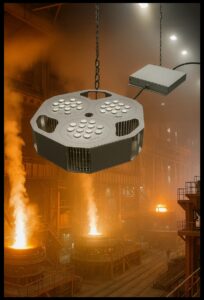
The long-term performance of an industrial LED fixture depends on the quality and compatibility of its major internal components. The first and most obvious are the LED chips themselves, which determine baseline efficiency, thermal behavior, and lumen maintenance characteristics. High-quality LED packages from reputable manufacturers typically offer better consistency, slower depreciation, and more stable performance under extended operation. However, even excellent LED chips can underperform if the surrounding fixture architecture is inadequate.
The LED driver is often the most vulnerable and most decisive component in long-life industrial lighting. It regulates current, manages electrical behavior, and protects the LEDs from unstable power conditions. In many field failures, the driver reaches end-of-life before the LEDs themselves. A robust driver with high thermal tolerance, surge protection, stable current output, and long-life capacitor design is therefore essential for industrial durability. In harsh environments, driver selection can determine whether a fixture operates reliably for years or begins failing prematurely.
Another critical factor is thermal management. LEDs are highly sensitive to heat, and excessive junction temperature directly accelerates lumen depreciation and component aging. Heat sinks, thermal interface materials, airflow pathways, and housing geometry all play a central role in maintaining long service life. In industrial applications, where ambient temperatures may already be elevated, thermal design is not a secondary feature—it is a core requirement.
The mechanical housing and sealing system also contribute significantly to longevity. Industrial fixtures must withstand dust, moisture, impact, vibration, and sometimes corrosive airborne chemicals. Poor gasket quality, weak enclosure construction, or inadequate ingress protection can allow environmental exposure to damage internal components over time. Similarly, optical elements such as lenses and reflectors must be resistant to yellowing, cracking, and thermal distortion to ensure consistent light distribution over the product lifecycle.
Taken together, these components define whether an industrial LED fixture is truly long-life in a meaningful, operational sense. A durable lighting system is not the result of one premium part, but of balanced engineering across the entire fixture platform.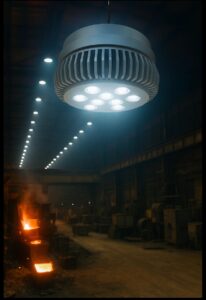
Industrial sites present a combination of environmental stress factors that can quickly expose the weaknesses of traditional lighting technologies. Heat is one of the most common causes of premature degradation, especially in facilities such as foundries, metalworking plants, boiler rooms, and manufacturing lines with elevated ambient temperatures. Traditional HID lamps and fluorescent systems are often sensitive to thermal stress, which can shorten lamp or ballast life and reduce light quality over time.
Dust and airborne contaminants are another major issue. In factories, grain handling facilities, woodworking plants, and logistics centers, particulate buildup can affect fixture performance, reduce optical efficiency, and contribute to overheating. Moisture and humidity introduce additional risk, particularly in food processing plants, washdown zones, and semi-outdoor industrial spaces. Conventional systems are often less effectively sealed than modern industrial LED luminaires, making them more vulnerable to corrosion, electrical instability, and internal contamination.
Vibration and impact are also common in industrial environments. Machinery operation, crane movement, vehicle traffic, and structural vibration can gradually damage fragile components such as lamp filaments, ballasts, sockets, or connectors in older lighting systems. Fluorescent and HID fixtures in particular are not well suited to repeated mechanical stress, and even minor vibration can accelerate wear or cause intermittent performance issues.
These failure mechanisms rarely occur in isolation. In many industrial applications, heat, dust, vibration, and electrical fluctuation occur simultaneously, creating a compounding effect that shortens service life dramatically. As a result, traditional lighting often becomes increasingly unreliable as the facility ages, requiring more frequent maintenance just to preserve basic visibility.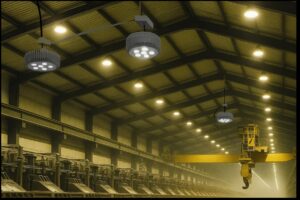
The financial burden of short-lifespan lighting is often underestimated because many of its costs do not appear directly on the purchase order. A fixture with a low upfront price may initially seem economical, but if it requires frequent replacement or service, the total cost of ownership can quickly exceed that of a more durable alternative. In industrial environments, this gap becomes especially significant because lighting maintenance is often more complex and labor-intensive than in commercial buildings.
One of the largest hidden expenses is maintenance labor. Replacing failed fixtures in industrial settings may require trained technicians, scheduled shutdown windows, lockout procedures, or elevated access equipment such as scissor lifts and boom lifts. In high-bay facilities, even a routine lamp replacement can become a time-consuming and expensive task. When failures occur repeatedly across a large site, these costs accumulate rapidly.
There is also the issue of operational disruption. Lighting failures can affect visibility in production zones, inspection stations, loading areas, and circulation paths. In some cases, work must be slowed or temporarily suspended until adequate lighting is restored. This introduces productivity losses that are rarely captured in simple fixture price comparisons but can materially affect plant performance.
Short-lifespan systems also create inventory and planning burdens. Facilities may need to stock replacement lamps, ballasts, or spare fixtures, allocate internal maintenance resources more frequently, and manage unpredictable failure patterns. Over time, these recurring demands create inefficiencies that are difficult to justify when long-life LED alternatives are available.
For industrial buyers focused on long-term operating efficiency, these hidden costs make one point increasingly clear: the cheapest lighting system at purchase is often the most expensive one to own.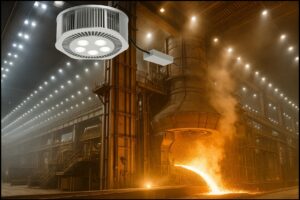
One of the most immediate and measurable advantages of long-life industrial LEDs is the dramatic reduction in maintenance frequency. Traditional lighting systems often require periodic lamp replacement, ballast servicing, or fixture-level repairs, particularly in facilities with long daily operating hours. By contrast, a high-quality industrial LED system can operate for many years before meaningful maintenance is required, significantly reducing the burden on internal teams or external contractors.
This reduction is especially valuable in high-mount and hard-to-access applications such as warehouse aisles, production halls, gymnasiums, loading bays, and utility yards. In these locations, even simple maintenance tasks can involve lifts, scaffolding, work permits, or temporary area shutdowns. Every avoided replacement cycle therefore saves not just component cost, but also access logistics, labor time, and operational inconvenience.
Lower maintenance frequency also contributes to better maintenance planning and predictability. Instead of reacting to frequent random failures, facility managers can align lighting service with broader asset management schedules or planned shutdown periods. This creates a more controlled and efficient maintenance strategy while reducing the risk of emergency interventions.
Over the lifecycle of the installation, the maintenance savings from long-life LEDs often become one of the largest contributors to total project value. In many industrial settings, these savings can rival or even exceed the energy savings generated by the LED upgrade itself.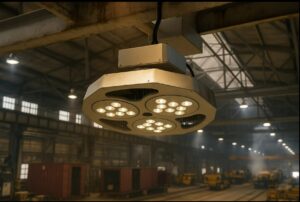
In industrial environments, lighting reliability is directly linked to productivity, safety, and process continuity. Long-life LEDs offer a major advantage in this area by delivering more stable, predictable performance over extended operating cycles. Unlike conventional lamps that may experience abrupt failure, delayed startup, or rapid degradation, industrial LEDs are generally better able to maintain consistent illumination with fewer interruptions.
This is particularly important in facilities that operate on multi-shift or 24/7 schedules. In continuous manufacturing, logistics, or processing environments, there is often no convenient downtime window for addressing lighting failures. Fixtures must perform not only efficiently, but reliably under sustained daily use. Long-life LED systems are well suited to these conditions because they are designed for long operating hours, stable output, and reduced susceptibility to the abrupt component failures common in older lighting technologies.
Operational reliability also supports quality control and workflow consistency. In task-oriented areas such as assembly stations, inspection lines, packaging zones, and machine service corridors, fluctuating or degraded lighting can affect worker performance and visual accuracy. A durable LED system helps preserve lighting conditions over time, reducing the variability that can develop as conventional systems age unevenly.
From an industrial operations perspective, lighting reliability is not merely a comfort issue—it is a form of infrastructure stability. Long-life LEDs contribute to that stability by reducing the likelihood that lighting becomes a recurring source of disruption.
Energy efficiency remains a major reason why industrial facilities adopt LED lighting, but the most meaningful savings come not just from initial wattage reduction, but from sustained efficiency over the fixture’s usable life. Traditional lighting systems often lose output quickly, requiring over-lighting at installation or more frequent replacement to maintain target illumination levels. Long-life LEDs typically offer better lumen maintenance, meaning they preserve useful light output more effectively over time while continuing to operate at relatively low power consumption.
This sustained efficiency is important because industrial lighting systems often operate for thousands of hours each year. Even modest improvements in wattage efficiency can produce substantial annual savings when multiplied across dozens or hundreds of fixtures. When those savings are maintained over many years without frequent component replacement, the long-term cost advantage becomes even stronger.
In addition, modern industrial LED systems often provide more effective optical control, allowing light to be directed more precisely onto work surfaces, aisles, yards, or process zones. This means facilities can often achieve required illumination levels with fewer watts or fewer fixtures compared to less efficient legacy systems.
When evaluating lighting investments, energy efficiency should therefore be viewed not as a single installation-day metric, but as a lifecycle performance characteristic. Long-life LEDs excel in this regard because they combine low power demand with long-duration functional performance, delivering recurring savings year after year.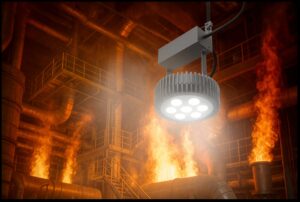
Industrial lighting plays a critical role in maintaining safe working conditions. Poor illumination can contribute to accidents, equipment mishandling, visual fatigue, and reduced situational awareness in environments where people and machinery often operate in close proximity. Long-life LEDs improve safety not simply because they are bright, but because they are capable of providing more consistent and dependable visibility over time.
In many traditional lighting systems, illumination quality gradually declines due to lamp aging, ballast issues, color shift, or uneven replacement patterns. This can create dark spots, inconsistent brightness, or visual discomfort that may go unnoticed until they begin affecting operations. Long-life LEDs help avoid this problem by maintaining more stable light output and more uniform performance across the installation.
This is particularly valuable in machine operation zones, forklift pathways, loading docks, stairwells, maintenance corridors, and inspection areas, where visual clarity is essential. Better lighting supports safer movement, clearer identification of hazards, and improved accuracy in both manual and machine-assisted tasks.
From a compliance perspective, stable industrial lighting can also help facilities better align with internal safety expectations and relevant illumination standards. While lighting alone does not guarantee safety, it remains one of the most foundational environmental controls in any industrial workspace. Long-life LEDs strengthen that foundation by supporting visibility with less degradation and fewer interruptions over time.
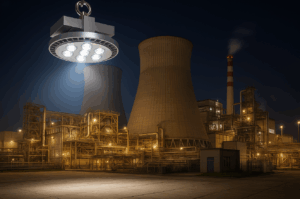
Among all design factors affecting LED lifespan, thermal management is arguably the most critical. LEDs are efficient light sources, but they still generate heat, and if that heat is not effectively dissipated, it will accumulate within the fixture. Elevated operating temperature accelerates lumen depreciation, shortens driver life, weakens seals, and can gradually degrade optical and electrical components. In industrial applications where ambient temperatures may already be high, poor thermal design can dramatically reduce service life.
Effective thermal management begins with the fixture housing and heat sink architecture. Industrial-grade luminaires often use die-cast aluminum or other thermally conductive materials to transfer heat away from the LED board and driver compartment. The geometry of fins, airflow channels, and mounting structure can significantly influence how efficiently the fixture sheds heat into the surrounding environment. This is especially important in enclosed or heat-intensive spaces where natural cooling conditions are limited.
Thermal interface materials also play a key role. These materials ensure efficient heat transfer between the LED package, mounting board, and heat sink. Low-quality or poorly applied thermal compounds can create hotspots that reduce both optical and electrical lifespan. Over time, these hotspots may contribute to premature degradation even if the fixture initially performs well.
For industrial buyers, thermal design should be treated as a core reliability feature rather than a secondary engineering detail. A long-life LED fixture is only as durable as its ability to manage heat consistently under the actual thermal conditions of the site.
If the LED chip is the heart of the fixture, the driver is its control system—and in many industrial lighting failures, it is the first component to fail. The driver regulates current, converts input power, protects against electrical irregularities, and ensures stable operation of the LED array. Because of its central electrical role, driver quality has a direct and often decisive impact on fixture longevity.
Industrial environments frequently expose lighting systems to voltage fluctuations, surge events, continuous operating hours, and elevated internal temperatures. A low-grade driver may function adequately at installation but degrade quickly under these conditions, leading to flicker, intermittent failure, reduced output, or complete outage. For this reason, long-life industrial fixtures typically incorporate drivers designed with high-temperature tolerance, surge protection, stable current regulation, and long-life internal components.
One important consideration is the durability of capacitors and other heat-sensitive electronic elements inside the driver. These components often determine the practical service life of the electrical system. Premium industrial drivers are engineered to preserve stability over extended periods and are better suited to environments where power quality may not be ideal.
In many cases, the difference between a short-lived and a long-life industrial LED system is not the LED chip itself, but the quality of the driver platform supporting it. Buyers evaluating industrial luminaires should therefore treat driver specification and protection features as a major part of the product’s long-term value.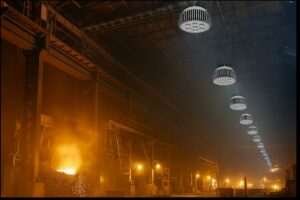
Industrial fixtures must often operate in environments where physical durability matters as much as optical or electrical performance. Unlike office or retail lighting, industrial luminaires may be exposed to vibration, impact, dust loading, moisture, chemical residue, and rough handling during installation or service. A fixture intended for long-term industrial use must therefore be mechanically robust enough to maintain structural and environmental integrity over time.
High-quality industrial LED luminaires typically use heavy-duty metal housings, reinforced mounting systems, and durable fastening components designed to withstand both static and dynamic stress. This is particularly important in factories with overhead cranes, logistics facilities with forklift traffic, and machinery-heavy environments where structural vibration is common. Weak housings or unstable mounting assemblies can lead to misalignment, internal stress, or eventual mechanical failure.
Corrosion resistance is another important aspect of mechanical durability. In certain industrial sectors—such as marine, chemical processing, wastewater treatment, or outdoor infrastructure—fixtures may be exposed to corrosive atmospheres that can degrade untreated metals over time. Protective coatings, anti-corrosion finishes, and appropriate material selection help preserve enclosure integrity and extend service life.
Rugged construction also supports long-term environmental sealing. If a fixture’s housing deforms, cracks, or loosens under stress, its ability to keep out dust and moisture may be compromised. In this way, mechanical durability is closely linked to overall reliability. A truly long-life industrial LED fixture must be physically built for the realities of industrial deployment, not merely optimized for controlled indoor use.
Ingress and impact protection are essential indicators of whether a fixture is suitable for harsh industrial service. Two of the most relevant classification systems are IP (Ingress Protection) and IK (Impact Protection) ratings. While these ratings are often listed on datasheets, their practical importance is sometimes underestimated during purchasing decisions.
IP ratings describe how well a fixture is protected against solid particles such as dust and against water intrusion. In industrial applications, ratings such as IP65, IP66, or IP67 are commonly desirable depending on the environment. In dusty factories, outdoor yards, washdown areas, or moisture-prone service zones, strong ingress protection helps prevent contamination of internal electrical and optical components. Without adequate sealing, dust accumulation and moisture ingress can accelerate failure and reduce both safety and service life.
IK ratings indicate the fixture’s resistance to mechanical impact. In heavy-duty environments, lighting equipment may be exposed to accidental knocks, tool strikes, equipment vibration, or general physical stress. A strong IK rating helps ensure that lenses, housings, and mounting structures remain intact under these conditions.
For industrial buyers, these ratings should not be treated as optional extras or marketing language. They are practical indicators of whether the fixture is likely to maintain integrity in the real operating environment. In many cases, a fixture’s long-term reliability depends as much on its sealing and structural resistance as on its luminous efficacy or wattage.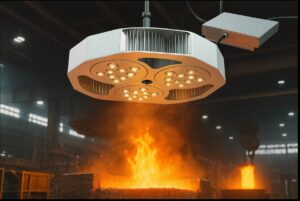
Manufacturing plants are among the most common and most demanding environments for industrial lighting. These facilities often combine continuous operation, high ceilings, machinery vibration, airborne dust, and task-critical visibility requirements. In such settings, long-life LEDs can significantly improve both operational reliability and maintenance efficiency.
Production lines and machine work zones require consistent illumination to support assembly accuracy, operator safety, equipment monitoring, and material handling. Lighting that degrades quickly or fails unpredictably can interfere with workflow and increase the burden on maintenance teams. Because many manufacturing plants run on multiple shifts, there may be limited opportunity to service lighting without affecting production schedules.
Long-life LED fixtures are especially valuable here because they provide stable output over long daily operating cycles while reducing the need for frequent intervention. Their instant start, low maintenance profile, and efficient light distribution make them well suited to both open production halls and more localized machine or process areas.
In facilities where maintenance access is constrained by equipment layout or overhead obstructions, the reduction in service frequency becomes even more important. For manufacturing operations focused on uptime and efficiency, durable LED lighting is not simply an energy upgrade—it is a practical improvement to plant infrastructure.
Warehouses and logistics centers place unique demands on lighting systems due to their large scale, vertical storage layouts, and long operating hours. High-bay aisles, loading zones, cross-docking areas, and order fulfillment spaces all depend on reliable illumination to support movement, inventory handling, and operational safety.
One of the biggest challenges in these environments is fixture accessibility. Lighting is often mounted at considerable height above racking systems or open floor areas, making maintenance both time-consuming and costly. Even a simple replacement may require access equipment and temporary disruption of logistics flow. In active facilities, this can interfere with picking operations, forklift traffic, or loading schedules.
Long-life LEDs offer substantial value in this context because they can dramatically reduce replacement frequency while maintaining better lumen consistency over time. This helps preserve visibility in aisles, reduces dark zones caused by failed fixtures, and minimizes the need for maintenance intervention in hard-to-reach locations.
Because warehouses often operate for extended hours—sometimes around the clock—the cumulative energy savings from efficient LED systems are also highly significant. When combined with reduced maintenance and improved optical control, long-life LEDs become one of the most cost-effective infrastructure upgrades available to modern logistics facilities.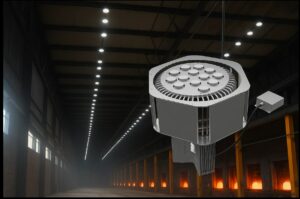
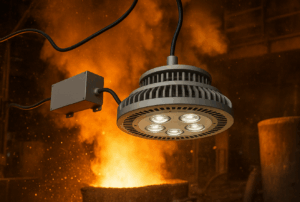
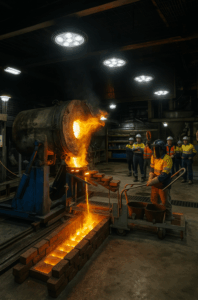
Few environments test lighting systems more aggressively than steel mills, foundries, forging shops, glass plants, and other high-temperature industrial facilities. In these settings, ambient heat, radiant thermal exposure, airborne particulates, and continuous operation create extremely challenging conditions for conventional fixtures. Standard lighting products often fail prematurely when exposed to sustained thermal stress, making fixture longevity a particularly critical issue.
In hot industrial zones, the main threat to lighting life is not simply usage hours, but excessive operating temperature at the component level. LED junction temperature, driver electronics, seals, and optical materials can all degrade more rapidly if the fixture is not specifically designed for thermal resistance. This is why long-life LED solutions for these environments must incorporate advanced heat dissipation design, high-temperature-rated drivers, and robust enclosure materials.
The operational value of durable lighting in these facilities is exceptionally high. Maintenance access may be difficult, hazardous, or only possible during specific shutdown periods. Any lighting failure in a heat-intensive process area can create both safety concerns and maintenance complications. As a result, high-temperature industrial sites often benefit disproportionately from well-engineered long-life LEDs.
For facilities in this category, the right lighting system is not simply one that is bright or efficient—it must be able to survive where standard fixtures cannot.
Food processing facilities, packaging plants, and other clean industrial environments present a different set of challenges for lighting. Here, the primary concerns are often moisture, washdown procedures, hygiene requirements, temperature variation, and corrosion resistance. Lighting systems must maintain performance while also supporting sanitary and operational standards.
In these environments, fixture failure can be particularly disruptive because lighting is often closely integrated with quality control, inspection, packaging, and processing operations. At the same time, maintenance access may need to be carefully coordinated to avoid contamination risk or production interruption. Frequent servicing is therefore undesirable from both a labor and operational standpoint.
Long-life LEDs are well suited to these applications because they can be designed with sealed housings, moisture-resistant construction, and low-maintenance operation. This helps reduce exposure to internal contamination while preserving light quality in spaces where visual clarity is essential.
In addition, stable LED illumination supports better task visibility in environments where product handling, sorting, labeling, or inspection accuracy matters. For food and clean-process industries, long-life lighting contributes not only to efficiency, but also to more consistent working conditions and lower maintenance risk.
Outdoor industrial environments—including equipment yards, loading docks, ports, service compounds, rail facilities, utility substations, and infrastructure sites—require lighting systems that can withstand weather exposure, temperature swings, vibration, dust, and long nighttime operating periods. These applications often involve broad-area illumination where reliability is essential for movement safety, asset visibility, and operational continuity.
One of the main challenges in outdoor industrial lighting is the combination of environmental exposure and maintenance difficulty. Fixtures may be mounted on poles, building exteriors, towers, or remote structures where access is inconvenient and servicing costs are high. Exposure to rain, wind, UV radiation, and airborne contaminants can further shorten the life of inadequately designed luminaires.
Long-life LED flood lights and area lights offer strong value in these settings because they combine durable enclosure design, efficient optical performance, and reduced service frequency. Their directional light control also helps improve site visibility while minimizing wasted light and improving perimeter coverage.
For industrial organizations managing large outdoor spaces, reliable long-life lighting supports both operational function and site security. In these applications, fixture durability is not simply a technical preference—it is a practical necessity.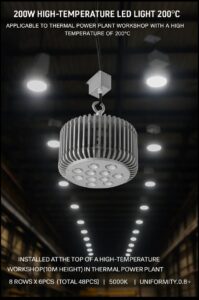
A common procurement mistake is to compare lighting products primarily by unit price. While initial cost is naturally important, it does not account for how the fixture will perform over the years it is expected to remain in service. Two luminaires may appear similar at purchase, yet have very different lifecycle outcomes depending on driver quality, thermal design, sealing, and durability.
In industrial settings, the consequences of choosing a lower-cost but shorter-lived fixture can be substantial. A product that requires earlier replacement or more frequent service may generate hidden expenses that quickly erase the original purchase savings. These expenses often include labor, access equipment, spare inventory, maintenance planning, and lost productivity during service activity.
This is why sophisticated buyers increasingly evaluate lighting using a lifecycle cost perspective. Instead of asking only, “What does this fixture cost today?” they ask, “What will this fixture cost us to own, maintain, and operate over the next five to ten years?” Long-life LEDs tend to perform very well under this framework because their value compounds over time.
From a financial standpoint, the most economical industrial lighting solution is not always the one with the lowest invoice price—it is the one that delivers the lowest long-term operating burden.
Maintenance savings are one of the most significant contributors to the total cost advantage of long-life LEDs. In industrial facilities, the cost of replacing a failed fixture is rarely limited to the price of the component itself. The real cost often includes technician time, lift rental or operation, safety procedures, work permits, and in some cases temporary disruption of nearby operations.
These costs become especially pronounced in high-bay installations such as warehouses, factories, sports halls, or process facilities. If a traditional fixture or low-grade LED system requires repeated service over a multi-year period, the cumulative labor burden can become substantial. By contrast, a properly engineered long-life LED fixture may remain in operation for many years with minimal intervention.
This reduction in maintenance activity also improves resource efficiency. Internal maintenance teams can focus on higher-priority equipment rather than routine lighting replacement, while facility managers gain more predictable service planning. In large installations with hundreds of fixtures, the difference between frequent and infrequent maintenance can translate into meaningful annual savings.
For many industrial buyers, the maintenance savings alone are sufficient to justify the investment in long-life LED systems, particularly in facilities where access is difficult or downtime is expensive.
While maintenance savings are powerful, the full financial case for long-life LEDs becomes even stronger when combined with energy efficiency. Industrial lighting systems often operate for thousands of hours per year, meaning even moderate reductions in wattage can generate significant recurring electricity savings. When those savings are paired with a long service life, the return on investment becomes highly attractive.
For example, replacing legacy HID or fluorescent systems with efficient industrial LEDs can reduce power consumption while simultaneously improving light quality and lowering maintenance frequency. The result is a dual-benefit cost structure: lower operating cost per hour and fewer maintenance-related expenses per year.
This combination often leads to shorter-than-expected payback periods, especially in facilities with high operating hours or expensive maintenance conditions. Once the system reaches payback, the remaining years of low-maintenance operation continue to generate economic value.
In industrial purchasing terms, long-life LEDs should therefore be seen not simply as an efficiency upgrade, but as a capital investment with measurable lifecycle return. Their value is strongest when evaluated over time, not just at the point of purchase.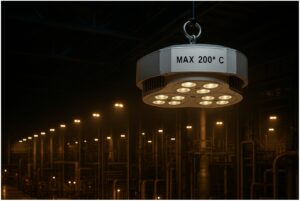
One of the most persistent misconceptions in lighting procurement is the idea that wattage alone is a meaningful indicator of fixture quality or suitability. While wattage tells buyers how much power a fixture consumes, it says very little about actual light output, optical efficiency, durability, or long-term reliability.
Two fixtures with the same wattage may perform very differently depending on LED efficacy, thermal management, driver quality, and beam control. A lower-quality fixture may consume the same power but produce less usable light, depreciate faster, or fail sooner in industrial conditions. Selecting lighting based primarily on wattage can therefore lead to poor performance and disappointing lifecycle economics.
A better approach is to evaluate the fixture as a complete system, including lumen output, lumen maintenance, environmental compatibility, and expected service life. In industrial applications, wattage should be treated as just one specification among many—not the primary basis for product selection.
Heat is one of the most important factors affecting LED longevity, yet it is often underestimated during purchasing decisions. Many buyers assume that if a fixture is labeled as industrial, it can automatically tolerate elevated temperatures. In reality, thermal suitability varies widely between products, and a fixture that performs well in a standard warehouse may fail prematurely in a hot process environment.
This mistake is particularly costly in facilities such as foundries, steel plants, mechanical rooms, kiln zones, and manufacturing areas with significant ambient heat. If the fixture is not designed for those conditions, driver stress, LED degradation, and shortened service life are highly likely.
To avoid this issue, buyers should evaluate both the fixture’s rated operating temperature range and the quality of its thermal management design. In hot environments, thermal engineering is not optional—it is fundamental to long-term performance.
As noted earlier, the driver is often the most failure-prone component in an LED fixture. Yet in many procurement decisions, it receives far less attention than lumen output or efficacy. This can be a costly oversight, especially in industrial settings where power quality may be inconsistent and fixtures are expected to operate for long daily periods.
A low-grade driver may initially reduce product cost, but it can significantly shorten the fixture’s real-world lifespan. Common issues include flicker, intermittent failure, poor surge tolerance, and thermal degradation. In many cases, driver failure occurs long before the LEDs themselves reach the end of their useful life.
For industrial buyers, driver specification should be considered a major reliability factor. A fixture intended for long-life service must include an electrical platform capable of supporting that expectation under actual operating conditions.
A final but very common mistake is selecting fixtures that are technically LED products, but not truly industrial-grade luminaires. Commercial or light-duty LED fixtures may be adequate for offices, retail spaces, or light indoor use, but they are often not built to withstand the stress factors common in industrial environments.
Problems typically include weak sealing, insufficient impact resistance, poor corrosion protection, fragile mounting systems, or limited thermal tolerance. These deficiencies may not be immediately obvious at installation, but they often reveal themselves over time through premature failures, optical degradation, or maintenance issues.
Industrial buyers should therefore avoid assuming that “LED” automatically means “industrial-ready.” The fixture must be evaluated against the actual environmental and operational demands of the application. Otherwise, even a seemingly efficient product may become an expensive underperformer.
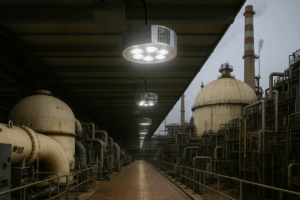
The first and most important step in fixture selection is understanding the real operating environment. This includes not only whether the fixture is used indoors or outdoors, but also the full range of environmental stress factors it may encounter over its service life.
Key questions include:
These factors have a direct influence on which type of fixture design is appropriate. For example, a standard warehouse high bay may not be suitable for a foundry, while a general flood light may not provide sufficient sealing or corrosion resistance for an outdoor utility site. Long-life performance depends on matching the product to the environment from the outset.
Industrial lighting performance is not determined by fixture durability alone. It also depends on whether the luminaire is appropriate for the actual lighting task. This means selecting the correct fixture type, beam angle, mounting method, and optical distribution for the application.
A high-bay luminaire may be ideal for warehouse aisles or manufacturing halls, while a flood light may be more suitable for yards, loading zones, or outdoor work areas. In some facilities, linear industrial fixtures are better for task-oriented or lower-mount applications. The wrong fixture type can lead to wasted light, uneven distribution, or insufficient visibility even if the product itself is durable.
Buyers should also consider the required illumination level for the specific task area. Machine operation, storage handling, inspection work, and circulation zones all have different visual demands. Long-life performance has little value if the lighting system is not functionally aligned with the operational purpose of the space.
Once the environment and application are understood, buyers should review technical specifications with a focus on long-term performance rather than headline marketing numbers. Important factors include:
A credible long-life industrial fixture should present these specifications transparently and coherently. If key durability details are vague or omitted, that may indicate the product is not truly optimized for industrial use.
Finally, product quality alone is not enough. In many industrial projects, the supplier’s ability to understand the application and recommend the correct configuration is just as important as the fixture itself. Industrial lighting is often highly context-dependent, and generic recommendations may not account for heat, mounting height, process layout, or maintenance constraints.
A capable supplier should be able to support fixture selection based on site conditions, operational requirements, and lifecycle expectations, rather than simply offering a one-size-fits-all solution. This is especially important for buyers managing specialized environments such as high-temperature plants, sports facilities, utility sites, or mixed indoor-outdoor industrial campuses.
When long-term reliability is the goal, choosing the right supplier is part of choosing the right lighting system.
For industrial buyers, lighting decisions are increasingly judged not only by technical performance, but by how well they support broader operational goals such as uptime, cost control, safety, and infrastructure reliability. In this context, long-life LEDs stand out as one of the most practical and defensible investments available in industrial facility management.
The reason is straightforward: lighting is a high-visibility asset with continuous operational impact. It affects how safely people move, how accurately tasks are performed, how often maintenance teams must intervene, and how much energy a facility consumes every day. A long-life LED system improves all of these areas simultaneously, making it far more than a simple equipment replacement.
From a procurement perspective, durable LED fixtures help convert lighting from a recurring maintenance burden into a more predictable, lower-risk asset class. Instead of spending resources repeatedly on replacement cycles, buyers can shift toward a lifecycle-oriented model where lighting delivers stable performance for years with fewer interruptions and lower total support cost.
This makes long-life LEDs particularly attractive for:
As industrial organizations continue to prioritize efficiency, resilience, and lifecycle economics, the case for long-life LED lighting becomes increasingly strong. It is not simply a trend in modern lighting—it is a logical response to the operational realities of industrial infrastructure.
In industrial environments, lighting must do far more than turn on and provide brightness. It must perform reliably under heat, dust, moisture, vibration, long operating hours, and real-world maintenance constraints. This is why service life matters so deeply in industrial lighting selection. A short-lived fixture may appear economical at first, but over time it can create hidden costs through maintenance labor, access challenges, downtime, and inconsistent illumination.
Long-life LEDs offer a fundamentally better solution. When properly engineered, they combine durability, energy efficiency, reduced maintenance, stable light output, and stronger lifecycle economics into a single lighting platform. Their value is especially clear in manufacturing plants, warehouses, foundries, food processing facilities, and outdoor industrial areas where reliability is essential and maintenance is costly.
However, achieving these benefits requires more than simply choosing any LED product. Industrial buyers must evaluate thermal design, driver quality, sealing, mechanical construction, and application suitability to ensure the fixture can truly deliver long-term performance in the intended environment.
For facilities looking to improve uptime, reduce maintenance burden, and lower total lighting cost over time, long-life industrial LEDs are not just a modern upgrade—they are a smart operational investment. In an era where efficiency and reliability are increasingly linked, durable lighting has become an important part of industrial performance itself.
–The End–