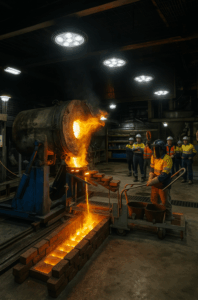
Lighting in harsh industrial environments is rarely a simple matter of installing fixtures and expecting years of uninterrupted performance. In facilities exposed to high ambient temperatures, airborne dust, corrosive chemicals, vibration, humidity, or direct weather exposure, lighting systems are subjected to conditions that significantly accelerate wear, reduce efficiency, and shorten product lifespan. As a result, the real cost of lighting in these applications is often far higher than many operators initially anticipate.
Harsh environments exist across a wide range of industries. Foundries, steel mills, glass plants, cement plants, power stations, mining facilities, food processing lines, offshore sites, wastewater treatment plants, and heavy manufacturing workshops all present unique environmental stresses that standard commercial lighting products are not designed to withstand. In these spaces, fixture failure is not merely an inconvenience—it can lead to maintenance disruptions, reduced worker visibility, safety concerns, and avoidable operational expenses.
The mistake many buyers make is assuming that “cost-effective” lighting means selecting the lowest-priced fixture available. In reality, the opposite is often true. A low-cost luminaire that fails prematurely, requires repeated replacement, or consumes excessive electricity can quickly become one of the most expensive decisions in a facility’s infrastructure plan. In industrial settings, the economics of lighting are shaped not only by the initial product price, but also by energy consumption, maintenance intervals, access difficulty, labor costs, and system reliability under stress.
This is why lighting for harsh environments should be evaluated as a long-term operational investment rather than a short-term procurement item. The right solution can significantly reduce maintenance cycles, improve energy efficiency, support safer work conditions, and lower the total cost of ownership over time. Cost-effectiveness in these settings is not about compromise. It is about engineering lighting systems that perform consistently where failure is costly and conditions are unforgiving.
This article explores what truly makes lighting cost-effective in harsh environments, the major cost drivers industrial buyers should understand, and how engineered LED solutions can deliver stronger long-term value in demanding applications.
In industrial lighting procurement, the term “cost-effective” is frequently misunderstood. Too often, purchasing decisions are driven primarily by unit price, with buyers selecting fixtures based on the lowest quotation rather than the long-term financial impact of the product in actual operation. While controlling capital expenditure is an understandable priority, this approach can be misleading—particularly in harsh environments where operating conditions quickly expose the weaknesses of under-engineered products.
A lighting fixture’s true value is not determined by what it costs on the day it is purchased. It is determined by how long it performs reliably, how efficiently it uses energy, how often it requires maintenance, and how well it withstands the specific stresses of its environment. In this sense, a lower-cost fixture can become significantly more expensive than a higher-quality alternative if it fails early, degrades rapidly, or increases labor and replacement costs over time.
Lifecycle value is especially important in facilities where maintenance access is difficult or disruptive. Replacing a failed luminaire mounted in a high-bay production hall, over a process line, or above hazardous equipment often requires lift access, scheduled downtime, safety precautions, and labor coordination. In such situations, the cost of replacing a failed fixture can exceed the fixture’s original purchase price multiple times over. Therefore, any product that reduces replacement frequency immediately contributes to stronger lifecycle economics.
Furthermore, lighting influences more than just electrical bills. It affects workplace visibility, inspection accuracy, machine operation, and employee safety. Poorly performing lighting can reduce operational efficiency, create inconsistent illumination, and increase hidden costs that do not appear on a purchase order but directly affect productivity. This is particularly true in industrial environments where visual clarity and uptime are tightly linked to output quality and workplace control.
A cost-effective lighting solution, therefore, is not simply affordable—it is financially efficient over its full service life. It balances acquisition cost with durability, performance stability, energy savings, and reduced maintenance exposure. For industrial buyers, the smarter question is not “Which fixture is cheaper today?” but rather “Which fixture will cost less to own, operate, and maintain over the next five to ten years?”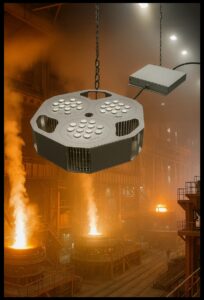
To properly assess industrial lighting investments, buyers must move beyond simple price comparisons and instead evaluate products through the lens of Total Cost of Ownership (TCO). TCO is a far more accurate and strategic metric because it captures the complete economic impact of a lighting system over its operational life, rather than just the initial purchase expense.
In harsh environments, TCO becomes especially important because environmental stress tends to magnify every weakness in design, material selection, and thermal management. A fixture that appears competitively priced at procurement stage may impose significantly higher costs later through excessive energy consumption, early driver failure, sealing issues, lumen depreciation, or repeated maintenance interventions. TCO helps expose these hidden liabilities before they become operational burdens.
A proper TCO evaluation typically includes several cost layers. The first is product acquisition cost, including the fixture itself and any associated accessories such as brackets, mounting hardware, or controls. The second is installation cost, which may vary substantially depending on fixture weight, mounting complexity, or whether electrical infrastructure modifications are required. The third is energy consumption, often one of the largest long-term contributors, especially in facilities operating 12 to 24 hours per day.
Beyond these obvious categories, TCO also includes maintenance and replacement costs. These can be substantial in industrial settings where labor rates are high, access is difficult, or shutdown coordination is required. Finally, there is operational disruption cost—the financial consequence of fixture failure affecting visibility, production continuity, or worker safety. While this cost is harder to quantify, it is often one of the most significant in mission-critical industrial environments.
By applying a TCO framework, buyers can compare lighting systems on the basis of long-term value rather than short-term price. A higher-quality industrial LED fixture may carry a greater upfront cost, but if it reduces power consumption, lasts longer, and eliminates repeated maintenance interventions, it will often outperform cheaper alternatives financially within a relatively short payback period.
For engineering teams and procurement managers alike, TCO provides a more disciplined way to justify better lighting decisions. It aligns product selection with operational realities and ensures that cost-effectiveness is measured not by invoice alone, but by measurable performance over time.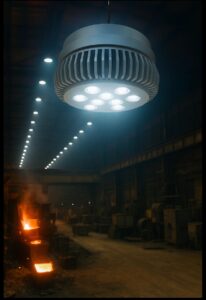
Harsh environments fundamentally change the economics of lighting. A fixture that performs adequately in a clean warehouse, retail facility, or office ceiling may fail quickly when exposed to heat, dust, humidity, corrosive air, or mechanical vibration. For this reason, lighting in demanding industrial spaces cannot be selected using the same criteria as standard commercial lighting. It requires a different buying strategy—one based on application-specific resilience rather than generalized performance claims.
One of the biggest mistakes buyers make is assuming that all “industrial” lighting products are equally suitable for harsh conditions. In practice, many products marketed as industrial-grade are only designed for moderate-duty environments. They may offer acceptable lumen output and energy efficiency, but lack the thermal tolerance, sealing integrity, corrosion resistance, or mechanical durability necessary for truly severe applications. Without a clear understanding of the site conditions, buyers risk selecting fixtures that look compliant on paper but perform poorly in operation.
A different buying strategy begins with environmental diagnosis. What is the actual ambient temperature? Is there direct radiant heat? Is dust fine and abrasive, or coarse and intermittent? Is the area exposed to water jets, steam, chemicals, salt air, or process vibration? Is maintenance access easy or highly restricted? These factors should shape fixture selection from the beginning, because they determine not only survival, but also maintenance burden and return on investment.
Harsh environments also demand more emphasis on engineering details that may be overlooked in ordinary applications. These include heat dissipation pathways, driver compartment isolation, gasket quality, housing material, lens durability, ingress protection, and thermal derating behavior. In these settings, fixture design is not cosmetic—it is operationally decisive.
A strategic buyer in harsh-environment lighting does not ask only whether a fixture is bright enough or efficient enough. They ask whether it is appropriately engineered for the exact stress profile of the site, and whether it will continue delivering stable performance under those conditions year after year. This shift in mindset is what separates low-cost purchasing from cost-effective infrastructure planning.
Ultimately, harsh environments reward precision in specification. The more accurately a lighting solution is matched to the environment, the lower the long-term operating cost tends to be. This is why industrial lighting decisions in these spaces must be driven by engineering suitability, not generic product familiarity.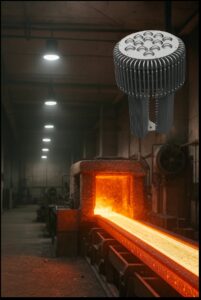
Premature fixture failure is one of the most common and expensive issues in harsh-environment lighting systems. In many industrial applications, lighting products do not fail because of age alone—they fail because the environment imposes continuous physical and thermal stress that exceeds the fixture’s design tolerance. When this happens, the lighting system begins to generate hidden costs long before its rated lifespan is ever reached.
Heat is among the most destructive factors. Elevated ambient temperatures can accelerate the degradation of LED drivers, capacitors, seals, and optical materials. In hot process areas such as foundries, furnace halls, glass manufacturing lines, and mechanical rooms, internal fixture temperatures can rise well above what many standard luminaires are engineered to handle. Even when LEDs themselves remain functional, associated components often deteriorate first, causing flicker, reduced output, or total fixture failure.
Dust and airborne particulates are another major cause of early performance loss. In cement plants, woodworking facilities, metal processing workshops, and mining operations, dust accumulation can obstruct heat dissipation surfaces, compromise seals, and gradually affect optical clarity. Fine dust is especially problematic because it can penetrate weak enclosures and settle around internal components, increasing thermal stress and reducing reliability.
Moisture and corrosion further compound the problem. In food processing plants, coastal facilities, wastewater sites, and washdown areas, fixtures are often exposed to humidity, chemical cleaning agents, or corrosive airborne contaminants. If the housing, lens, hardware, or sealing materials are not properly selected, degradation can occur rapidly, leading to enclosure failure, internal condensation, and electrical instability.
The cost implications of premature failure extend far beyond the fixture itself. Each failed luminaire creates a maintenance event. It requires diagnosis, access equipment, technician time, replacement parts, and often coordination with production schedules. If multiple fixtures fail within a short period, facilities may face repeated disruptions that multiply labor costs and compromise illumination consistency across the site.
From a financial standpoint, premature fixture failure is one of the clearest indicators that a lighting system was not properly specified for its environment. It is also one of the strongest reasons why engineered harsh-environment LED solutions often prove more economical over time. A fixture that survives longer in difficult conditions does not merely save replacement cost—it reduces operational instability and protects the lighting system from becoming a recurring maintenance liability.
In harsh industrial environments, maintenance cost is often one of the most underestimated components of lighting ownership. Many buyers focus heavily on fixture pricing and electrical efficiency while giving insufficient attention to the long-term labor burden associated with relamping, troubleshooting, and replacement. Yet in many industrial facilities, maintenance and access costs can quickly exceed the original capital cost of the lighting system itself.
This issue becomes particularly severe in locations where fixtures are installed at height, over process equipment, or in difficult-to-reach operational zones. High-bay manufacturing halls, steel structures, crane aisles, utility corridors, loading areas, and outdoor mast installations often require scissor lifts, boom lifts, scaffolding, or shutdown procedures simply to access the lighting. Each maintenance event therefore involves more than a technician and a replacement unit—it also requires scheduling, safety controls, access equipment, and labor coordination.
In production-critical facilities, lighting maintenance may also interfere with plant operations. Replacing a failed luminaire over an active process line or inside a restricted industrial zone can require temporary work stoppages or shift-based intervention. In such cases, the cost of maintenance includes not only labor and equipment, but also the opportunity cost of operational interruption. Even short interventions can become expensive when multiplied across multiple fixtures and repeated over time.
Harsh environments increase maintenance demand because they accelerate the wear mechanisms that lead to failure. Thermal stress can shorten driver life, dust can impair heat dissipation, moisture can affect seals and connectors, and vibration can loosen mechanical or electrical components. If the fixture is not designed specifically to resist these conditions, maintenance intervals become shorter and less predictable.
This is where long-life, low-maintenance LED lighting becomes economically significant. A well-engineered industrial LED fixture reduces the number of interventions required over its service life, which can translate into substantial labor savings. Fewer replacements mean fewer lifts, fewer shutdowns, fewer work orders, and less burden on already stretched maintenance teams.
For facility managers and procurement teams, maintenance should not be treated as a secondary concern. It is a direct cost driver that can significantly influence the real affordability of a lighting system. In harsh environments, the most cost-effective fixture is often not the one with the lowest purchase price, but the one that requires the fewest maintenance actions over time.
Energy consumption remains one of the most persistent and measurable cost drivers in industrial lighting, especially in facilities operating long shifts or around the clock. In harsh environments, where lighting often supports continuous production, safety monitoring, and outdoor operations, inefficient fixtures can generate a substantial long-term financial burden. Even modest inefficiencies, when multiplied across dozens or hundreds of luminaires running daily, can result in significant annual electricity costs.
Many older industrial sites still rely on legacy lighting technologies such as metal halide, high-pressure sodium, or conventional HID systems. While these technologies were once standard for high-output applications, they are inherently less efficient than modern LED systems. They consume more power to produce the same usable illumination, require longer warm-up times, and often suffer from lumen depreciation that reduces effective visibility well before complete failure occurs.
The problem is not only raw wattage—it is also optical inefficiency. In many traditional lighting systems, a considerable portion of emitted light is wasted due to poor beam control, spill light, or inadequate distribution patterns. This means facilities may be paying for electrical consumption that does not translate into useful illumination on the working plane. In harsh environments where visibility is essential for machine operation, inspection, and movement safety, this inefficiency is both costly and operationally undesirable.
Modern industrial LED lighting significantly improves this equation. High-efficacy LED systems can deliver more lumens per watt, better directional control, and more uniform illumination across task areas. This allows facilities to reduce overall energy usage while often improving lighting quality at the same time. In many retrofit scenarios, operators can lower connected load substantially without compromising lux levels or visual performance.
Energy savings also have strategic implications beyond utility bills. Lower power consumption reduces strain on electrical infrastructure, supports sustainability goals, and may contribute to compliance with internal energy management or ESG initiatives. In some cases, reduced lighting loads can also simplify backup power planning or improve generator efficiency in remote and temporary industrial setups.
For buyers evaluating cost-effectiveness, energy performance should therefore be treated as a core decision factor—not a marketing bonus. A lighting system that performs efficiently year after year can produce one of the fastest and most reliable returns on investment, particularly in harsh environments where lights are essential, heavily used, and expected to operate continuously under demanding conditions.
Among all lighting-related cost drivers, production downtime and safety exposure are arguably the most difficult to quantify—and often the most expensive to ignore. In harsh industrial environments, lighting is not merely a utility function. It is an operational support system that directly affects workflow continuity, visual control, equipment interaction, and worker awareness. When lighting fails or performs inconsistently, the consequences can extend far beyond maintenance budgets.
In production facilities, inadequate lighting can disrupt routine operations in subtle but costly ways. Poor visibility can slow down inspections, reduce task accuracy, complicate material handling, and create hesitation in machine-related work. In environments where precision, timing, or process monitoring are essential, unstable illumination can interfere with operational efficiency even if the production line does not fully stop. These micro-disruptions often go unrecorded, but over time they create measurable productivity losses.
More severe failures can trigger direct downtime. If a lighting outage affects a critical work zone, loading area, maintenance corridor, or machine access point, operators may be forced to suspend activity until visibility is restored. In regulated or safety-sensitive environments, continuing work under insufficient lighting may not be acceptable from a compliance or risk-management perspective. This is particularly relevant in sectors such as power generation, heavy fabrication, logistics infrastructure, and process manufacturing.
Safety exposure is equally important. Harsh environments already present elevated operational risk due to heat, moving equipment, uneven surfaces, airborne contaminants, and complex workflows. Poor lighting amplifies these risks by reducing spatial awareness, obscuring hazards, and making it harder for personnel to identify equipment conditions or navigate safely. Slips, trips, contact incidents, and delayed hazard recognition are all more likely in poorly illuminated spaces.
From a cost standpoint, safety-related consequences can be significant. Even minor incidents may lead to lost time, reporting obligations, supervisory intervention, and workforce disruption. More serious events can result in medical costs, liability concerns, or regulatory consequences. While lighting is only one part of workplace safety, it is a foundational one—especially in demanding industrial settings where environmental conditions already challenge normal visibility.
This is why reliable lighting should be viewed not only as a maintenance or energy issue, but as a continuity and risk-control asset. A cost-effective lighting solution in a harsh environment is one that helps maintain operational flow, minimizes unplanned interruptions, and supports safer working conditions across the life of the facility.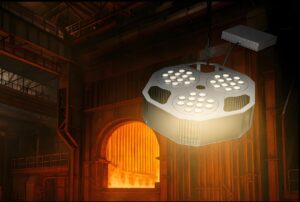
In many harsh industrial settings, temperature is the single most important variable influencing lighting performance and service life. Elevated ambient heat, radiant process heat, and poor airflow can all place substantial thermal stress on lighting systems, particularly in enclosed or production-intensive environments. For this reason, high thermal resistance is not simply a desirable feature—it is a core requirement for cost-effective lighting in demanding applications.
LEDs are widely recognized for their energy efficiency and longevity, but their long-term performance is highly dependent on effective thermal management. While the LED chip itself is efficient, excess heat still accumulates within the fixture and must be properly dissipated. If thermal control is inadequate, internal temperatures can rise to levels that accelerate component degradation, reduce lumen output, shift color consistency, and shorten driver lifespan. In harsh environments, this risk is magnified considerably.
Facilities such as foundries, steel plants, ceramic kilns, glass manufacturing halls, boiler rooms, engine rooms, and industrial baking areas often expose fixtures to sustained ambient temperatures far above those found in standard commercial buildings. In these conditions, conventional lighting products may fail well before their rated life, even if they appear suitable in terms of wattage or brightness. This is why thermal resistance should always be evaluated based on the actual site environment—not generic catalog assumptions.
A thermally robust fixture typically incorporates engineered heat sinks, optimized airflow pathways, temperature-resistant drivers, and housing materials capable of maintaining structural and electrical stability under elevated temperatures. More advanced products may also feature remote driver configurations or specialized thermal separation to protect sensitive components from direct heat accumulation. These design features are not cosmetic—they are directly tied to product survival and operating cost.
In practical terms, selecting a fixture with the correct thermal rating can significantly reduce maintenance events, prevent premature failure, and improve output stability over time. This is especially important in hot zones where maintenance access is difficult or where lighting reliability directly affects production and safety. Some applications may require fixtures rated for 60°C or 80°C ambient conditions, while specialized environments may demand resistance up to 90°C, 150°C, or even 200°C depending on installation strategy and proximity to heat sources.
Ultimately, high thermal resistance is one of the clearest indicators of whether a lighting system is truly engineered for harsh use. It is also one of the strongest contributors to long-term cost-effectiveness in industrial environments where heat is constant, unavoidable, and operationally significant.
Ingress protection is one of the most critical specifications in harsh-environment lighting, yet it is often undervalued during procurement. In industrial facilities where fixtures are exposed to dust, moisture, washdown procedures, airborne debris, or outdoor weather, enclosure integrity directly determines how well a lighting system will survive over time. Strong ingress protection is not just a technical rating—it is a frontline defense against premature failure and unnecessary maintenance cost.
The purpose of ingress protection is to prevent unwanted solids and liquids from entering the fixture enclosure and damaging internal components. This is especially important in LED systems, where drivers, circuit boards, connectors, and optical assemblies must remain protected from environmental contamination to maintain long-term reliability. Once dust, water, or corrosive particles breach the housing, the risk of electrical instability, thermal imbalance, optical degradation, and total fixture failure rises sharply.
In industrial lighting, ratings such as IP65, IP66, and IP67 are commonly used to indicate varying levels of enclosure protection. An IP65 fixture is generally protected against dust ingress and low-pressure water exposure. IP66 typically provides stronger protection against powerful water jets, while IP67 adds resistance to temporary immersion under defined conditions. The appropriate rating depends entirely on the application, and selecting the wrong level can create both reliability and cost problems.
Dust-heavy facilities such as cement plants, grain processing sites, woodworking operations, and metal fabrication workshops demand strong particulate protection to prevent accumulation inside the fixture. Moisture-prone environments such as food processing plants, cold storage areas, wastewater facilities, and outdoor industrial yards require equally strong defense against water intrusion and condensation. In washdown zones, especially those subject to regular cleaning with high-pressure spray, insufficient ingress protection can result in rapid fixture deterioration even if the light output initially appears acceptable.
Strong ingress protection also supports better thermal and optical consistency. A sealed fixture is less likely to suffer internal contamination that interferes with heat transfer surfaces or lens clarity. This helps preserve both efficiency and illumination quality over time, reducing the likelihood of service calls caused by output decline or enclosure compromise.
For buyers focused on cost-effectiveness, ingress protection should be considered a financial safeguard rather than a specification checkbox. A properly sealed fixture lasts longer, performs more predictably, and avoids the hidden costs associated with contamination-related failures. In harsh environments, robust enclosure protection is one of the most practical ways to preserve long-term lighting value.
Not all harsh environments are dominated by heat or dust. In many industrial and infrastructure applications, corrosion is the primary threat to lighting durability. Exposure to salt air, chemical vapors, cleaning agents, fertilizers, humidity, process emissions, or industrial pollutants can rapidly degrade fixtures that are not built with corrosion resistance in mind. In these conditions, material selection becomes a defining factor in whether a lighting system remains cost-effective over time.
Corrosion can affect lighting systems in several ways. It may attack the fixture housing, causing structural weakening or surface degradation. It can compromise fasteners, brackets, hinges, and mounting interfaces, creating mechanical reliability issues. It may also affect seals, connectors, and exposed metal interfaces, increasing the risk of moisture ingress and electrical instability. Over time, corrosion not only shortens fixture life—it can also increase maintenance burden and create safety concerns related to fixture integrity.
This challenge is common in coastal industrial facilities, marine terminals, wastewater treatment plants, chemical processing sites, fertilizer storage areas, food processing operations, and aggressive washdown environments. In such locations, even a fixture with strong thermal performance and good ingress protection may fail prematurely if its materials are not compatible with the chemical realities of the site.
Corrosion-resistant construction usually begins with housing design and alloy selection. Marine-grade aluminum, stainless steel hardware, anti-corrosion surface coatings, sealed cable glands, and chemically stable lens materials all contribute to long-term resilience. Protective powder coatings or specialized finishes can further improve resistance to oxidation, salt spray, and chemical attack. However, true durability depends on the quality and integration of the entire fixture system, not just one treated surface.
From a cost perspective, corrosion resistance has a direct influence on replacement frequency and maintenance planning. A fixture that physically degrades in one to two years in a corrosive environment is not merely underperforming—it is generating avoidable recurring cost. Replacing such products repeatedly creates unnecessary procurement cycles, labor interventions, and operational inconsistency.
For industrial buyers, corrosion resistance should be evaluated with the same seriousness as lumen output or efficacy. In chemically aggressive or moisture-rich environments, it is often the deciding factor between a lighting system that delivers long-term return and one that becomes a recurring maintenance issue. Cost-effective harsh-environment lighting must be able to survive not only the electrical load, but also the atmosphere in which it is expected to operate.
Mechanical stress is an often-overlooked factor in industrial lighting reliability. In many harsh environments, lighting fixtures are exposed not only to heat, dust, or moisture, but also to continuous vibration, structural movement, accidental impact, or equipment-related shock. These mechanical forces can gradually weaken fixture assemblies, damage internal components, and shorten product lifespan if the luminaire is not designed to withstand them.
Vibration is common in facilities that operate heavy machinery, compressors, conveyors, stamping equipment, turbines, generators, crushers, mixers, or industrial fans. It is also relevant in transportation-linked environments such as ports, rail depots, loading facilities, and mobile tower applications. Even when vibration appears moderate, long-term exposure can loosen fasteners, stress electrical connections, fatigue mounting hardware, and reduce overall fixture stability.
Impact risk is another consideration, particularly in industrial spaces where forklifts, suspended loads, maintenance tools, or moving equipment may come into contact with lighting systems. In these environments, lens durability, housing strength, and mounting security all contribute to whether a fixture survives normal operational hazards without requiring replacement.
A fixture that lacks adequate mechanical robustness may continue to function initially, but suffer from progressive reliability decline. Electrical interruptions, cracked housings, shifted optics, loose components, or compromised seals often begin as mechanical issues rather than purely electrical failures. Once structural integrity is weakened, the fixture becomes more vulnerable to environmental ingress and accelerated degradation.
Vibration- and impact-resistant lighting is typically characterized by reinforced housing construction, secure internal component mounting, durable lens materials, and mechanically stable installation interfaces. Fixtures intended for demanding industrial use may also be tested to specific impact resistance standards or designed to maintain performance under repeated physical stress.
From a cost-effectiveness perspective, mechanical resilience contributes directly to long-term value. A fixture that remains structurally stable under vibration and incidental impact is less likely to require service, replacement, or emergency maintenance. This is especially important in environments where lighting is mounted in exposed or elevated positions and where failures are disruptive or expensive to address.
In harsh environments, durability must be understood as more than resistance to weather or temperature. Mechanical reliability is equally important. Lighting that can withstand vibration and impact is better positioned to deliver stable performance, lower maintenance frequency, and stronger lifecycle economics in real industrial conditions.
A long rated lifespan is one of the most frequently advertised features in LED lighting, but in industrial harsh-environment applications, lifespan alone is not enough. What matters just as much—if not more—is whether the fixture can maintain useful and consistent light output throughout that lifespan. Cost-effective lighting is not simply lighting that remains powered for many years. It is lighting that continues to deliver stable illumination quality with minimal degradation over time.
In industrial operations, illumination consistency has practical consequences. Production floors, inspection stations, mechanical rooms, storage areas, and outdoor work zones all depend on predictable light levels to support safe movement, visual accuracy, and operational continuity. If a fixture experiences rapid lumen depreciation, its nominal survival becomes less meaningful because the space may become underlit long before the fixture actually fails.
This is why lumen maintenance is a critical performance metric in harsh-environment lighting. A fixture may have an attractive initial lumen output, but if heat, contamination, or poor thermal design cause that output to decline rapidly, the long-term value of the product is significantly reduced. In these cases, facilities may be forced to replace or supplement fixtures earlier than expected, increasing both cost and maintenance complexity.
Stable lumen output depends on several design factors: quality LED chips, effective heat dissipation, durable optical materials, current regulation, and enclosure protection. In harsh environments, all of these elements must work together to preserve output under stress. Excessive heat can accelerate lumen depreciation, while dust or moisture ingress can affect optical surfaces and reduce effective light delivery. Therefore, lumen stability is not an isolated feature—it is the result of overall fixture engineering.
Long-life, stable-output lighting creates value in multiple ways. It reduces relamping cycles, minimizes illumination inconsistency across the facility, and helps preserve compliance with workplace lighting standards over time. It also improves planning confidence, allowing maintenance teams to schedule interventions based on long service intervals rather than unpredictable decline.
For procurement and engineering teams, this means lifespan claims should always be interpreted alongside environmental suitability. A fixture’s projected life in ideal laboratory conditions is not the same as its practical life in a foundry, washdown area, dusty process hall, or hot mechanical zone. Cost-effective lighting is lighting that continues to perform usefully in the real environment where it is installed.
In harsh environments, long lifespan and stable lumen output are not separate benefits—they are mutually reinforcing characteristics that define whether a lighting system truly delivers sustained economic value.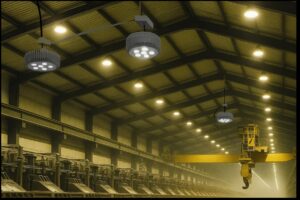
One of the most immediate and measurable advantages of LED lighting in harsh industrial environments is its ability to reduce energy consumption without compromising operational illumination. In facilities where lighting systems run for extended hours—often 12, 16, or even 24 hours per day—electrical efficiency is not a marginal benefit. It is a major determinant of long-term cost control and return on investment.
Traditional industrial lighting technologies such as metal halide, high-pressure sodium, and other HID systems were once widely used because they offered high output for large spaces. However, these technologies are inherently less efficient than modern LED alternatives. They consume more power to achieve comparable lux levels, generate more waste heat, and often lose useful light output as they age. This means operators may be paying high electrical costs while receiving progressively weaker illumination over time.
LED systems change this equation by delivering more usable light per watt consumed. High-efficacy industrial LEDs can significantly reduce connected load while maintaining or improving visibility in production zones, utility spaces, storage areas, and outdoor yards. Their directional optical control also helps ensure that more of the generated light reaches the intended task area rather than being wasted through spill, scatter, or inefficient distribution.
In harsh environments, this efficiency advantage is especially valuable because lighting often operates in areas where process continuity depends on clear visibility. Mechanical rooms, hot production zones, logistics corridors, and outdoor infrastructure sites cannot simply reduce lighting hours to save electricity. Instead, they need fixtures that maintain performance while lowering the energy required to do so. LED technology is uniquely positioned to support this need.
The financial effect can be substantial. Even a moderate wattage reduction across a large industrial site can translate into significant annual savings, particularly in facilities with high fixture counts or long operating schedules. In some retrofit projects, energy savings alone are sufficient to create a compelling payback period before maintenance savings are even included.
Lower energy consumption also contributes to broader operational benefits. It can reduce heat load on electrical systems, support sustainability targets, improve facility energy intensity metrics, and in some cases reduce backup power requirements. For industrial buyers balancing cost, performance, and long-term asset value, these combined benefits make LED lighting a strong ROI driver.
In harsh conditions, where every system must justify its operating cost, lower energy consumption is not just an environmental advantage—it is a practical and financially meaningful performance gain.
Maintenance frequency is one of the most important contributors to lighting ROI in harsh industrial environments. A fixture that requires fewer service interventions over its lifetime does more than reduce labor—it improves operational stability, lowers access-related cost, and helps maintenance teams focus on higher-priority equipment. This is one of the core reasons why LED lighting often delivers superior long-term value in demanding applications.
Unlike traditional discharge-based lighting technologies, LEDs do not rely on bulbs that require frequent replacement as part of normal operation. Their solid-state design allows them to operate for significantly longer periods when properly engineered and correctly applied. In harsh environments, this durability becomes particularly valuable because every maintenance event tends to be more expensive than it would be in a conventional building.
In many industrial facilities, lighting is installed in elevated, enclosed, hazardous, or operationally sensitive areas. Replacing a failed fixture in such locations may require lift equipment, lockout procedures, shift coordination, and multiple personnel. If this happens repeatedly, maintenance cost rises quickly and can become a persistent operational burden. LED systems reduce this burden by extending service intervals and lowering the overall number of interventions required.
This advantage is magnified in facilities where environmental conditions accelerate wear on conventional fixtures. Heat, moisture, dust, vibration, and corrosion all tend to shorten the life of poorly matched products, resulting in unpredictable maintenance demand. By contrast, well-designed industrial LED luminaires built for harsh conditions are more capable of sustaining stable performance under stress, which means fewer failures and more predictable lifecycle planning.
Reduced maintenance frequency also improves lighting consistency across the facility. In sites where fixtures fail at different rates, visual uniformity can deteriorate over time, creating uneven brightness and complicating replacement logistics. Longer-lasting LED systems help maintain a more stable lighting environment, reducing the need for reactive patchwork maintenance.
From a financial perspective, maintenance reduction is often one of the largest hidden ROI drivers in an LED upgrade. While energy savings are easy to calculate, the savings associated with avoided labor, reduced downtime, fewer emergency replacements, and lower access costs can be equally or even more significant—especially in harsh-use applications.
For industrial operators seeking cost-effective lighting, reduced maintenance is not merely a convenience. It is a strategic operational benefit that directly strengthens return on investment and supports more resilient facility performance over the long term.
Return on investment in industrial lighting is not determined solely by electricity savings and maintenance reduction. Light quality itself plays a direct role in how effectively a facility operates. In harsh environments where precision, safety, inspection accuracy, and visual control matter, better lighting quality can contribute meaningfully to productivity and operational efficiency.
Many older or lower-grade lighting systems provide illumination that is technically bright, yet functionally poor. They may create glare, uneven distribution, shadows, color distortion, or visual fatigue. In industrial settings, these issues are more than aesthetic concerns. They affect how well workers can identify equipment conditions, read labels, inspect surfaces, distinguish materials, and move safely through complex work areas.
LED lighting generally provides superior control over beam angle, light distribution, and optical uniformity compared to many legacy systems. This allows lighting layouts to be designed more precisely for task visibility rather than simply filling a space with raw output. Better beam control reduces wasted light and helps ensure that illumination reaches the actual working plane, machinery, aisles, platforms, or loading zones where it is needed most.
In harsh environments, visual clarity becomes even more important because environmental factors often already challenge visibility. Airborne dust, steam, heat shimmer, reflective surfaces, or outdoor weather can all make a space harder to navigate or monitor effectively. High-quality LED lighting can improve contrast, reduce dark spots, and support more consistent visual conditions despite these environmental challenges.
Improved light quality also supports human performance. Workers operating in well-lit environments are generally better positioned to perform inspections accurately, identify hazards earlier, and maintain confidence in visually demanding tasks. This can influence everything from maintenance quality to product handling efficiency and general situational awareness across the facility.
From an ROI standpoint, better light quality may not appear directly on a utility invoice, but it affects the operational value generated by the lighting system every day. A lighting upgrade that improves visibility while reducing power and maintenance cost creates a multi-layered return—not just through lower expense, but through better facility function.
In demanding industrial spaces, lighting should not be evaluated only by wattage or lumen output. It should also be judged by how effectively it supports real work. When LED systems deliver better light quality, they become not just a lower-cost solution, but a more productive one.
One of the strongest reasons LED lighting delivers better ROI in harsh environments is its potential for superior reliability under stress—provided the fixture is properly engineered for the application. In demanding industrial settings, reliability is not simply a technical advantage. It is a cost-control mechanism that protects operations from repeated failures, inconsistent illumination, and avoidable maintenance burdens.
Environmental stress can take many forms: elevated temperatures, airborne contaminants, vibration, moisture, corrosion, direct weather exposure, or combinations of several conditions at once. Traditional lighting systems often struggle under these circumstances because they include fragile lamps, inefficient thermal behavior, or components that degrade quickly when exposed to industrial stressors. Their performance may deteriorate long before total failure occurs, resulting in unstable output and rising service needs.
LED technology, by contrast, offers a fundamentally more resilient operating platform when correctly designed. Its solid-state architecture eliminates some of the vulnerabilities associated with lamp-based systems, and its compact form factor allows for more advanced thermal, optical, and sealing design. This creates opportunities for manufacturers to build lighting systems specifically optimized for severe-duty environments rather than merely adapted from standard commercial products.
Reliability under stress matters because harsh environments tend to punish weak design details quickly. A fixture with poor gasket quality may fail from moisture ingress. A product with inadequate heat dissipation may suffer driver burnout. A luminaire using incompatible hardware may corrode structurally. In all of these cases, the result is not only fixture failure, but recurring operational cost.
When an industrial LED fixture is truly engineered for harsh use, it is better able to maintain electrical stability, optical consistency, and physical integrity over time. This reduces the likelihood of unplanned outages and helps preserve both energy and maintenance performance across the full lifecycle of the installation.
For facility managers, reliability has compounding value. Every avoided failure means one less work order, one less access intervention, one less disruption to production, and one more step toward predictable infrastructure performance. In industrial environments where uptime and control matter, this predictability is a major source of ROI.
Ultimately, the return on lighting investment is strongest when the system continues doing its job without drawing repeated attention. In harsh conditions, LED lighting delivers that value best when reliability is treated not as a marketing promise, but as a measurable engineering outcome.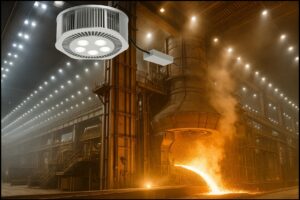
Foundries and metal processing facilities are among the most demanding environments for industrial lighting. These sites combine extreme ambient temperatures, radiant heat, airborne particulates, heavy equipment movement, and often long operating hours, making them one of the clearest examples of where cost-effective harsh-environment lighting is essential.
In these facilities, lighting systems are exposed not only to elevated air temperature, but also to localized thermal spikes caused by furnaces, molten metal operations, hot surfaces, and process equipment. Standard luminaires, even those marketed for industrial use, may struggle to survive under such conditions if they are not specifically designed for thermal resilience. Premature driver failure, optical degradation, and enclosure fatigue are common outcomes when thermal loads are underestimated.
Airborne contamination is another major issue. Dust, metallic particles, and process debris can accumulate on fixture surfaces, impairing heat dissipation and reducing optical performance. Inadequate enclosure sealing may allow contaminants to enter the fixture, affecting internal components and accelerating reliability loss. Over time, this leads to more frequent maintenance interventions and inconsistent lighting conditions across the work area.
The operational cost of lighting failure in foundries is particularly high because these facilities often involve elevated mounting positions, safety-sensitive workflows, and continuous or semi-continuous production schedules. Replacing failed fixtures may require access equipment, coordinated shutdowns, and maintenance windows that are difficult to schedule without disrupting plant activity. As a result, fixture durability and maintenance reduction are directly tied to cost-effectiveness.
Lighting quality also matters greatly in metal processing environments. Workers must be able to monitor equipment, inspect materials, navigate safely, and maintain awareness in areas where visibility may already be challenged by heat shimmer, glare, and airborne particulates. Uniform, stable illumination supports both safety and process control, making lighting performance a meaningful operational factor rather than a background utility.
In these settings, cost-effective lighting is achieved by selecting LED systems engineered for high thermal resistance, robust sealing, strong mechanical stability, and long-term lumen maintenance. The right solution does more than save electricity—it helps reduce failure rates, extend service intervals, and support safer, more reliable production environments.
For foundries and metal plants, lighting is a harsh-duty infrastructure asset. Choosing the right system is not about minimizing upfront cost, but about ensuring dependable performance in one of the most punishing industrial conditions lighting can face.
Glass manufacturing environments present a unique combination of lighting challenges that make fixture selection especially critical. These facilities are characterized by continuous high-temperature processes, radiant heat exposure, large production areas, and often elevated mounting heights. In such conditions, cost-effective lighting depends on far more than energy efficiency—it requires long-term thermal reliability and stable performance under constant environmental stress.
One of the defining features of glass production is sustained heat. Furnaces, forming lines, annealing equipment, and hot process zones create ambient conditions that can exceed the tolerance of standard industrial lighting products. Even when fixtures are mounted at a distance from direct heat sources, rising hot air and prolonged exposure can significantly elevate operating temperatures inside the luminaire. Without strong thermal management, this leads to accelerated component aging and shortened service life.
Glass facilities also tend to operate continuously or near-continuously, which means lighting systems often run for extended periods every day. This increases both the energy significance and the maintenance sensitivity of the lighting infrastructure. A fixture that consumes excessive power or fails prematurely will have a much larger cost impact in a 24/7 environment than it would in an intermittently used facility.
Maintenance access is another practical concern. Many luminaires in glass plants are installed over process lines, high-bay production halls, or structural spans that are not easy to access during active operation. Replacing fixtures in these areas can require specialized lift equipment, safety coordination, and timing that aligns with production schedules. As a result, long service life and reduced intervention frequency are especially valuable.
Visual performance also matters in glass manufacturing. Operators often need clear illumination for equipment monitoring, process observation, movement safety, and quality control tasks. In spaces where radiant heat, reflections, and large open volumes can affect visibility, well-designed LED lighting can improve uniformity and reduce visual strain.
Cost-effective lighting in glass facilities is therefore achieved by combining several key characteristics: high ambient temperature tolerance, efficient energy performance, strong enclosure integrity, and long-term lumen stability. The goal is not merely to install brighter fixtures, but to deploy a lighting system that remains dependable in a thermally aggressive, operationally intensive environment.
For glass manufacturers, the right lighting solution can lower lifecycle cost while improving reliability and maintaining visibility where consistent performance is essential. In these applications, harsh-environment LED lighting is not simply an upgrade—it is a practical investment in operational continuity.
Cement plants, mining operations, and other heavy-dust industrial environments place extraordinary demands on lighting systems. These sites are characterized by airborne particulates, abrasive contamination, vibration, outdoor exposure, and often difficult maintenance conditions. In such applications, the cost-effectiveness of lighting is determined not by catalog brightness or low purchase price, but by how well the fixture survives and performs under persistent contamination and mechanical stress.
Dust is one of the most destructive environmental factors for industrial lighting. In cement and mining operations, airborne particles can accumulate rapidly on fixture housings, lenses, and heat dissipation surfaces. This accumulation reduces optical efficiency, traps heat, and can compromise thermal performance over time. Fine particulate matter is especially problematic because it can infiltrate poorly sealed enclosures and settle around internal electrical components, increasing the risk of overheating and failure.
These environments are also physically demanding. Vibration from crushers, conveyors, motors, drilling equipment, and material handling systems can gradually weaken fixture assemblies if they are not mechanically robust. Outdoor mining sites or aggregate operations may expose luminaires to weather, mud, temperature swings, and impact risk, all of which increase the need for rugged construction and secure mounting.
Maintenance in these sectors is often difficult and expensive. Lighting may be installed in high-bay process structures, towers, tunnels, remote yards, or inaccessible operational zones. Replacing a failed fixture may involve travel, equipment access, safety procedures, and coordination with active industrial processes. As a result, every unnecessary maintenance event creates both direct cost and logistical burden.
Lighting quality also remains important despite the environmental harshness. Workers in these industries require dependable illumination for inspection, movement safety, equipment access, and general task visibility. In dusty or low-contrast environments, inconsistent lighting can make routine operations more difficult and increase risk.
For these applications, cost-effective lighting should prioritize high ingress protection, durable thermal behavior, vibration resistance, and optical designs that maintain useful performance despite contamination exposure. LED systems are particularly well suited when engineered correctly, because they combine efficiency with sealed construction and long operational life.
In cement, mining, and heavy-dust environments, the right lighting system reduces more than just power usage. It lowers maintenance frequency, improves reliability, and helps facilities maintain safer, more consistent illumination in places where environmental conditions are constantly working against equipment longevity.
Food processing environments create a distinct set of lighting challenges that differ significantly from those found in heavy industrial heat or dust applications. In these facilities, the harshness comes not only from moisture and humidity, but also from frequent sanitation cycles, chemical exposure, temperature fluctuations, and strict hygiene expectations. As a result, cost-effective lighting in food production spaces must be engineered for durability, cleanability, and long-term enclosure integrity.
One of the most important environmental factors in food facilities is washdown exposure. Processing lines, packaging zones, cleaning stations, and preparation areas are often subjected to regular high-pressure water spray, steam, foam cleaning agents, and sanitizing chemicals. Fixtures that are not properly sealed or chemically compatible can degrade quickly under these conditions, leading to gasket failure, internal condensation, corrosion, or electrical instability.
Humidity and thermal cycling further increase stress on lighting systems. Cold storage areas, refrigerated processing rooms, cooking zones, and packaging environments may experience rapid transitions between hot and cold conditions. These fluctuations can create condensation risk and challenge enclosure stability if the luminaire is not properly designed for moisture control.
Maintenance access can also be sensitive in food production facilities. Because hygiene and process continuity are critical, replacing failed fixtures may require carefully scheduled interventions to avoid contamination concerns or production disruption. In some operations, even minor maintenance events can be operationally inconvenient and costly. This makes long service life and low maintenance demand particularly valuable.
Lighting quality is equally important. Food processing personnel often perform visually detailed tasks such as sorting, inspection, cleaning verification, labeling, and equipment monitoring. Uniform illumination and reliable color rendering can support better visibility and more consistent working conditions, especially in fast-paced or quality-sensitive production environments.
Cost-effective lighting in these areas therefore depends on several factors working together: strong ingress protection, corrosion-resistant construction, washdown compatibility, thermal stability, and long-term optical performance. LED lighting is especially advantageous because it offers energy efficiency, long lifespan, and design flexibility for sealed, hygienic fixture formats.
In food processing and washdown environments, the best lighting system is one that minimizes maintenance, withstands aggressive cleaning protocols, and continues delivering dependable illumination without compromising operational hygiene. This is where engineered harsh-environment LED solutions can provide meaningful long-term value—not only in cost savings, but in day-to-day production reliability.
Outdoor industrial and infrastructure environments represent another major category where cost-effective harsh-environment lighting is essential. Unlike enclosed facilities, these applications expose lighting systems directly to weather, temperature swings, wind, UV radiation, moisture, airborne contaminants, and in some cases mechanical shock or structural vibration. For lighting to remain economical in these settings, it must be engineered not only for performance, but for long-term outdoor resilience.
Typical outdoor industrial lighting applications include logistics yards, ports, loading docks, utility substations, rail facilities, construction compounds, perimeter zones, tank farms, parking and service areas, and remote infrastructure installations. These sites often require reliable illumination over large areas for safety, movement control, equipment access, and nighttime operations. Because they may operate after dark on a daily basis, energy use and fixture longevity have a direct impact on operating cost.
Weather exposure is one of the most obvious challenges. Rain, snow, humidity, condensation, and airborne dust can all affect fixture reliability if enclosure protection is insufficient. In coastal or marine-adjacent environments, salt-laden air can accelerate corrosion. In sunny climates, prolonged UV exposure can degrade low-quality lens materials or surface coatings. In cold or variable climates, repeated expansion and contraction may stress seals and mechanical joints over time.
Maintenance is often more difficult outdoors than many buyers expect. Fixtures may be mounted on poles, structures, gantries, towers, or elevated building exteriors where access requires equipment and scheduling. In remote or infrastructure-linked locations, maintenance may also involve travel time, safety planning, or restricted site access. As a result, a lighting system that reduces service frequency can create substantial lifecycle savings.
Lighting quality remains a practical concern outdoors as well. Uniform illumination, controlled beam patterns, and dependable output help improve visibility for vehicle movement, pedestrian circulation, loading activity, and site security. Poorly designed systems may waste light, create glare, or leave critical zones underlit despite high energy consumption.
Cost-effective lighting for outdoor industrial environments should therefore combine high efficacy with strong ingress protection, corrosion resistance, UV-stable materials, and long operational life. LED technology offers clear advantages in this area when paired with appropriate housing and optical design.
For outdoor industrial and infrastructure sites, the most economical lighting solution is one that can withstand exposure, reduce maintenance, and maintain useful illumination over many years in environments where failure is both inconvenient and expensive.
Power plants, utility installations, and industrial mechanical rooms are environments where lighting often receives less attention than major process equipment, yet its reliability is critically important to safe and efficient operation. These spaces are typically characterized by elevated ambient temperatures, continuous equipment operation, vibration, confined layouts, and in some cases moisture or chemical exposure. As a result, cost-effective lighting in these areas must be selected with operational realism rather than generic facility assumptions.
Mechanical and utility spaces often contain boilers, pumps, turbines, generators, switchgear, compressors, piping networks, and control systems that generate substantial heat. Even when not classified as extreme-temperature zones, these areas can maintain ambient conditions significantly above those of standard occupied spaces. Lighting fixtures installed in such environments must be able to tolerate elevated temperature over long periods without suffering premature component degradation.
Another challenge is the operational importance of visibility. In these environments, maintenance technicians, operators, and inspection personnel rely on lighting to access equipment, read gauges, identify leaks, navigate around piping and cable runs, and perform routine checks safely. Poor lighting can slow maintenance work, increase visual strain, and make troubleshooting more difficult—particularly in cramped or infrastructure-dense spaces.
Maintenance access can also be inconvenient. Fixtures may be mounted above equipment, in utility tunnels, on structural beams, or in spaces with limited working clearance. Replacing failed lighting in these conditions often requires work permits, lockout coordination, or temporary equipment access restrictions. Therefore, long-life, low-maintenance lighting becomes especially valuable from both a labor and uptime perspective.
In power generation and utility contexts, reliability carries even greater weight because many of these facilities operate continuously and support critical infrastructure functions. Lighting failures may not always stop operations directly, but they can reduce maintenance readiness, complicate emergency response, and increase risk in already complex technical environments.
Cost-effective lighting for these applications should emphasize thermal durability, stable lumen output, low maintenance requirements, and reliable enclosure protection. LED systems are particularly effective when engineered for industrial duty, as they can reduce energy load while maintaining strong illumination quality and long service intervals.
In power plants, utility facilities, and mechanical rooms, lighting should be treated as an operational support asset rather than a background utility. The right system helps maintain safe access, improve maintenance efficiency, and reduce avoidable infrastructure cost over the long term.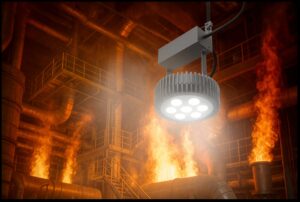
Choosing the most cost-effective lighting fixture for a harsh environment begins with one fundamental principle: the product must match the real conditions of the site. This sounds obvious, but in practice it is where many costly mistakes originate. Fixtures are often selected based on general application labels—such as “industrial,” “high bay,” or “outdoor”—without a sufficiently detailed assessment of the environmental stresses they will actually face in operation.
A proper selection process starts with environmental evaluation. Buyers should consider ambient temperature, exposure to direct radiant heat, dust concentration, humidity level, water contact, chemical presence, vibration, mounting height, and accessibility for maintenance. Each of these variables can influence which fixture designs are suitable and which are likely to fail prematurely despite appearing acceptable in a brochure.
For example, a fixture that performs well in a dry warehouse may not survive in a washdown processing area. A product suitable for a covered workshop may not withstand sustained heat in a furnace-adjacent production hall. Similarly, a standard outdoor floodlight may be insufficient for a coastal utility site with salt exposure and high wind. In each case, selecting the wrong environmental match can transform an apparently affordable product into a recurring maintenance problem.
The importance of environmental matching also extends to fixture configuration. Housing material, optical design, driver placement, lens type, cable entry method, and mounting hardware may all need to be adapted depending on site conditions. This is why application-specific specification is often more valuable than simply selecting the highest lumen package or lowest unit price.
Another important factor is maintenance accessibility. In areas where fixture replacement is difficult or disruptive, buyers should place greater emphasis on service life and reliability, because the cost of a maintenance event may be far greater than the cost difference between product options. Conversely, in more accessible areas, fixture strategy may allow for different economic trade-offs.
Ultimately, cost-effectiveness begins with fit-for-purpose engineering. The more precisely a lighting solution is aligned with the actual demands of the environment, the more likely it is to deliver stable performance, lower maintenance, and better lifecycle economics. Harsh-environment lighting should never be chosen by category alone. It should be chosen by condition, risk profile, and operational consequence.
One of the more subtle challenges in industrial lighting selection is finding the right balance between under-specification and over-specification. Both mistakes can increase long-term cost, even though they occur for opposite reasons. Cost-effective lighting does not mean buying the most rugged fixture available for every space, nor does it mean minimizing specification to reduce upfront expense. It means selecting a solution that is appropriately engineered for the actual level of environmental stress.
Under-specification is the more common and more expensive error. This happens when a fixture lacks the thermal resistance, ingress protection, corrosion resistance, or structural durability required for the application. The immediate consequence may not be obvious at installation, but over time the product begins to fail earlier than expected, requiring replacement, maintenance, and operational intervention. In harsh environments, under-specification almost always results in higher total ownership cost.
Over-specification, however, can also create inefficiency. Not every industrial space requires the same level of environmental protection. Installing highly specialized extreme-temperature or marine-grade fixtures in moderately demanding areas may unnecessarily increase capital expenditure without generating proportional operational value. While robust engineering is beneficial, it should be aligned with real site conditions rather than used indiscriminately.
The key is to understand the actual severity of each environment and specify accordingly. A food processing washdown area may require strong moisture and corrosion resistance but not extreme thermal tolerance. A steel mill ceiling zone may require exceptional heat resistance and dust protection but not the same chemical compatibility as a wastewater plant. A loading dock may need outdoor weather protection and impact resistance without requiring fully sealed clean-room style construction.
This application-specific approach allows facilities to optimize both performance and budget. It also supports standardization across similar zones while preserving appropriate differentiation where environmental demands genuinely vary. Rather than treating all industrial areas as identical, buyers should classify lighting environments by stress level and select fixture families accordingly.
From a procurement standpoint, this balance is essential for maximizing ROI. Overbuilding every space wastes capital; underbuilding every space creates recurring cost. The most cost-effective strategy lies in specifying just enough environmental resilience to ensure dependable long-term performance without paying for unnecessary design complexity.
In harsh-environment lighting, precision is more economical than extremes. The goal is not to buy the toughest fixture available—it is to buy the right fixture for the job.
In the industrial lighting market, product marketing language can often sound impressive while revealing very little about how a fixture will perform in a real harsh environment. Terms such as “heavy-duty,” “industrial-grade,” “durable,” or “high-performance” are widely used, but unless they are supported by verifiable technical data, they should not be treated as reliable indicators of long-term value. For buyers seeking cost-effective lighting, comparison must be based on measurable performance—not broad claims.
The first category of data to examine is environmental suitability. This includes rated operating temperature range, ingress protection level, housing material, corrosion resistance features, and any available information on impact or vibration tolerance. These details are especially important because they indicate whether the fixture is genuinely designed for the conditions it will face, rather than simply marketed for general industrial use.
Energy and optical performance should also be evaluated carefully. Efficacy, lumen output, beam angle options, optical distribution, and lumen maintenance data all provide insight into how efficiently and consistently the fixture will perform over time. Initial brightness alone is not enough. A product that appears powerful on day one but degrades quickly or wastes light through poor optical control may offer poor long-term value.
Another important area is electrical reliability. Driver quality, surge protection, power factor, thermal design, and internal component protection can significantly affect service life in demanding applications. In harsh environments, electrical stability often depends on engineering details that are not obvious from exterior appearance or general sales descriptions.
Warranty terms should also be interpreted critically. A longer warranty can be a positive signal, but only if the product’s technical design and application suitability support that promise. Buyers should understand what the warranty covers, under what operating conditions it remains valid, and whether it aligns realistically with the environment in question.
Working from performance data also allows buyers to compare products more fairly across suppliers. It shifts the decision process away from brand impression or superficial specification sheets and toward practical engineering evaluation. This is especially important in industrial procurement, where lighting decisions may affect multiple facilities, large fixture quantities, or long operational cycles.
Cost-effective lighting decisions are strongest when they are evidence-based. In harsh environments, where the consequences of poor selection are amplified, data is not a formality—it is a risk-management tool. Buyers who compare measurable performance rather than marketing language are far more likely to select lighting systems that deliver real long-term value.
Even the best lighting product can become a poor investment if it is applied incorrectly. That is why one of the most important aspects of choosing cost-effective lighting for harsh environments is working with suppliers who genuinely understand industrial applications—not just lighting catalogs. In demanding environments, product selection should be guided by operational context, not only by generic fixture specifications.
Industrial lighting is rarely one-size-fits-all. Two facilities may both require “high bay LED lighting,” yet the environmental realities can be entirely different. One may be a hot steel fabrication area with heavy airborne particulates, while the other is a food packaging hall with frequent washdown and moderate temperature. A supplier that treats these environments as interchangeable is unlikely to recommend the most suitable solution.
Experienced industrial lighting suppliers typically begin by asking application-specific questions: What is the ambient temperature? Is there direct radiant heat? How often are the lights used? What kind of dust or moisture is present? How accessible are the fixtures for maintenance? Are there corrosion concerns? What are the illumination priorities—general visibility, inspection, outdoor security, machine operation, or all of the above? These questions are not procedural—they are central to making a lighting system economically successful.
Suppliers with industrial expertise are also more likely to provide useful guidance on fixture layout, wattage selection, beam angle, mounting strategy, and lifecycle trade-offs. This can help buyers avoid both under-specification and unnecessary overengineering. In many cases, proper application support is what turns a technically acceptable product into a truly cost-effective one.
Another benefit of working with knowledgeable suppliers is better long-term consistency. Industrial buyers often need repeatability across projects, expansions, or replacement cycles. A supplier that understands the operational logic behind a site’s lighting choices is better positioned to support standardization, phased upgrades, and future procurement efficiency.
For procurement managers and engineers, supplier capability should therefore be considered part of the value equation. The cheapest quotation is not always the lowest-risk decision if it comes without meaningful technical support or application understanding. In harsh environments, poor recommendations can be just as expensive as poor products.
Ultimately, cost-effective lighting depends not only on what is installed, but on how intelligently it is selected. Suppliers who understand industrial conditions, operational constraints, and performance priorities can help facilities make more durable, more efficient, and more financially sound lighting decisions over the long term.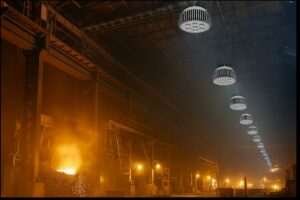
One of the most common and costly mistakes in industrial lighting procurement is selecting products based primarily—or exclusively—on unit price. While controlling purchase cost is a legitimate concern, especially in large-scale facility projects, focusing too narrowly on initial fixture price often leads to higher overall expenditure once the lighting system is placed into real operation. This is particularly true in harsh environments, where low-cost products tend to reveal their limitations quickly.
The problem with price-only purchasing is that it ignores the broader economic structure of lighting ownership. A fixture is not just a one-time product purchase. It is an operating asset that consumes electricity, requires maintenance, affects labor demand, and contributes to workplace visibility and reliability. A low-priced luminaire that fails early or performs inefficiently may generate far more cost over its service life than a higher-quality alternative.
In harsh industrial settings, this risk is amplified. Environmental stress from heat, dust, moisture, vibration, or corrosion can expose weak thermal design, poor sealing, low-grade materials, or inadequate electrical protection. A product that seemed cost-competitive during quotation may become expensive through repeated maintenance calls, shortened replacement cycles, and operational inconsistency.
Price-only purchasing also tends to undervalue installation and access cost. In many industrial applications, replacing a failed fixture involves labor, equipment, scheduling, and sometimes production disruption. When these factors are considered, the financial penalty of early failure becomes much more significant than the difference between a low-cost and a well-engineered fixture at the time of purchase.
Another issue is that low-price products often appear similar to higher-quality alternatives on superficial specification sheets. Buyers may see comparable lumen figures or wattage ratings and assume performance will be equivalent. In reality, long-term durability, thermal tolerance, enclosure quality, and component reliability are often where the real differences lie—and these are not always obvious from simplified product summaries.
For procurement teams, the goal should not be to avoid competitive pricing. It should be to avoid false economy. A fixture that costs less but performs worse is not a savings opportunity—it is a delayed expense.
In harsh-environment lighting, the smartest purchasing decisions are made when unit price is considered alongside total cost of ownership, environmental suitability, and expected maintenance burden. True cost-effectiveness comes from lifecycle value, not invoice optics.
Another widespread purchasing error is the use of commercial-grade lighting products in environments that demand true industrial durability. This mistake often occurs because commercial fixtures may appear visually suitable, offer attractive pricing, or carry performance claims that seem adequate for general facility use. However, once deployed in harsh industrial conditions, these products frequently underperform or fail prematurely because they were never engineered for the environmental realities of the site.
Commercial-grade fixtures are typically designed for offices, retail spaces, standard warehouses, parking areas, or other relatively controlled environments. While they may provide acceptable brightness and efficiency in such settings, they often lack the thermal resilience, ingress protection, corrosion resistance, and structural robustness required for demanding industrial use. As a result, what appears to be a practical cost-saving substitution often becomes a recurring maintenance problem.
This issue is especially common in transitional spaces—areas such as production-adjacent warehouses, utility corridors, loading interfaces, mechanical access zones, or outdoor service areas. Because these spaces do not always look “extreme” at first glance, they may be specified with lighting products intended for lighter-duty environments. Over time, however, exposure to dust, vibration, moisture, process heat, or chemical contaminants begins to affect fixture reliability.
The consequences are usually predictable: shortened lifespan, inconsistent light output, failed drivers, degraded seals, optical clouding, and more frequent service calls. These failures do not simply increase replacement cost—they also undermine standardization and create uncertainty around future maintenance planning.
From a cost perspective, the use of commercial-grade fixtures in industrial conditions is a classic example of under-specification. The initial savings may appear favorable on a purchase order, but they are often erased quickly through higher labor costs, reduced reliability, and the need for premature re-upgrading.
To avoid this mistake, buyers should evaluate products not by appearance or general category, but by environmental capability. If a space is exposed to operational heat, airborne particulates, moisture, aggressive cleaning, corrosion risk, or difficult access conditions, it should be treated as an industrial lighting application—even if it is not located directly on the main production line.
In harsh environments, the line between “good enough” and “fit for purpose” can be financially significant. Commercial-grade products may have a place in controlled facility areas, but they are rarely the most cost-effective choice where industrial stress is a daily operating reality.
A third major mistake in harsh-environment lighting procurement is overlooking or underestimating the importance of thermal and environmental ratings. Buyers may focus on lumen output, wattage, or price while assuming that any fixture labeled for industrial use will naturally be capable of handling the site conditions. In reality, the absence of proper environmental matching is one of the most common causes of early lighting failure and inflated long-term cost.
Thermal ratings are especially important in industrial applications where ambient temperature is elevated or where fixtures are exposed to radiant heat from nearby equipment. A product that performs well in a 25°C or 30°C environment may degrade rapidly in a facility where temperatures regularly rise to 50°C, 60°C, or higher. Even if the fixture appears functional at installation, prolonged thermal stress can accelerate driver aging, reduce lumen stability, and significantly shorten service life.
Environmental ratings matter just as much. Dust-heavy facilities require strong particulate protection. Washdown and outdoor applications demand reliable moisture resistance. Corrosive sites need compatible materials and hardware. Vibration-prone environments require mechanical stability. When these requirements are ignored, fixtures may fail through contamination, enclosure compromise, structural degradation, or electrical instability—often well before any nominal rated lifespan is reached.
The problem is not simply technical noncompliance. It is economic inefficiency. Every fixture installed outside its real operating envelope becomes a probable future maintenance event. Over time, this increases labor demand, replacement frequency, and operational unpredictability. In some facilities, it may also create visibility issues that affect safety or process continuity.
One reason this mistake persists is that environmental and thermal ratings can seem secondary compared to more visible specification data such as lumens or efficacy. However, in harsh environments, these ratings are often more decisive than headline performance figures. A slightly lower-efficacy fixture with the correct environmental resilience may prove far more cost-effective than a higher-output product that fails early.
For buyers and specifiers, the lesson is clear: performance claims only matter if the fixture can sustain them under real site conditions. Ignoring thermal and environmental ratings does not simplify the buying process—it merely postpones the cost of a poor decision.
In industrial lighting, durability begins with specification discipline. Cost-effectiveness depends on selecting products that are not only bright and efficient, but appropriately rated for the actual environment in which they must operate.
A lighting fixture does not exist in isolation—it exists in a physical environment that determines how easy or difficult it is to service. One of the most expensive mistakes industrial buyers make is underestimating the cost of maintenance access when evaluating lighting options. In harsh environments, access complexity can transform even a modest fixture failure into a disproportionately expensive operational event.
In many industrial facilities, lighting is mounted high above the floor, over active production lines, near process equipment, on towers, along utility structures, or in restricted-access technical spaces. Reaching these fixtures may require lifts, scaffolding, lockout procedures, temporary work permits, or coordination with plant operations. The cost of replacing a failed luminaire in these conditions often includes far more than the fixture itself.
Access-related costs typically involve labor time, equipment rental or deployment, scheduling, supervision, and sometimes temporary interruption of adjacent operations. In some cases, the replacement task may need to be performed during off-hours or planned shutdown windows, further increasing labor expense and logistical complexity. When these realities are ignored during procurement, buyers tend to underestimate the true financial impact of choosing shorter-life or lower-reliability fixtures.
This issue is especially relevant in harsh environments because environmental stress increases the likelihood of failure. A fixture installed in a hot, dusty, wet, or corrosive area may require service more often than expected if it is not properly specified. If that fixture is also difficult to access, every additional failure carries a compounded cost.
From a total cost of ownership perspective, maintenance access should be treated as a central decision variable. In hard-to-reach areas, it is often economically justified to invest in more durable, longer-life fixtures even if their initial purchase price is higher. The avoided maintenance interventions can quickly offset the upfront premium.
This principle also supports better planning. Facilities that understand their access constraints can segment lighting areas by maintenance difficulty and prioritize more robust products where service is most disruptive or expensive. This creates a more strategic allocation of budget and reduces avoidable lifecycle cost.
In harsh-environment lighting, accessibility is part of the economics. A low-cost fixture installed in a high-cost maintenance location is rarely a good investment. Buyers who account for access from the beginning are much more likely to choose lighting systems that remain cost-effective in real-world operation.
A less obvious but highly consequential purchasing mistake is failing to standardize lighting across similar operating areas within a facility or across multiple sites. While individual fixture decisions may seem minor in isolation, inconsistent product selection can create long-term inefficiencies in procurement, maintenance, spare parts management, and operational planning. In harsh environments, where reliability and serviceability are already critical, lack of standardization often increases cost in ways that are easy to overlook at the time of purchase.
This issue commonly arises when lighting is purchased reactively or in phases without a broader specification strategy. Different departments, contractors, or maintenance teams may select fixtures based on availability, price, or short-term needs rather than lifecycle alignment. Over time, the facility accumulates a patchwork of luminaires with different wattages, mounting systems, optics, electrical characteristics, and maintenance requirements.
The result is operational complexity. Spare inventory becomes harder to manage because multiple product types must be stocked or sourced. Maintenance teams need to work with different replacement procedures and component interfaces. Lighting performance across similar areas may become inconsistent, making it harder to maintain uniform visibility standards or plan future upgrades efficiently.
In harsh environments, inconsistency can also lead to uneven reliability. If one area uses properly specified fixtures while another uses lower-grade substitutes, failure rates and maintenance burdens may vary unnecessarily across the same facility. This complicates troubleshooting and can obscure whether lighting problems are caused by environment, product quality, or specification mismatch.
Standardization does not mean using one fixture everywhere regardless of conditions. Rather, it means establishing logical fixture families for defined application categories—such as high-temperature zones, washdown areas, outdoor yards, or dusty production spaces—and using those selections consistently where the environmental demands are similar. This creates both technical and financial advantages.
From a cost-effectiveness standpoint, standardization supports better purchasing leverage, simpler maintenance planning, more predictable spare parts management, and smoother future expansion. It also improves specification discipline by ensuring that fixture choices are tied to environmental requirements rather than convenience.
For industrial buyers, lighting should be treated as part of an infrastructure system, not a collection of isolated purchases. In harsh environments, standardization is one of the most practical ways to reduce complexity, improve reliability, and strengthen long-term value across the lighting lifecycle.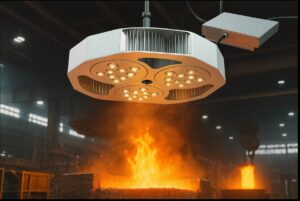
When building a lighting investment strategy for harsh environments, reliability should be treated as the primary economic driver—not a secondary technical preference. In demanding industrial applications, a lighting system that fails frequently or performs inconsistently will almost always cost more over time, regardless of how attractive its initial purchase price may have been. For this reason, reliability is not simply a quality attribute. It is a direct cost-control strategy.
Reliable lighting reduces more than just replacement frequency. It lowers maintenance demand, minimizes emergency interventions, supports consistent visibility, and helps protect operations from avoidable disruptions. In facilities where uptime, safety, and workflow continuity matter, reliability has a compounding financial effect that extends far beyond the fixture itself.
The strategic implication is clear: when evaluating lighting options for harsh environments, buyers should begin by asking which product is most likely to survive and perform under the actual site conditions. Questions about efficacy, lumen output, controls, or price remain important, but they should be considered after environmental durability and long-term operational stability have been addressed.
This reliability-first mindset also helps avoid a common procurement trap—being distracted by nominal performance figures that look impressive on paper but are not sustainable in the field. A fixture that delivers slightly higher initial output or marginally lower purchase cost is not necessarily the better investment if it cannot maintain performance under heat, moisture, dust, vibration, or corrosion exposure.
In practical terms, prioritizing reliability means giving greater weight to thermal design, enclosure quality, component protection, material durability, and supplier application knowledge. It also means understanding that a fixture’s value lies not only in what it can do when new, but in how little attention it demands over time.
For industrial operators, reliable lighting contributes to a more stable maintenance environment and more predictable facility performance. This predictability is itself a financial asset, because it reduces uncertainty and allows infrastructure budgets to be managed more efficiently.
In harsh environments, the smartest lighting strategy begins with a simple principle: the most cost-effective fixture is usually the one that causes the fewest problems. Reliability is not the opposite of affordability—it is the foundation of it.
A strong lighting investment strategy should never evaluate energy savings and maintenance savings in isolation. In harsh industrial environments, the best return on investment typically comes from combining both factors—selecting lighting systems that reduce electricity consumption while also minimizing service interventions over time. When these two advantages are achieved together, the economic impact becomes significantly more powerful than either one alone.
Energy savings are often the easiest part of the ROI case to calculate. Lower wattage, improved efficacy, and better optical control can all reduce electrical demand and generate visible utility cost reductions. These savings are especially meaningful in facilities where lighting runs for long hours each day or where large fixture quantities are installed across production, storage, utility, or outdoor operational zones.
However, in harsh environments, maintenance savings can be just as important—and in some cases even more financially significant. If a lighting system operates in high-temperature zones, difficult-access areas, washdown spaces, or dust-heavy structures, every avoided maintenance event represents a real reduction in labor, access equipment, scheduling complexity, and operational disruption. These savings may be less obvious than a power bill, but they often contribute substantially to long-term cost-effectiveness.
The most strategic lighting investments therefore target both dimensions at once. A high-efficacy fixture that fails prematurely may save energy but create maintenance headaches. Conversely, a rugged fixture that lasts but consumes excessive power may reduce labor while leaving unnecessary operating cost on the table. The ideal harsh-environment lighting solution balances efficiency with durability.
This integrated approach also supports stronger internal justification for lighting upgrades. Procurement teams may respond to energy payback logic, while operations and maintenance teams are often more influenced by service reduction and reliability improvement. A product that performs well in both areas creates a more compelling business case across departments.
From a planning perspective, facilities should assess lighting options using a combined lifecycle model that includes annual energy use, expected service interval, environmental suitability, and access cost. This allows buyers to identify which solutions offer the best overall financial performance rather than simply the best result in one category.
In harsh environments, cost-effective lighting is rarely defined by a single metric. The strongest investment outcomes come from systems that lower both the energy required to operate and the effort required to keep them operating.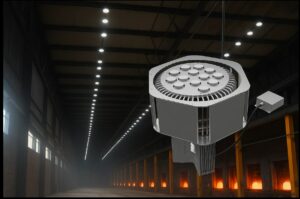
A truly cost-effective lighting strategy should not focus only on today’s immediate project needs. It should also account for how the facility may expand, evolve, or standardize over time. In industrial operations, lighting infrastructure often grows in phases—new process areas are added, older zones are retrofitted, auxiliary buildings are upgraded, or similar installations are replicated across multiple sites. When lighting is selected with this long-term perspective in mind, the result is usually lower complexity and better lifecycle value.
One of the main advantages of planning for expansion is consistency. If a facility establishes clear fixture categories for high-temperature areas, washdown spaces, outdoor yards, dusty production halls, and utility rooms, future procurement becomes simpler and more efficient. Instead of restarting the selection process for every project, the organization can build around proven fixture families that are already matched to known environmental conditions.
This approach improves more than procurement efficiency. It also helps maintenance teams manage spare parts, understand installation methods, and troubleshoot issues more effectively. When similar environments use standardized lighting systems, service procedures become more predictable and replacement planning becomes easier to control.
Expansion-aware planning also reduces the risk of fragmented infrastructure. Without a long-term strategy, facilities often accumulate a mix of fixture types driven by different vendors, contractors, budgets, or short-term decisions. Over time, this can create inconsistency in light quality, mounting compatibility, electrical characteristics, and maintenance requirements—ultimately increasing cost and operational complexity.
From a financial standpoint, standardization often creates purchasing leverage as well. Facilities that commit to consistent lighting families across projects may benefit from better procurement terms, smoother supplier support, and lower inventory complexity. These efficiencies may not appear dramatic in a single purchase cycle, but they become highly valuable over years of operation and site development.
Long-term planning also helps future-proof lighting decisions. If a facility expects environmental conditions to intensify, operational hours to increase, or infrastructure zones to expand, selecting more scalable and durable lighting solutions now can prevent costly rework later.
In harsh-environment applications, cost-effectiveness is not only about surviving the current installation. It is about creating a lighting platform that remains practical, maintainable, and economically efficient as the facility grows. The smarter the planning horizon, the stronger the long-term return.
The final shift that defines a smarter lighting investment strategy is conceptual: lighting should be viewed not merely as a utility expense, but as an operational asset. This perspective is especially important in harsh industrial environments, where lighting has a direct influence on uptime, safety, maintenance efficiency, and the practical usability of the facility itself.
When lighting is treated only as a cost line item, procurement decisions tend to prioritize short-term price reduction. Fixtures are evaluated primarily on purchase cost or basic wattage savings, while broader operational consequences receive less attention. This often leads to under-specification, reactive replacement cycles, and infrastructure choices that look economical initially but perform poorly over time.
By contrast, when lighting is treated as an asset, the evaluation framework changes. Buyers begin to consider how lighting supports the work being done in the space: whether it helps operators see clearly, whether it reduces maintenance burden, whether it contributes to safe access, whether it remains reliable under environmental stress, and whether it supports efficient facility operation year after year. This is a far more accurate way to judge value in industrial settings.
In harsh environments, lighting often influences critical routines that are easy to overlook because they are so embedded in daily operations. Technicians rely on it to inspect equipment. Operators rely on it to monitor process conditions. Maintenance teams rely on it to access infrastructure safely. Logistics teams rely on it for movement and coordination. If lighting underperforms, these functions become less efficient—even if the impact is not immediately visible on a purchase spreadsheet.
Viewing lighting as an operational asset also strengthens cross-functional decision-making. Engineering, maintenance, operations, procurement, and EHS teams all have a stake in how lighting performs. A more strategic lighting plan reflects these overlapping priorities rather than reducing the decision to fixture cost alone.
Ultimately, cost-effective lighting in harsh environments is not about buying the cheapest light. It is about investing in a system that contributes positively to how the facility functions every day. The more directly lighting supports productivity, safety, uptime, and maintenance control, the more valuable it becomes as part of the operation itself.
When industrial lighting is evaluated through this broader lens, better decisions tend to follow—and those decisions are almost always more economical in the long run.
In harsh industrial environments, lighting should never be evaluated solely by its purchase price. The real cost of a lighting system is shaped by how well it performs under environmental stress, how much energy it consumes, how often it requires maintenance, and how effectively it supports safe and efficient facility operation. This is why true cost-effectiveness is not about buying the cheapest fixture—it is about selecting the solution that costs the least to own over time.
Heat, dust, moisture, corrosion, vibration, and difficult maintenance access all increase the financial consequences of poor lighting decisions. A fixture that fails early or performs inconsistently in these conditions can generate avoidable labor expense, downtime risk, and operational inefficiency that far exceed any short-term procurement savings. By contrast, a properly engineered harsh-environment LED lighting system can reduce energy bills, extend maintenance intervals, improve visibility, and provide a more stable infrastructure platform for long-term industrial use.
The most cost-effective lighting solutions are those that align with the actual conditions of the site. They are thermally appropriate, well sealed, mechanically durable, corrosion resistant where needed, and capable of maintaining useful light output over time. They also support broader operational priorities—such as safety, uptime, standardization, and maintenance efficiency—that contribute directly to overall facility performance.
For industrial buyers, engineers, and procurement managers, the takeaway is clear: lighting in harsh environments should be treated as a lifecycle investment, not a commodity purchase. When evaluated through total cost of ownership rather than unit price alone, high-quality LED lighting consistently proves its value where environmental conditions are most demanding.
In the end, the best lighting is not the one that costs less today. It is the one that continues to cost less year after year while delivering the reliability and performance your operation depends on.
–The End–