Metal casting and forging are cornerstone processes in heavy industry, producing components for automotive, aerospace, construction, and machinery sectors. These processes involve extreme heat, molten metals, and high-impact mechanical operations. Within such challenging environments, lighting is not merely a convenience—it is a critical safety and productivity factor. Proper illumination directly impacts operator accuracy, reduces workplace accidents, and improves overall operational efficiency.
Traditional lighting systems such as high-intensity discharge (HID) lamps, halogen fixtures, or fluorescent tubes often fail to meet the stringent demands of metalworking environments. These conventional solutions are prone to rapid degradation due to heat, vibration, dust, and corrosive atmospheres. Maintenance and replacement cycles are frequent and costly, disrupting production schedules.
LED technology has emerged as a transformative solution for industrial lighting, offering high energy efficiency, long service life, and resistance to harsh operating conditions. High-temperature industrial LED fixtures are specifically engineered to withstand the extreme thermal loads and mechanical stress typical in casting and forging facilities. By providing consistent, high-quality illumination, LED systems enhance operational safety, improve visual inspection accuracy, and contribute to significant energy savings.
Moreover, modern LED solutions offer intelligent control features such as dimming, remote monitoring, and integration with automation systems. These innovations enable facility managers to optimize lighting schedules, reduce energy waste, and maintain consistent illumination levels even in the most challenging industrial environments. As metal casting and forging operations continue to scale up in complexity and intensity, high-performance LED lighting has become indispensable for modern industrial operations.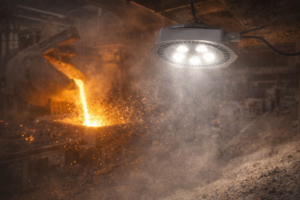
Metal casting and forging environments present unique challenges that make traditional lighting solutions unreliable. One of the primary obstacles is extreme heat exposure. Furnaces, molten metal pouring, and hot metal handling routinely generate temperatures exceeding 1,200°C in certain zones. Standard lighting fixtures cannot withstand such radiant heat, leading to early component failure, discoloration, and compromised electrical performance. Overheating often causes frequent replacements, creating costly downtime.
Another significant challenge is dust, smoke, and particulate matter. Foundry operations generate fine metal powders, ceramic particulates, and airborne flux particles, which settle on light fixtures and reduce luminous output. In addition, smoke and industrial gases can diffuse or scatter light, reducing visibility and operator effectiveness. Inaccurate lighting compromises quality control, increasing the risk of defects in cast or forged parts.
Vibration and mechanical shock are also critical considerations. Forging hammers, presses, and conveyor systems generate continuous mechanical vibrations that can damage poorly designed fixtures. Standard glass or plastic housings are prone to cracking or dislodgement under repeated impact, creating safety hazards.
Lastly, the corrosive atmosphere within these facilities further complicates lighting solutions. Exposure to chemical fluxes, molten metal splatter, or cleaning agents can erode metal housings and affect electrical contacts, further shortening fixture lifespan. These combined environmental stressors necessitate lighting solutions that are not only heat-resistant but also shockproof, dust-tight, and corrosion-resistant.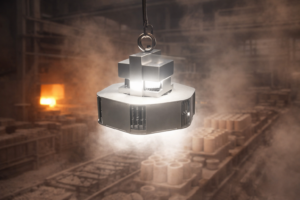
LED lighting offers multiple advantages over traditional lighting in metal casting and forging environments. One of the most significant benefits is high-temperature resistance. Industrial-grade LEDs are engineered with thermal-resistant materials, advanced heat sinks, and high-temperature electronics, allowing operation in ambient temperatures up to 200°C or more without compromising lumen output or fixture longevity. This is particularly critical near furnaces, pouring stations, or forging presses where conventional lamps would fail.
Energy efficiency is another major advantage. LEDs consume 50–70% less energy than HID or halogen fixtures while delivering equivalent or superior light output. In large-scale foundries or forging halls, energy savings can translate to significant operational cost reductions over time. Reduced heat emission from LEDs also contributes to lower cooling loads, further enhancing energy efficiency.
Longevity and maintenance reduction are pivotal for industrial facilities. High-quality LED fixtures often have lifespans exceeding 50,000 hours, even in challenging conditions. This reduces fixture replacements, minimizes downtime, and lowers labor costs associated with maintenance.
LEDs also enhance safety and operational visibility. With high CRI (Color Rendering Index) ratings, LEDs provide natural and uniform illumination, allowing operators to detect surface defects, cracks, or other irregularities in metal parts. Instant start capability ensures no waiting time for lighting to reach full brightness, critical during emergency or intermittent operations.
Finally, modern LEDs offer adaptive control features. Dimmable fixtures, motion sensors, and programmable timers can dynamically adjust illumination based on activity or production cycles. Integration with facility automation ensures optimal lighting conditions while minimizing energy wastage, making LED systems not only efficient but intelligent.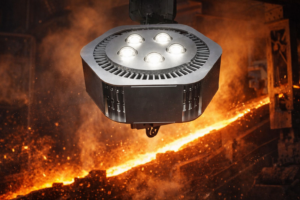
When selecting LED solutions for metal casting and forging operations, certain key features are essential to ensure durability and performance. Thermal management is paramount. Fixtures should include advanced heat sinks, high-grade aluminum or copper housing, and thermally resistant driver electronics to prevent overheating and maintain consistent performance even under prolonged exposure to high temperatures.
Durability and impact resistance are critical. Forging environments generate mechanical vibrations and occasional impacts from tools or equipment. Fixtures with anti-shock housings, reinforced lenses, and vibration-resistant mounting can withstand continuous mechanical stress without degradation.
Ingress protection and dust resistance are equally important. IP65 or higher-rated fixtures prevent dust, smoke, and splashed liquids from entering the housing, protecting sensitive electronics and maintaining illumination performance.
Customizable beam angles and lumen output allow facility managers to tailor lighting to specific zones. Focused beams for inspection areas and wide beams for production floors ensure proper illumination coverage, enhancing operator efficiency and reducing shadows that could compromise safety.
Finally, smart controls and monitoring capabilities are increasingly essential in modern industrial lighting. Fixtures with integrated sensors, dimming options, and remote monitoring provide flexibility, energy efficiency, and predictive maintenance capabilities. Alerts for fixture degradation or failure allow timely replacements, minimizing disruption in continuous operations.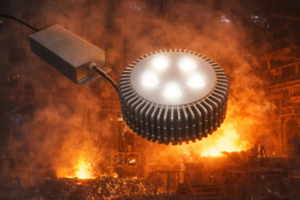
LED illumination enhances visibility and safety across all areas of metal casting and forging facilities. Foundry floors, for example, benefit from high-intensity, heat-resistant LED fixtures positioned above furnace lines, pouring stations, and molding areas. Uniform illumination reduces errors during molten metal handling and prevents accidents caused by misjudged depth or flow.
In forging halls, powerful LED lighting ensures operators can monitor hammering or press zones with precision. High CRI LEDs make subtle surface defects visible, enhancing product quality and reducing the need for post-processing inspections.
Inspection and quality control areas require consistent and shadow-free lighting. LEDs provide high-lumen output with uniform light distribution, enabling precise detection of cracks, inclusions, or other imperfections. This improves reliability and ensures compliance with stringent industrial standards.
Even storage and loading zones benefit from LED technology. High ceilings and expansive spaces in foundries or metal warehouses require long-throw, high-efficiency LED fixtures. Improved lighting in these areas reduces material handling errors, prevents accidents, and ensures efficient operations during night shifts or low-light conditions.
Proper installation and maintenance are essential for maximizing the performance of LED systems in metal casting and forging environments. Mounting recommendations include overhead, wall-mounted, or mobile fixtures depending on operational layout and heat exposure. High-temperature zones may require fixtures mounted at a safe distance with reflective or directional optics to optimize illumination while minimizing thermal stress.
Routine inspection and cleaning are vital. Dust, flux residues, and metallic particulates accumulate on fixture surfaces, diminishing light output. Regular cleaning schedules using non-abrasive methods ensure consistent lumen performance and prevent overheating caused by blocked heat sinks.
When considering a lighting upgrade, facility managers often weigh retrofit vs. new installation options. Retrofits allow replacement of old HID or fluorescent systems with energy-efficient LEDs while retaining existing mounting structures, offering cost and time savings. New installations, however, enable customized layouts, smart control integration, and optimal fixture positioning for maximum illumination efficiency.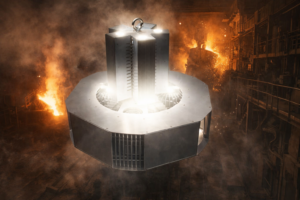
Several metal casting and forging facilities have successfully adopted high-temperature LED solutions, demonstrating tangible benefits. For example, a large automotive foundry upgraded its furnace line illumination to LED fixtures rated for 150°C ambient temperature. The facility reported a 60% reduction in energy consumption and a 40% decrease in maintenance costs over two years. Operator feedback also highlighted improved visibility during molten metal handling, reducing minor accidents and increasing production accuracy.
Another forging plant installed high-lumen LED arrays above hammering zones. The LEDs’ uniform lighting and high CRI made detecting surface defects significantly easier, reducing defective parts by 25%. Smart dimming controls allowed illumination to adjust automatically during shift transitions, further enhancing energy efficiency.
These case studies demonstrate that properly engineered LED systems not only survive harsh industrial conditions but also provide measurable benefits in safety, efficiency, and operational cost savings.
High-performance LED lighting has emerged as a critical component in metal casting and forging facilities. Designed to withstand extreme temperatures, vibration, dust, and corrosive atmospheres, industrial LEDs enhance safety, increase operational efficiency, and reduce energy and maintenance costs. By leveraging advanced thermal management, durable construction, and smart controls, facility managers can ensure consistent, high-quality illumination across all operational zones.
Investing in industrial-grade LEDs is no longer just an energy-saving measure; it is a strategic decision that directly impacts productivity, quality, and workplace safety. As metalworking operations grow more demanding, high-performance LED illumination will continue to be an indispensable solution for modern foundries and forging plants.
–The End–