
In the highly regulated and temperature-sensitive environments of food processing and pharmaceutical manufacturing, lighting is not merely a tool for visibility—it is an integral component of operational efficiency, safety, and compliance. Facilities in these sectors frequently encounter elevated ambient temperatures, persistent steam, and stringent sanitation protocols, all of which challenge conventional lighting technologies. Standard industrial fixtures often fail prematurely under such conditions, leading to increased maintenance costs, operational downtime, and potential regulatory risks.
High-heat LED lighting offers a solution by combining thermal resilience, energy efficiency, and robust construction to meet the demanding requirements of these environments. Selecting the correct fixture ensures consistent illumination, supports safety and inspection processes, and minimizes production interruptions, all while complying with hygiene and regulatory standards.
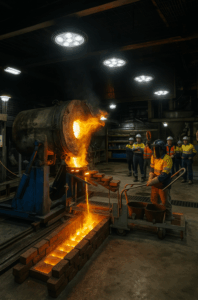
Industrial production areas in the food and pharmaceutical sectors often involve machinery and processes that generate substantial heat. Conventional lighting technologies are typically rated for ambient temperatures up to 25–40°C, but ovens, sterilizers, drying tunnels, and heated processing rooms routinely exceed these temperatures. When standard fixtures are exposed to such environments, LEDs may overheat, drivers can fail, and lenses or gaskets may degrade, leading to reduced lumen output or complete fixture failure.
Inadequate lighting in these environments carries real operational consequences. Reduced visibility can compromise worker safety, increase the risk of contamination, and impair quality inspections, potentially leading to defective or unsafe products. Frequent maintenance and unplanned replacement can cause production interruptions and inflate operational costs. High-heat lighting mitigates these risks by providing durable fixtures designed specifically for elevated temperatures, enabling continuous, reliable illumination that maintains worker safety and process quality while reducing total cost of ownership over time.
Identifying zones prone to high heat is essential when designing a lighting strategy. In food processing facilities, areas adjacent to ovens, roasters, and baking lines regularly reach temperatures that can compromise standard fixtures. Steam tunnels, drying chambers, and packaging zones near heated machinery experience heat buildup and condensation, while commercial kitchens and industrial cooking operations require fixtures that withstand high temperatures, humidity, and frequent washdowns. Bottling and canning lines are also subjected to steam exposure, creating conditions unsuitable for conventional lighting.
Pharmaceutical manufacturing facilities face similar challenges. Sterilization chambers, autoclaves, and tablet coating rooms operate at elevated temperatures to meet production standards. Heated production areas for active pharmaceutical ingredients (APIs) demand robust fixtures capable of continuous operation. Packaging and inspection zones often have elevated ambient temperatures due to proximity to equipment or heat-generating processes, and utility corridors, boiler rooms, and mechanical platforms require lighting that combines thermal endurance with reliability. In all these applications, choosing lighting engineered for high temperatures ensures operational safety, reduces maintenance interruptions, and maintains compliance with sanitary and regulatory standards.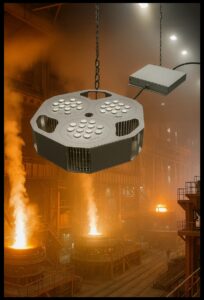
Designing lighting for high-heat food and pharmaceutical environments involves multiple challenges. First, ambient temperatures often exceed the thermal limits of standard fixtures, accelerating degradation of LEDs, drivers, and housings. Without effective thermal management, lumen output declines rapidly, and the risk of sudden fixture failure increases.
Second, frequent washdowns and sanitation protocols in these facilities expose lighting to high-pressure water, chemical detergents, and disinfectants. Fixtures must resist ingress of moisture and corrosive substances to remain operational while meeting hygiene standards. Hygiene and cleanability are equally critical; smooth surfaces, minimal fasteners, and fully enclosed designs prevent microbial growth and facilitate compliance with sanitation protocols.
Third, many production zones operate continuously, requiring lights to perform reliably 24/7. Any unplanned downtime can disrupt production lines, delay inspections, and incur additional labor and replacement costs. Finally, lighting quality directly impacts visibility for inspections, worker safety, and regulatory compliance. Fixtures must provide uniform, glare-free illumination with sufficient color rendering to ensure accurate quality assessment and maintain worker comfort. Addressing these challenges demands a careful selection of high-heat LED lighting engineered for durability, hygiene, and thermal stability.
Selecting the right lighting solution involves evaluating more than just brightness. High-heat LED fixtures must withstand maximum ambient temperatures specific to the process area, whether 60°C in packaging zones or 90°C in baking lines. Efficient thermal management is crucial; heat sinks, isolated driver compartments, and thermally stable materials help dissipate heat and preserve performance over extended periods. IP-rated protection ensures resistance against moisture, steam, and chemical exposure, with ratings ranging from IP65 for standard wet areas to IP69K for high-pressure washdown zones.
Corrosion resistance is also essential. Anodized aluminum housings, stainless steel fasteners, and chemically resistant lenses maintain fixture longevity in harsh, high-heat environments while complying with sanitation requirements. The fixture must provide flicker-free illumination with high CRI, uniform light distribution, and minimal glare to optimize line inspections and worker comfort. Long service life reduces maintenance frequency and total cost of ownership, and flexible mounting options—from ceiling mounts to suspension or brackets—ensure compatibility with diverse facility layouts. Considering these factors together guarantees that the selected fixture performs reliably under extreme industrial conditions while maintaining hygiene and safety standards.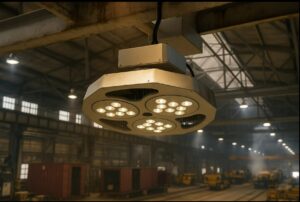
High-heat LED lighting offers significant advantages over traditional lighting technologies such as metal halide, high-pressure sodium, or fluorescent fixtures. Unlike older systems, which may struggle to operate reliably under high ambient temperatures, LEDs are specifically engineered with thermal management solutions that allow them to function efficiently in extreme conditions without premature failure. The intrinsic design of LEDs provides superior energy efficiency, consuming significantly less electricity while delivering comparable or greater brightness, which translates to lower operational costs for facilities running 24/7 production lines.
Moreover, LED fixtures offer extended lifespan compared to conventional lighting. Metal halide or fluorescent lamps often require frequent replacement, and this is particularly problematic in high-heat or sanitized environments, where fixture access is limited and each maintenance event can disrupt production. LEDs maintain high lumen output over time and minimize degradation even under continuous operation, ensuring that light quality and intensity remain consistent.
The ability of LEDs to provide instant-on performance further distinguishes them from traditional lighting, which may require warm-up periods and can fluctuate in output. This instant illumination is critical in facilities where production shifts may start abruptly or where intermittent inspections must occur under consistent lighting conditions. Additionally, LEDs maintain uniform light quality with high CRI, reducing flicker, glare, and visual fatigue, which are essential for accurate quality control and safe working conditions. Collectively, these advantages make high-heat LED fixtures a far more reliable, efficient, and sustainable solution for food and pharmaceutical environments than traditional lighting technologies.
The implementation of high-heat LED lighting offers measurable benefits tailored to the unique operational requirements of food processing and pharmaceutical facilities. In food production plants, proper illumination enhances worker safety, ensuring that operators can clearly see moving machinery, conveyors, and high-temperature equipment. Consistent lighting facilitates quality control processes, enabling accurate inspection of baked goods, packaged foods, and other heat-processed products. Reduced maintenance requirements allow for longer uninterrupted production cycles, minimizing the operational disruptions that frequently occur when fixtures fail in high-temperature zones. Additionally, fixtures designed for washdown and high-heat applications contribute to compliance with sanitation protocols, reducing the risk of contamination and helping facilities meet regulatory standards such as FDA or HACCP guidelines.
For pharmaceutical manufacturing, high-heat lighting ensures reliable illumination in controlled production environments, including sterilization chambers, tablet coating rooms, and drying tunnels. Consistent, flicker-free light improves precision during critical processes and reduces visual errors during quality inspections, which is essential when handling sensitive materials or APIs. Durable, thermally resistant fixtures minimize the risk of contamination from component failure and contribute to compliance with stringent industry regulations, including cGMP standards. Moreover, the extended lifespan of high-heat LED fixtures reduces maintenance frequency, limiting downtime and improving production efficiency. In both industries, integrating specialized high-heat LED lighting translates directly into operational safety, process reliability, and long-term cost savings, making it an essential component of modern industrial facility management.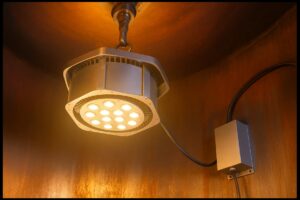
Selecting lighting for high-temperature food and pharmaceutical environments is more complex than choosing based solely on wattage or price. A common mistake is focusing exclusively on lumen output without considering the actual ambient temperature of the installation area. Standard fixtures often fail under sustained heat, resulting in unexpected downtime and increased maintenance costs. Similarly, many buyers overlook the impact of washdown protocols or chemical exposure on fixture performance. Water ingress and corrosive cleaning agents can degrade housings, seals, and lenses, leading to fixture failure if protection is insufficient.
Another frequent error is assuming that general-purpose industrial lighting is adequate for critical process zones. Fixtures not specifically designed for high-heat or sanitary conditions may not withstand elevated temperatures or provide surfaces that comply with cleanroom or FDA-approved standards. Prioritizing initial purchase cost over total cost of ownership is another common pitfall. Cheaper fixtures may require frequent replacement, leading to higher labor, downtime, and maintenance costs in the long term. Additionally, many buyers neglect factors such as driver reliability, thermal management design, IP ratings, and mounting adaptability, all of which are crucial to sustained performance in harsh industrial environments. Avoiding these mistakes requires a comprehensive assessment of the operational conditions, sanitation protocols, and compliance requirements to ensure a durable, efficient, and safe lighting solution.
Selecting the appropriate high-heat LED lighting requires careful evaluation of multiple operational and environmental factors. Facilities must first determine the maximum ambient temperature each production zone will experience, as exceeding the fixture’s rated temperature can significantly reduce performance and lifespan. Exposure to water, steam, and chemical cleaning agents must be assessed to ensure IP-rated protection meets the facility’s sanitation standards. In food and pharmaceutical environments, it is equally critical to consider whether the lighting will operate in zones with direct food contact or sanitary constraints, requiring smooth, corrosion-resistant materials to prevent microbial growth.
The daily operating hours of each zone influence fixture selection, as high-duty cycles demand reliable thermal management to avoid overheating and lumen degradation. Mounting requirements—whether ceiling, suspension, bracket, or retrofit—must align with facility layouts and existing infrastructure. Lighting quality considerations, including CRI and uniform distribution, are essential for tasks such as visual inspection and quality control. Compliance with regulatory standards, including FDA, HACCP, or cGMP requirements, may also dictate specific lighting features or construction materials. A systematic evaluation of these parameters ensures that the selected fixtures deliver consistent performance, safety, and long-term operational efficiency, avoiding costly mistakes and optimizing the production environment.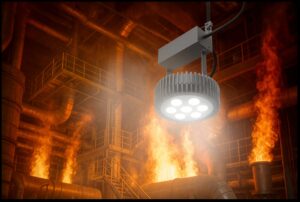
Every food and pharmaceutical facility presents unique challenges, making customization a key consideration for high-heat lighting. Off-the-shelf fixtures may not fully address the combination of temperature, humidity, sanitation, and spatial constraints present in specialized industrial environments. Custom solutions allow facilities to specify wattage and lumen output that precisely match production needs, reducing over-illumination and energy waste. Beam angles and light distribution can be tailored to ensure uniform illumination across complex machinery layouts, inspection zones, or heat-intensive areas.
Thermal resistance can also be customized for higher-than-standard ambient temperatures, ensuring continuous operation even in ovens, sterilizers, or drying tunnels. Voltage and dimming compatibility can be integrated for process control or energy management systems, while mounting adaptations ensure retrofit or new construction compatibility. Additionally, control systems can be incorporated to synchronize lighting with production schedules, enhancing operational efficiency. By customizing fixtures to the facility’s exact requirements, operators reduce maintenance frequency, maintain compliance with hygiene and safety standards, and ensure reliable illumination that supports the production process rather than forcing the environment to adapt to standard lighting. In essence, customization transforms lighting from a basic utility into a strategic operational asset.
High-heat lighting for food and pharmaceutical facilities is essential for operational efficiency, worker safety, and regulatory compliance. Fixtures designed for extreme temperatures, continuous operation, and washdown environments deliver reliable performance while reducing maintenance costs and production interruptions. Investing in purpose-built high-heat LED lighting ensures consistent, high-quality illumination, supporting inspections, process control, and worker safety while complying with industry standards.
Call to Action:
For expert guidance on selecting or customizing high-temperature LED lighting for your food or pharmaceutical facility, contact our technical team to evaluate your specific process requirements.
–The End–