
Petrochemical & Chemical Plant LED Lighting | Durable Industrial Lighting Solutions
Petrochemical and chemical processing facilities operate in some of the most demanding industrial environments in the world. From corrosive vapors and airborne contaminants to high ambient temperatures, moisture, dust, and hazardous classified areas, these plants place extreme performance requirements on every installed component—including the lighting system.
In such environments, lighting is far more than a basic utility. It is a critical part of plant safety, operational efficiency, maintenance visibility, inspection accuracy, and long-term infrastructure reliability. Poor lighting can lead to unsafe working conditions, higher maintenance costs, reduced productivity, and frequent fixture failure.
This is why more plant owners, EPC contractors, engineers, and procurement teams are upgrading to petrochemical plant LED lighting and chemical plant lighting solutions specifically designed for harsh industrial applications. Compared with traditional lighting technologies, industrial LED systems offer higher energy efficiency, longer service life, stronger environmental resistance, and lower lifecycle cost.
In this guide, we will explain everything you need to know about selecting the right industrial LED lighting for refineries, chemical plants, tank farms, process units, and hazardous industrial areas.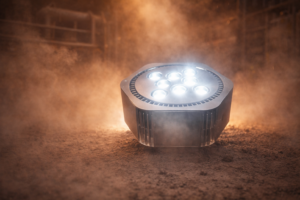
Lighting in petrochemical and chemical facilities has a direct impact on both operational safety and production reliability. Workers depend on clear, stable illumination to perform essential tasks such as:
In these environments, poor visibility is not just inconvenient—it can become a serious operational and safety concern. A dark service platform, an underlit pipe rack, or an unstable fixture in a process area can increase the likelihood of human error, delayed maintenance, and unsafe working conditions.
For this reason, industrial LED lighting for petrochemical plants must be selected as a functional part of the plant’s operating system, not simply as a building accessory.
Many petrochemical and chemical plants expose lighting fixtures to sulfur compounds, solvents, hydrocarbons, acidic vapors, alkalis, and chemical aerosols. These substances can attack fixture housings, fasteners, coatings, gaskets, and optical covers over time.
Without adequate protection, corrosion can lead to:
This is why corrosion-resistant LED lighting is essential for long-term reliability in chemical processing environments.
Heat is another major challenge in refineries and chemical plants. Lighting fixtures are often installed near:
Standard commercial or warehouse lighting products are usually not designed to survive in these environments. Elevated temperatures can accelerate:
For this reason, high temperature industrial LED lights are often necessary in petrochemical process areas.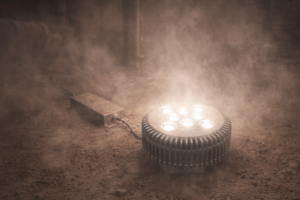
Many petrochemical and chemical plants contain areas where flammable gases, vapors, or combustible substances may be present. In such zones, lighting fixtures must be selected according to the site’s hazardous area requirements.
This is where hazardous area LED lights or explosion-proof LED lighting may become necessary, depending on the area classification and project specification.
Lighting in these environments must be engineered not only for illumination performance, but also for safe operation in risk-sensitive industrial conditions.
Lighting systems in chemical and petrochemical plants are frequently exposed to:
Without proper sealing, these factors can lead to fixture contamination and early electrical failure. This is why IP65, IP66, or IP67 industrial LED lighting is often preferred for harsh plant applications.
Unlike many commercial facilities, petrochemical and chemical plants often run continuously. Lighting systems must therefore support long operating hours with minimal interruption.
This means fixtures must deliver:
In a plant environment, lighting should not become a recurring maintenance problem.
One of the biggest advantages of LED lighting for chemical facilities is its superior energy efficiency. Compared with traditional technologies such as metal halide, high-pressure sodium, or fluorescent lighting, LED fixtures produce more usable light with lower power consumption.
For facilities operating around the clock, this can result in meaningful reductions in:
This is especially valuable in large industrial sites with hundreds of installed luminaires.
In petrochemical environments, replacing failed lighting can be expensive and difficult—especially when fixtures are mounted in:
Because industrial LED luminaires generally offer much longer operating life than traditional lamps, they help reduce:
This makes industrial LED lighting for refineries particularly attractive from a lifecycle cost perspective.
High-quality LED lighting provides more consistent, stable, and uniform illumination, which is critical in industrial process environments.
This helps improve visibility for:
Improved light quality also supports safer working conditions during:
For safety-sensitive facilities, better lighting means better operational control.
Unlike traditional discharge lamps, LED fixtures provide instant full brightness without long warm-up delays. This is especially important in facilities where immediate visibility is needed after:
LED systems also provide more stable long-term illumination without the flicker, aging instability, or delayed restrike associated with older lighting technologies.
One of the strongest advantages of petrochemical plant LED lighting is reduced maintenance demand in hard-to-reach areas.
In many chemical plants, replacing a failed fixture may require:
By reducing fixture failure and extending service life, LED lighting significantly lowers the maintenance burden across the facility.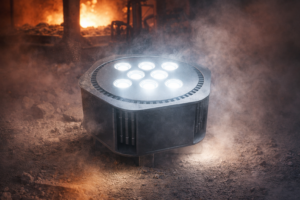
Selecting the right chemical plant lighting requires more than simply choosing a high lumen output fixture. The luminaire must be designed for the actual operating environment.
Where required, lighting fixtures should be appropriate for hazardous or classified areas. Depending on the project, this may involve selecting hazardous area LED lights or explosion-proof industrial lighting designed for use in volatile industrial environments.
This is especially relevant in areas such as:
Because chemical exposure is a major concern, the fixture should be built using durable materials such as:
The goal is to ensure that the luminaire can withstand prolonged exposure to aggressive plant atmospheres.
A lighting fixture used in a petrochemical plant must be matched to the actual ambient temperature of the installation area.
This is especially important for fixtures installed near:
For harsh applications, high temperature LED lighting is often necessary to ensure stable long-term performance.
To resist dust, moisture, and outdoor exposure, fixtures should provide strong sealing performance. In many industrial applications, this means selecting luminaires with:
This is essential for maintaining fixture integrity in demanding process and outdoor environments.
A reliable industrial LED high bay or industrial flood light for chemical plants should also offer:
These factors help improve overall system reliability and reduce the risk of early failure.
Lighting performance depends not only on brightness, but also on how light is distributed. The right beam angle and mounting style help optimize visibility, reduce glare, and improve coverage.
Important considerations include:
In industrial environments, optical suitability is just as important as wattage.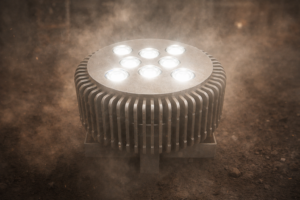
These are among the most demanding lighting environments in the plant. Fixtures used here must support:
Because these areas often involve heat, vapor, and contamination, fixture durability is especially important.
Tank farms require dependable outdoor illumination for:
These areas often benefit from industrial flood lights with strong weather resistance and efficient area coverage.
Pipe racks and utility routes require uniform, dependable lighting for:
Because these are often long linear spaces, efficient lighting distribution is critical.
These areas often contain dense mechanical equipment and require stable illumination for:
Lighting in these zones should also tolerate vibration, heat, and contamination.
Although less harsh than process zones, support spaces still require high-quality lighting for:
LED lighting helps improve both energy efficiency and visual comfort in these areas.
Outdoor logistics and access areas require strong, weather-resistant illumination for:
These applications often require LED flood lights or area lighting systems with reliable outdoor performance.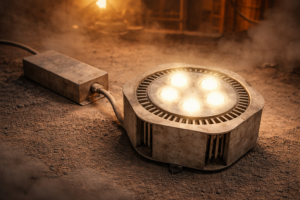
Upgrading to the right LED lighting for chemical plants helps solve several persistent industrial lighting problems.
Frequent Fixture Failure
Harsh plant conditions quickly damage low-grade lighting products.
High Maintenance Costs
Frequent replacement in difficult access areas increases labor burden and operating cost.
Unsafe or Uneven Illumination
Poor lighting creates dark zones, glare, and reduced visibility in work-critical areas.
Excessive Energy Consumption
Legacy lighting systems waste electricity while delivering lower performance.
Premature Degradation from Heat and Corrosion
Standard fixtures often fail early because they are not designed for real petrochemical operating conditions.
This is why selecting purpose-built refinery lighting solutions is essential for long-term plant performance.
Choosing the right lighting solution starts with understanding the application.
Step 1: Evaluate the Environment
Assess:
Step 2: Define the Project Goal
Clarify whether the priority is:
Step 3: Match the Fixture to the Application
Different plant areas may require:
Step 4: Review Technical Specifications Carefully
Pay close attention to:
Step 5: Work with an Experienced Industrial Lighting Supplier
A knowledgeable supplier can help optimize:
In industrial projects, application knowledge matters.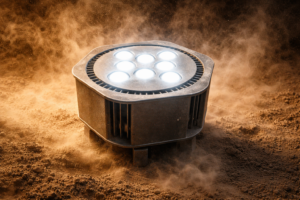
When Retrofit Makes Sense
LED retrofit is often ideal when the plant wants to:
This is especially useful in active facilities where shutdown time is limited.
When a New Lighting Design Is Better
A full redesign may be more effective when:
Both approaches can be effective—the right choice depends on the condition of the current system and the goals of the project.
A well-designed petrochemical plant LED lighting system delivers value far beyond initial fixture cost.
Key ROI Benefits Include:
In harsh industrial environments, the true cost of lighting is not what you pay once—it is what the system costs you over years of operation.
That is why many plant operators are shifting from low-cost commodity fixtures to more durable, application-specific industrial LED lighting for refineries and chemical plants.
Choosing the Right LED Lighting for Harsh Chemical and Petrochemical Environments
Petrochemical and chemical plants require lighting systems that can do far more than simply turn on. They must deliver reliable illumination, environmental resistance, long-term durability, and stable performance under some of the toughest industrial operating conditions.
From corrosion resistance and high temperature tolerance to energy efficiency and reduced maintenance, modern LED lighting offers a smarter and more dependable solution for harsh industrial facilities.
Whether the application involves:
…the right chemical plant lighting solution can improve safety, reduce operating cost, and strengthen plant reliability over the long term.
For industrial buyers, engineers, and procurement teams, the best results come from selecting lighting that is not only bright and efficient—but truly designed for the realities of petrochemical operation.
–The End–