
Industrial and commercial lighting systems are often deployed in environments far removed from controlled conditions. Facilities such as cement plants, foundries, food processing lines, and logistics hubs expose luminaires to airborne dust, high humidity, oil mist, and extreme or fluctuating temperatures. These environmental stressors rarely occur in isolation; instead, they interact and accelerate degradation. For example, dust accumulation can trap heat on luminaire surfaces, while moisture can accelerate corrosion of internal components, particularly in the presence of chemical contaminants.
In such conditions, conventional lighting fixtures—especially those not engineered for environmental sealing—experience rapid performance decline. Optical surfaces become obscured, thermal dissipation is reduced, and electrical components face increased failure risks. Therefore, environmental protection must be considered a primary design parameter in industrial lighting applications.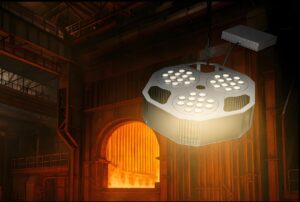
Using lighting systems without adequate environmental protection results in both direct and indirect costs. Direct costs include frequent replacements, increased maintenance labor, and higher spare parts consumption. Indirect costs are often more significant and include production downtime, safety risks due to poor visibility, and reduced operational efficiency.
In high-bay industrial environments, replacing a failed fixture may require halting operations and deploying specialized equipment such as lifts or scaffolding. Additionally, inconsistent lighting can increase the risk of workplace accidents and regulatory non-compliance. Over time, these factors significantly increase the total cost of ownership (TCO), making low-cost, unprotected fixtures a poor long-term investment.
Ingress Protection (IP) ratings provide a standardized method for evaluating a luminaire’s resistance to solid particles and liquids. Defined by IEC 60529, the IP rating system allows engineers and buyers to compare products based on verified environmental performance.
An IP65 rating is widely regarded as a critical threshold for industrial applications. It ensures complete protection against dust ingress and resistance to water jets from any direction. This level of protection preserves internal components, maintains optical performance, and enhances overall system reliability in harsh environments.
The IP rating consists of two digits. The first digit indicates protection against solid objects, including dust. A rating of “6” means the fixture is completely dust-tight, preventing any particulate ingress under defined test conditions.
The second digit indicates protection against liquids. A rating of “5” means the fixture can withstand water projected by a nozzle from any direction. While this does not allow for submersion, it ensures reliable operation in environments exposed to rain, splashing, or washdowns.
IP65 is commonly compared with IP54, IP66, and IP67. IP54 provides limited dust protection and resistance to splashing water, making it unsuitable for heavy industrial environments. IP66 offers higher resistance to powerful water jets, while IP67 includes protection against temporary immersion.
For most industrial indoor and semi-outdoor applications, IP65 provides the optimal balance between protection and cost. Higher ratings may introduce additional sealing complexity and thermal management challenges, which are not always necessary.
To achieve IP65 certification, luminaires must undergo testing in accordance with IEC 60529 standards. Dust testing involves placing the fixture in a controlled chamber filled with fine particles, often under vacuum conditions, to ensure no ingress occurs.
Water testing involves spraying the fixture with pressurized water from multiple angles for a specified duration. Certification is typically verified by third-party testing organizations, providing assurance that the product meets real-world performance expectations.
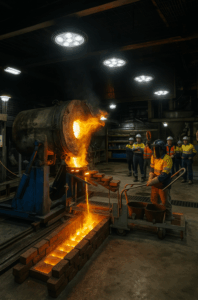
Effective sealing is critical to achieving IP65 protection. Gaskets are used at all potential entry points, including housing joints, access covers, and cable interfaces. Common materials include silicone and EPDM rubber, both of which offer flexibility, chemical resistance, and long-term durability.
Silicone gaskets are particularly suitable for high-temperature environments due to their ability to maintain elasticity under thermal stress. Proper gasket design must also account for compression set and long-term aging, ensuring consistent sealing performance throughout the product lifecycle.
Housing materials play a key role in both durability and thermal management. Die-cast aluminum is widely used due to its excellent heat dissipation, structural strength, and corrosion resistance when treated with protective coatings.
Polycarbonate housings may be used in applications requiring lightweight and impact-resistant designs, although they may not perform as well in high-temperature or chemically aggressive environments. Surface treatments such as powder coating or anodization further enhance corrosion resistance, especially in coastal or industrial settings.
Thermal management is a major challenge in sealed IP65 fixtures. Without airflow, heat must be dissipated through conduction. This requires optimized heat sink designs, high thermal conductivity materials, and efficient thermal interface components.
Maintaining low LED junction temperatures is essential for preserving lumen output and extending lifespan. Advanced designs may include external heat sinks and optimized housing geometries to improve heat dissipation while maintaining full environmental sealing.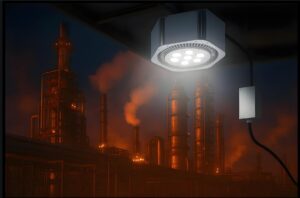
Dust accumulation can significantly degrade lighting performance. In conventional fixtures, dust settles on optical components, reducing light output and altering beam distribution. Over time, this leads to uneven illumination and poor visibility.
Dust ingress into electrical compartments can also cause overheating, insulation failure, and potential electrical hazards. In certain industries, combustible dust presents additional safety risks.
IP65 LED fixtures prevent dust from entering the enclosure, preserving both optical clarity and internal component integrity. This ensures consistent light output over time and reduces the need for frequent cleaning.
By keeping internal components free from dust, thermal performance is also improved, contributing to longer system lifespan and stable operation.
Dust-tight lighting is essential in cement plants, mining operations, and grain storage facilities. These environments involve high levels of airborne particulates that can quickly degrade unprotected lighting systems.
In such applications, IP65 fixtures provide reliable, long-term performance while minimizing maintenance requirements.
Water ingress is a leading cause of lighting failure. Moisture can corrode metal components, damage electronic circuits, and cause short circuits. Over time, exposure to moisture significantly reduces the lifespan of lighting systems.
Condensation inside fixtures can also occur in environments with temperature fluctuations, further increasing the risk of internal damage.
IP65-rated fixtures are designed to withstand water jets from any direction, making them suitable for washdown environments and outdoor applications. The sealed design prevents water from reaching sensitive components, ensuring reliable operation.
While not suitable for submersion, IP65 provides sufficient protection for most industrial wet conditions.
Common applications include food processing plants, car wash facilities, and outdoor industrial areas. In these environments, lighting systems must withstand frequent exposure to water without compromising performance.
IP65 fixtures provide the necessary protection to ensure durability and consistent operation.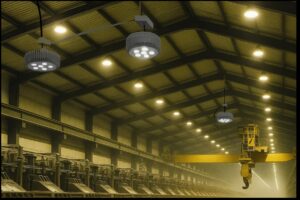
Temperature has a significant impact on LED performance and longevity. High temperatures accelerate lumen depreciation and reduce the lifespan of both LEDs and drivers.
Maintaining proper thermal conditions is essential to ensure stable performance and avoid premature failure.
Designing IP65 fixtures for high-temperature environments requires specialized materials and components. Drivers, wiring, and electronic components must be rated for elevated temperatures.
Advanced designs may include high-temperature-resistant materials and enhanced heat dissipation systems, allowing operation in environments exceeding 100°C or more.
Applications include foundries, glass manufacturing plants, and industrial baking or curing processes. These environments require lighting systems that can withstand both high temperatures and environmental contaminants.
IP65 high-temperature LED fixtures provide a reliable solution for these demanding conditions.
7.1 Reliability and Longevity
IP65 fixtures are designed to operate reliably in harsh environments. By preventing dust and water ingress, they protect internal components and reduce failure rates.
This leads to longer service life and improved system stability.
7.2 Lower Maintenance Costs
Reduced maintenance is a key advantage of IP65 lighting. Sealed designs minimize cleaning, repairs, and replacements, lowering overall operational costs.
This is especially beneficial in environments where maintenance access is difficult or hazardous.
7.3 Energy Efficiency and Performance Stability
IP65 LED fixtures offer high energy efficiency and maintain consistent performance over time. By preventing contamination of optical components, they ensure stable light output and reduce energy waste.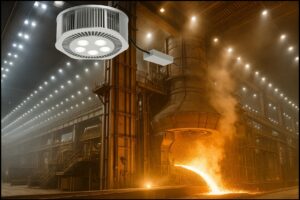
8.1 Matching IP Rating to Application Needs
Selecting the correct IP rating requires understanding the environmental conditions, including dust levels, water exposure, and temperature.
IP65 is suitable for most industrial applications, but more extreme environments may require higher ratings.
8.2 Additional Specifications to Evaluate
Other important factors include operating temperature range, impact resistance (IK rating), and corrosion resistance.
Evaluating these specifications ensures that the selected fixture meets all application requirements.
8.3 Customization Options
Modern IP65 fixtures offer customization options such as wattage, beam angles, mounting types, and control systems.
These options allow users to tailor lighting solutions to specific operational needs.
9.1 Proper Installation to Maintain IP Integrity
Correct installation is essential to maintain IP65 protection. All seals, cable glands, and connections must be properly installed according to manufacturer guidelines.
Improper installation can compromise the fixture’s protective capabilities.
9.2 Routine Inspection Guidelines
Periodic inspections should be conducted to check for seal degradation, housing damage, and other potential issues.
Early detection helps prevent failures and extends the lifespan of the lighting system.
9.3 Cleaning and Handling in Harsh Environments
Cleaning should be performed using appropriate methods that do not damage seals or surfaces. Low-pressure water and non-abrasive cleaning agents are recommended.
Proper handling ensures long-term performance and durability.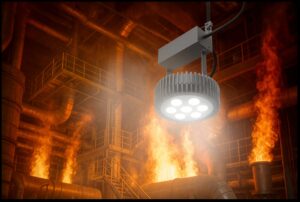
10.1 Advancements in Sealing Technologies
New materials and sealing techniques are improving the performance of IP-rated fixtures. Advanced polymers and coatings provide better resistance to environmental stress.
These innovations enable more durable and efficient lighting solutions.
10.2 Integration with Smart Monitoring Systems
Smart lighting systems with sensors and IoT capabilities allow real-time monitoring and predictive maintenance.
This improves reliability and reduces downtime.
10.3 Higher Efficiency in Harsh Environments
Ongoing improvements in LED technology are increasing efficiency even in extreme conditions.
This supports energy savings and sustainability goals.
11.1 Balancing Protection, Cost, and Performance
IP65 LED fixtures provide a balanced solution for harsh environments, offering strong protection without unnecessary complexity.
11.2 Long-Term ROI in Industrial Applications
Despite higher upfront costs, IP65 lighting delivers long-term savings through reduced maintenance and improved reliability.
11.3 Final Recommendations for Buyers and Engineers
Careful evaluation of environmental conditions and product specifications is essential. Selecting high-quality, certified IP65 fixtures ensures optimal performance and long-term value.
–The End–