
Industrial environments such as metal foundries, glass manufacturing plants, ceramic kilns, and power generation facilities routinely operate under extreme thermal conditions, where ambient temperatures can exceed 80°C and, in some localized zones, surpass 150°C or even 200°C. These elevated temperatures present significant challenges for conventional lighting systems, which are typically designed to function within standard ambient conditions of 25°C to 40°C. Under such thermal stress, traditional luminaires suffer from accelerated material degradation, reduced luminous output, and frequent component failures.
The primary issue lies in the sensitivity of lighting components—especially electronic drivers, capacitors, and semiconductor junctions—to heat. Excessive thermal exposure leads to increased junction temperatures in light sources, resulting in lumen depreciation, color shift, and shortened operational lifespan. Furthermore, high-temperature environments are often accompanied by additional stressors such as dust, vibration, corrosive gases, and humidity, compounding the risk of premature failure.
Maintenance in these environments is both costly and hazardous. Frequent lamp replacements not only increase operational expenditure but also introduce safety risks due to difficult access conditions and potential exposure to extreme heat. Therefore, the demand for lighting solutions that can maintain performance integrity under such conditions has become a critical requirement across multiple industrial sectors.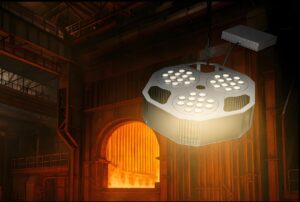
While light-emitting diode (LED) technology is widely recognized for its energy efficiency and long lifespan, standard LED systems are not inherently designed for high-temperature operation. The performance of LEDs is highly dependent on effective thermal management, as excessive junction temperatures can significantly reduce luminous efficacy and accelerate degradation mechanisms within the semiconductor material.
In typical applications, LEDs rely on ambient air and heat sink structures to dissipate heat generated during operation. However, in high-temperature environments, the reduced temperature gradient between the LED junction and the surrounding air limits heat dissipation efficiency. As a result, the internal temperature of the LED rises rapidly, leading to thermal runaway risks and premature failure.
To address these challenges, high-temperature LED solutions incorporate specialized design adaptations. These include the use of high-temperature-resistant electronic components, advanced thermal interface materials, and optimized heat dissipation structures. Additionally, driver circuits are engineered to withstand elevated temperatures, often replacing conventional electrolytic capacitors with more stable alternatives such as ceramic or film capacitors.
The growing demand for reliable lighting in extreme environments has driven significant innovation in LED technology. High-temperature LEDs are now specifically engineered to operate in ambient conditions exceeding 80°C, with some advanced systems capable of functioning reliably at temperatures up to 200°C. This evolution enables industries to leverage the energy efficiency and durability of LEDs without compromising performance in harsh thermal conditions.
A high-temperature LED is specifically engineered to maintain stable performance and reliability in environments where ambient temperatures significantly exceed standard operating conditions. Unlike conventional LED fixtures, which are typically rated for maximum ambient temperatures (Ta) of 40°C to 50°C, high-temperature LEDs are designed to operate at Ta ratings ranging from 80°C to as high as 200°C or more, depending on the application and product design.
The defining characteristic of high-temperature LEDs lies in their ability to control junction temperature (Tj), which is a critical factor influencing LED performance and lifespan. Elevated junction temperatures accelerate lumen depreciation, reduce luminous efficacy, and can lead to catastrophic failure if not properly managed. High-temperature LED systems incorporate advanced thermal pathways to ensure that heat generated at the semiconductor junction is efficiently transferred away from the critical components.
In addition to thermal resilience, these LEDs are often built with robust mechanical and electrical designs. This includes reinforced housings, high-temperature wiring, and specialized sealing materials capable of withstanding prolonged exposure to heat without degradation. The design also accounts for thermal expansion and contraction cycles, which can otherwise cause mechanical stress and failure in standard fixtures.
Ultimately, high-temperature LEDs are defined not only by their temperature rating but also by their ability to deliver consistent luminous performance, maintain color stability, and achieve extended operational lifespans under extreme thermal conditions.
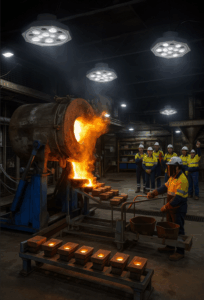
The performance of high-temperature LED systems is fundamentally dependent on the selection of materials and components that can withstand extreme thermal stress. At the core of these systems are high-performance LED chips, often mounted on ceramic substrates rather than conventional printed circuit boards (PCBs). Ceramic materials offer superior thermal conductivity and stability at elevated temperatures, enabling efficient heat transfer away from the LED junction.
Equally critical are the driver components, which regulate the electrical current supplied to the LEDs. In high-temperature applications, traditional electrolytic capacitors are often replaced with film or ceramic capacitors due to their superior thermal endurance and longer lifespan. Semiconductor devices within the driver are also selected based on their ability to operate reliably at high temperatures without significant performance degradation.
Thermal interface materials (TIMs) play a crucial role in facilitating heat transfer between components. High-temperature LEDs utilize advanced TIMs with low thermal resistance and high thermal stability to ensure efficient conduction of heat from the LED chip to the heat sink. These materials must maintain their properties over extended periods without drying out or degrading.
The housing and enclosure materials are also engineered for durability. Aluminum alloys with high thermal conductivity are commonly used for heat sinks, while surface treatments such as anodization enhance corrosion resistance. In some cases, stainless steel or specialized coatings are employed to withstand harsh industrial environments.
Effective thermal management is the cornerstone of high-temperature LED design. Given the limited effectiveness of conventional cooling methods in extreme environments, these systems rely heavily on optimized passive cooling strategies. Heat sinks are designed with increased մակ surface area and optimized geometries to maximize heat dissipation through conduction and radiation.
The thermal pathway is carefully engineered to minimize resistance at each interface, ensuring efficient transfer of heat from the LED junction to the արտաքին environment. This includes the use of բարձր conductivity materials and precision assembly techniques to eliminate օդ gaps that can impede heat flow.
In some advanced applications, active cooling methods such as forced օդ systems or liquid cooling may be employed. However, these solutions are typically reserved for highly specialized environments due to their added complexity and maintenance requirements.
Additionally, fixture design plays a significant role in thermal management. Orientation, mounting position, and surrounding airflow conditions all გავლენა the overall heat dissipation performance. High-temperature LED fixtures are often designed to operate effectively even in low-airflow environments, ensuring reliable performance regardless of installation conditions.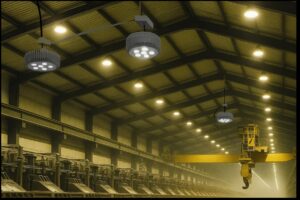
One of the most significant advantages of high-temperature LED systems is their ability to maintain high energy efficiency even under elevated ambient conditions. In conventional lighting technologies such as metal halide or high-pressure sodium lamps, efficiency drops considerably as operating temperatures rise. In contrast, high-temperature LEDs are specifically engineered to minimize thermal losses and sustain luminous efficacy across a broader temperature range.
This is achieved through optimized semiconductor materials and improved thermal pathways that reduce junction temperature fluctuations. By stabilizing the junction temperature, the LED can operate closer to its optimal efficiency point, ensuring that electrical energy is effectively converted into visible light rather than being dissipated as excess heat. High-performance systems can maintain luminous efficacy levels in the range of 130–170 lm/W, even in environments exceeding 100°C.
Furthermore, advanced driver electronics are designed to deliver stable current output under thermal stress, preventing efficiency losses caused by voltage instability. The integration of temperature compensation mechanisms also allows the system to dynamically adjust performance parameters, ensuring consistent output without excessive energy consumption.
From an operational perspective, maintaining high efficiency under extreme heat translates directly into reduced energy costs. In large-scale industrial facilities where lighting systems operate continuously, even marginal efficiency improvements can result in substantial long-term savings. This makes high-temperature LEDs not only a technically superior solution but also an economically advantageous investment.
High-temperature LED luminaires are designed with durability as a core principle, enabling them to achieve significantly longer operational lifespans compared to traditional lighting systems in harsh environments. The lifespan of an LED is typically defined by the L70 metric, which represents the point at which the light output declines to 70% of its initial value. In high-temperature applications, maintaining a দীর্ঘ L70 lifespan requires precise control of thermal and electrical stress factors.
By utilizing high-temperature-resistant components and robust thermal management systems, these LEDs can achieve lifespans exceeding 50,000 hours even under elevated ambient temperatures. The elimination of failure-prone components, such as electrolytic capacitors, further enhances reliability by reducing the likelihood of վաղ-stage component degradation.
Mechanical robustness also plays a critical role. High-temperature LED fixtures are designed to withstand thermal expansion and contraction cycles without compromising structural integrity. Sealed enclosures protect internal components from dust, moisture, and corrosive तत्व, which are often present in industrial environments.
Reliability is particularly crucial in applications where maintenance access is limited or hazardous. By minimizing failure rates and extending maintenance intervals, high-temperature LEDs contribute to improved operational continuity and reduced downtime. This reliability not only lowers maintenance costs but also enhances safety by reducing the need for frequent interventions in high-risk environments.
In high-temperature environments, maintaining consistent प्रकाश output and color characteristics is a critical requirement for operational efficiency and safety. Standard lighting systems often experience significant lumen depreciation and color shift when exposed to prolonged heat, leading to uneven illumination and reduced visibility.
High-temperature LEDs are engineered to mitigate these effects through advanced सामग्री selection and precise नियंत्रण of junction temperature. Stable thermal conditions ensure that the प्रकाश-emitting प्रक्रिया within the semiconductor remains consistent, thereby preserving both luminous intensity and spectral distribution.
Color stability is particularly important in industrial settings where accurate visual perception is required for quality control and safety निरीक्षण. High-temperature LEDs are designed to maintain a consistent correlated color temperature (CCT) and color rendering index (CRI) over time, even under extreme thermal stress.
Additionally, optical components such as lenses and diffusers are изготовлены from high-temperature-resistant materials that resist discoloration and deformation. This ensures that the प्रकाश distribution pattern remains uniform throughout the lifespan of the fixture.
The ability to deliver stable and predictable lighting performance under harsh conditions enhances productivity, reduces visual fatigue, and supports safer working environments. This makes high-temperature LEDs an essential solution for industries where lighting quality cannot be compromised.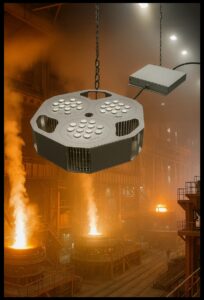
Metal halide (MH) lighting has historically been widely used in industrial environments due to its high प्रकाश output. However, MH lamps are highly sensitive to तापमान fluctuations and require controlled operating conditions to maintain performance. In high-temperature environments, MH systems suffer from reduced efficiency, prolonged warm-up times, and frequent lamp failures.
In contrast, high-temperature LEDs offer instant illumination with no warm-up delay, ensuring immediate full प्रकाश output. Their solid-state construction eliminates the जोखिम of arc tube failure, which is a common issue in MH lamps under thermal stress. Additionally, LEDs do not rely on गैस discharge mechanisms, making them inherently more stable in fluctuating तापमान conditions.
Maintenance requirements also differ significantly. MH lamps typically require replacement every 6,000 to 15,000 hours, whereas high-temperature LEDs can operate for over 50,000 hours with minimal degradation. This results in reduced maintenance frequency and lower operational costs.
From an energy perspective, LEDs provide superior efficiency, converting a higher percentage of electrical ऊर्जा into visible प्रकाश. This not only reduces energy consumption but also minimizes heat generation, further improving overall system performance in high-temperature environments.
High-pressure sodium (HPS) lighting is known for its durability and relatively long lifespan compared to other التقليدية lighting technologies. However, HPS lamps produce a monochromatic yellow प्रकाश with poor color rendering, which limits their suitability for applications requiring accurate visual perception.
High-temperature LEDs, on the other hand, offer उत्कृष्ट color rendering and a wide range of color temperature options. This enables better visibility and improved working conditions in industrial environments. Furthermore, LEDs maintain consistent color characteristics over time, whereas HPS lamps tend to exhibit color shift as they age.
Efficiency is another key differentiator. While HPS lamps are relatively efficient, their performance declines in high-temperature environments due to increased internal pressure and thermal stress. LEDs maintain higher efficiency levels and are less प्रभावित by ambient temperature variations.
Operational flexibility is also enhanced with LEDs. Features such as dimming, स्मार्ट नियंत्रण, and instant ऑन/off capability provide greater adaptability compared to HPS systems, which require warm-up and restrike periods.
When evaluating lighting solutions for high-temperature environments, total cost of ownership (TCO) is a critical factor that extends beyond initial purchase price. High-temperature LEDs offer a compelling TCO advantage due to their energy efficiency, দীর্ঘ lifespan, and reduced maintenance requirements.
Energy savings constitute a significant portion of the TCO benefits. By consuming less power while delivering equivalent or superior प्रकाश output, LEDs reduce electricity costs over the lifetime of the installation. This is particularly important in large industrial facilities where lighting systems operate continuously.
Maintenance cost reduction is another major contributor. The extended lifespan of LEDs minimizes the frequency of replacements, reducing labor costs and downtime. In hazardous environments, this also translates into improved safety and lower जोखिम exposure.
Additionally, the durability and reliability of high-temperature LEDs reduce the likelihood of unexpected failures, further enhancing operational efficiency. When combined, these factors result in a lower overall cost compared to traditional lighting solutions, making high-temperature LEDs a financially sound investment for industrial applications.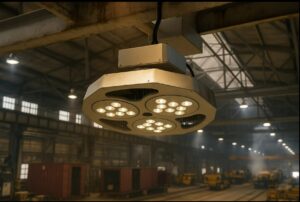
Metal smelting and foundry operations represent some of the most challenging environments for lighting systems due to extreme heat, उड़ते particles, and corrosive atmospheres. Ambient temperatures often exceed 100°C, with localized hotspots reaching significantly higher levels بالقرب of furnaces and molten metal प्रक्रियाएं.
High-temperature LEDs are ideally suited for these conditions, offering robust construction and reliable performance. Their مقاوم housings and sealed designs protect against dust and металличес debris, while advanced thermal management systems ensure stable operation despite intense heat exposure.
Consistent lighting is essential for safety and precision in foundry operations. High-temperature LEDs provide uniform illumination and stable color rendering, enabling workers to accurately monitor processes and detect potential hazards.
Glass manufacturing environments are characterized by continuous high-temperature operations, often exceeding 120°C in production zones near furnaces and forming خطوط. These conditions pose severe challenges to conventional lighting systems, which are prone to rapid degradation and failure when exposed to sustained thermal stress.
High-temperature LEDs provide a reliable lighting solution by maintaining stable الأداء under these الظروف. Their مقاوم thermal design ensures that critical components such as drivers and LED chips operate within safe limits, even when ambient temperatures are extremely elevated. Additionally, the absence of fragile filaments or الغاز-filled tubes eliminates the risk of catastrophic failure due to thermal shock.
Another key advantage is the ability of LEDs to deliver consistent and uniform illumination, which is essential for quality control in glass production. Precise visibility allows operators to detect imperfections, monitor عملية forming, and ensure product consistency. High color rendering capabilities further enhance visual accuracy, which is critical in maintaining production standards.
Moreover, the long operational lifespan of high-temperature LEDs reduces maintenance interruptions in facilities that often run 24/7. This contributes to improved productivity and lower operational costs, making LEDs a preferred choice in modern glass manufacturing plants.
Ceramic production and kiln-based processes involve extreme temperature cycling, where lighting systems are exposed to both sustained heat and periodic fluctuations. Temperatures near kilns can exceed 150°C, while surrounding areas may experience rapid changes due to heating and cooling cycles.
High-temperature LEDs are engineered to withstand such thermal cycling without compromising structural integrity or performance. The use of durable materials and flexible mounting designs allows these fixtures to absorb thermal expansion and contraction without damage. This is particularly important in preventing mechanical failures that are common in التقليدية lighting systems.
In addition, high-temperature LEDs offer superior مقاومة to dust and particulate matter, which are prevalent in ceramic manufacturing environments. Sealed enclosures with high ingress protection (IP) ratings prevent contamination of internal components, ensuring long-term reliability.
From an operational perspective, consistent and عالية-quality lighting enhances worker safety and efficiency. Proper illumination is essential for monitoring kiln operations, handling materials, and maintaining الإنتاج quality. High-temperature LEDs deliver stable प्रकाश output, reducing visual fatigue and improving overall working conditions.
Power generation facilities and boiler rooms are environments characterized by elevated ambient temperatures, high humidity, and constant vibration. Lighting systems in these areas must not only withstand heat but also operate reliably under mechanical stress and fluctuating electrical conditions.
High-temperature LEDs are well-suited for such applications due to their solid-state construction and مقاوم design. Unlike traditional lighting systems, LEDs are less susceptible to vibration-induced failures, making them ideal for installation near heavy machinery and turbines.
Thermal management is particularly critical in boiler rooms, where ambient temperatures can exceed 80°C. High-temperature LEDs maintain stable الأداء by efficiently dissipating heat and preventing overheating of sensitive components. Advanced driver designs with surge protection also ensure reliable operation in environments with unstable power supply.
Additionally, LEDs provide instant illumination, which is essential for emergency situations and maintenance operations. Their long lifespan reduces the need for frequent replacements, minimizing downtime and maintenance costs in critical infrastructure facilities.
Food processing environments, particularly those involving ovens and baking lines, present unique challenges that combine high temperatures with strict hygiene requirements. Lighting systems must be able to withstand حرارة exposure while also meeting food safety standards.
High-temperature LEDs are designed to operate reliably in these conditions, with مقاوم materials that can endure elevated temperatures without emitting harmful substances. Their sealed конструкции prevent contamination and facilitate easy cleaning, which is essential in maintaining sanitary conditions.
In addition to durability, LEDs offer excellent प्रकाश quality, enabling precise monitoring of food products during processing. Consistent color temperature and high color rendering index (CRI) allow operators to accurately assess product appearance and quality.
Energy efficiency is another महत्वपूर्ण factor in food processing facilities, where lighting systems often operate continuously. High-temperature LEDs reduce energy consumption while maintaining high performance, contributing to lower operational costs and improved sustainability.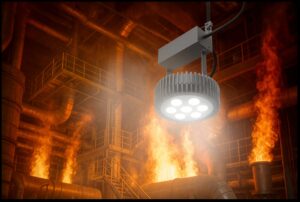
Selecting the appropriate high-temperature LED solution begins with understanding the ambient temperature rating (Ta) required for the application. This rating indicates the maximum temperature at which the fixture can operate reliably without performance degradation or failure.
It is essential to match the Ta rating of the luminaire with the actual environmental conditions, including potential तापमान spikes. בנוסף, certifications such as UL, CE, and other regional compliance standards provide assurance of product safety, quality, and performance.
Buyers should also consider testing standards and manufacturer validation տվյալ, ensuring that the المنتجات have been rigorously evaluated under real-world conditions. This helps mitigate risks associated with premature failure and ensures long-term reliability.
Luminous efficiency, typically measured in lumens per watt (lm/W), is a critical parameter in evaluating the performance of high-temperature LEDs. However, it is important to assess efficiency under actual operating conditions rather than standard laboratory settings.
High-temperature environments can affect प्रकाश output, so selecting fixtures that maintain high efficiency at elevated temperatures is essential. בנוסף, buyers should consider total luminous output and distribution patterns to ensure adequate illumination levels for the application.
Lighting design calculations, including lux level requirements and beam angle selection, play a महत्वपूर्ण role in optimizing performance. Properly selected LEDs can deliver uniform illumination while minimizing energy consumption.
The mechanical design and build quality of high-temperature LED fixtures are కీలक factors in determining their durability and performance. High-quality materials such as aluminum alloys and corrosion-resistant coatings ensure long-term reliability in harsh environments.
Ingress protection (IP) ratings are also महत्वपूर्ण, as they indicate the fixture’s resistance to dust and moisture. In industrial settings, selecting fixtures with high IP ratings helps prevent contamination and extends the lifespan of internal components.
Additionally, robust construction ensures resistance to mechanical stress, including vibration and thermal expansion. Սա is particularly important in heavy industrial applications where الظروف can be अत्यंत demanding.
The LED driver is one of the most critical components in high-temperature lighting systems, as it regulates electrical current and ensures stable operation. In extreme environments, driver reliability becomes even more important due to increased thermal and electrical stress.
High-temperature LED drivers are designed with مقاوم components that can withstand elevated temperatures without degradation. Features such as surge protection, thermal shutdown, and overvoltage protection enhance system reliability and safety.
Eliminating weak components, such as electrolytic capacitors, further improves durability. Buyers should prioritize driver الجودة and ensure that it is specifically designed for high-temperature applications.
Industrial applications often ունեն unique requirements that cannot be met by standard lighting solutions. High-temperature LEDs offer a range of customization options, including wattage selection, beam angles, mounting configurations, and temperature ratings.
Customization allows buyers to optimize lighting performance for specific environments, ensuring maximum efficiency and reliability. Additionally, tailored solutions can address unique challenges such as limited installation space or special environmental conditions.
Working with experienced manufacturers who offer engineering support and customization capabilities is essential in achieving the best results.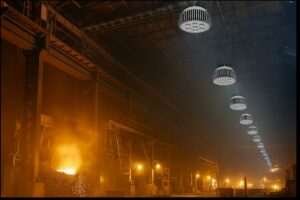
Correct installation is crucial for maximizing the performance and lifespan of high-temperature LED fixtures. Proper positioning ensures optimal heat dissipation and prevents localized overheating.
Installers should consider factors such as distance from heat sources, airflow conditions, and mounting orientation. Ensuring adequate ventilation allows heat to dissipate effectively, reducing stress on internal components.
Additionally, following manufacturer guidelines and using appropriate mounting hardware helps maintain structural integrity and safety.
Although high-temperature LEDs require less maintenance than traditional lighting systems, periodic inspection and cleaning are still necessary to ensure optimal performance. Dust accumulation and pollution can reduce heat dissipation efficiency and Light output.
Regular maintenance schedules should include cleaning of heat sinks and optical components, as well as inspection of electrical connections. Early detection of potential issues helps prevent unexpected failures and extends the lifespan of the fixtures.
Safety is a paramount concern in high-temperature environments. Lighting systems must be designed and installed to minimize risks associated with overheating, electrical faults, and mechanical failure.
High-temperature LEDs incorporate multiple safety features, including thermal protection mechanisms and robust enclosures. Compliance with industrial safety standards ensures that the fixtures can operate safely under extreme conditions.
Proper training for installation and maintenance personnel further enhances safety and reduces the risk of accidents.
Ongoing advancements in materials science are driving the development of more resilient high-temperature LED systems. Innovations such as ceramic substrates, advanced semiconductors, and high-performance thermal interface materials are improving heat.
These materials enable LEDs to operate at even higher temperatures while maintaining efficiency and reliability, expanding their applicability across more demanding industries.
The integration of smart technologies is transforming industrial lighting systems. High-temperature LEDs are increasingly equipped with sensors and IoT-enabled controls that allow real-time monitoring of performance parameters such as temperature, energy consumption, and output.
This data-driven approach enables predictive maintenance, reduces downtime, and enhances operational efficiency. Smart lighting systems also provide flexibility in allowing users to adjust lighting conditions to specific requirements.
As energy efficiency standards continue to evolve, high-temperature LEDs are expected to achieve even higher luminous efficacy levels. Improvements in chip technology and driver efficiency are contributing to reduced energy consumption and lower carbon emissions.
Sustainability is becoming a key consideration in industrial operations, and high-temperature LEDs play a significant role in supporting environmental goals. Their long lifespan and reduced maintenance requirements further minimize resource consumption and waste.
9.1 Summary of Benefits
High-temperature LEDs offer a comprehensive solution for industrial lighting in extreme environments. Their ability to maintain efficiency, reliability, and consistent performance under elevated temperatures makes them superior to traditional lighting technologies.
9.2 Why High-Temperature LEDs Are the Future
With ongoing advancements in technology and increasing demand for durable lighting solutions, high-temperature LEDs are poised to become the standard in industrial applications. Their combination of performance, efficiency, and reliability aligns with the evolving needs of modern industries.
9.3 Final Recommendations for Buyers
When selecting high-temperature LED solutions, buyers should prioritize products with proven thermal performance, high-quality components, and reliable certifications with experienced manufacturers ensures access to customized solutions and technical support.
–The End–