
Industrial facilities such as metal foundries, glass manufacturing plants, ceramic kilns, and heavy processing factories routinely operate under extreme thermal conditions that challenge conventional lighting systems. Ambient temperatures in these environments often exceed 80°C and may reach peaks of 150°C or higher due to radiant heat from furnaces, molten materials, and continuous production processes. In addition to high ambient temperatures, lighting fixtures are frequently exposed to thermal shocks, airborne particulates, corrosive gases, and mechanical vibrations. These harsh conditions create a complex operating environment where standard lighting solutions degrade rapidly, resulting in reduced illumination quality and increased failure rates. Engineers and facility managers must therefore prioritize lighting systems that are specifically engineered to withstand sustained thermal stress while maintaining consistent performance. The demand for thermal-resistant LED lighting is directly driven by the need to ensure operational continuity, worker safety, and compliance with industrial standards in such extreme environments.
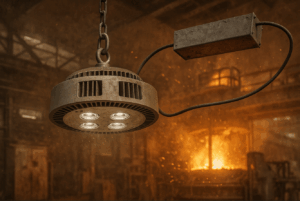
Traditional lighting technologies, including HID, fluorescent, and even standard industrial LED fixtures, exhibit significant performance limitations when deployed in high-temperature environments. Elevated temperatures accelerate the degradation of electronic components, leading to shortened lifespan and frequent maintenance requirements. In LEDs, excessive heat negatively impacts the junction temperature, which directly reduces luminous efficacy and accelerates lumen depreciation. Furthermore, conventional drivers are particularly vulnerable to thermal stress, often becoming the first point of failure. Materials such as low-grade plastics and rubber seals may deform or deteriorate under prolonged heat exposure, compromising fixture integrity and ingress protection. These limitations not only increase maintenance costs but also pose safety risks due to unexpected lighting failures in critical operational areas. As a result, relying on conventional lighting in high-heat environments often leads to increased downtime, reduced productivity, and higher total cost of ownership.
The evolution of LED technology has led to the development of thermal-resistant industrial lighting solutions specifically designed to address the challenges of extreme heat environments. These advanced systems incorporate specialized materials, optimized thermal management structures, and high-temperature-tolerant electronic components to ensure stable operation under elevated ambient conditions. Innovations such as high-conductivity heat sinks, ceramic substrates, and remote driver configurations have significantly improved the thermal resilience of modern LED fixtures. In addition, manufacturers now offer customizable thermal ratings, allowing lighting systems to be tailored for specific industrial applications. The emergence of these technologies has transformed the role of lighting from a maintenance burden into a strategic asset that enhances operational efficiency and reliability. As industries continue to demand higher performance and durability, thermal-resistant LEDs are rapidly becoming the preferred solution for harsh industrial environments.
Thermal-resistant industrial LEDs are specialized lighting systems engineered to operate reliably in environments characterized by high ambient temperatures and intense thermal radiation. Unlike standard LED fixtures, these systems are designed with enhanced thermal tolerance, allowing them to function effectively at temperatures ranging from 80°C to as high as 200°C depending on the model and application. Core characteristics include robust thermal management, high-quality materials, and stable optical performance under heat stress. These fixtures are also designed to maintain consistent lumen output and color stability, even when exposed to prolonged high-temperature conditions. Additionally, thermal-resistant LEDs often feature reinforced enclosures, high-temperature-resistant seals, and advanced driver protection mechanisms. These attributes collectively ensure that the lighting system can withstand harsh industrial conditions without compromising performance or safety.
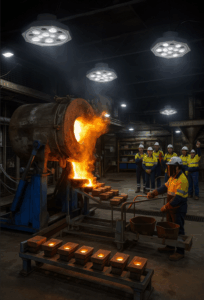
Evaluating thermal-resistant industrial LEDs requires a thorough understanding of several critical performance parameters. One of the most important metrics is the maximum ambient operating temperature rating, which indicates the highest temperature at which the fixture can operate safely. Luminous efficacy under elevated temperatures is another key consideration, as heat can significantly impact light output efficiency. Lifespan metrics such as L70 or L80 ratings must also be assessed in the context of high-temperature operation, as these values can vary significantly compared to standard conditions. Additional parameters include thermal resistance, heat dissipation efficiency, and driver reliability. Engineers should also consider factors such as color rendering index (CRI), beam angle stability, and ingress protection ratings to ensure the fixture meets application-specific requirements. A comprehensive evaluation of these parameters is essential for selecting the most suitable lighting solution for high-heat environments.
The primary distinction between thermal-resistant industrial LEDs and standard industrial LED fixtures lies in their design and material composition. Thermal-resistant LEDs utilize advanced heat dissipation technologies, such as high-performance heat sinks and optimized airflow designs, to manage heat more effectively. They also incorporate high-temperature-resistant materials, including specialized aluminum alloys and ceramic components, which provide superior durability under thermal stress. In contrast, standard LEDs are typically designed for ambient temperatures below 50°C and may not perform reliably in extreme conditions. Another key difference is the use of remote drivers or specially engineered drivers that can withstand higher temperatures. Optical components in thermal-resistant LEDs are also designed to resist deformation and discoloration caused by heat. These differences make thermal-resistant LEDs significantly more reliable and efficient in demanding industrial applications.
Effective heat dissipation is the cornerstone of thermal-resistant LED design. Engineers employ a variety of strategies to ensure that heat generated by the LED chips and surrounding environment is efficiently managed. Passive cooling systems, such as large-surface-area heat sinks and finned structures, are commonly used to maximize heat transfer. The design of these components is optimized to promote natural convection, allowing heat to dissipate without the need for active cooling systems. Thermal path optimization is another critical aspect, ensuring that heat is efficiently conducted away from the LED junction to prevent performance degradation. Advanced computational modeling techniques are often used to design and validate these systems, ensuring optimal thermal performance under real-world conditions. By prioritizing efficient heat dissipation, manufacturers can significantly extend the lifespan and reliability of LED fixtures in high-temperature environments.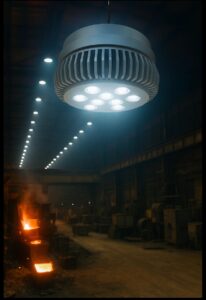
Material selection plays a crucial role in the performance and durability of thermal-resistant industrial LEDs. High-quality aluminum alloys are commonly used for heat sinks due to their excellent thermal conductivity and structural strength. In more demanding applications, ceramic materials may be employed for their superior heat resistance and electrical insulation properties. Sealing components are also critical, with silicone-based materials preferred over standard rubber due to their ability to withstand higher temperatures without degradation. Optical components, such as lenses and diffusers, are typically made from heat-resistant polymers or glass to prevent yellowing and deformation. These materials are carefully selected and tested to ensure long-term performance under extreme conditions. The use of advanced materials not only enhances thermal resistance but also contributes to the overall reliability and safety of the lighting system.
The driver is often the most vulnerable component in an LED lighting system, particularly in high-temperature environments. To address this challenge, thermal-resistant LEDs incorporate advanced driver protection strategies. One common approach is the use of remote drivers, which are installed in cooler areas away from the heat source. This significantly reduces thermal stress and extends the lifespan of the electronic components. In cases where remote drivers are not feasible, manufacturers use high-temperature-rated components and advanced thermal shielding techniques to protect the driver. Additional features may include surge protection, thermal cut-off mechanisms, and robust circuit design to ensure reliable operation. By enhancing driver durability, these systems minimize the risk of failure and ensure consistent performance in demanding industrial settings.
Maintaining optical performance under high-temperature conditions is a critical requirement for industrial lighting systems. Thermal-resistant LEDs are designed with optical components that can withstand prolonged exposure to heat without degradation. High-quality lenses made from heat-resistant materials ensure consistent light distribution and beam angle stability. These materials are specifically chosen to resist yellowing, cracking, and deformation, which can compromise lighting performance over time. In addition, advanced optical designs are used to optimize light output while minimizing thermal impact. This includes the use of reflective coatings and precision-engineered optics that enhance efficiency and uniformity. By ensuring optical stability, thermal-resistant LEDs provide reliable illumination that meets the stringent requirements of industrial applications.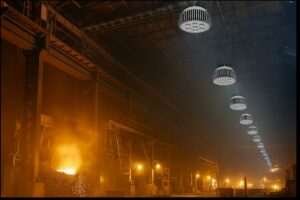
One of the most significant advantages of thermal-resistant industrial LEDs is their extended operational lifespan in high-temperature environments. By effectively managing heat and utilizing durable materials, these lighting systems can maintain performance for significantly longer periods compared to conventional solutions. This reduces the frequency of replacements and maintenance interventions, which is particularly important in industrial settings where access to lighting fixtures may be difficult or hazardous. Reduced maintenance not only lowers labor costs but also minimizes operational disruptions, allowing facilities to maintain continuous production. Over time, these benefits contribute to substantial cost savings and improved efficiency.
Thermal-resistant LEDs are designed to maintain high energy efficiency even under elevated temperatures. Unlike traditional lighting systems, which often experience significant efficiency losses in high-heat conditions, these advanced LEDs are engineered to deliver consistent luminous efficacy. This is achieved through optimized thermal management and high-quality components that minimize energy losses. As a result, facilities can achieve substantial energy savings while maintaining optimal illumination levels. This is particularly important in large industrial operations where lighting accounts for a significant portion of energy consumption. Improved energy efficiency also supports sustainability initiatives and reduces the overall environmental impact of industrial activities.
Reliable lighting is essential for ensuring safety in industrial environments, particularly in areas with high temperatures and hazardous conditions. Thermal-resistant LEDs provide consistent illumination, reducing the risk of accidents caused by poor visibility or sudden lighting failures. Their robust design ensures stable operation even under extreme conditions, enhancing overall system reliability. In addition, features such as high ingress protection ratings and impact resistance further improve safety by protecting the fixture from environmental hazards. By providing dependable lighting, these systems contribute to a safer working environment and help facilities comply with regulatory standards.
While the initial investment in thermal-resistant LED lighting may be higher than standard solutions, the long-term cost benefits are substantial. Reduced maintenance, extended lifespan, and improved energy efficiency all contribute to a lower total cost of ownership. Additionally, the reliability of these systems minimizes downtime and associated production losses, further enhancing their economic value. When evaluated over the lifecycle of the lighting system, thermal-resistant LEDs often provide a significantly higher return on investment. For industrial buyers and procurement managers, this makes them a strategic choice that aligns with both operational and financial objectives.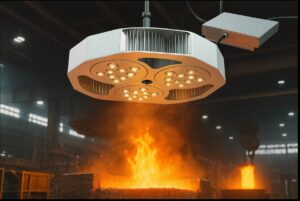
Metal smelting and foundry environments represent one of the most thermally aggressive applications for industrial lighting. Ambient temperatures frequently exceed 100°C, while localized radiant heat from furnaces and molten metal can be significantly higher. In these environments, lighting fixtures are not only exposed to extreme heat but also to metallic dust, sparks, and corrosive fumes, all of which accelerate equipment degradation. Thermal-resistant LEDs are engineered with reinforced housings, high-temperature seals, and optimized heat dissipation structures to ensure long-term reliability. Their ability to maintain lumen output stability is critical for ensuring visibility in casting lines, ladle operations, and quality inspection zones. Furthermore, consistent lighting reduces operational risks, improves worker safety, and supports precision tasks. By minimizing failure rates and maintenance interventions, these lighting systems play a key role in maintaining continuous production cycles and reducing costly downtime in foundry operations.
Glass manufacturing facilities operate continuously at extremely high temperatures, particularly around furnaces and forming lines where temperatures can exceed 150°C. Lighting systems in these areas must endure constant thermal exposure without degradation of optical or structural components. Thermal-resistant LEDs are specifically designed to address these challenges through the use of heat-stable lenses, high-conductivity materials, and advanced thermal isolation techniques. These fixtures provide consistent illumination that is essential for monitoring molten glass flow, detecting defects, and ensuring process control. Additionally, their resistance to thermal discoloration ensures long-term optical clarity, which is critical in quality-sensitive production environments. The durability of thermal-resistant LEDs reduces maintenance frequency, which is particularly valuable in glass plants where access to lighting fixtures can be difficult and hazardous. Overall, these systems enhance operational efficiency, product quality, and worker safety.
Ceramic production and kiln operations involve prolonged exposure to extreme temperatures, often exceeding 200°C in localized zones. These environments also present additional challenges such as dust accumulation, thermal cycling, and confined installation spaces. Thermal-resistant LEDs are designed to operate reliably under these conditions by incorporating high-temperature-rated components and robust thermal management systems. Their compact yet durable design allows for installation in tight spaces near kilns and firing chambers. Stable illumination is essential for monitoring firing processes, inspecting products, and ensuring consistent quality. Unlike conventional lighting, which may fail prematurely due to heat stress, thermal-resistant LEDs maintain performance over extended periods. This reliability reduces maintenance requirements and supports uninterrupted production. Furthermore, their energy efficiency contributes to lower operational costs, making them an ideal solution for energy-intensive ceramic manufacturing processes.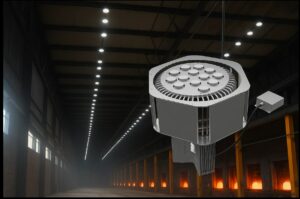
Power plants and boiler rooms are characterized by a combination of high temperatures, humidity, vibration, and airborne contaminants. Lighting systems in these environments must be capable of withstanding continuous thermal stress while maintaining reliable operation. Thermal-resistant LEDs are engineered to meet these demands through the use of sealed enclosures, corrosion-resistant materials, and high-temperature electronic components. Their robust design ensures consistent performance in areas such as turbine halls, boiler compartments, and maintenance corridors. Reliable lighting is critical for inspection, maintenance, and emergency response activities, where visibility directly impacts safety and operational efficiency. Additionally, the long lifespan of thermal-resistant LEDs reduces the need for frequent replacements, which can be challenging in complex industrial infrastructures. By providing dependable illumination under demanding conditions, these systems contribute to improved plant reliability and reduced operational risk.
Outdoor industrial installations in regions with extreme climates, such as deserts or oil and gas fields, expose lighting systems to high ambient temperatures, intense solar radiation, and environmental contaminants. These conditions can significantly impact the performance and lifespan of conventional lighting solutions. Thermal-resistant LEDs are designed to operate effectively under such الظروف by combining high-temperature tolerance with robust environmental protection. Features such as UV-resistant coatings, high IP ratings, and efficient thermal management systems ensure reliable performance even under direct sunlight and elevated ambient temperatures. These fixtures are commonly used in applications such as pipeline facilities, refineries, and remote industrial sites where maintenance access is limited. Their durability and energy efficiency make them a cost-effective solution for long-term outdoor use. By maintaining consistent illumination in harsh climates, thermal-resistant LEDs support safe and efficient operations in critical infrastructure projects.
Selecting the appropriate thermal-resistant LED begins with a thorough assessment of the ambient temperature conditions in the target environment. Engineers must consider both average operating temperatures and peak thermal loads, including radiant heat from nearby equipment. Accurate temperature mapping is essential to ensure that the selected fixture can operate within its rated limits. Choosing a fixture with insufficient thermal tolerance can lead to premature failure, while over-specifying may result in unnecessary costs. Therefore, a balanced approach that aligns product specifications with real-world conditions is critical.
The effectiveness of a thermal-resistant LED largely depends on its thermal management design. Key factors to evaluate include the size and structure of the heat sink, airflow optimization, and overall fixture geometry. High-quality designs will facilitate efficient heat dissipation, reducing thermal stress on critical components. Engineers should also consider installation conditions, such as enclosed spaces or areas with limited airflow, which may impact performance.
Compliance with industry standards and certifications is an important consideration when selecting thermal-resistant LEDs. Certifications such as IP and IK ratings provide assurance of the fixture’s resistance to dust, water, and mechanical impact. High-temperature testing certifications further validate the product’s performance under extreme conditions. Selecting certified products helps ensure reliability and compliance with regulatory requirements.
Many manufacturers offer customization options to meet specific application requirements. These may include adjustable wattage, beam angles, mounting configurations, and control systems. Customization allows engineers to optimize lighting performance for their specific environment, enhancing efficiency and effectiveness.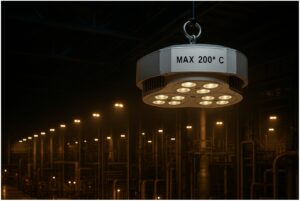
7.1 Proper Mounting and Spacing
Proper installation is essential for maximizing the performance and lifespan of thermal-resistant LEDs. Fixtures should be mounted in locations that minimize heat accumulation and allow for adequate airflow. Proper spacing between fixtures can also help reduce thermal buildup and ensure uniform illumination.
7.2 Ventilation and Airflow Considerations
Adequate ventilation is critical for effective heat dissipation. Engineers should ensure that fixtures are installed in areas with sufficient airflow to support passive cooling. In some cases, additional ventilation systems may be required to maintain optimal operating conditions.
7.3 Maintenance in High-Temperature Environments
Regular maintenance is essential for ensuring long-term performance. This includes routine inspections, cleaning of optical components, and monitoring of system performance. Proper maintenance practices can help identify potential issues early and extend the lifespan of the lighting system.
The integration of smart monitoring systems and embedded thermal sensors is transforming the way industrial lighting systems are managed in high-temperature environments. Modern thermal-resistant LEDs can incorporate temperature sensors that continuously monitor internal and ambient conditions in real time. This data can be transmitted to centralized control systems, enabling facility managers to track performance trends and identify potential issues before they lead to failure. Predictive maintenance becomes possible by analyzing temperature fluctuations, driver performance, and operating hours. In high-risk environments such as foundries or power plants, this capability significantly enhances operational reliability and safety. Additionally, automated alerts can be configured to notify maintenance teams when temperature thresholds are exceeded, allowing for proactive intervention. As digitalization continues to advance, smart thermal monitoring will become a standard feature, enabling more intelligent, efficient, and resilient industrial lighting systems.
Thermal-resistant LED lighting is increasingly being integrated into broader Industrial Internet of Things (IIoT) ecosystems. By connecting lighting systems to networked platforms, facilities can leverage advanced analytics, remote control, and system-wide optimization. Lighting fixtures can serve as data nodes, collecting and transmitting information related to temperature, energy consumption, and operational status. This integration enables centralized monitoring across multiple facilities, improving decision-making and resource allocation. In addition, IoT-enabled lighting systems can be synchronized with other industrial processes, such as automation systems and environmental controls, to enhance overall efficiency. For example, lighting levels can be dynamically adjusted based on operational requirements or occupancy, reducing energy consumption while maintaining safety standards. The convergence of lighting and IoT technologies represents a significant step toward smarter industrial infrastructure, where lighting is no longer a standalone system but an integral part of a connected ecosystem.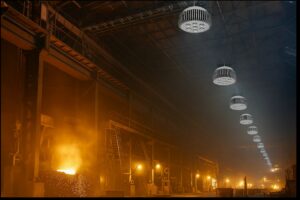
Ongoing advancements in materials science and thermal engineering are driving the next generation of thermal-resistant LED solutions. Emerging materials such as graphene-enhanced composites, advanced ceramics, and phase-change materials offer superior thermal conductivity and heat resistance compared to traditional materials. These innovations enable more efficient heat dissipation, allowing LEDs to operate at higher temperatures without performance degradation. In addition, new cooling technologies, including hybrid passive-active systems and micro-channel heat sinks, are being developed to further improve thermal management. These advancements not only enhance durability but also enable more compact and lightweight fixture designs. As research continues, the integration of these cutting-edge materials and technologies will lead to even more robust and efficient lighting solutions for extreme environments. This progress will expand the range of applications for thermal-resistant LEDs and further solidify their role as a critical component in modern industrial operations.
9.1 Strategic Importance for Industrial Operations
Thermal-resistant LEDs play a critical role in ensuring reliable and efficient industrial operations. Their ability to withstand extreme conditions makes them an essential component of modern industrial infrastructure.
9.2 Long-Term Value for Engineers and Procurement Teams
For engineers and procurement professionals, investing in thermal-resistant LEDs offers significant long-term value. These systems provide a reliable, efficient, and cost-effective solution for high-temperature environments.
9.3 Final Recommendations for Buyers
When selecting thermal-resistant LED lighting, buyers should prioritize quality, performance, and reliability. By choosing the right solution, they can achieve optimal results and maximize return on investment.
–The end–