
Industrial facilities often operate under environmental conditions that are far more demanding than typical commercial or residential spaces. Foundries, steel mills, glass manufacturing plants, ceramic kilns, and heavy manufacturing workshops frequently expose equipment to elevated ambient temperatures, radiant heat, airborne particulates, and continuous mechanical vibration. In these environments, ambient temperatures can easily exceed 50°C, while localized areas near furnaces or thermal processing equipment may reach even higher levels. Lighting systems installed in such facilities must therefore withstand sustained exposure to thermal stress while continuing to provide stable and uniform illumination.
The challenge is further intensified by the fact that lighting fixtures are often installed at considerable heights in large industrial halls, making frequent maintenance difficult and costly. High ceilings combined with harsh conditions require lighting systems capable of delivering high lumen output, long service life, and exceptional durability. Conventional lighting technologies were not originally designed for such extreme operational environments, leading to a mismatch between lighting capabilities and industrial requirements.
As industrial production continues to expand and automation increases, reliable lighting becomes a critical infrastructure component rather than a simple utility. In high-temperature environments, lighting must perform consistently without degradation in brightness or safety performance. This need has accelerated the development of specialized lighting solutions designed specifically for extreme industrial conditions.
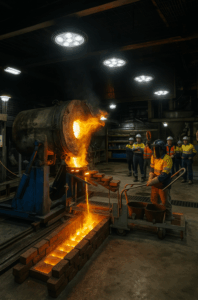
Traditional lighting technologies, including metal halide lamps, high-pressure sodium lamps, and fluorescent fixtures, have long been used in industrial facilities. However, these lighting systems exhibit several limitations when exposed to elevated temperatures. Many conventional lamps rely on components that are highly sensitive to thermal stress, including ballasts, filaments, or gas-filled tubes. When subjected to sustained heat, these components can degrade rapidly, leading to reduced efficiency and shortened operating life.
Another challenge associated with traditional lighting is heat generation within the fixture itself. High-intensity discharge lamps produce significant internal heat during operation, which further exacerbates thermal stress in already hot environments. As the surrounding temperature rises, the ability of the fixture to dissipate this heat becomes increasingly limited. This often results in lumen depreciation, color instability, and premature lamp failure.
Additionally, traditional industrial lighting systems typically require periodic bulb replacement and ballast maintenance. In facilities with high ceilings or complex machinery layouts, accessing these fixtures can be time-consuming and hazardous. Frequent maintenance interruptions can disrupt production schedules and increase operational costs. As industries strive to improve efficiency and reduce downtime, the limitations of traditional lighting technologies become increasingly evident.
Advancements in semiconductor lighting technology have enabled the development of industrial LED systems specifically engineered to operate under extreme environmental conditions. Unlike traditional lighting technologies, light-emitting diodes convert electrical energy into light with significantly higher efficiency and lower heat generation. This inherent efficiency allows LEDs to perform more reliably in demanding environments, provided that the thermal design of the fixture is properly engineered.
High-temperature LED lighting solutions incorporate specialized materials, optimized heat dissipation structures, and industrial-grade electronic components capable of tolerating elevated ambient temperatures. These systems are designed not only to survive extreme conditions but also to maintain consistent luminous output and electrical stability throughout their operational lifetime. By addressing the thermal limitations that hinder traditional lighting systems, LED technology provides a more sustainable and dependable solution for modern industrial facilities.
As industries increasingly prioritize energy efficiency, operational reliability, and workplace safety, high-temperature LED lighting has emerged as a critical innovation. Its ability to deliver long-term performance under extreme conditions makes it an ideal choice for facilities where heat, dust, and mechanical stress are unavoidable.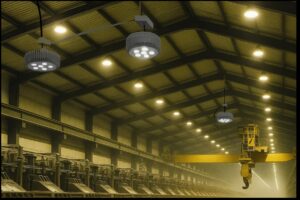
High ambient temperatures have a direct and measurable impact on the performance and reliability of electronic components within lighting systems. Semiconductor devices, including LED chips and driver circuits, are particularly sensitive to thermal stress. When exposed to elevated temperatures over extended periods, internal materials can undergo gradual degradation that alters electrical characteristics and reduces efficiency.
For LED lighting systems, the driver module is one of the most temperature-sensitive components. The driver contains capacitors, transformers, and power control circuitry that regulate electrical current supplied to the LEDs. Electrolytic capacitors, which are commonly used in driver circuits, experience accelerated aging when operating at high temperatures. Their internal electrolyte gradually evaporates or deteriorates, causing reduced capacitance and eventual failure of the power supply system.
Similarly, excessive heat can influence the junction temperature of LED chips. The junction temperature refers to the internal temperature of the semiconductor material where light generation occurs. If this temperature rises beyond optimal limits, luminous efficiency declines and the LED experiences faster lumen depreciation. Over time, this degradation can significantly reduce the usable lifespan of the lighting fixture.
The cumulative effect of thermal stress on electronic components often leads to unstable performance, flickering, or complete system failure. Therefore, managing heat is one of the most critical design considerations in industrial lighting systems intended for high-temperature environments.
One of the most immediate consequences of excessive heat exposure is a dramatic reduction in lighting system lifespan. Most lighting technologies are designed with specific operating temperature ranges in mind. When these limits are exceeded, component wear accelerates and the overall reliability of the system declines.
In conventional lighting systems, high temperatures can shorten the operational life of lamps by damaging filaments, degrading gas mixtures, or destabilizing arc discharge processes. Even in LED systems, poor thermal management can result in rapid lumen depreciation and early driver failure. When lighting systems fail prematurely, facilities must allocate additional resources for maintenance, replacement parts, and labor.
Frequent lighting failures are particularly problematic in industrial environments where fixtures are mounted at heights of 10 to 30 meters. Replacing failed lamps may require specialized lifting equipment, temporary shutdown of production areas, and strict safety procedures. These maintenance operations can significantly disrupt workflow and increase operational costs.
From a financial perspective, repeated lighting failures translate into higher total cost of ownership. In contrast, lighting systems engineered to withstand high temperatures can maintain stable performance for many years with minimal intervention. This reliability reduces maintenance frequency and supports uninterrupted industrial operations.
Adequate illumination plays a fundamental role in maintaining workplace safety within industrial environments. High temperatures can indirectly compromise safety by causing lighting systems to fail or operate below their intended brightness levels. When fixtures degrade due to thermal stress, lumen output may decline gradually, leading to insufficient lighting across work areas.
Poor lighting conditions can increase the risk of workplace accidents, particularly in environments where heavy machinery, high-speed equipment, or hazardous materials are present. Operators rely on clear visibility to monitor processes, inspect equipment, and navigate complex industrial spaces. Reduced illumination can impair visual accuracy, slow response times, and increase the likelihood of operational errors.
In addition to brightness reduction, unstable lighting performance—such as flickering or intermittent outages—can create distractions and visual fatigue for workers. Consistent, uniform lighting is essential for maintaining concentration and ensuring accurate task execution.
High-temperature-resistant lighting systems address these concerns by maintaining stable luminous output even under demanding conditions. By ensuring reliable illumination, these systems contribute directly to safer working environments and improved operational efficiency.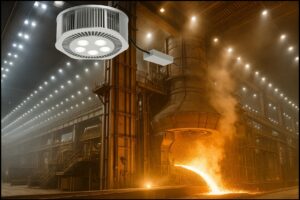
Thermal management is the cornerstone of high-temperature LED lighting design. Although LEDs are more energy-efficient than traditional lighting technologies, they still generate heat during operation. If this heat is not effectively dissipated, the internal temperature of the LED junction can rise to levels that compromise performance and durability.
To address this challenge, modern industrial LED fixtures incorporate advanced heat dissipation structures designed to rapidly transfer heat away from sensitive electronic components. One of the most common approaches involves the use of large aluminum heat sinks with high thermal conductivity. These structures increase the surface area available for heat exchange with the surrounding air, allowing thermal energy to dissipate more efficiently.
In addition to heat sinks, some high-temperature lighting systems utilize finned designs or integrated airflow channels that promote natural convection. These features enhance air circulation around the fixture, improving overall cooling performance without requiring active cooling systems. The use of thermally conductive interface materials further ensures efficient heat transfer between the LED module and the heat sink.
By combining optimized mechanical structures with high-performance thermal materials, engineers can significantly reduce operating temperatures within the fixture. This approach allows LED lighting systems to maintain stable performance even when installed in environments where ambient temperatures are exceptionally high.
Beyond thermal structure design, the selection of internal components plays a critical role in ensuring reliable operation in extreme environments. High-temperature LED lighting systems rely on industrial-grade electronic components specifically rated for elevated operating temperatures. These components include high-temperature capacitors, reinforced circuit boards, and durable wiring materials capable of maintaining electrical stability under thermal stress.
For example, capacitors used in high-temperature drivers may be rated for operating temperatures of 105°C or higher, significantly extending their service life compared to standard components. Similarly, printed circuit boards are often constructed using specialized substrates that provide improved thermal conductivity and resistance to heat-induced deformation.
Wiring insulation and connectors must also withstand high temperatures without degrading or becoming brittle. Materials such as silicone insulation or high-temperature polymers are commonly used to ensure long-term reliability. These materials maintain flexibility and electrical insulation properties even when exposed to prolonged heat.
The integration of high-temperature-resistant components ensures that every part of the lighting system contributes to overall durability. By eliminating weak points that might otherwise fail under thermal stress, manufacturers can create lighting fixtures capable of delivering consistent performance in harsh industrial settings.
The LED chip itself is the core light-generating element of any LED fixture, and its performance characteristics strongly influence the overall reliability of the lighting system. In high-temperature industrial applications, specialized LED chips are selected to ensure stable luminous output even when operating conditions are challenging.
These industrial-grade LED chips are engineered with optimized semiconductor structures that tolerate higher junction temperatures without significant efficiency loss. Advanced packaging technologies improve heat transfer away from the active semiconductor layers, reducing the risk of thermal damage. Some chips are also designed with enhanced phosphor stability to maintain consistent color temperature and color rendering over time.
In addition to thermal stability, high-performance LED chips offer high luminous efficacy, often exceeding 150 lumens per watt. This efficiency allows lighting systems to deliver powerful illumination while minimizing electrical power consumption and internal heat generation.
The combination of durable chip design and advanced thermal packaging enables LED fixtures to operate reliably in environments where conventional lighting technologies would quickly fail. As a result, specialized LED chips form the technological foundation of modern high-temperature industrial lighting solutions.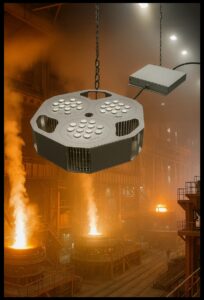
One of the most significant benefits of high-temperature industrial LED lighting is its extended operational lifespan. Unlike traditional lighting technologies that rely on fragile filaments or gas discharge processes, LEDs are solid-state devices with no moving parts. This structural simplicity makes them inherently more durable and resistant to environmental stress.
When combined with effective thermal management and high-quality components, LED fixtures can achieve operational lifetimes exceeding 50,000 hours or more. Even in high-temperature environments, properly engineered LED systems maintain stable performance for many years before requiring replacement. This longevity significantly reduces the frequency of maintenance interventions.
Extended service life is particularly valuable in large industrial facilities where lighting fixtures are installed at considerable heights. Replacing lamps in such environments often requires lifting equipment, trained maintenance personnel, and temporary production interruptions. By minimizing replacement cycles, long-life LED systems help reduce labor costs and operational disruptions.
Furthermore, stable long-term performance ensures consistent illumination levels across work areas. This reliability supports safer working conditions and helps maintain productivity in demanding industrial environments.
Energy efficiency is another key advantage of LED lighting technology. LEDs convert a greater proportion of electrical energy into visible light compared to traditional lighting sources. High-pressure sodium and metal halide lamps, for example, waste a significant portion of their energy as heat rather than useful illumination.
Modern industrial LED fixtures commonly achieve luminous efficacies between 150 and 170 lumens per watt, enabling facilities to achieve substantial energy savings. These savings can be particularly significant in large manufacturing plants where lighting systems operate continuously for extended periods.
Lower energy consumption also contributes indirectly to improved thermal performance. Because LEDs generate less waste heat during operation, the thermal load within the fixture is reduced. This helps maintain lower internal temperatures and extends the lifespan of electronic components.
Over time, reduced electricity consumption translates into measurable cost savings for industrial operators. When combined with longer service life and reduced maintenance requirements, LED lighting systems offer a compelling return on investment for high-temperature industrial applications.
Industrial environments often present multiple challenges beyond high temperatures alone. Dust, airborne particles, vibration, humidity, and corrosive chemicals can all affect the reliability of lighting equipment. High-temperature LED lighting systems are typically engineered with rugged housings and protective sealing to withstand these conditions.
Many industrial LED fixtures feature high ingress protection (IP) ratings, such as IP65 or IP66, which prevent dust and moisture from entering the internal electronics. Durable aluminum housings provide mechanical strength while also serving as effective heat dissipation structures.
Resistance to vibration is particularly important in facilities with heavy machinery or continuous mechanical motion. Solid-state LED technology is inherently more resistant to vibration than traditional lamps, which often contain fragile internal components.
By combining thermal resilience with robust environmental protection, high-temperature LED lighting systems deliver reliable illumination in some of the most demanding industrial settings.
Lighting quality directly influences worker safety and operational accuracy in industrial environments. High-performance LED lighting systems provide bright, uniform illumination that enhances visibility across large work areas. This improved lighting quality allows workers to identify hazards, monitor machinery, and perform tasks with greater precision.
LED lighting also offers instant start capability and stable brightness levels, eliminating the warm-up time associated with some traditional lamps. In situations where lighting must be restored quickly after a power interruption, this feature can be particularly valuable.
Additionally, LEDs produce minimal flicker when properly designed, reducing eye strain and visual fatigue among workers. Stable lighting conditions contribute to a more comfortable working environment and support higher levels of concentration during complex tasks.
By maintaining consistent illumination in high-temperature industrial environments, LED lighting systems help reduce accident risks and support safer workplace operations.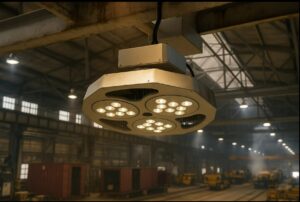
Metal smelting and foundry operations represent some of the most extreme lighting environments encountered in industry. Furnaces used for melting metals such as steel, aluminum, and copper generate intense radiant heat that can elevate surrounding ambient temperatures far beyond normal industrial conditions. In many cases, temperatures near furnace lines or casting areas may exceed 60°C, while radiant heat can directly affect nearby equipment and infrastructure.
Lighting systems installed in these facilities must therefore withstand continuous exposure to elevated temperatures while maintaining stable illumination. Conventional lighting technologies frequently experience rapid degradation in such environments, resulting in shortened lamp life and frequent maintenance interventions. High-temperature LED lighting solutions are specifically engineered to address these challenges by incorporating robust thermal management structures and heat-resistant electronic components.
In addition to thermal resilience, foundry lighting must also resist dust, smoke, and airborne metal particles generated during smelting and casting processes. Industrial LED fixtures designed for these environments typically feature sealed housings with high ingress protection ratings to prevent contamination of internal electronics.
Reliable illumination is critical for worker safety in metal processing facilities, where molten materials, heavy machinery, and complex workflows are common. High-temperature LED lighting provides consistent brightness and improved visibility, allowing operators to monitor processes accurately and respond quickly to potential hazards. As a result, LED systems have become an increasingly preferred lighting solution for modern smelting and foundry operations.
Glass manufacturing facilities present a unique combination of extreme heat, intense radiant energy, and continuous production activity. During the glass melting process, furnaces operate at temperatures exceeding 1,000°C, generating substantial radiant heat that spreads throughout surrounding work areas. Lighting systems installed in these facilities must function reliably despite this persistent thermal exposure.
Traditional lighting technologies often struggle in glass plants because high ambient temperatures accelerate component degradation and reduce lamp stability. Frequent lamp replacements are not only costly but also disruptive, especially in facilities that operate around the clock. In contrast, high-temperature LED lighting systems are designed to maintain stable performance even when installed near high-heat production lines.
Another important consideration in glass manufacturing environments is visual clarity. Workers must carefully monitor molten glass flow, inspect product quality, and control automated production equipment. Consistent, high-quality illumination is therefore essential for maintaining precision during manufacturing operations.
Industrial LED lighting solutions provide uniform light distribution and high luminous efficacy, ensuring that work areas remain well illuminated without excessive energy consumption. Their durable construction and long service life reduce maintenance requirements and allow facilities to maintain uninterrupted production schedules.
Ceramic and tile manufacturing processes rely heavily on kiln firing systems that expose production areas to sustained high temperatures. Kilns used for firing ceramic products operate at temperatures ranging from several hundred to over one thousand degrees Celsius. Although lighting fixtures are typically installed outside the kiln chamber itself, the surrounding environment can still experience significantly elevated temperatures.
Lighting systems used in ceramic plants must therefore tolerate both heat and airborne dust generated during material handling and processing. Clay particles, glazing materials, and other fine particulates can accumulate on fixtures and potentially interfere with their operation. High-temperature LED lighting systems are designed with sealed housings and durable materials that protect internal components from contamination.
Another challenge in ceramic manufacturing facilities is the large size of production halls. Kiln lines, conveyor systems, and storage areas often span extensive floor space, requiring powerful lighting capable of delivering uniform illumination across wide areas. LED high-bay fixtures provide high lumen output while maintaining excellent energy efficiency, making them well suited for such applications.
By combining durability, thermal resistance, and efficient light distribution, high-temperature LED lighting systems help ceramic manufacturers maintain safe and productive work environments. Their reliability reduces maintenance disruptions and supports consistent operation of high-temperature kiln processes.
Industrial baking and drying processes are widely used in industries such as food production, coatings, textiles, and chemical processing. These processes often involve large ovens, curing chambers, or drying tunnels that operate at elevated temperatures for extended periods. As a result, surrounding work areas may experience sustained heat exposure that can affect installed lighting equipment.
In facilities with continuous baking or curing operations, lighting systems must operate reliably without being affected by fluctuating temperatures or thermal gradients. Conventional lighting technologies may suffer from shortened lifespan in these environments due to heat buildup within fixtures and sensitive electronic components.
High-temperature LED lighting solutions provide a more resilient alternative for industrial baking and drying facilities. Their efficient design minimizes internal heat generation while advanced heat dissipation structures help maintain safe operating temperatures. Additionally, LED fixtures can be engineered to withstand ambient temperatures significantly higher than those tolerated by standard commercial lighting systems.
Stable lighting conditions are especially important in food processing and quality inspection areas where visual accuracy is critical. LED lighting offers consistent brightness, excellent color rendering, and flicker-free operation, allowing workers to perform detailed inspections and monitor production processes effectively.
By delivering dependable illumination under challenging thermal conditions, high-temperature LED lighting systems help ensure both operational efficiency and product quality in industrial baking and drying environments.
Power generation facilities and heavy machinery workshops are characterized by complex mechanical systems, high electrical loads, and significant heat output from turbines, generators, and industrial equipment. In these environments, lighting systems must function reliably despite elevated ambient temperatures and continuous mechanical vibration.
Power plants, in particular, contain numerous areas where heat accumulation is unavoidable. Boiler rooms, turbine halls, and engine maintenance areas may experience sustained high temperatures combined with airborne dust or oil vapors. Lighting fixtures installed in such locations must be capable of maintaining stable performance without frequent maintenance intervention.
High-temperature LED lighting systems offer several advantages for these demanding environments. Their solid-state construction makes them inherently resistant to vibration, while robust aluminum housings provide both mechanical durability and effective thermal management. Many fixtures also incorporate advanced sealing techniques to prevent the intrusion of dust, moisture, or industrial contaminants.
Reliable illumination is essential for technicians responsible for monitoring complex machinery and performing maintenance procedures. Adequate lighting improves visibility around equipment, reduces the likelihood of operational errors, and enhances overall workplace safety.
As power plants and heavy industrial workshops continue to modernize their infrastructure, high-temperature LED lighting has become an increasingly important component of reliable facility operations.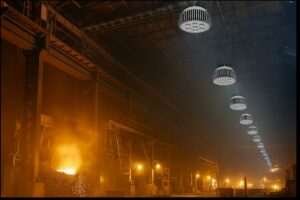
When selecting LED lighting systems for high-temperature environments, one of the most important factors to consider is the fixture’s temperature rating. This rating indicates the maximum ambient temperature at which the lighting system can operate reliably without compromising performance or lifespan. In industrial applications, fixtures may be specifically designed for ambient temperatures of 90°C, 150°C, or even 200°C depending on the severity of the environment.
Understanding these ratings requires careful evaluation of the installation location and surrounding heat sources. For example, areas near furnaces, kilns, or high-temperature machinery may require fixtures with significantly higher thermal tolerance than standard industrial lighting systems. Selecting a fixture with an insufficient temperature rating can lead to rapid component degradation, reduced luminous output, and premature failure.
Manufacturers determine temperature ratings through extensive thermal testing and component qualification. These tests ensure that internal electronics, LED chips, and housing materials can withstand sustained exposure to elevated temperatures without performance degradation. In many cases, specialized heat sinks, high-temperature drivers, and reinforced wiring are incorporated to support these extreme operating conditions.
Facility managers and engineers must carefully assess environmental conditions before selecting a lighting solution. By matching fixture temperature ratings to the actual operating environment, industrial operators can ensure reliable performance and maximize the lifespan of their lighting systems.
Another critical factor in selecting high-temperature LED lighting is luminous efficiency, typically measured in lumens per watt. This metric indicates how effectively a lighting fixture converts electrical energy into visible light. Higher luminous efficacy allows facilities to achieve the required illumination levels while minimizing energy consumption and operational costs.
In industrial environments where lighting systems operate continuously, even modest improvements in energy efficiency can result in significant long-term savings. Modern industrial LED fixtures commonly achieve efficiencies between 150 and 170 lumens per watt, making them far more energy-efficient than traditional lighting technologies such as metal halide or high-pressure sodium lamps.
Power requirements must also be considered when designing lighting systems for large industrial spaces. Facilities with high ceilings or expansive production areas may require high-power fixtures capable of delivering substantial lumen output. However, selecting excessively high wattage fixtures without proper lighting design can lead to uneven illumination and unnecessary energy consumption.
A well-designed LED lighting system balances luminous efficiency, power consumption, and light distribution to achieve optimal performance. By carefully evaluating these factors, industrial facilities can implement lighting solutions that provide both high-quality illumination and energy efficiency.
Effective heat dissipation is a defining characteristic of high-temperature LED lighting systems. Even though LEDs generate less heat than traditional lighting technologies, the heat produced must still be efficiently managed to maintain stable operation. Poor thermal management can increase the junction temperature of LED chips and accelerate the degradation of internal components.
When evaluating lighting fixtures for high-temperature environments, engineers should examine the design of the heat sink and overall thermal structure. High-quality fixtures typically incorporate large aluminum heat sinks with optimized fin structures that increase surface area for heat transfer. These fins allow heat to dissipate more efficiently through natural convection.
The quality of thermal interface materials also plays a critical role. Materials that facilitate efficient heat transfer between the LED module and the heat sink help reduce thermal resistance and maintain lower operating temperatures. Some advanced lighting systems even incorporate integrated thermal pathways that distribute heat evenly across the fixture housing.
By prioritizing fixtures with well-engineered thermal management systems, industrial operators can significantly improve the reliability and longevity of their lighting installations.
Industrial facilities vary widely in terms of layout, equipment configuration, and environmental conditions. As a result, standardized lighting products may not always provide optimal performance for every application. Custom lighting solutions allow manufacturers to tailor LED fixtures to the specific requirements of each facility.
Customization can involve adjustments to power levels, beam angles, mounting methods, or thermal protection capabilities. For example, facilities with extremely high ambient temperatures may require specialized fixtures with enhanced heat sinks or remote driver configurations to reduce internal heat buildup.
Lighting design services can also play an important role in optimizing illumination across complex industrial spaces. Engineers may use simulation software to determine the optimal placement and configuration of fixtures in order to achieve uniform lighting levels while minimizing energy consumption.
By working with lighting providers capable of delivering customized solutions, industrial operators can ensure that their lighting systems are precisely matched to the demands of their environment. This approach maximizes performance, reliability, and long-term value.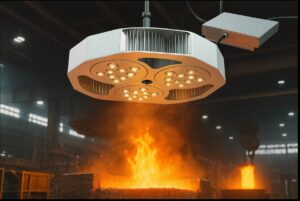
As industrial lighting technology continues to evolve, advancements in thermal management remain a central focus for engineers and manufacturers. Future high-temperature LED lighting systems are expected to incorporate increasingly sophisticated thermal design strategies that further enhance performance in extreme environments.
One area of ongoing innovation involves the development of new materials with improved thermal conductivity. Advanced aluminum alloys, graphite-based materials, and composite heat spreaders are being explored as alternatives to conventional heat sink materials. These materials can transfer heat more efficiently, allowing lighting fixtures to maintain lower internal temperatures even when installed in high-heat environments.
Another emerging approach involves optimized structural design enabled by advanced manufacturing techniques. Computational thermal modeling allows engineers to simulate airflow patterns and heat distribution within lighting fixtures, leading to more effective heat sink geometries. In some cases, additive manufacturing technologies are being used to create complex thermal structures that would be difficult to produce using traditional fabrication methods.
As these innovations continue to mature, future LED lighting systems will be capable of operating reliably in environments that were previously considered too extreme for conventional lighting equipment.
The rapid development of smart technologies and industrial automation is transforming the way lighting systems are managed within modern facilities. High-temperature LED lighting solutions are increasingly being integrated with intelligent control systems that allow operators to monitor and adjust lighting conditions in real time.
Smart lighting systems can incorporate sensors, wireless communication modules, and centralized management platforms that enable dynamic control of illumination levels. For example, lighting output can be automatically adjusted based on occupancy, production schedules, or ambient light conditions. This level of control improves energy efficiency while ensuring that work areas remain properly illuminated.
In industrial environments, smart lighting systems can also provide valuable diagnostic information. Sensors embedded within fixtures may monitor temperature, power consumption, or operational status, allowing maintenance teams to identify potential issues before failures occur. This predictive maintenance capability reduces downtime and improves overall system reliability.
As industrial facilities continue to adopt digital infrastructure and Industry 4.0 technologies, intelligent LED lighting systems will play an increasingly important role in integrated facility management.
Global industrial sectors are placing increasing emphasis on sustainability, energy efficiency, and operational reliability. As energy costs rise and environmental regulations become more stringent, facilities are actively seeking lighting solutions that reduce electricity consumption while maintaining high performance.
High-temperature LED lighting aligns closely with these objectives. Its superior energy efficiency reduces power usage, while its long service life minimizes material waste associated with frequent lamp replacements. Additionally, LED technology eliminates the use of hazardous materials such as mercury, which is commonly found in some traditional lighting sources.
The growing adoption of LED lighting in harsh industrial environments reflects a broader shift toward resilient infrastructure solutions. Industries such as metallurgy, glass manufacturing, and heavy engineering are recognizing the long-term economic and environmental benefits of upgrading their lighting systems.
As technological improvements continue to enhance durability and efficiency, the demand for high-temperature LED lighting solutions is expected to grow steadily across global industrial markets.
Industrial environments characterized by extreme heat present significant challenges for conventional lighting systems. Elevated temperatures accelerate component degradation, reduce lighting lifespan, and increase maintenance requirements, ultimately impacting operational efficiency and workplace safety. Traditional lighting technologies often struggle to maintain reliable performance under these demanding conditions.
High-temperature LED lighting systems provide a robust alternative designed specifically for harsh industrial environments. Through advanced thermal management, durable electronic components, and specialized LED chips, these lighting solutions can withstand elevated ambient temperatures while maintaining consistent illumination quality. Their long service life, energy efficiency, and environmental resilience make them well suited for applications such as foundries, glass manufacturing plants, ceramic kiln facilities, and heavy industrial workshops.
In addition to delivering dependable illumination, high-temperature LED lighting contributes to improved workplace safety by ensuring stable visibility in challenging conditions. As industries continue to modernize their operations and pursue greater efficiency, LED technology has become a critical component of reliable industrial infrastructure.
Looking forward, ongoing advancements in thermal management, smart lighting integration, and energy-efficient design will further expand the capabilities of high-temperature LED systems. These innovations will enable industrial facilities to maintain safe, productive, and sustainable operations even in the most demanding thermal environments.
–The End–