
Industrial environments present a unique set of challenges for lighting systems. Traditional lighting solutions, such as fluorescent or metal halide fixtures, often fail to deliver consistent performance under harsh operating conditions. Factors such as extreme temperatures, mechanical vibrations, dust accumulation, chemical exposure, and high humidity can significantly reduce lamp life, compromise safety, and increase maintenance costs. As industrial operations continue to scale and evolve, engineers, facility managers, and procurement professionals demand lighting solutions that can maintain high efficiency, reliability, and longevity in these severe conditions.
LED technology has emerged as a transformative solution, providing significant advantages over conventional lighting. Industrial-grade LEDs are designed specifically to withstand these rigorous conditions without compromising performance. They combine superior thermal management, robust materials, and energy-efficient designs to ensure continuous illumination in both indoor and outdoor industrial environments. Beyond durability, these LEDs offer higher luminous efficacy, lower power consumption, and reduced environmental impact, aligning with modern sustainability objectives.
This article explores the key features, technical specifications, and real-world applications of industrial-grade LEDs, providing actionable insights for engineers and procurement managers tasked with designing or upgrading industrial lighting systems. By understanding the critical design considerations and advantages of LEDs built for tough environments, decision-makers can implement lighting solutions that improve operational efficiency, enhance workplace safety, and minimize maintenance costs.
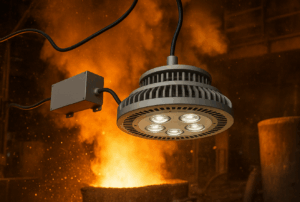
Industrial settings are inherently harsh, and lighting systems must be engineered to withstand a wide range of environmental stressors. High-temperature zones, such as foundries, steel production plants, or glass manufacturing facilities, expose lighting fixtures to constant heat, often exceeding the tolerance of standard lamps. Conversely, cold environments such as freezers or outdoor winter storage areas require LEDs that maintain optimal performance in subzero temperatures, preventing flicker or lumen depreciation.
Dust, dirt, and particulate matter are another common challenge in industrial spaces such as cement plants, mining operations, or grain silos. These airborne contaminants can accumulate on fixture surfaces, reducing luminous output and potentially causing overheating. Moisture and chemical exposure in food processing plants, pharmaceutical facilities, or chemical production sites can further degrade conventional lighting components, leading to corrosion, short circuits, or electrical failures.
Mechanical stress is also prevalent in industrial facilities. Vibrations from heavy machinery, conveyor belts, or forklifts can compromise the structural integrity of conventional lighting systems, leading to premature failures or even safety hazards. The combination of these factors emphasizes the need for purpose-built industrial LEDs that offer not only durability but also consistent light output and reliability. Choosing inappropriate lighting solutions for these environments can result in frequent maintenance, production downtime, and increased operational costs, making the selection of resilient, industrial-grade LEDs a critical consideration for any industrial operation.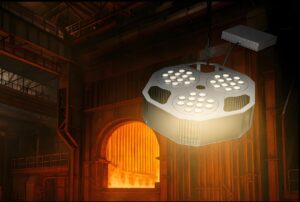
Industrial-grade LEDs are engineered with specialized features to endure extreme conditions while providing superior lighting performance. One of the most critical aspects is temperature resilience. High-performance LEDs utilize advanced thermal management systems, including high-quality heat sinks, thermally conductive materials, and optimized chip designs, enabling them to operate reliably in temperatures exceeding 50°C, while also maintaining low-temperature performance in subzero environments.
Ingress protection is another essential feature. Industrial LEDs often meet high IP ratings (IP65–IP69), ensuring they are dust-tight and resistant to water jets or chemical sprays. This protects the internal electronics from corrosion and contamination, making these fixtures suitable for wet, dusty, or chemically aggressive conditions.
Vibration and shock resistance is achieved through reinforced housings, flexible mounting systems, and internal shock-absorbing components. These design elements prevent structural damage and electrical failure in environments with heavy machinery or continuous vibration.
Industrial LEDs also provide long lifespan and reliability, with MTBF ratings often exceeding 50,000 hours under harsh operating conditions. This reduces maintenance frequency and costs, minimizing downtime in critical production areas. Coupled with energy efficiency, these LEDs deliver high lumen output per watt, often exceeding 150–170 lm/W, allowing industrial operations to reduce energy consumption while maintaining optimal illumination levels. Overall, these features ensure that industrial-grade LEDs meet the rigorous demands of modern manufacturing, processing, and logistical operations.
When selecting industrial-grade LEDs, understanding critical technical specifications is essential to ensure optimal performance. Power ratings typically range from 50W to 3000W, accommodating applications from localized task lighting to large-scale outdoor or high-bay installations. Lumen output and luminous efficacy are key metrics, with high-performance LEDs achieving 150–170 lm/W, offering superior brightness while reducing energy costs.
Color temperature is another consideration, impacting both visibility and productivity. Industrial environments often require neutral white (4000K–5000K) or cool white (5000K–6500K) lighting to enhance visual acuity, reduce eye strain, and improve safety. For specialized environments, such as laboratories or clean rooms, precise color rendering (CRI ≥ 80) ensures accurate perception of colors and materials.
Compliance with certifications and industrial standards, including UL, DLC, CE, and RoHS, ensures that the fixtures meet rigorous safety, performance, and environmental requirements. Additional features such as surge protection, dimming capability, and adjustable mounting options further enhance the versatility and durability of industrial LEDs. Evaluating these specifications allows engineers and facility managers to select fixtures that are tailored to their unique industrial environments, providing reliable performance and long-term operational efficiency.
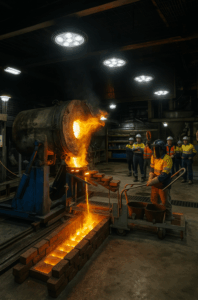
Industrial-grade LEDs find applications across a broad spectrum of environments, offering resilience and efficiency where traditional lighting often falls short. In manufacturing plants, LEDs are deployed on assembly lines, heavy machinery zones, and production areas where continuous illumination is critical for worker safety and operational precision. High-bay LEDs provide uniform light coverage in warehouses, logistics hubs, and distribution centers, improving visibility and reducing workplace accidents.
Outdoor industrial sites, including storage yards, loading docks, and construction areas, benefit from rugged LED fixtures that withstand weather extremes, dust, and vibrations from heavy equipment. Specialty environments, such as food processing facilities, chemical plants, and mining operations, require LEDs that resist moisture, corrosive chemicals, and harsh particulate exposure. These fixtures maintain consistent performance, reduce maintenance intervals, and comply with regulatory and safety standards.
By leveraging industrial-grade LEDs, facility managers can achieve reliable illumination across diverse operational conditions, enhancing both productivity and safety. Additionally, the energy efficiency of these systems contributes to lower operational costs and environmental sustainability, further supporting the goals of modern industrial operations.
Compared to traditional lighting solutions such as metal halide, fluorescent, or halogen lamps, industrial-grade LEDs offer substantial advantages. Energy efficiency is a primary benefit, as LEDs deliver significantly higher lumens per watt, reducing electricity consumption and operational costs. Traditional lamps often require frequent replacement due to short lifespans, whereas industrial LEDs provide durability exceeding 50,000 hours, minimizing maintenance frequency and costs.
Reliability and performance under harsh conditions is another advantage. Metal halide or fluorescent lamps are susceptible to heat, vibration, and dust accumulation, often resulting in flickering or complete failure. Industrial LEDs are engineered with robust housings, thermal management, and ingress protection, ensuring consistent output even in extreme environments.
LEDs also improve workplace safety and productivity, providing instant-on illumination without warm-up time, superior color rendering, and uniform light distribution. These benefits are critical in industrial settings where visibility impacts worker efficiency and operational precision. Furthermore, the total cost of ownership (TCO) for industrial LEDs is lower when factoring in energy savings, reduced maintenance, and extended service life. Overall, industrial-grade LEDs represent a smart investment for facilities aiming to enhance operational efficiency while reducing risks and long-term costs.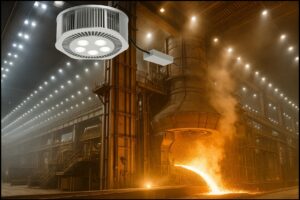
Real-world implementation of industrial-grade LEDs demonstrates their practical benefits. In one manufacturing facility, replacing metal halide high-bay lamps with industrial LEDs reduced energy consumption by 35%, while maintenance costs dropped by nearly 50% due to extended fixture lifespan. In mining operations, rugged LED fixtures improved visibility in underground tunnels, reducing workplace accidents and enhancing productivity during night shifts. Food processing plants benefit from LED solutions with high IP ratings and corrosion-resistant materials, ensuring compliance with sanitation regulations while reducing downtime caused by fixture maintenance.
These success stories highlight the versatility of industrial-grade LEDs across various sectors. Whether in heavy industry, logistics, or specialty processing, LEDs designed for tough environments offer measurable advantages in safety, energy efficiency, and operational reliability. Decision-makers can leverage these case studies to evaluate ROI and justify upgrades to more resilient lighting systems.
Selecting the right industrial-grade LED requires careful consideration of environmental factors and operational requirements. Evaluate the operational environment, including temperature ranges, humidity, dust, vibration, and chemical exposure. Check compliance with industrial standards and certifications to ensure safety and regulatory adherence. Consider customization options such as fixture power, mounting types, coverage area, and beam angle to optimize illumination for specific applications. Additionally, calculate total cost of ownership (TCO), factoring in energy savings, maintenance reduction, and fixture lifespan. A well-informed selection process ensures that industrial-grade LEDs deliver reliable performance, safety, and cost efficiency over the long term.
Industrial-grade LEDs offer a transformative solution for challenging industrial environments. Their durability, energy efficiency, and reliability address the limitations of traditional lighting systems, ensuring continuous performance under extreme conditions. By selecting LEDs designed specifically for industrial applications, engineers, facility managers, and procurement professionals can enhance workplace safety, reduce operational costs, and improve productivity. The adoption of industrial-grade LEDs is not merely a lighting upgrade—it is a strategic investment in operational resilience, sustainability, and long-term efficiency.
–The End–