
Traditional lighting technologies, including fluorescent, halogen, and standard LED fixtures, are typically designed for ambient operating temperatures between –20°C and 50°C. When exposed to industrial heat sources such as furnaces, kilns, or smelting equipment, these fixtures quickly experience performance degradation. The most vulnerable components are usually the LED drivers, electrolytic capacitors, and insulation materials.
Under elevated temperatures, electronic components may suffer from accelerated aging and reduced electrical stability. Capacitors may dry out, insulation materials can deteriorate, and circuit boards may warp or fail. Even if the LED chips themselves remain functional, the supporting electronics often fail prematurely, leading to frequent lighting outages.
Thermal stress also reduces luminous efficiency. LEDs operating beyond their recommended junction temperature experience lumen depreciation, meaning the light output drops significantly over time. In safety-critical industrial environments, inconsistent lighting can increase operational risks and reduce worker visibility.
As a result, conventional lighting fixtures installed in high-heat areas often require frequent maintenance or replacement, leading to increased downtime and higher operational costs.
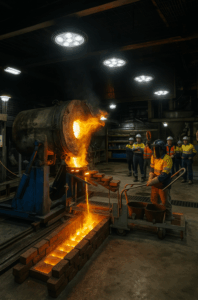
Many industrial processes generate substantial radiant heat, making it necessary to deploy lighting fixtures capable of operating under extreme temperature conditions. Facilities that commonly require 200°C-rated industrial lighting include:
In these environments, lighting fixtures may be installed near equipment that continuously emits heat. Without specialized design, conventional fixtures can fail quickly, resulting in frequent shutdowns for maintenance.
The shift toward energy-efficient industrial infrastructure has increased demand for advanced LED lighting solutions capable of performing under extreme conditions. Industrial facility managers are seeking lighting systems that combine thermal resilience, energy efficiency, and long operational life.
Compared to legacy lighting technologies such as HID lamps, modern high-temperature LEDs offer superior luminous efficiency and lower power consumption. They also provide better directional lighting control and instant start capabilities.
Additionally, the expansion of heavy industries and advanced manufacturing sectors has created new lighting challenges. Facilities operating around furnaces, heat treatment equipment, and high-temperature processing lines increasingly require specialized lighting that can operate reliably at temperatures approaching 200°C.
Effective thermal management is the foundation of any lighting system designed to operate in extreme heat. High-temperature LED fixtures incorporate carefully engineered heat dissipation structures that prevent excessive heat buildup within the fixture.
These designs often utilize heavy-duty aluminum or heat-resistant alloys that efficiently transfer heat away from critical electronic components. Passive cooling systems, including optimized heat sinks and thermal conduction pathways, help maintain stable internal temperatures without relying on mechanical fans that may fail in harsh environments.
Another key design strategy involves thermal isolation between the LED module and the driver components. By separating heat-sensitive electronics from high-temperature zones within the fixture, manufacturers can significantly extend the operational lifespan of the lighting system.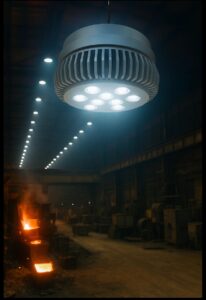
In addition to structural design, high-temperature industrial lighting relies on specially selected electronic components capable of operating under elevated temperatures.
Industrial-grade LED drivers are often built with high-temperature capacitors and reinforced circuit boards that can tolerate sustained heat exposure. Components are carefully selected to ensure electrical stability even under prolonged thermal stress.
Advanced insulation materials such as silicone encapsulants, ceramic substrates, and high-temperature wiring are also used to protect internal components. These materials maintain their structural integrity even when exposed to temperatures far beyond the limits of conventional plastics.
Through the combination of specialized electronics and heat-resistant materials, high-temperature LED fixtures achieve reliable operation in environments where ordinary lighting systems would quickly fail.
Industrial lighting fixtures operating in extreme heat environments must also withstand mechanical stress, dust, vibration, and chemical exposure.
To address these challenges, high-temperature fixtures typically feature sealed housings with high ingress protection ratings, protecting internal components from dust, moisture, and contaminants commonly found in industrial facilities.
Protective coatings may also be applied to prevent corrosion caused by chemical vapors or industrial gases. These coatings help ensure long-term durability in facilities where harsh conditions are unavoidable.
Additionally, heavy-duty mounting systems are used to secure fixtures in environments where vibration from heavy machinery could otherwise compromise lighting stability.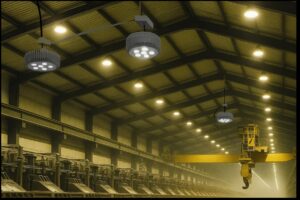
One of the most significant advantages of specialized high-temperature LED lighting is its ability to maintain consistent light output even under intense heat exposure. Advanced LED chips designed for industrial applications can operate at higher junction temperatures without significant performance degradation.
This stability ensures that production areas remain properly illuminated, which is critical for worker safety and operational efficiency. Reliable lighting also helps maintain visibility in areas where precision work or equipment monitoring is required.
Over time, these fixtures maintain higher levels of lumen output compared to traditional lighting solutions operating in the same harsh environments.
Energy efficiency is another major benefit of high-temperature LED lighting systems. Compared with traditional high-intensity discharge (HID) lamps or halogen fixtures, modern LED solutions offer significantly higher luminous efficacy.
Industrial LED fixtures designed for extreme heat environments commonly achieve luminous efficiency levels of 150–170 lumens per watt, making them far more efficient than older technologies.
This improved efficiency translates into lower energy consumption, reduced utility costs, and a smaller environmental footprint. For large industrial facilities operating hundreds of fixtures, the cumulative energy savings can be substantial.
Maintenance in high-temperature industrial areas can be difficult and costly. Equipment shutdowns may be required to access lighting fixtures installed near furnaces or production machinery.
High-temperature LED fixtures are designed for extended service life, even in harsh environments. By using durable materials and robust electronic components, these lighting systems can operate for tens of thousands of hours without significant performance degradation.
Reduced maintenance requirements not only lower operational costs but also minimize disruptions to industrial production processes.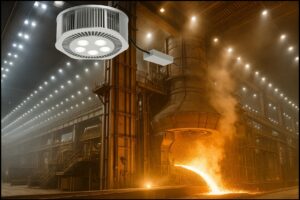
Foundries and metal processing plants generate some of the most extreme thermal conditions in industrial environments. Molten metals, furnaces, and casting processes create intense radiant heat that can quickly damage conventional lighting equipment.
High-temperature LED fixtures provide reliable illumination in these facilities, ensuring that workers can safely monitor production processes and perform maintenance tasks.
Glass manufacturing involves continuous high-temperature operations where furnaces operate at extremely elevated temperatures. Lighting systems installed near furnace areas must withstand both thermal radiation and airborne particulates.
Specialized LED fixtures designed for high-temperature environments can maintain stable performance under these demanding conditions, providing consistent illumination for inspection and production monitoring.
Ceramic manufacturing relies on kilns that operate at high temperatures during firing processes. These environments require lighting systems capable of maintaining performance without degradation from prolonged heat exposure.
High-temperature LED lighting solutions provide the durability and stability required for these industrial settings.
Food processing plants and industrial curing facilities also utilize high-temperature equipment such as ovens and curing chambers. Lighting systems in these environments must maintain both safety and operational reliability.
High-temperature LED fixtures help ensure proper illumination while meeting the stringent hygiene and safety requirements often found in food and industrial processing facilities.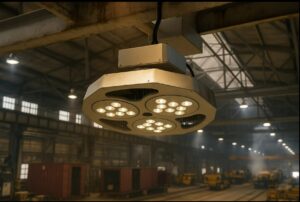
One of the most critical considerations when selecting industrial lighting is ensuring that the fixture’s temperature rating accurately reflects the operating environment.
Lighting systems designed for extreme heat should be tested and certified to operate safely under the specified temperature conditions.
Industrial environments often require high-output lighting capable of illuminating large spaces. Selecting fixtures with high luminous efficiency ensures adequate brightness while minimizing energy consumption.
Beam angle options and optical lens design also play an important role in achieving effective light distribution.
Fixtures should offer versatile mounting options suitable for high ceilings, industrial structures, or equipment installations. Ease of maintenance is also important, especially in facilities where accessing lighting systems may require specialized equipment.
6.1 Proper Placement Near Heat Sources
Even high-temperature fixtures should be installed with proper consideration for heat exposure. Maintaining a safe distance from direct heat sources helps improve fixture longevity and performance.
6.2 Electrical Protection and Wiring Considerations
Electrical connections in high-temperature environments must utilize heat-resistant cables, connectors, and insulation materials. Proper electrical protection ensures long-term safety and reliability.
6.3 Preventive Maintenance in Extreme Environments
Routine inspections and preventive maintenance programs help ensure that lighting systems continue operating reliably in harsh industrial conditions.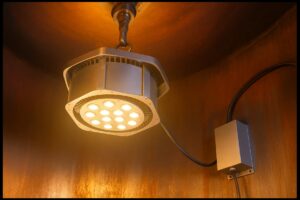
7.1 Innovations in Heat-Resistant Materials
Ongoing advancements in materials science are enabling the development of lighting fixtures capable of operating under even more extreme conditions. New alloys, ceramics, and thermal interface materials are improving heat resistance and durability.
7.2 Smart Monitoring and Predictive Maintenance
The integration of smart sensors and industrial IoT technologies is transforming the way industrial lighting systems are monitored and maintained.
Lighting fixtures equipped with temperature sensors and performance monitoring capabilities can provide real-time data, allowing facility managers to detect potential issues before failures occur.
7.3 Expanding Applications Across Heavy Industry
As industrial processes become more advanced, the demand for reliable lighting solutions capable of withstanding harsh environments will continue to grow. High-temperature LED lighting is expected to play an increasingly important role across industries such as petrochemicals, advanced manufacturing, and materials processing.
Reliable lighting is essential for maintaining safe and efficient operations in high-temperature industrial environments. Conventional lighting technologies often struggle to perform under extreme heat, leading to frequent failures and costly maintenance.
High-temperature LED fixtures engineered to operate under temperatures up to 200°C provide a durable and energy-efficient solution for these demanding applications. Through advanced thermal management, specialized electronics, and robust structural design, these lighting systems deliver consistent illumination even in the harshest industrial conditions.
As industrial facilities continue to modernize and prioritize efficiency, high-temperature LED lighting will remain a critical component of reliable infrastructure in extreme environments.
–The End–