
Extreme heat industrial environments present one of the most challenging operating conditions for lighting systems. Facilities such as foundries, glass plants, kiln lines, and heavy manufacturing workshops routinely expose luminaires to ambient temperatures far beyond standard commercial ratings. In these harsh settings, lighting is not merely a convenience—it is a critical infrastructure component directly influencing worker safety, operational accuracy, equipment monitoring, and regulatory compliance. Insufficient or unreliable illumination can lead to accidents, reduced productivity, and compromised product quality.
Traditional lighting technologies, including high-intensity discharge (HID), halogen, and fluorescent fixtures, were not originally engineered for sustained exposure to elevated thermal loads. Their internal components degrade rapidly under heat stress, leading to shortened service life, unstable output, and increased maintenance frequency. Furthermore, conventional lamps generate significant heat themselves, compounding thermal challenges rather than mitigating them.
Advances in solid-state lighting have introduced high-temperature-rated LED luminaires specifically designed for harsh environments. These modern systems combine high luminous efficacy with advanced thermal engineering, allowing them to maintain stable performance even when ambient temperatures exceed 90°C, 150°C, or in specialized cases, 200°C. As industries pursue energy efficiency, operational reliability, and sustainability targets, replacing legacy fixtures with heat-resistant LED technology has become a strategic infrastructure upgrade rather than a simple lighting retrofit.
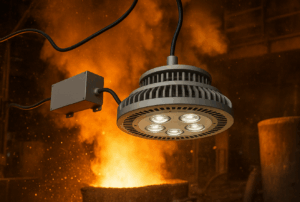
Extreme heat zones exist across multiple industrial sectors where production processes inherently generate high thermal output. Metal smelting facilities, for example, operate furnaces exceeding 1,000°C, creating ambient air temperatures that can easily surpass 80–120°C in surrounding areas. Glass manufacturing plants expose lighting systems to radiant heat from molten materials and combustion chambers, while ceramic kilns maintain sustained firing cycles that raise local atmospheric temperatures for extended durations.
Industrial baking and curing lines also produce persistent heat concentrations, particularly in food processing and coatings industries. In these settings, luminaires may be installed directly above ovens, drying tunnels, or thermal chambers, exposing them to continuous thermal radiation rather than occasional spikes. Such environments differ significantly from ordinary industrial spaces because the temperature stress is constant, not intermittent.
Another defining characteristic is the spatial variability of temperature. A single facility may contain zones ranging from moderate to extreme heat, requiring lighting systems tailored to each micro-environment. Standard fixtures rated for 40–50°C ambient conditions cannot survive in these areas, leading to frequent failure and safety risks. Consequently, lighting equipment used in high-temperature industrial zones must be engineered as purpose-built systems rather than modified general-purpose fixtures.
High temperature is only one of several environmental stressors present in harsh industrial settings. Extreme heat zones frequently combine multiple damaging conditions that collectively accelerate equipment degradation. Thermal cycling is a major factor: machinery startup and shutdown cycles can cause rapid temperature fluctuations, inducing expansion and contraction in fixture materials. Over time, this mechanical stress weakens seals, loosens connections, and leads to structural fatigue.
Dust and airborne particulates are also common. Foundries and manufacturing plants often release fine metallic or mineral particles that can infiltrate poorly sealed luminaires. When combined with high temperatures, these contaminants can accumulate on internal components, reducing heat dissipation efficiency and increasing the risk of electrical failure. Corrosive atmospheres present another hazard, especially in facilities where chemicals, vapors, or salt-laden air are present.
Continuous operation further intensifies these stress factors. Many heavy industrial facilities run 24 hours a day, meaning lighting systems must perform reliably without cooling periods. Unlike office or commercial installations, there is no opportunity for thermal recovery. Under such conditions, only luminaires specifically engineered for high-temperature endurance—with robust materials, advanced sealing, and optimized thermal pathways—can maintain long-term reliability.
Conventional lighting technologies are inherently vulnerable to elevated temperatures because their core components rely on materials and electronics that degrade rapidly under thermal stress. HID lamps, for instance, depend on arc tubes and gas mixtures that become unstable when ambient temperatures exceed design limits. Excessive heat alters internal pressure conditions, leading to reduced light output, color instability, and premature failure.
Fluorescent lamps suffer similar issues. Their ballasts are particularly sensitive to heat, as insulation materials inside electronic drivers deteriorate at high temperatures. Once insulation integrity declines, electrical leakage and component burnout become likely. Halogen lamps, although tolerant of heat generated internally, are not designed to withstand high external ambient temperatures for extended periods. Continuous exposure accelerates filament evaporation and glass envelope weakening.
Another vulnerability lies in sealing materials. Traditional fixtures often use rubber gaskets or polymer seals that lose elasticity when exposed to heat, allowing dust and moisture ingress. This compromises both electrical safety and optical performance. Ultimately, the combined effects of material degradation, electrical instability, and mechanical stress make traditional lighting unsuitable for extreme heat zones without frequent replacement.
Energy efficiency is a major limitation of legacy lighting technologies, particularly in high-temperature environments. HID and halogen lamps typically deliver lower lumens per watt compared to modern LED systems, meaning they require higher electrical input to produce equivalent illumination. This inefficiency translates directly into increased operational costs, especially in facilities operating continuously.
Moreover, conventional lamps convert a large proportion of electrical energy into heat rather than visible light. In extreme heat zones, this additional thermal output is detrimental because it raises ambient temperature further, placing extra strain on cooling systems and nearby equipment. The lighting itself becomes a secondary heat source, worsening environmental conditions for both workers and machinery.
Inefficient lighting also impacts infrastructure requirements. Higher wattage systems necessitate heavier wiring, larger transformers, and more robust circuit protection. Over time, these additional electrical demands increase capital and maintenance expenses. From an energy management perspective, replacing inefficient fixtures with high-efficacy LED luminaires can significantly reduce power consumption, decrease heat generation, and improve overall facility efficiency.
Maintenance is particularly complex in extreme heat zones due to accessibility and safety constraints. Traditional fixtures that fail frequently require technicians to enter hazardous environments for replacement or repair. In facilities such as smelting plants or kiln operations, accessing luminaires may involve shutting down production lines, using specialized protective equipment, or waiting for equipment to cool. Each maintenance intervention therefore incurs operational downtime and labor costs.
Frequent lamp replacement also increases inventory management requirements. Facilities must stock spare bulbs, ballasts, and fixtures to ensure uninterrupted operation. Over time, these recurring costs can exceed the initial purchase price of the lighting system. Furthermore, maintenance activities in high-temperature zones expose personnel to risks including burns, heat exhaustion, and exposure to airborne contaminants.
Reliability is therefore a key metric in these environments. Lighting systems must operate for extended periods without intervention. Traditional fixtures, with shorter lifespans and higher failure rates under heat stress, cannot meet these reliability requirements efficiently. This limitation is one of the primary drivers behind industrial transitions to LED technology.
Safety considerations are paramount in extreme heat environments, and traditional lighting technologies present multiple hazards. Glass envelopes in HID and halogen lamps can weaken when exposed to high temperatures, increasing the likelihood of rupture. A shattered lamp not only causes immediate darkness but can also release hot fragments, posing injury risks and potential fire hazards.
Lumen depreciation is another safety concern. As conventional lamps age—particularly under thermal stress—their light output diminishes significantly. Reduced illumination can impair visibility for workers operating heavy machinery or handling hazardous materials. Poor visibility increases the probability of accidents, equipment damage, and production errors.
Electrical instability also becomes more likely as components degrade. Overheated ballasts and wiring insulation can lead to short circuits or sparks, which are especially dangerous in environments containing flammable dust or vapors. In contrast, lighting systems engineered specifically for high-temperature operation incorporate reinforced housings, stable drivers, and thermal protection mechanisms that reduce these risks. Ensuring lighting reliability is therefore not only an operational requirement but a critical safety imperative.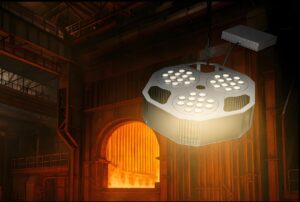
High-temperature LED luminaires are engineered with specialized thermal management systems that enable stable operation in environments far beyond the limits of conventional lighting. Unlike legacy lamps that rely on fragile internal structures, LEDs use solid-state semiconductor chips mounted on thermally conductive substrates. This architecture allows heat to be transferred efficiently away from sensitive components.
Advanced heat sink designs play a central role in this capability. Industrial-grade LED fixtures often incorporate finned aluminum or alloy housings optimized through computational thermal simulations. These structures maximize surface area and airflow, enabling passive cooling without the need for moving parts. High-temperature-rated drivers are also used, featuring components capable of withstanding elevated ambient conditions without electrical drift or failure.
The result is a lighting system that maintains consistent performance even under continuous exposure to extreme heat. Stable junction temperatures preserve luminous efficacy, color consistency, and lifespan. This reliability is essential in industrial environments where lighting interruptions are unacceptable. By integrating thermal tolerance into every layer of design—from materials to electronics—LED technology provides a robust solution for harsh applications.
One of the most compelling advantages of LED lighting is its superior energy efficiency. Modern industrial LEDs can achieve luminous efficacy levels exceeding 150 lumens per watt, significantly outperforming traditional HID or halogen lamps. This efficiency reduces power consumption while delivering equal or higher illumination levels, making LED retrofits a cost-effective upgrade for facilities seeking to reduce operating expenses.
Lower power usage also translates into reduced heat generation. Because LEDs convert a larger portion of electrical energy into visible light rather than infrared radiation, they contribute less additional heat to already hot environments. This characteristic is particularly valuable in extreme heat zones, where minimizing thermal load can improve worker comfort and protect sensitive equipment.
Energy efficiency further supports sustainability objectives. Reduced electricity consumption lowers greenhouse gas emissions associated with power generation, helping organizations meet environmental targets and regulatory requirements. Over the lifespan of an LED fixture, the cumulative energy savings can be substantial, often resulting in a rapid return on investment compared to legacy lighting systems.
Longevity is a defining advantage of LED technology, especially in high-temperature environments where maintenance access is difficult. Industrial-grade LEDs are commonly rated for operational lifespans exceeding 50,000 hours, and specialized high-temperature models can maintain reliable performance even under continuous exposure to extreme ambient conditions. This durability stems from the absence of fragile filaments or gas-filled tubes, which are typical failure points in conventional lamps.
LED degradation occurs gradually rather than catastrophically. Instead of suddenly burning out, LED luminaires experience slow lumen depreciation over time. This predictable performance allows maintenance teams to schedule replacements proactively, avoiding unexpected outages. In contrast, traditional lamps may fail abruptly, disrupting operations and requiring immediate intervention.
Extended lifespan also reduces lifecycle costs. Fewer replacements mean lower labor expenses, reduced spare-parts inventory, and less downtime. In hazardous environments, minimizing maintenance interventions is especially valuable because it reduces worker exposure to dangerous conditions. Consequently, long-life LED fixtures provide both economic and safety benefits.
Safety and reliability are fundamental design priorities for high-temperature LED lighting systems. Industrial luminaires are typically constructed with impact-resistant housings, reinforced lenses, and vibration-tolerant mounting structures. These features ensure that fixtures remain operational even in environments subject to mechanical stress, heavy machinery movement, or structural vibration.
Instant start capability is another important advantage. Unlike HID lamps that require warm-up time, LEDs achieve full brightness immediately upon activation. This characteristic is critical in industrial settings where lighting must respond instantly after power interruptions. Stable performance also ensures consistent illumination levels, which is essential for tasks requiring precision and visibility.
Many high-temperature LED fixtures include integrated protection circuits that guard against overvoltage, overheating, and electrical surges. These safeguards prevent damage to internal components and reduce fire risks. By combining mechanical durability, electrical stability, and thermal resilience, LED lighting systems deliver a level of reliability unattainable with traditional technologies.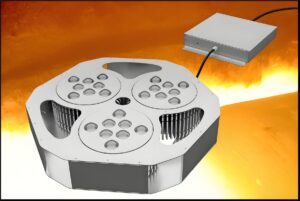
Materials selection is one of the most critical engineering factors determining whether a luminaire can withstand extreme heat environments. High-temperature LED fixtures are constructed using advanced alloys and thermally stable polymers specifically chosen for their resistance to deformation, oxidation, and thermal fatigue. Aluminum alloys with high thermal conductivity are commonly used for housings because they efficiently transfer heat away from internal components while maintaining structural integrity under elevated temperatures.
Optical components must also be engineered for heat resistance. Standard plastics used in commercial lighting can warp or discolor when exposed to prolonged high temperatures. In contrast, industrial high-temperature fixtures often employ borosilicate glass or high-performance optical polymers capable of maintaining transparency and mechanical strength under thermal stress. These materials ensure consistent light distribution and prevent optical degradation over time.
Sealing materials are equally important. Silicone gaskets and fluoropolymer seals are frequently used instead of conventional rubber because they retain elasticity at higher temperatures. This prevents cracking and maintains ingress protection, ensuring dust and contaminants cannot enter the luminaire. Through careful material engineering, high-temperature LED fixtures achieve durability that conventional lighting cannot match.
Thermal management is the foundation of high-temperature luminaire design. Even though LEDs are efficient, they still generate heat at the semiconductor junction. If this heat is not effectively dissipated, it can reduce efficiency, alter color characteristics, and shorten component lifespan. Therefore, industrial-grade fixtures incorporate advanced passive cooling architectures that maintain safe operating temperatures without relying on fans or moving parts.
Heat sinks are engineered using computational fluid dynamics modeling to optimize airflow and maximize convective cooling. Fin geometry, spacing, and orientation are carefully calculated to dissipate heat efficiently even in environments where ambient temperatures are already elevated. In extreme heat zones, the goal is not simply cooling but maintaining thermal equilibrium so that internal temperatures remain within safe operating limits.
Thermal interface materials also play a key role. High-performance conductive pads and pastes ensure efficient heat transfer between LED chips, circuit boards, and housing structures. This layered thermal pathway allows heat to move quickly away from sensitive electronics and disperse into the surrounding environment. Such integrated thermal engineering enables LED luminaires to maintain stable performance even under continuous high-temperature exposure.
The protective housing of a high-temperature LED fixture must serve multiple functions simultaneously: mechanical protection, environmental sealing, and thermal dissipation. Industrial housings are typically constructed with thick-walled metal bodies designed to withstand impacts, vibrations, and structural stresses common in heavy manufacturing facilities. Reinforced brackets and mounting systems ensure fixtures remain stable even in environments subject to machinery movement or airflow turbulence.
Ingress protection ratings are essential in harsh industrial zones. Dust, moisture, and chemical vapors can quickly damage internal electronics if a fixture is not properly sealed. High-temperature LED luminaires often feature IP65, IP66, or higher ratings, indicating strong resistance to particulate intrusion and water exposure. This protection is achieved through precision machining, gasket compression systems, and corrosion-resistant coatings.
Surface treatments such as anodizing or powder coating further enhance durability. These finishes protect metal surfaces from oxidation and chemical attack while also improving heat radiation properties. The result is a housing that not only shields internal components but also contributes to overall thermal performance. Such integrated design ensures reliable operation in environments where conventional fixtures would quickly fail.
Electrical reliability is another essential requirement for lighting systems operating in extreme heat zones. High temperatures can accelerate insulation breakdown, increase resistance in conductors, and destabilize electronic circuits. To address these challenges, high-temperature LED fixtures incorporate drivers and control components specifically rated for elevated ambient conditions.
Industrial drivers are designed using high-grade capacitors, resistors, and semiconductors capable of maintaining stable electrical characteristics at high temperatures. These components are selected for low thermal drift, ensuring consistent current delivery to LED chips. Stable current regulation is critical for preserving light output, color consistency, and overall lifespan.
Surge protection is also integrated to safeguard against voltage spikes caused by heavy machinery or power fluctuations. In industrial facilities, electrical noise and transient surges are common, and without proper protection they can damage lighting systems. Wide-voltage input capability further enhances reliability, allowing fixtures to operate safely across varying power conditions. By combining thermal resilience with electrical stability, these advanced systems ensure uninterrupted illumination in demanding environments.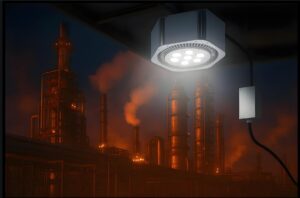
When comparing traditional lighting technologies with high-temperature LED systems, several performance metrics clearly demonstrate the superiority of modern solid-state solutions. Energy consumption is one of the most measurable differences. LED fixtures typically require significantly less wattage to achieve the same illumination levels, resulting in immediate reductions in power usage and operating costs.
Maintenance intervals also differ dramatically. Traditional lamps may require replacement every few thousand hours in high-temperature environments, whereas LED luminaires can operate for tens of thousands of hours with minimal degradation. This extended service life reduces labor requirements, spare parts inventory, and production interruptions.
Cost-of-ownership analysis reveals that although LED fixtures may have higher upfront costs, their long-term financial benefits outweigh initial investment. Lower energy consumption, reduced maintenance, and longer lifespan collectively produce substantial savings over time. Environmental impact is another important consideration. LEDs contain no mercury or hazardous gases and generate less waste due to their longevity. Consequently, organizations transitioning from legacy lighting to LED technology often realize improvements not only in operational efficiency but also in sustainability performance and regulatory compliance.
Proper installation begins with a comprehensive assessment of the target environment. Measuring ambient temperature is essential, as extreme heat zones may vary significantly within the same facility. Thermal mapping can identify hotspots where specialized high-temperature-rated fixtures are required. Without accurate environmental data, selecting appropriate luminaires becomes guesswork, potentially leading to premature failure.
Mounting height and spacing must also be evaluated. High ceilings or large industrial halls require fixtures with sufficient lumen output and appropriate beam angles to ensure uniform illumination. Reflective surfaces, obstructions, and machinery placement should be considered during planning to prevent shadows or glare.
Electrical infrastructure is another factor. Existing wiring, voltage supply, and circuit capacity must be reviewed to ensure compatibility with new fixtures. Conducting a thorough site assessment allows engineers to design a lighting system tailored to the facility’s specific thermal and structural conditions, ensuring optimal performance and longevity.
Selecting the correct luminaire for extreme heat environments requires careful evaluation of multiple technical specifications. Temperature rating is the primary criterion. Fixtures must be chosen according to the highest expected ambient temperature, whether 90°C, 150°C, or 200°C. Selecting a unit with insufficient rating can result in rapid degradation or failure.
Beam angle and light distribution are also critical. Narrow beams may be appropriate for high mounting heights, while wider angles provide uniform coverage in lower installations. Lumen output should be calculated based on task requirements, ensuring adequate visibility without excessive brightness or glare.
Material quality, ingress protection rating, and driver specifications must also be verified. Industrial buyers should prioritize fixtures certified for harsh environments and tested for thermal endurance. Careful selection ensures that installed lighting will deliver reliable performance throughout its operational life, minimizing maintenance and maximizing return on investment.
Compliance with industrial standards is essential for any lighting system used in extreme environments. Regulatory requirements may include electrical safety certifications, thermal endurance testing, and environmental protection ratings. These standards ensure that fixtures meet minimum safety and performance thresholds before deployment in hazardous conditions.
Certification bodies often evaluate luminaires for resistance to heat, vibration, dust, and moisture. Compliance demonstrates that the product has undergone rigorous testing and is suitable for demanding applications. In regulated industries such as manufacturing, mining, or chemical processing, using certified equipment is not only recommended but often mandatory.
Adhering to recognized standards also simplifies inspection and approval processes. Facilities equipped with compliant lighting systems can more easily meet workplace safety regulations and insurance requirements. Consequently, selecting certified high-temperature LED fixtures is a critical step in ensuring both operational reliability and regulatory conformity.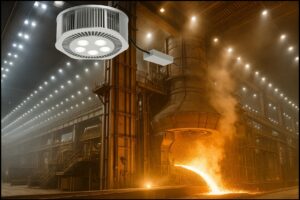
Replacing traditional lighting with high-temperature LED systems provides measurable financial benefits. Energy savings are typically the most immediate advantage. Because LEDs consume less power for the same light output, facilities can reduce electricity expenses significantly, especially in operations running continuously. Over time, these savings accumulate into substantial cost reductions.
Maintenance cost reduction is another major contributor to return on investment. Longer lifespan means fewer replacements, lower labor expenses, and reduced downtime. In hazardous environments where maintenance access is difficult, minimizing service interventions can save considerable resources.
Improved illumination also enhances productivity. Workers can perform tasks more accurately and safely when lighting is stable and uniform. This can lead to fewer errors, improved product quality, and increased operational efficiency. Payback periods for LED retrofits in industrial facilities are often relatively short, particularly when energy and maintenance savings are combined. As a result, upgrading to high-temperature LED lighting is not only a technical improvement but also a financially strategic decision.
Real-world applications demonstrate the practical advantages of replacing traditional fixtures with LED technology in extreme heat zones. In metal processing plants, retrofitting HID luminaires with high-temperature LEDs has resulted in improved visibility and reduced maintenance frequency. Operators report fewer lighting failures and more consistent illumination across production floors.
Glass manufacturing facilities have also benefited from LED upgrades. The intense radiant heat generated by furnaces previously caused frequent lamp failures, leading to costly downtime. After installing specialized LED fixtures, these facilities experienced longer service intervals and lower energy consumption.
Outdoor industrial installations in harsh climates represent another successful application. Facilities exposed to both high ambient temperatures and direct sunlight require lighting capable of withstanding extreme environmental stress. High-temperature LED luminaires designed for such conditions provide reliable performance while reducing operating costs. These case examples illustrate how advanced lighting technology can transform challenging environments into safer and more efficient workplaces.
The evolution of industrial lighting continues as new technologies emerge. Smart monitoring integration is becoming increasingly common, allowing facilities to track fixture performance, temperature, and power consumption in real time. Predictive maintenance systems can analyze this data to detect early signs of component degradation, enabling proactive servicing before failures occur.
Material science innovations are also advancing the field. New thermal interface compounds and heat-resistant composites are being developed to improve heat dissipation and extend fixture lifespan. These materials will enable future luminaires to operate reliably at even higher ambient temperatures.
LED chip efficiency continues to improve as well. Higher efficacy means more light output with less power consumption and lower heat generation. As semiconductor technology advances, industrial lighting systems will become increasingly efficient, durable, and intelligent. These trends indicate that LED technology will remain the dominant solution for extreme heat environments for years to come.
Extreme heat zones present one of the most demanding challenges for industrial lighting systems. Traditional fixtures, originally designed for moderate environments, struggle to maintain reliability, efficiency, and safety under sustained thermal stress. Their limitations in lifespan, energy consumption, and maintenance requirements make them increasingly unsuitable for modern industrial operations.
High-temperature LED technology offers a comprehensive solution. Through advanced materials, engineered thermal management, and robust electrical design, these luminaires deliver stable performance even in environments exceeding conventional limits. Their energy efficiency, long lifespan, and reduced maintenance requirements translate into measurable operational and financial benefits.
For industrial operators seeking to enhance safety, productivity, and sustainability, replacing traditional lighting with purpose-built LED systems is a strategic upgrade rather than a simple equipment change. As technology continues to evolve, high-temperature LED lighting will play an increasingly vital role in supporting efficient and resilient industrial infrastructure.
–The End–
SEO Keywords
high temperature LED lighting, industrial LED retrofit, extreme heat lighting solutions, heat resistant LED fixtures, industrial lighting upgrade, high temperature luminaire, LED vs HID industrial lighting, harsh environment lighting, thermal resistant lighting systems, industrial lighting efficiency
–The End–