
Industrial environments exposed to elevated temperatures represent one of the most demanding operating conditions for electrical infrastructure, and lighting systems are among the most vulnerable components. High-heat zones are commonly found in heavy manufacturing facilities, metallurgical plants, glass production lines, ceramics processing factories, and thermal treatment workshops. In these environments, ambient temperatures may routinely exceed the design tolerance of conventional luminaires, leading to rapid degradation, unstable illumination, and frequent system failure. Lighting in such facilities is not merely for visibility; it directly affects operational precision, inspection accuracy, worker safety, and production continuity.
Traditional lighting technologies, including HID, halogen, and standard commercial LED fixtures, are typically engineered for moderate ambient conditions. When exposed to intense radiant heat, these systems experience accelerated material fatigue, electronic instability, and optical distortion. Over time, this results in reduced luminous output, inconsistent color rendering, and sudden outages that can disrupt workflow and increase accident risk. Consequently, facilities operating in high-temperature zones require specialized lighting solutions designed to withstand sustained thermal stress while maintaining performance consistency.
High-temperature LED lighting systems address these challenges through purpose-engineered materials, advanced thermal management structures, and industrial-grade electronic components. These fixtures are specifically designed to operate reliably in environments where standard lighting would fail prematurely. As industrial facilities increasingly prioritize operational efficiency, sustainability, and worker safety, upgrading to thermally resilient lighting infrastructure has become a strategic investment rather than a discretionary improvement. Understanding the technological principles, performance advantages, and implementation considerations of high-temperature LED systems is therefore essential for facility engineers, plant managers, and procurement professionals seeking long-term reliability in extreme environments.
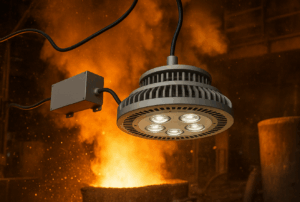
High-temperature industrial environments are defined not only by elevated ambient air temperatures but also by complex thermal dynamics that create localized heat concentrations, fluctuating gradients, and radiant exposure zones. These environments are typically categorized into three ranges: moderate heat zones between 50°C and 90°C, high heat zones between 90°C and 150°C, and extreme heat zones exceeding 150°C. Each category presents distinct engineering challenges for lighting systems, particularly in terms of component durability, insulation stability, and thermal dissipation requirements.
Beyond temperature alone, several environmental stress factors contribute to the harshness of these settings. Radiant heat from furnaces, kilns, and molten material surfaces can significantly raise fixture surface temperatures beyond ambient measurements. Dust particles, metallic residues, chemical vapors, and combustion byproducts can accumulate on luminaires, obstructing heat transfer and accelerating material corrosion. Additionally, many industrial processes generate mechanical vibration and rapid thermal cycling, both of which place additional strain on electrical connections, seals, and mounting structures.
The interaction of these factors creates a multidimensional stress environment in which lighting equipment must maintain stable electrical performance despite simultaneous thermal, mechanical, and chemical challenges. For instance, a luminaire installed near a smelting furnace may be subjected to high radiant heat from one direction, cooler airflow from another, and periodic shock vibration from nearby machinery. Standard lighting designs rarely account for such combined stresses, which explains their short operational lifespan in these conditions. A thorough understanding of environmental heat profiles is therefore a prerequisite for selecting appropriate lighting solutions capable of delivering consistent illumination and long service life in demanding industrial settings.
Conventional lighting technologies were not engineered with extreme thermal environments in mind, and their limitations become evident when deployed in high-heat industrial zones. One of the most critical weaknesses is the thermal sensitivity of electronic components. Drivers, capacitors, and semiconductor junctions in standard luminaires are typically rated for moderate temperatures. When exposed to excessive heat, these components degrade rapidly, leading to voltage instability, flickering output, or complete system failure. Such failures often occur unexpectedly, making maintenance planning difficult and increasing operational risk.
Another limitation is material deformation. Optical lenses and protective covers made from standard polymers can warp, discolor, or crack when subjected to prolonged heat exposure. This deformation reduces light transmission efficiency and alters beam distribution patterns, resulting in uneven illumination and reduced visibility for workers. Metal housings that lack sufficient thermal design may also expand unevenly, loosening seals and allowing dust or moisture ingress that further accelerates internal damage.
Traditional lighting systems also suffer from shortened lifespan in hot environments. A fixture rated for 50,000 operating hours under laboratory conditions may last only a fraction of that time when installed near high-temperature machinery. Frequent replacements increase maintenance costs and require production interruptions, both of which negatively impact operational efficiency. Moreover, repeated thermal stress can weaken mounting brackets and wiring insulation, introducing safety hazards such as electrical shorts or falling fixtures.
Because of these limitations, relying on standard lighting technology in extreme environments often leads to a cycle of recurring failures, escalating expenses, and compromised workplace safety. The inadequacy of conventional systems underscores the necessity for specialized lighting solutions designed specifically for sustained performance under elevated thermal conditions.
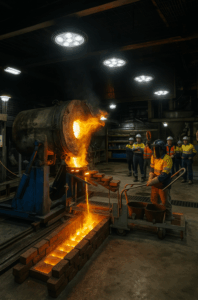
High-temperature LED lighting systems are fundamentally distinct from standard luminaires because they are engineered from the ground up to tolerate extreme thermal stress. The most important difference lies in material selection. Heat-resistant alloys, ceramic substrates, and specialized glass or silicone optics replace conventional plastics and low-grade metals. These materials maintain structural integrity and optical clarity even when exposed to sustained temperatures exceeding 150°C, ensuring consistent performance over extended operational periods.
Equally critical is the thermal management architecture. High-temperature fixtures incorporate advanced heat dissipation systems, including enlarged heat sinks, high-conductivity housings, and passive cooling channels that facilitate efficient heat transfer away from sensitive components. Unlike consumer lighting products that rely on ambient airflow for cooling, industrial high-heat luminaires are designed to manage internal temperature independently of environmental conditions. This allows them to operate reliably even when surrounding air is extremely hot or stagnant.
Electronic design also distinguishes high-temperature LED lighting from conventional alternatives. Industrial-grade drivers are specifically rated for elevated temperature operation and are often equipped with thermal protection circuitry that regulates current flow when internal temperatures approach critical thresholds. Such safeguards prevent catastrophic failure and extend component lifespan. Additionally, sealing systems are reinforced with high-temperature gaskets that resist degradation, ensuring long-term protection against dust, fumes, and moisture intrusion.
These engineering enhancements collectively enable high-temperature LED fixtures to deliver stable luminous output, maintain electrical reliability, and preserve structural integrity under conditions that would quickly destroy standard lighting equipment. The result is a specialized illumination solution capable of supporting industrial operations where reliability is essential and environmental conditions are extreme.
The performance benefits of high-temperature LED lighting extend far beyond simple heat resistance. One of the most significant advantages is luminous stability. In extreme environments, conventional lights often exhibit lumen depreciation, color shift, or flicker due to thermal stress. High-temperature LEDs, by contrast, are designed to maintain consistent luminous output even when ambient temperatures approach their rated limits. This stability ensures that workspaces remain uniformly illuminated, supporting accurate visual inspection and reducing operator fatigue.
Longevity is another major benefit. Because all critical components are engineered to withstand heat, these fixtures can operate for significantly longer periods without failure. In many industrial installations, high-temperature LED systems achieve service lifespans three to five times longer than standard fixtures under identical environmental conditions. This extended lifespan directly translates into reduced maintenance frequency, fewer replacement cycles, and lower labor costs.
Energy efficiency also improves substantially. Modern industrial LEDs can deliver luminous efficacy levels exceeding 160 lumens per watt, allowing facilities to reduce electricity consumption while maintaining or even increasing illumination levels. In high-heat environments where cooling loads may already be significant, the lower power draw of efficient lighting systems helps minimize additional thermal burden on the facility.
Finally, reliability under stress enhances operational continuity. Lighting failures in industrial plants can halt production, delay inspections, or create safety hazards. By providing dependable illumination regardless of temperature fluctuations, high-temperature LED systems support uninterrupted workflow and contribute to overall process stability. These combined performance advantages make them an essential infrastructure upgrade for facilities operating in extreme thermal conditions.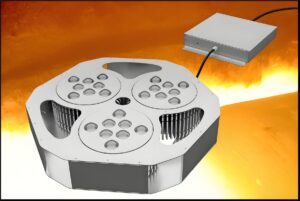
Selecting appropriate high-temperature lighting requires careful evaluation of technical specifications rather than relying solely on wattage or brightness ratings. The most critical parameter is the maximum ambient temperature rating, which indicates the highest environmental temperature at which the fixture can operate continuously without performance degradation. Facilities must measure actual on-site conditions and choose luminaires rated above the highest recorded temperature to ensure long-term reliability.
Luminous efficacy is another essential specification. Higher efficacy values indicate greater light output per unit of electrical power, which directly affects energy efficiency and operating cost. In industrial environments where lighting systems may operate continuously, even small improvements in efficacy can yield substantial savings over time. Equally important is the ingress protection rating, which defines resistance to dust and moisture. High IP ratings are particularly valuable in facilities where airborne particles or vapors are present, as contaminants can trap heat and damage internal components.
Electrical compatibility must also be verified. Industrial facilities often use a wide range of supply voltages, and lighting fixtures must be capable of operating safely within these ranges. Drivers designed for broad voltage input provide flexibility and reduce the risk of malfunction due to power fluctuations. Color temperature selection is another consideration, as different tasks require different lighting characteristics. For example, inspection areas may benefit from cooler color temperatures for enhanced contrast, while general workspaces may use neutral tones for visual comfort.
Evaluating these specifications holistically ensures that the selected lighting system aligns with both environmental conditions and operational requirements. Proper specification analysis is therefore a crucial step in preventing premature failures and maximizing return on investment.
High-temperature LED lighting plays a vital role across a wide range of industrial sectors where extreme thermal conditions are unavoidable. In metal smelting and foundry operations, luminaires must withstand intense radiant heat from molten materials and furnaces while still providing clear visibility for workers handling hazardous processes. Reliable lighting in such environments supports accurate monitoring of material flow, equipment status, and safety conditions.
Glass manufacturing facilities present another demanding application. Production lines often involve continuous furnaces operating at extremely high temperatures, creating ambient conditions that would quickly degrade standard lighting systems. High-temperature LEDs ensure consistent illumination along production lines, enabling operators to detect defects, monitor equipment, and maintain quality control without interruption.
Ceramic and kiln operations also benefit significantly from thermally resilient lighting. These facilities typically include enclosed firing chambers, high-temperature conveyors, and heat-intensive drying processes. Lighting installed near these areas must tolerate both sustained heat and sudden thermal fluctuations as equipment cycles between heating and cooling phases. Durable LED systems designed for such environments maintain performance stability despite these rapid temperature changes.
Heavy manufacturing plants, power generation facilities, and industrial baking or curing lines represent additional sectors where specialized lighting is essential. In each of these applications, reliable illumination directly supports productivity, safety, and equipment maintenance. The versatility of high-temperature LED technology allows it to be adapted to diverse industrial settings, making it a universal solution for facilities operating under extreme thermal stress.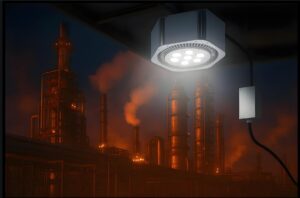
Safety considerations are paramount in high-temperature industrial environments, and lighting plays a crucial role in maintaining safe working conditions. Poor or inconsistent illumination can obscure hazards, increase the likelihood of accidents, and hinder emergency response. High-temperature LED lighting helps mitigate these risks by providing stable, uniform light output even under extreme thermal conditions. Workers can clearly see machinery, pathways, and warning indicators, reducing the chance of operational errors or injuries.
Another important safety advantage is reduced fire risk. Conventional lighting fixtures exposed to excessive heat may overheat internally, potentially igniting nearby materials or damaging electrical wiring. High-temperature luminaires are designed with materials and circuitry that tolerate elevated temperatures without reaching ignition thresholds, significantly lowering the probability of fire incidents. Reinforced seals and high-temperature insulation further enhance safety by preventing internal short circuits caused by dust or moisture intrusion.
Compliance with industrial safety standards is also easier to achieve when facilities use lighting systems specifically rated for high-temperature operation. Regulatory bodies often require equipment installed in hazardous environments to meet defined performance criteria. Using certified high-temperature fixtures helps facilities demonstrate adherence to these requirements, reducing legal liability and ensuring smoother inspection processes.
In addition, improved lighting quality enhances worker productivity and comfort. Adequate illumination reduces eye strain, supports accurate task execution, and improves situational awareness. These factors contribute not only to safer workplaces but also to more efficient operations. Thus, upgrading to thermally resilient lighting is both a safety enhancement and a compliance strategy that benefits multiple aspects of industrial performance.
Although high-temperature LED lighting systems typically require a higher initial investment than standard fixtures, their long-term financial advantages make them highly cost-effective. One of the primary sources of savings is reduced maintenance. Conventional lights installed in extreme environments often fail frequently, necessitating replacement parts, labor, and downtime. High-temperature LEDs, by contrast, are engineered for durability, which significantly lowers maintenance frequency and associated costs over their operational lifespan.
Energy savings also contribute substantially to return on investment. High-efficiency LEDs convert a greater proportion of electrical energy into visible light rather than heat, reducing power consumption while maintaining high illumination levels. In facilities where lighting operates continuously or for extended shifts, these efficiency gains translate into noticeable reductions in electricity expenses. Over time, energy savings alone can offset a large portion of the initial purchase cost.
Downtime reduction is another financial benefit. Lighting failures can interrupt production, delay inspections, or halt critical processes. Each interruption carries economic consequences, including lost output and labor inefficiency. Reliable high-temperature lighting minimizes these disruptions, ensuring continuous operation and consistent productivity. When combined with lower maintenance and energy costs, the cumulative savings often allow facilities to recover their investment within one to two years.
A comprehensive lifecycle cost analysis typically reveals that high-temperature LED systems outperform traditional lighting technologies in total cost of ownership. For decision-makers evaluating infrastructure upgrades, this long-term economic perspective demonstrates that investing in specialized lighting is not merely an expense but a strategic financial decision.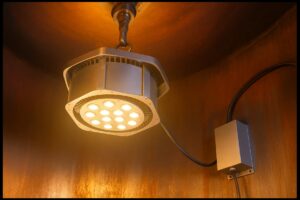
Successfully upgrading to high-temperature LED lighting requires a structured implementation approach that accounts for environmental conditions, operational requirements, and installation logistics. The first step is conducting a detailed site assessment. Engineers must measure ambient temperatures, identify radiant heat sources, and analyze airflow patterns to determine the thermal profile of each installation area. Accurate data ensures that selected fixtures are appropriately rated for real operating conditions rather than estimated values.
The next stage involves fixture selection. Based on the assessment results, lighting professionals choose luminaires with temperature ratings exceeding the highest measured values. Additional factors such as mounting height, beam angle, and illumination uniformity must also be considered to ensure optimal light distribution. Selecting the correct fixture configuration at this stage prevents performance issues and eliminates the need for costly replacements later.
Installation best practices are equally important. Fixtures should be mounted in positions that minimize direct exposure to radiant heat while still providing adequate illumination. Proper wiring, secure mounting hardware, and heat-resistant connectors must be used to maintain system reliability. In some cases, protective shields or reflectors may be installed to deflect heat away from luminaires and extend their lifespan.
Finally, post-installation testing and validation confirm system performance. Monitoring light output, temperature stability, and electrical behavior under actual operating conditions allows engineers to verify that the lighting system meets design expectations. This systematic implementation process ensures that high-temperature LED upgrades deliver maximum reliability, efficiency, and longevity.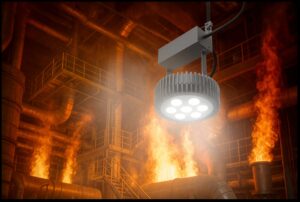
Technological innovation continues to advance the capabilities of high-temperature lighting systems, expanding their performance range and functional intelligence. One emerging trend is the integration of smart monitoring technology within luminaires. Embedded temperature sensors can continuously track internal conditions and transmit data to centralized control systems. This enables facility managers to detect anomalies early and perform predictive maintenance before failures occur.
Artificial intelligence is also beginning to influence industrial lighting. AI-driven diagnostics can analyze operational data to identify patterns associated with component wear or environmental stress. By predicting potential issues, these systems allow maintenance teams to address problems proactively rather than reactively, improving reliability and reducing downtime. Such intelligent lighting infrastructure represents a shift from passive illumination devices to active participants in industrial monitoring networks.
Material science advancements are further enhancing performance limits. Researchers are developing new alloys, ceramics, and composite materials capable of withstanding even higher temperatures without deformation or degradation. These innovations may soon enable lighting fixtures to operate safely in environments exceeding 250°C, opening new possibilities for industries with extreme thermal processes.
As these technologies mature, high-temperature lighting systems will become more efficient, durable, and intelligent. Facilities adopting next-generation solutions will benefit from improved operational insight, reduced maintenance costs, and greater adaptability to demanding environments. The future of industrial lighting therefore lies not only in brightness and efficiency but also in resilience and data-driven functionality.
High-heat industrial environments demand specialized infrastructure capable of withstanding extreme conditions without compromising performance. Lighting systems are particularly critical because they directly influence visibility, safety, productivity, and operational continuity. Conventional lighting technologies, though suitable for moderate conditions, are not designed to tolerate sustained exposure to high temperatures, radiant heat, and industrial contaminants. Their limitations often lead to frequent failures, increased maintenance costs, and potential safety hazards.
High-temperature LED lighting provides a robust solution to these challenges. Through advanced materials, sophisticated thermal management, and industrial-grade electronics, these fixtures deliver stable illumination and long service life even in the most demanding environments. Their performance advantages include consistent light output, reduced energy consumption, extended lifespan, and improved reliability. When evaluated from a lifecycle perspective, these benefits translate into significant cost savings and rapid return on investment.
Implementing such systems requires careful planning, including site assessment, proper specification selection, and thorough performance validation. Facilities that follow a structured upgrade strategy can maximize the advantages of high-temperature lighting while minimizing installation risks. Looking ahead, ongoing technological innovation promises even greater capabilities, including smart monitoring, predictive diagnostics, and materials engineered for ultra-high-temperature applications.
In modern industry, lighting is no longer a simple utility but a strategic asset that supports efficiency, safety, and competitiveness. Upgrading high-heat industrial areas with high-temperature LED lighting is therefore not merely an equipment replacement decision; it is a forward-looking investment in operational resilience and long-term performance.
–The End–