
Industrial facilities operating under elevated temperatures present one of the harshest environments for lighting systems. Facilities such as steel mills, glass plants, foundries, kiln operations, and power generation stations often experience ambient temperatures exceeding 80°C, with localized zones reaching above 150°C. Conventional lighting technologies—including high-intensity discharge (HID), metal halide, and fluorescent fixtures—are not engineered to tolerate such thermal stress. Excess heat accelerates internal component degradation, destabilizes electrical performance, and reduces light output consistency. As a result, lighting failures occur frequently, forcing operators into costly replacement cycles and unplanned maintenance interventions. These issues not only increase operational costs but can also compromise safety and productivity where consistent illumination is mission-critical.
Advances in semiconductor engineering and thermal management have enabled a new generation of high-temperature-rated LED luminaires specifically designed for extreme industrial environments. Unlike earlier LED systems that were sensitive to thermal buildup, modern high-temperature models incorporate specialized driver circuits, heat-resistant materials, and optimized heat dissipation structures. These innovations allow LEDs to maintain performance stability even when ambient conditions exceed conventional operating thresholds. As industries seek to modernize infrastructure while lowering operational expenditures, adoption of thermally robust LED solutions has accelerated across sectors that previously considered LEDs unsuitable for extreme heat zones.
This article aims to provide a comprehensive technical and economic analysis of high-temperature LED lighting systems, focusing on their lifecycle cost advantages and operational benefits. By examining engineering principles, efficiency metrics, maintenance economics, and real-world application scenarios, the discussion demonstrates how these specialized luminaires outperform traditional lighting technologies. The goal is to equip engineers, procurement managers, and facility operators with a clear understanding of why high-temperature LED lighting represents a strategic investment rather than merely an equipment upgrade.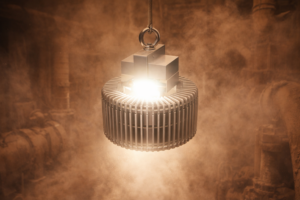
Industrial environments can be categorized by thermal intensity, which directly influences lighting design requirements. Moderate heat zones typically range from 50°C to 80°C and are common near industrial ovens or mechanical rooms. High-heat areas span approximately 80°C to 150°C and are frequently found in metal processing or chemical plants. Extreme heat environments exceed 150°C and may approach or surpass 200°C in facilities such as glass manufacturing or furnace chambers. Each classification imposes distinct thermal loads on lighting equipment, requiring progressively more specialized materials, insulation systems, and electronic protection mechanisms.
Temperature is rarely the only environmental stressor present in heavy industrial settings. Lighting systems must often withstand mechanical vibration from machinery, airborne particulates such as dust or metal filings, oil vapor, corrosive chemicals, and humidity fluctuations. These combined stressors create compound failure risks for conventional fixtures. For example, dust accumulation can trap heat inside housings, while vibration can loosen electrical connections. A lighting system designed solely for temperature resistance but not environmental durability may still fail prematurely. Therefore, robust industrial luminaires must be engineered with holistic environmental protection in mind.
Elevated temperature has a measurable negative impact on traditional lighting technologies. HID lamps suffer from accelerated electrode wear, fluorescent tubes experience ballast degradation, and halogen bulbs face filament stress that shortens service life. Heat also increases electrical resistance, which reduces efficiency and causes further thermal buildup in a destructive feedback cycle. The combined effect is rapid lumen depreciation, meaning light output declines well before the rated lifespan is reached. In extreme cases, fixtures fail entirely within months rather than years, creating recurring replacement expenses and operational disruption.
The defining feature of high-temperature LED luminaires is their advanced thermal management architecture. These systems incorporate high-conductivity heat sinks, often made of aluminum alloys or composite materials, to rapidly dissipate heat away from sensitive electronic components. In addition, thermally isolated driver compartments prevent heat transfer from the ambient environment to internal circuitry. Some designs employ passive convection channels or fin geometries that maximize airflow without requiring moving parts. Such structural innovations ensure that junction temperatures remain within safe operating limits, preserving LED efficiency and longevity.
Standard electronic components are not suitable for extreme environments, so high-temperature LED fixtures rely on specialized parts engineered for thermal resilience. Capacitors, wiring insulation, optical lenses, and sealing gaskets are selected based on elevated temperature ratings. For instance, silicone gaskets may replace rubber seals to prevent hardening or cracking, while ceramic substrates may be used instead of plastic boards to maintain structural integrity. These material choices allow the luminaire to maintain electrical stability and optical clarity even under sustained thermal exposure.
Industrial buyers often require verification that lighting systems meet rigorous reliability standards. High-temperature LED fixtures are therefore subjected to extensive laboratory testing, including thermal cycling, vibration resistance, ingress protection validation, and long-duration burn-in procedures. Compliance with recognized industrial certifications demonstrates that the luminaire has been evaluated under simulated real-world conditions. Such validation provides assurance that performance claims are supported by empirical testing rather than theoretical specifications.
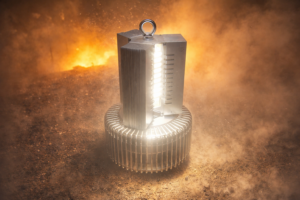
One of the most significant advantages of LED technology is its superior luminous efficacy, typically measured in lumens per watt. High-temperature LED fixtures commonly achieve efficiencies exceeding those of HID or halogen systems by a substantial margin. This means more usable light is produced for each unit of electricity consumed. Even in extreme heat conditions, well-designed LED systems maintain high efficacy because thermal regulation prevents efficiency losses that plague conventional lamps.
Improved efficacy directly translates into lower energy consumption for the same illumination level. In large industrial facilities operating hundreds or thousands of fixtures, even modest efficiency gains can produce substantial reductions in electricity costs. Energy savings accumulate continuously throughout the operational lifespan of the lighting system, making efficiency improvements one of the most economically impactful benefits of LED adoption.
Traditional lighting technologies often exhibit performance instability when ambient temperatures fluctuate. LEDs designed for high-temperature operation, however, maintain consistent luminous output across a wide thermal range. This stability is critical in industrial environments where lighting must remain uniform to support precision tasks, machine operation, and safety compliance. Consistent output also simplifies lighting design calculations because engineers can rely on predictable performance curves.
Heat is a primary factor that shortens the lifespan of most lighting technologies. High-temperature LED luminaires mitigate this issue through optimized thermal design and durable components, allowing them to operate reliably for tens of thousands of hours even in elevated temperatures. Compared with traditional lamps that may fail prematurely in such environments, LEDs provide dramatically longer service intervals.
Longer operational life means fewer replacement events over the same period. Each avoided replacement saves not only the cost of a new fixture or lamp but also the labor required for installation. In industrial facilities where fixtures may be mounted at height or in hazardous zones, maintenance operations can require specialized equipment or shutdown procedures. Reducing replacement frequency therefore yields both direct and indirect cost savings.
Facilities using conventional lighting often maintain large inventories of spare lamps and components to minimize downtime. With longer-lasting LED fixtures, the need for extensive spare-parts storage decreases. Reduced inventory lowers capital tied up in stock, frees storage space, and simplifies logistics management. Over time, these efficiencies contribute to measurable operational savings.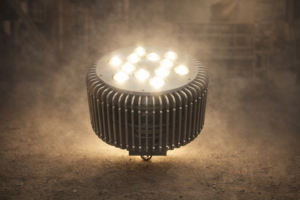
While high-temperature LED fixtures typically involve higher upfront costs than traditional lighting systems, a comprehensive financial evaluation must consider total cost of ownership rather than initial purchase price alone. When energy savings, reduced maintenance, and extended lifespan are factored in, LEDs often prove significantly more economical over their operational lifetime. This lifecycle perspective is essential for accurate capital budgeting decisions.
Labor costs associated with lighting maintenance can exceed equipment costs in demanding industrial environments. Modeling these expenses requires accounting for technician time, safety procedures, equipment rentals, and potential production interruptions. High-temperature LED systems, by reducing maintenance frequency, can dramatically lower cumulative labor expenditures over multi-year periods.
Return on investment analyses typically demonstrate that high-temperature LED installations achieve payback within a relatively short timeframe, especially in facilities with long operating hours. By quantifying energy savings, maintenance reductions, and replacement avoidance, decision-makers can estimate realistic payback periods and internal rates of return. Such financial modeling often reveals that LEDs represent not just a technological improvement but a sound economic strategy.
Lighting failures can interrupt operations, particularly in environments where visibility is essential for machinery control or inspection tasks. High-temperature LED fixtures reduce the probability of unexpected outages, thereby supporting uninterrupted production. Reliability improvements translate into higher operational efficiency and reduced risk of costly downtime.
Adequate illumination is a fundamental safety requirement in industrial workplaces. Stable, high-quality lighting improves visibility, reduces accident risk, and supports compliance with occupational safety standards. Because high-temperature LEDs maintain consistent brightness and color quality, they enhance visual clarity in environments where traditional lamps might dim or flicker.
Predictability is a valuable attribute in industrial asset management. High-temperature LED lighting systems exhibit gradual, measurable lumen depreciation rather than sudden failure. This allows maintenance teams to plan replacements proactively, aligning them with scheduled shutdowns rather than emergency repairs. Predictable performance simplifies facility planning and resource allocation.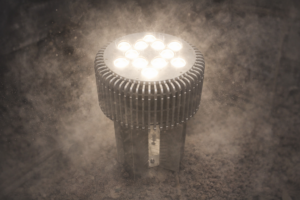
Steel mills operate furnaces and rolling equipment that generate intense heat, making them among the most challenging environments for lighting systems. High-temperature LED fixtures installed in these facilities have demonstrated improved reliability and lower maintenance requirements compared with traditional lighting, resulting in reduced operational disruptions.
Glass manufacturing involves continuous high-temperature processes that can degrade conventional fixtures rapidly. LEDs designed for extreme heat maintain stable illumination despite constant thermal exposure, ensuring consistent lighting conditions for quality control and monitoring tasks.
Refineries often combine high temperatures with corrosive vapors and vibration. Specialized LED luminaires engineered for these conditions provide dependable performance while minimizing maintenance interventions in hazardous zones, where servicing equipment can be complex and costly.
Power plants require dependable lighting for monitoring turbines, boilers, and control systems. High-temperature LEDs support these operations by delivering consistent illumination and reducing the likelihood of fixture failure in high-heat mechanical areas.
Energy-efficient lighting directly reduces electricity consumption, which in turn lowers greenhouse gas emissions associated with power generation. Facilities transitioning to LED technology often achieve measurable reductions in their carbon footprint, supporting corporate sustainability goals.
Because LED fixtures last significantly longer than traditional lamps, fewer units are discarded over time. This reduction in waste decreases environmental impact and supports responsible resource management. Longer lifespans also reduce the environmental costs associated with manufacturing and transporting replacement products.
Many jurisdictions have implemented energy efficiency standards for industrial equipment. High-temperature LED lighting helps facilities meet or exceed these regulatory requirements, reducing the risk of non-compliance penalties while enhancing operational efficiency.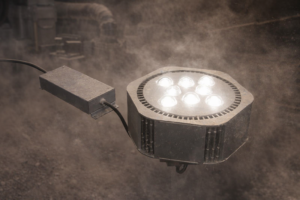
When specifying lighting systems for extreme environments, decision-makers must evaluate several technical factors. The temperature rating of the fixture must match or exceed the ambient conditions of the installation site. Driver placement and insulation design should ensure electronic components remain within safe operating ranges. Appropriate ingress protection ratings are necessary to guard against dust, moisture, or chemical exposure. Mounting configurations must suit structural conditions, and warranty coverage should reflect the manufacturer’s confidence in product durability. Careful evaluation of these criteria ensures that selected fixtures will perform reliably throughout their intended service life.
Technological innovation continues to advance the capabilities of industrial LED lighting. Emerging developments include smart luminaires equipped with temperature sensors that monitor operating conditions in real time. Integration with industrial Internet of Things platforms allows predictive maintenance analytics, enabling facilities to anticipate failures before they occur. Artificial intelligence-driven diagnostics may further enhance system optimization by analyzing performance data and recommending adjustments. These trends indicate that high-temperature LED lighting will evolve from a passive infrastructure component into an intelligent system contributing to overall operational efficiency.
High-temperature LED lighting represents a transformative solution for industrial environments characterized by extreme thermal conditions. By combining advanced thermal engineering, durable components, and superior efficiency, these systems deliver measurable cost benefits across energy consumption, maintenance, and operational reliability. When evaluated through a total cost of ownership framework, high-temperature LEDs consistently outperform conventional lighting technologies. For industrial operators seeking to reduce expenses, improve safety, and enhance sustainability, upgrading to high-temperature LED lighting is not merely an incremental improvement—it is a strategic investment in long-term performance.
–The End–