
Industrial environments present some of the most demanding challenges for effective lighting. From metal foundries and glass manufacturing plants to chemical processing facilities, operators face extreme conditions that often exceed the capabilities of traditional lighting. Poor illumination in these settings not only reduces operational efficiency but also significantly increases safety risks. Hazards such as molten metal splashes, moving machinery, chemical spills, and complex inspection tasks require precise visual perception, where even minor lapses can result in serious accidents or operational errors.
Modern LED technology, particularly LEDs within the 3000K–5600K color temperature range, provides a solution designed to meet these challenges. This range, spanning warm white (3000K) to daylight (5600K), offers flexibility to optimize visual clarity for various industrial tasks while maintaining energy efficiency, durability, and consistent performance under extreme conditions.
Unlike conventional high-intensity discharge (HID) or fluorescent lamps, LEDs in this spectrum deliver consistent, flicker-free illumination, minimize eye strain, and provide superior color rendering. Their ability to maintain performance in high-temperature, dusty, and moisture-laden environments makes them ideal for industrial applications where other lighting technologies fail.
Effective industrial lighting requires more than just brightness; it requires a strategic approach to color temperature, uniformity, glare control, and thermal management. By selecting the appropriate 3000K–5600K LED solution, industrial facilities can significantly enhance visibility, improve worker safety, reduce operational errors, and achieve measurable energy savings. This article explores the benefits, applications, and selection strategies for 3000K–5600K LEDs in extreme industrial conditions.
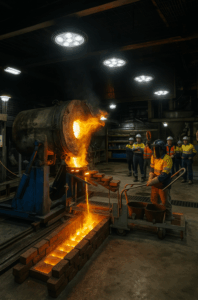
Color temperature, expressed in Kelvin (K), is a critical parameter in industrial lighting design as it directly impacts visibility, task performance, and operator comfort. LEDs within the 3000K–5600K range offer a spectrum of hues, from warm white to cool daylight, allowing industrial facilities to optimize lighting for both human-centric spaces and precision-oriented tasks.
Warm white LEDs (3000K) emit a soft, amber-hued light that reduces glare and creates a visually comfortable environment. These LEDs are particularly effective in control rooms, maintenance areas, and administrative spaces within industrial facilities, where glare from reflective surfaces can quickly cause eye fatigue. Warm white lighting enhances visual comfort without compromising safety, supporting longer work shifts and maintaining high operator alertness.
Neutral white LEDs (4000K–5000K) provide a balanced illumination ideal for general industrial areas such as warehouses, assembly lines, or logistics centers. This color temperature ensures uniform light distribution, reduces shadowing, and enhances object recognition, enabling workers to navigate complex spaces safely and efficiently. By improving contrast and color differentiation, neutral white LEDs support both productivity and safety compliance.
Daylight LEDs (5600K) simulate natural daylight, offering high contrast and superior color rendering essential for inspection zones, precision manufacturing, and quality control areas. The high contrast provided by 5600K LEDs allows operators to detect subtle defects, read color-coded safety indicators accurately, and perform detailed tasks with minimal visual fatigue.
Choosing the correct color temperature is more than an aesthetic preference; it directly affects human performance, perception, and cognitive alertness. Studies have shown that appropriately selected industrial lighting reduces eye strain, enhances focus, and minimizes error rates. In environments where accuracy, safety, and productivity are critical, the flexibility offered by 3000K–5600K LEDs allows facility managers to implement lighting solutions tailored to specific operational requirements.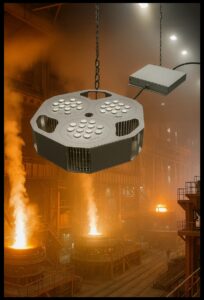
Industrial environments often combine multiple factors that severely impact visibility. High-temperature operations, airborne dust, chemical vapors, moisture, and mechanical vibration can all degrade the performance of conventional lighting solutions. For example, metal smelting and foundry operations expose fixtures to intense radiant heat, while chemical and food processing plants must comply with stringent hygiene standards, which restrict certain lighting options.
Glare, shadows, and color distortion are among the most common visibility challenges. In dusty or reflective environments, improper lighting can create excessive glare, reducing visual comfort and making it difficult to identify hazards. Shadows formed by uneven illumination can obscure moving machinery or floor hazards, while color distortion from older lighting technologies can prevent accurate identification of warning signs, chemical labels, or control panel indicators.
The consequences of inadequate visibility are both safety-related and operational. Workers may misjudge distances, overlook potential hazards, or experience visual fatigue, increasing the likelihood of accidents. Productivity also suffers, as inefficient lighting slows task completion, complicates inspections, and contributes to operational errors. Additionally, lighting systems that fail prematurely due to environmental stressors increase maintenance costs and downtime, further impacting facility efficiency.
LED technology in the 3000K–5600K range is specifically engineered to address these challenges. Advanced thermal management allows LEDs to maintain consistent output even in extreme temperatures, while ruggedized housings protect against dust, moisture, and vibration. The result is reliable, uniform illumination that enhances safety, reduces visual fatigue, and ensures continuous operational performance in the harshest industrial environments.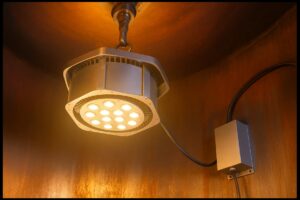
The implementation of 3000K–5600K LEDs in industrial settings offers numerous advantages that address both human factors and operational requirements. First and foremost, these LEDs provide enhanced visual clarity and contrast. High color rendering indexes (CRI) and precise color temperature tuning allow operators to detect fine details, differentiate between safety indicators, and monitor complex processes with greater accuracy. By reducing eye strain and improving object recognition, these LEDs directly contribute to safer and more productive work environments.
Another key advantage is task-specific lighting flexibility. Industrial facilities encompass a variety of work zones, each with unique visual demands. Warm 3000K LEDs are ideal for spaces where glare must be minimized and human comfort prioritized, such as control rooms and administrative areas. Neutral white LEDs (4000K–5000K) provide balanced illumination for general production lines, warehouse floors, or logistics centers, ensuring consistent light distribution and minimal shadowing. Cool daylight LEDs (5600K) are optimal for high-precision applications such as quality inspection, welding, or laboratory work, where maximum contrast and accurate color perception are critical for performance.
Energy efficiency and longevity are additional advantages. Industrial-grade LEDs frequently deliver luminous efficacies of 150–170 lm/W, significantly reducing electricity consumption compared to HID or fluorescent lighting. Moreover, their extended operational lifespan reduces replacement frequency, which is particularly important in facilities where lighting maintenance is labor-intensive, disruptive, or potentially hazardous.
Finally, 3000K–5600K LEDs are engineered for extreme environmental resilience. They are designed to withstand high temperatures, heavy dust exposure, chemical contact, and mechanical vibration. Advanced thermal management ensures consistent light output even under thermal stress, while durable housings prevent damage from environmental contaminants. This combination of performance, efficiency, and resilience ensures that industrial operations maintain consistent illumination, supporting both worker safety and operational reliability across diverse industrial applications.
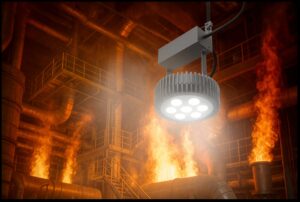
The real-world application of 3000K–5600K LEDs demonstrates their versatility and transformative impact across multiple industrial sectors. In metal smelting and foundries, workers operate in high-temperature zones with intense glare from molten materials. Installing 5000K–5600K LEDs in these environments enhances visual contrast, allowing operators to accurately monitor molten metals, identify surface defects, and safely maneuver around machinery. The daylight-like illumination ensures that even subtle temperature differences or material irregularities are visible, significantly reducing the risk of operational errors and accidents.
In chemical processing and food manufacturing facilities, hygiene and safety are critical. Warm 3000K–4000K LEDs are preferred in these areas due to their ability to reduce glare and improve visual comfort, ensuring accurate identification of chemical labels, color-coded indicators, and control panel statuses. Their sealed, moisture-resistant housings protect against chemical corrosion and water exposure, enabling continuous, reliable operation in wet or corrosive environments without compromising lighting performance.
Warehouses and logistics centers also benefit from the balanced illumination of neutral 4000K LEDs. In these large open spaces, uniform light distribution minimizes shadows and glare, improving visibility for forklift operators, inventory managers, and other personnel. This uniformity not only enhances safety but also improves operational efficiency by facilitating faster, more accurate inventory handling and reducing the likelihood of accidents caused by poor lighting.
Even in specialty industrial applications, such as precision manufacturing or inspection laboratories, cool 5600K LEDs play a vital role. Their high contrast and superior color rendering allow operators to detect small defects, differentiate between similar materials, and maintain high-quality standards. Across all these applications, the 3000K–5600K LED spectrum offers a combination of clarity, reliability, and energy efficiency that traditional lighting technologies cannot match, making it an indispensable component of modern industrial lighting strategy.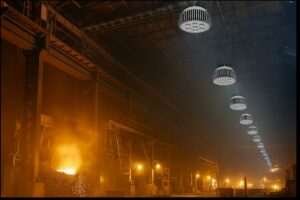
Choosing the ideal LED solution for extreme industrial conditions requires a comprehensive understanding of both operational needs and environmental stressors. One of the first considerations is color temperature selection. Warm 3000K LEDs are optimal for human-centric spaces where visual comfort is critical, neutral 4000K–5000K LEDs provide versatile illumination for general production or warehouse areas, and cool 5600K LEDs are best suited for precision tasks and inspection zones that require high contrast and accurate color differentiation.
Environmental resilience is equally critical. Industrial LEDs must endure high temperatures, heavy dust, moisture, and mechanical vibrations without degradation. Advanced thermal management systems, durable housings, and sealed designs ensure that the lighting maintains consistent performance over time, even in the harshest conditions. Electrical stability, minimal flicker, and high lumen maintenance further enhance reliability and reduce maintenance demands.
Fixture placement, beam angles, and mounting heights are also vital. Proper layout planning ensures uniform illumination, minimizes shadows, and avoids glare, which is particularly important in large facilities or areas with complex machinery. Beam angles should be chosen to optimize coverage while maintaining brightness, and mounting heights should be coordinated with the light output to ensure uniformity across work zones.
By integrating these considerations, industrial facilities can implement LED solutions that maximize safety, efficiency, and energy savings. High-quality 3000K–5600K LEDs provide reliable illumination across a wide range of applications, enabling operators to perform tasks with precision, reducing operational errors, and supporting long-term operational sustainability. Selecting the right LED is not just about brightness—it is about achieving the perfect balance of visibility, durability, and human performance in demanding industrial environments.
3000K–5600K LEDs provide industrial facilities with a transformative lighting solution capable of addressing extreme environmental challenges. Their versatility in color temperature, enhanced visibility, energy efficiency, and environmental resilience ensures optimal performance across diverse industrial applications. From high-temperature foundries and chemical plants to large-scale warehouses and precision manufacturing zones, these LEDs improve worker safety, operational efficiency, and long-term sustainability.
By carefully selecting and implementing industrial-grade LEDs, facilities can achieve superior illumination, reduce maintenance costs, enhance productivity, and create safer working conditions. The strategic use of 3000K–5600K LEDs ensures that every operational zone, from control rooms to high-precision inspection areas, benefits from consistent, high-quality illumination that supports both human performance and industrial excellence.
–The End–