Industrial facilities present a unique set of challenges for lighting systems. Unlike residential or commercial spaces, factories, warehouses, and outdoor industrial environments often operate under harsh conditions that include extreme heat, airborne dust, and elevated moisture levels. These environmental stressors not only compromise the performance of conventional lighting systems but also increase maintenance costs, reduce operational efficiency, and pose significant safety risks.
Traditional lighting technologies such as high-pressure sodium (HPS) lamps or metal halide (MH) fixtures are highly susceptible to degradation when exposed to these extreme conditions. High temperatures can cause rapid lumen depreciation, while dust and particulate matter can accumulate on fixtures, obstructing light output and impairing heat dissipation. Moisture and humidity further exacerbate these challenges by promoting corrosion, short circuits, and premature fixture failure.
Industrial-grade LEDs are increasingly recognized as the optimal solution for these challenging environments. Their robust design, energy efficiency, and ability to maintain stable light output under harsh conditions make them ideal for industrial applications. This article explores the performance advantages of industrial LEDs in heat, dust, and moisture-prone environments, highlighting their long-term reliability, safety benefits, and operational efficiency.
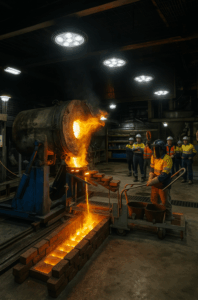
Industrial environments often generate significant heat due to operational processes. Foundries, smelting plants, glass manufacturing, and kilns operate at temperatures that can exceed hundreds of degrees Celsius. Even facilities without such extreme processes, such as metal fabrication shops or heavy machinery workshops, can experience elevated ambient temperatures due to machinery operation, lighting, and confined space ventilation.
Outdoor industrial environments, particularly in regions with high solar exposure, can also subject lighting systems to sustained high temperatures. Roof-mounted or pole-mounted fixtures are exposed not only to the heat generated by the sun but also to radiative heat from asphalt, concrete, and industrial machinery. Over time, this persistent thermal load can lead to fixture material fatigue, electrical component degradation, and reduced lumen output. Understanding these heat sources is critical for selecting lighting solutions designed to endure sustained thermal stress.
High temperatures significantly impact the performance and reliability of traditional lighting technologies. Metal halide and high-pressure sodium lamps, for example, are prone to accelerated lumen depreciation under prolonged heat exposure. The efficiency of their electrical components decreases with rising temperatures, often resulting in color shifts, flickering, or complete failure.
Moreover, elevated heat can compromise fixture housings, causing warping, seal degradation, or insulation breakdown. In some industrial processes, these failures are not only inconvenient but also dangerous, as malfunctioning lights can cause unsafe working conditions. Frequent replacements, combined with labor-intensive maintenance in high-temperature zones, contribute to higher operational costs and reduced productivity.
Industrial LEDs are designed with advanced thermal management systems to withstand high-temperature environments. Heat sinks constructed from high-conductivity materials such as aluminum or copper dissipate heat efficiently, while thermally optimized housing designs prevent hot spots that could degrade electronic components. Some high-power industrial LEDs incorporate active cooling mechanisms, including fans or liquid-cooling channels, to maintain junction temperatures within safe operating limits.
Additionally, modern LED drivers are rated for high ambient temperatures, ensuring stable electrical operation even under thermal stress. This sophisticated thermal management not only preserves luminous efficiency and color stability but also extends the overall lifespan of the fixture. The result is a lighting solution capable of consistent, reliable performance in environments where traditional lighting would quickly fail.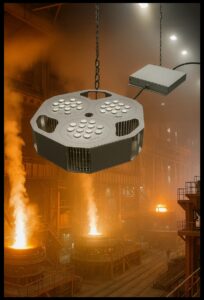
Industrial facilities are often exposed to airborne dust and particulate matter generated during manufacturing, processing, or material handling. Cement plants, mining operations, grain processing facilities, and wood or metal workshops release dust continuously into the environment. Even in modern, ventilated facilities, dust accumulation on lighting fixtures is unavoidable over time.
Dust particles can settle on lenses and reflectors, reducing light output and creating uneven illumination across workspaces. In environments with combustible dust, such as grain silos or chemical processing facilities, dust accumulation poses additional hazards, increasing the risk of ignition and explosion if lighting equipment is not properly designed for such conditions.
The accumulation of dust on traditional lighting fixtures can impair heat dissipation, causing thermal buildup and accelerating component degradation. Reduced airflow around heat-generating lamps increases operating temperatures, which may lead to premature failure or flickering. Moreover, dust can enter electrical enclosures, creating potential short circuits or arcing risks.
In facilities handling fine or combustible dust, these effects are even more pronounced. Standard lighting solutions are rarely designed to meet the rigorous safety standards required for hazardous dust zones, making them unsuitable for sustained industrial operations. Maintenance requirements in dust-heavy environments are therefore elevated, demanding frequent cleaning, downtime, and additional labor costs.
Industrial LEDs are engineered to perform reliably in dust-intensive environments. Fixtures are often enclosed in IP-rated housings, with smooth surfaces and protective lenses that minimize dust adherence and allow for easy cleaning. IP ratings such as IP65 and IP66 provide complete protection against solid particles, ensuring that internal components remain free from dust intrusion.
Additionally, LEDs are solid-state devices with fewer moving parts and no fragile filaments, making them inherently more resistant to dust-related damage. By maintaining consistent light output and thermal management even in dusty conditions, industrial LEDs reduce maintenance requirements and improve overall operational safety. These design advantages make LED lighting particularly suitable for mining, cement, and heavy manufacturing environments.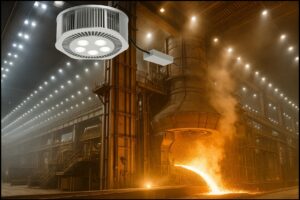
Moisture and high humidity are common in various industrial sectors, including food processing, chemical manufacturing, wastewater treatment, and coastal or outdoor facilities. These environments present unique challenges for lighting systems, as exposure to water vapor, condensation, and splashes can lead to electrical and material degradation.
Even moderate levels of humidity over time can promote corrosion of metal components and reduce the reliability of conventional lighting fixtures. Facilities that operate near water sources or in coastal regions face accelerated corrosion due to saline air, further complicating lighting performance and safety requirements.
Traditional lighting systems are often vulnerable to moisture ingress. Corrosion of metal housings, connectors, and wiring can compromise structural integrity and electrical safety. Moisture can also penetrate lamp enclosures, causing short circuits or complete fixture failure. In extreme cases, electrical faults induced by moisture may result in fire hazards or pose risks to personnel safety.
Fixtures with inadequate sealing or substandard gaskets are particularly prone to these failures. Maintenance-intensive solutions often require periodic inspection, cleaning, and component replacement, increasing operational costs and downtime. In addition, compromised lighting quality due to moisture exposure may affect workplace productivity, particularly in precision industrial tasks where consistent illumination is critical.
Industrial LED fixtures are specifically designed to address moisture-related challenges. High IP ratings, such as IP65, IP66, or IP67, provide robust protection against water ingress from splashes, jets, or temporary submersion. High-quality industrial LEDs often incorporate anti-corrosion coatings, stainless steel hardware, and moisture-resistant seals to further enhance durability.
These design considerations allow LEDs to maintain stable performance and long lifespans in high-humidity or wet industrial environments. By preventing water and corrosion damage, industrial LEDs minimize maintenance requirements, improve safety, and ensure reliable illumination in applications where traditional lighting systems would fail prematurely.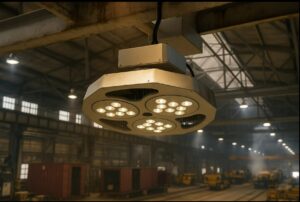
In many industrial environments, heat, dust, and moisture act simultaneously, creating compounded stress on lighting systems. Foundries, chemical processing plants, and outdoor heavy industry sites frequently experience all three stressors concurrently. Traditional lighting technologies struggle to maintain stable performance under such combined environmental challenges, resulting in accelerated degradation, high maintenance costs, and operational disruptions.
Industrial LED solutions are engineered to withstand multi-stressor conditions. Their solid-state design, thermal management, sealed housings, and corrosion-resistant materials enable reliable performance even when exposed to extreme temperatures, dense dust, and high humidity simultaneously. Advanced LED fixtures maintain consistent lumen output and color quality, enhancing workplace safety and productivity while minimizing the need for frequent replacements. This capability makes LEDs the preferred solution for industrial sites with complex environmental challenges.
Industrial LEDs offer substantial energy efficiency advantages over traditional lighting systems, particularly in harsh environments. Unlike metal halide or high-pressure sodium lamps, which suffer from significant energy loss due to heat, LEDs convert a higher proportion of electrical energy into visible light, maintaining efficiency even under extreme thermal conditions.
Additionally, LEDs exhibit remarkable stability in lumen output, maintaining brightness over extended operational periods. Their solid-state design ensures that environmental factors such as dust accumulation or moisture exposure do not cause abrupt failure or flickering, a common issue with legacy lighting technologies. Over time, this stability translates to reduced energy consumption, lower operational costs, and predictable performance, making LEDs a cost-effective solution for industrial facilities.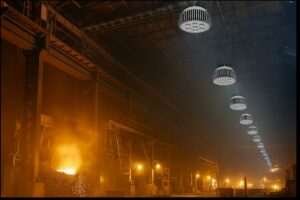
Industrial LEDs significantly reduce maintenance demands compared to traditional lighting systems. Their extended lifespan—often exceeding 50,000 hours—eliminates frequent lamp replacements and minimizes downtime in critical operations. Robust housings and IP-rated protection reduce the risk of fixture damage from environmental exposure, further reducing maintenance costs and operational disruption.
In addition, LEDs enhance workplace safety by providing consistent, high-quality illumination. Properly lit facilities reduce the risk of accidents and improve visibility in complex industrial workflows. The combination of reliability, safety, and energy efficiency contributes to a higher return on investment and positions industrial LEDs as a strategic upgrade for long-term operational performance.
High-resistance LED lighting is increasingly recognized as an essential solution across a wide spectrum of industrial applications, particularly in environments characterized by extreme heat, dense dust, or high moisture levels. In metal smelting facilities and foundries, for instance, LED fixtures are capable of operating reliably in ambient temperatures that often exceed conventional lighting limits. Their advanced thermal management ensures that lumen output remains consistent, providing safe and precise illumination for workers operating near molten metal or heavy machinery. Similarly, mining and heavy manufacturing operations benefit from dust-resistant LED fixtures that maintain high visibility while minimizing the risk of component degradation due to particulate accumulation.
Warehouses, logistics centers, and large outdoor yards also gain significant advantages from high-resistance LEDs. These fixtures not only withstand moisture and fluctuating environmental conditions but also deliver uniform, energy-efficient lighting over large areas, reducing the need for frequent maintenance and lowering operational costs. Food processing, chemical, and pharmaceutical facilities, where hygiene and moisture control are critical, require sealed, corrosion-resistant LED solutions that comply with strict industry safety standards. By offering tailored beam angles, IP ratings, and material durability, industrial LEDs provide adaptable, high-performance lighting solutions that enhance operational efficiency, worker safety, and energy management across multiple industrial sectors.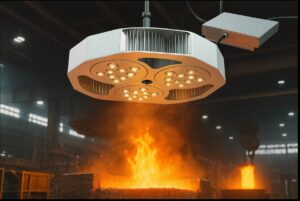
Selecting the optimal LED lighting system for harsh industrial conditions requires a comprehensive understanding of environmental factors, fixture design, and operational requirements. Thermal management is paramount; high-power industrial LEDs must be rated to tolerate the facility’s peak ambient temperatures without compromising lumen output, color stability, or lifespan. Dust and moisture protection are equally critical. IP ratings, such as IP65, IP66, or IP67, should be matched to site-specific conditions to ensure long-term fixture integrity and prevent internal component failure. Corrosion-resistant materials, including stainless steel hardware and anti-oxidation coatings, are essential in facilities exposed to humidity, saline air, or chemical vapors.
Additional considerations include fixture versatility and adaptability. Adjustable beam angles, modular designs, and customizable mounting configurations allow LEDs to meet precise illumination requirements across diverse workspaces. Energy efficiency, operational lifespan, and maintenance frequency must also be factored in to optimize total cost of ownership. By evaluating these critical technical parameters, facility managers can select LED solutions that not only endure extreme environmental stressors but also deliver reliable, high-quality illumination, enhance workplace safety, and support sustainable industrial operations over the long term.
Industrial LEDs represent the pinnacle of lighting technology for harsh environments. Their ability to maintain stable illumination under extreme heat, dust, and moisture conditions ensures operational reliability, reduces maintenance, and enhances workplace safety. Energy efficiency and long-term performance translate to lower operational costs and improved ROI, making LEDs a strategic choice for modern industrial facilities.
By selecting high-resistance LED solutions, industrial operators can future-proof their lighting infrastructure, enabling safer, more efficient, and more productive operations in even the most challenging environments.
–The End—