
Industrial and commercial facilities often operate under extreme conditions where temperature fluctuations and airborne particles pose significant challenges to lighting solutions. From steel foundries and manufacturing plants to outdoor construction sites and desert-adjacent facilities, these environments can drastically reduce the lifespan and efficiency of standard lighting systems. Traditional lighting, such as metal halide or fluorescent fixtures, often struggles under these conditions, experiencing frequent failures, decreased luminous output, and higher maintenance costs.
LED technology has emerged as a superior alternative due to its inherent energy efficiency, long operational life, and durability. However, not all LEDs are created equal when it comes to harsh environments. The key to achieving consistent, reliable performance lies in understanding the Ingress Protection (IP) rating, which determines the degree of protection a fixture has against solid particles and liquids. Among these ratings, IP65 LEDs have become the standard choice for high-temperature and dusty environments, providing a perfect balance between dust-tight construction and water resistance.
In this article, we will explore why IP65-rated LEDs are particularly suited for these challenging conditions, how they overcome common environmental obstacles, and the tangible benefits they offer in terms of safety, efficiency, and long-term cost savings. By understanding the technical considerations behind IP65 lighting solutions, facility managers and engineers can make informed decisions that optimize lighting performance while minimizing downtime and maintenance expenses.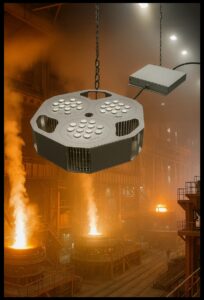
The Ingress Protection (IP) rating system is a standardized framework used to define the level of protection an electrical enclosure offers against intrusion by solids and liquids. The IP code consists of two digits: the first represents protection against solid particles, such as dust, while the second indicates protection against water or moisture. For facilities operating in harsh conditions, understanding this rating is crucial to selecting the appropriate lighting solution.
An IP65 rating signifies two key characteristics. The first digit, “6,” represents complete protection against dust ingress, ensuring that no dust particles can enter the fixture and interfere with its electrical or optical components. This is essential for environments such as woodworking shops, cement plants, or grain storage facilities, where dust accumulation can compromise both performance and safety. The second digit, “5,” indicates that the fixture is protected against low-pressure water jets from any direction. While it is not fully waterproof, this level of protection ensures that occasional splashes, cleaning processes, or exposure to rain will not damage the fixture.
IP65-rated LEDs effectively bridge the gap between standard indoor lighting and high-demand outdoor or industrial lighting. Unlike lower-rated fixtures, which may suffer from dust penetration or water damage, IP65 LEDs are engineered to withstand these challenges, providing long-term reliability. For engineers, facility managers, and procurement teams, understanding IP ratings helps ensure that the chosen LED solution can maintain both performance and safety standards, even in the most demanding environments.
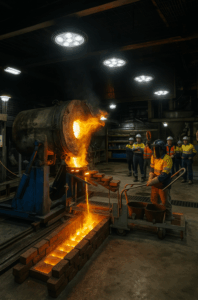
High-temperature environments present unique challenges for lighting systems. Industrial settings such as foundries, metal processing plants, and high-heat manufacturing areas routinely expose equipment to temperatures far above standard operating ranges. In such conditions, traditional lighting systems often experience lumen depreciation, electrical failures, or even complete fixture burnout due to excessive heat. High temperatures can also accelerate the degradation of materials, reducing the overall lifespan of lighting fixtures and increasing maintenance costs.
LEDs are generally more resilient to heat than conventional lighting, but even standard LEDs can suffer when thermal management is inadequate. Excessive heat can cause the LED chips to operate inefficiently, reducing light output and creating hotspots that further stress the fixture. Over time, this can lead to color shifts, flickering, and permanent fixture damage, which disrupts workflow and creates safety concerns.
IP65-rated LEDs address these challenges through advanced engineering. Their sealed housings prevent dust, moisture, and other contaminants from entering, while high-quality materials and heat-dissipating designs allow the fixture to operate efficiently under elevated temperatures. Many IP65 fixtures include aluminum heat sinks and thermally conductive materials, which optimize heat transfer away from the LED chips, maintaining a stable junction temperature and preventing premature lumen depreciation.
In addition, high-performance IP65 LEDs are often tested under rigorous environmental conditions, including extreme heat cycling, to ensure reliability over years of continuous operation. This makes them particularly suitable for environments such as glass manufacturing facilities, high-temperature chemical plants, and outdoor industrial areas exposed to direct sunlight. For industries where lighting reliability is critical to safety, productivity, and regulatory compliance, investing in IP65-rated LEDs ensures consistent performance, reduced downtime, and measurable long-term cost savings.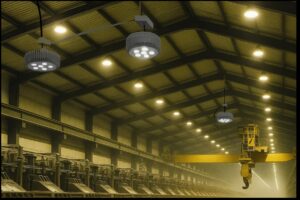
Dusty environments present a distinct set of obstacles for lighting systems. Facilities such as cement plants, woodworking shops, grain silos, and construction sites often have significant airborne particulate matter that can infiltrate fixtures and degrade their performance. Dust accumulation can block light output, reduce thermal dissipation, and increase the risk of electrical shorts or even fire hazards in environments with combustible dust.
Standard lighting systems without proper dust protection frequently require frequent cleaning and replacement, resulting in higher operational costs and reduced reliability. IP65-rated LEDs, however, are designed with dust-tight enclosures that prevent the ingress of even fine particulate matter. This ensures that the internal components remain clean and fully operational, preserving both the efficiency and longevity of the fixture.
In addition to maintaining light output, dust-proof designs improve thermal performance, as the fixture’s heat sinks remain unobstructed. This reduces the risk of overheating, which is particularly important in environments where dust may also be combustible. IP65 LEDs also contribute to overall workplace safety, as consistent illumination reduces the likelihood of accidents, and their sealed construction minimizes the risk of dust-triggered malfunctions. For facility managers, adopting IP65-rated LEDs in high-dust environments translates into lower maintenance costs, longer fixture lifespans, and safer, more efficient operations.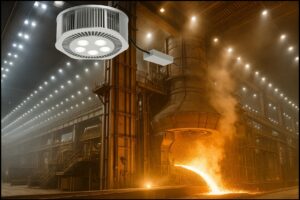
Beyond their capacity to withstand dust and heat, IP65 LEDs offer a range of advantages that enhance both operational efficiency and long-term value. One of the most significant benefits is energy efficiency. Unlike traditional lighting, LEDs consume far less electricity while delivering equivalent or superior illumination, resulting in substantial cost savings over time. Because IP65 LEDs maintain efficiency even in harsh environments, facilities can rely on consistent performance without increased energy expenditure.
Another key advantage is reduced maintenance. With their sealed construction, IP65 LEDs require less frequent cleaning and are less prone to damage, minimizing labor and replacement costs. This is particularly beneficial in large industrial settings, where maintenance downtime can disrupt operations and lead to productivity losses. Durability is also a critical factor. IP65 LEDs are often constructed from robust materials such as aluminum or reinforced polycarbonate, providing additional protection against corrosion, vibration, and impact.
IP65 LEDs also offer enhanced resilience against environmental stressors, including exposure to chemicals, moisture, and UV radiation in outdoor applications. Their sealed housings protect sensitive electronic components, preventing premature failure and extending the effective service life of the fixture. Additionally, many IP65 LEDs are designed to be fully compatible with dimming and smart control systems, allowing facilities to optimize energy use and reduce costs further while maintaining precise lighting control.
From a compliance perspective, IP65 LEDs meet industrial safety standards for both dust and moisture protection, making them suitable for use in regulated environments. They are ideal for applications ranging from warehouses and factories to outdoor facilities exposed to rain or spray. Collectively, these advantages position IP65 LEDs as a strategic investment that delivers cost efficiency, operational reliability, and enhanced safety. By choosing IP65-rated lighting, businesses can achieve long-term savings while ensuring a stable, high-quality illumination solution.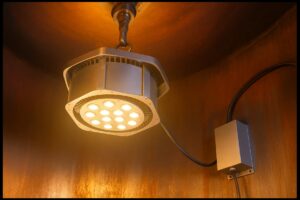
The practical applications of IP65 LEDs across industries illustrate their versatility and reliability. In manufacturing plants operating near high-temperature furnaces, IP65 LEDs have replaced traditional metal halide fixtures, maintaining bright, uniform lighting even under extreme heat. These installations have resulted in reduced downtime, lower energy costs, and significantly extended fixture lifespans. Operators also report fewer instances of overheating and lumen loss, which translates into more consistent working conditions and safer production areas.
Outdoor sports facilities and stadiums in desert or dusty climates have similarly benefited from IP65-rated lighting. Traditional outdoor lighting often fails due to dust accumulation, wind exposure, and occasional rain, leading to inconsistent illumination and high replacement costs. By contrast, IP65 LEDs provide reliable, uniform light output throughout the year, ensuring that athletes and spectators experience optimal visibility regardless of environmental conditions. Maintenance schedules are simplified, as the fixtures do not require frequent cleaning or repair, significantly reducing operational costs.
Warehouse and logistics operations also demonstrate the benefits of IP65-rated LEDs. Facilities dealing with airborne dust from packaging, transport materials, or production processes often face compromised lighting performance and increased maintenance expenses. IP65 LEDs maintain consistent illumination, protect sensitive electronics from particulate infiltration, and reduce the risk of overheating. In many cases, facility managers have noted measurable improvements in operational efficiency, energy savings, and safety metrics. These examples highlight how IP65 LEDs are adaptable across sectors, from industrial manufacturing and construction to outdoor recreational facilities, demonstrating both tangible cost benefits and long-term reliability.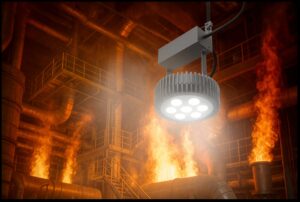
Selecting the right IP65 LED fixture requires careful consideration of several factors. Wattage and lumen output are primary considerations, as they determine whether a fixture provides sufficient illumination for the specific application. Facilities must assess ceiling heights, workspace dimensions, and operational tasks to ensure adequate light levels without overloading the electrical system.
Thermal management is another critical aspect. Even IP65-rated LEDs require efficient heat dissipation to maintain performance in high-temperature conditions. Choosing fixtures with integrated heat sinks or thermally conductive housings ensures that LEDs operate at safe temperatures, extending their lifespan and maintaining consistent luminous output.
Material quality is equally important. Fixtures constructed from high-grade aluminum or reinforced polycarbonate resist corrosion, impact, and vibration better than cheaper alternatives, especially in outdoor or industrial environments. Finally, compliance with safety and environmental standards—including dust and moisture protection, fire resistance, and electrical safety certifications—is essential to ensure that lighting installations meet regulatory requirements and avoid operational risks.
By carefully evaluating these parameters, facility managers and engineers can select IP65 LED solutions that deliver maximum performance, durability, and safety under challenging conditions, while also ensuring cost-effective operation and minimal maintenance over time.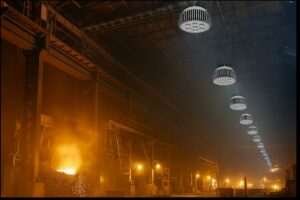
High-temperature and high-dust environments pose substantial challenges to lighting systems, affecting performance, safety, and operational costs. IP65-rated LEDs address these challenges by offering dust-tight, water-resistant, and thermally optimized designs that maintain consistent illumination even under extreme conditions. Beyond their durability, these fixtures provide energy efficiency, reduced maintenance requirements, and compliance with industrial safety standards, making them a strategic investment for a wide range of applications.
From manufacturing facilities and warehouses to outdoor sports complexes and construction sites, IP65 LEDs deliver reliable performance that minimizes downtime and maximizes ROI. For facility managers and engineers, understanding the significance of IP ratings and selecting appropriately rated fixtures ensures long-term operational efficiency, enhanced safety, and measurable cost savings. In harsh environments where lighting reliability is non-negotiable, IP65 LEDs are not merely an option—they are a necessity.
–The End–