
Industrial environments such as metal foundries, glassworks, chemical processing plants, and high-capacity manufacturing facilities often operate under extreme thermal conditions. Lighting in these settings is critical not only for operational efficiency but also for the safety and well-being of personnel. LEDs have emerged as the preferred lighting technology in these sectors due to their high luminous efficacy, long lifespan, and energy efficiency. However, their performance is highly sensitive to ambient temperature. Excessive heat can significantly reduce lumen output, accelerate material degradation, cause color shifts, and shorten the operational life of both LEDs and their drivers. This creates a dual challenge: providing adequate illumination while ensuring the reliability and durability of the lighting system. Optimizing light output in high-heat areas requires a multi-faceted approach encompassing LED selection, thermal management, installation practices, driver design, and ongoing maintenance. This guide is intended to provide engineers, facility managers, and lighting designers with actionable strategies to maximize performance and ensure sustainable operation of LED lighting systems under high-temperature conditions. The following sections outline the critical factors that influence LED performance, practical solutions for heat mitigation, and emerging technologies that further enhance system resilience.
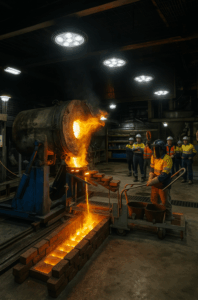
Understanding the thermal profile of the industrial environment is the first step in optimizing LED performance. Accurate measurement of ambient temperature, especially at the installation point of the fixtures, is essential. Peak temperatures can vary dramatically in different zones of a facility: directly above furnaces or ovens, near extrusion lines, or in poorly ventilated spaces, temperatures may exceed the rated limits of standard LEDs. Use calibrated thermometers, infrared cameras, or wireless temperature sensors to gather spatial and temporal temperature data. Document not only maximum temperatures but also diurnal or operational fluctuations, as LEDs are sensitive to both sustained heat and short-term spikes. This data enables engineers to select appropriate high-temperature-rated LEDs and design a lighting layout that mitigates thermal stress. It also provides baseline information for evaluating the potential need for supplemental cooling strategies, such as forced air circulation or heat shields. Comprehensive thermal mapping ensures that each fixture operates within safe temperature limits, thereby preventing premature lumen depreciation and minimizing the risk of component failure.
High-heat environments often contain both direct and indirect sources of thermal load that affect LED performance. Direct heat sources include furnaces, ovens, smelting lines, kilns, and high-power machinery, which can radiate substantial thermal energy into the surrounding area. Indirect sources may involve heat conducted through walls, ceilings, or ventilation ducts, as well as sunlight entering through skylights or roof openings. It is critical to assess not only the intensity but also the location of these sources relative to the planned LED installation points. Fixtures installed too close to intense radiative sources may experience accelerated degradation or fail prematurely. Identifying and mapping these heat sources allows designers to strategically place fixtures, select appropriate LED types, and implement mitigation measures such as heat shields, reflective barriers, or increased distance from the thermal source. Understanding the complete thermal environment is key to maintaining consistent light output and prolonging system longevity.
Airflow plays a pivotal role in heat dissipation and the overall thermal management of LED systems. In enclosed or poorly ventilated areas, heat accumulates around the LED fixtures, elevating junction temperatures and reducing luminous efficacy. Natural convection may be insufficient in densely packed production zones or areas with stagnant air. Conduct airflow analysis to determine whether passive cooling is adequate or if forced ventilation is necessary. Computational fluid dynamics (CFD) simulations or on-site airflow measurements can provide detailed insights into air movement patterns and identify hotspots. Improving airflow through ventilation fans, exhaust systems, or strategic placement of LED fixtures can significantly reduce heat buildup, enabling LEDs to operate closer to their rated performance. Ensuring consistent airflow is especially important in high-heat facilities where operational schedules produce cyclic heat peaks, as proper ventilation helps maintain both light quality and energy efficiency over time.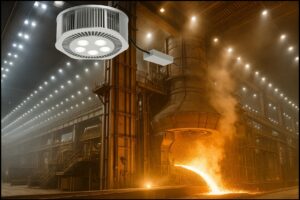
LEDs intended for high-heat industrial applications must be specifically rated to withstand elevated ambient temperatures. Standard LEDs typically operate efficiently in environments up to 25–30°C, but industrial applications may require LEDs rated for 50°C, 60°C, or even higher ambient temperatures. Choosing high-temperature-rated LEDs ensures that the semiconductor junctions, phosphor coatings, and encapsulating materials maintain their structural integrity and luminous output under thermal stress. Technologies such as Chip-on-Board (COB) and high-power SMD LEDs, particularly those with ceramic or metal-core printed circuit boards (MCPCBs), demonstrate superior thermal tolerance compared to standard plastic-base LEDs. These high-performance LEDs are designed to operate under continuous heat without substantial lumen depreciation or color shift. When selecting LEDs, it is essential to consult manufacturer datasheets for maximum operating temperature, derating curves, and recommended cooling practices to ensure compatibility with the specific industrial environment.
Derating refers to the reduction of maximum permissible LED current or power output as ambient temperature increases. In high-heat areas, failing to account for derating can lead to excessive junction temperatures, accelerated lumen depreciation, and premature fixture failure. For instance, a 100W LED operating in a 25°C environment may only safely operate at 80W when the ambient temperature rises to 55°C. Understanding and applying manufacturer-provided derating curves allows facility engineers to size LEDs appropriately and avoid thermal overload. Derating also influences system design choices such as fixture spacing, heat sink sizing, and driver selection. Properly applied derating ensures that LEDs operate within their safe thermal limits while maintaining consistent light output and reliability, even in high-temperature conditions.
High temperatures can cause shifts in the color output of LEDs, altering the perceived color temperature and reducing visual consistency across a facility. Color shifts are primarily due to changes in the phosphor chemistry and thermal stress on the LED chip. For applications where color rendering is critical—for example, inspection lines, laboratories, or quality control areas—select LEDs with low temperature-induced color shift. High-CRI LEDs with thermally stable phosphors are ideal for maintaining consistent color output, even in environments with elevated ambient temperatures. Proper color stability ensures operational accuracy, safety, and maintains visual comfort for personnel working under high-intensity industrial lighting.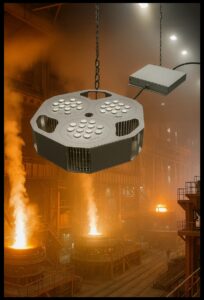
Heat sinks are the primary passive thermal management solution for high-power LEDs. Aluminum or copper heat sinks with high surface area efficiently dissipate heat from the LED junction to the surrounding environment. The design should maximize thermal contact with the LED while minimizing thermal resistance. In dusty or greasy industrial settings, regular cleaning is critical because contaminants act as thermal insulators, reducing heat dissipation efficiency. Heat sink geometry, including fin density and orientation, directly affects convection efficiency. Optimized heat sinks allow LEDs to maintain lower junction temperatures, improving lumen maintenance and extending operational lifespan. In extreme heat zones, advanced materials such as ceramic or graphene-based heat sinks can provide superior thermal conductivity compared to conventional metals, further enhancing system resilience.
For extremely high-temperature zones or densely packed fixtures, passive cooling may be insufficient. Active cooling solutions, such as forced-air fans, ventilation ducts, or integrated heat-pipe systems, provide direct heat removal from the LED module. These systems enhance convective heat transfer, maintaining junction temperatures within safe operational limits. Active cooling is particularly useful in environments where heat accumulates rapidly or fluctuates with operational cycles. Incorporating sensors to monitor fixture temperature allows dynamic control of fans or air circulation systems, providing energy-efficient thermal management while preserving light output. Active cooling systems, when correctly designed, significantly reduce lumen depreciation rates and extend fixture longevity.
Effective thermal interface materials (TIMs) such as high-conductivity pads, thermal pastes, or adhesive compounds are crucial for transferring heat from the LED to the heat sink. Poor thermal contact increases junction temperature and can exacerbate lumen loss and material degradation. Selection of TIMs should consider thermal conductivity, mechanical stability, and long-term performance under industrial environmental conditions. Proper application ensures uniform heat transfer across the LED module, maintaining thermal equilibrium and maximizing light output. Optimized thermal interfaces are a critical component in high-heat installations where every degree of thermal reduction contributes to reliability and energy efficiency.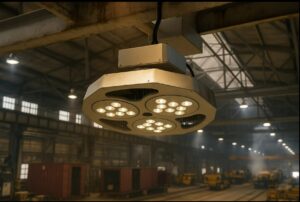
Fixture mounting directly affects thermal performance. In high-heat areas, it is important to leave adequate clearance around each fixture to allow natural convection or forced airflow to remove accumulated heat. For example, a 10–15 cm gap between the fixture and surrounding surfaces can significantly reduce thermal buildup. Avoid installing LEDs immediately above furnaces, ovens, or other high-radiative sources unless additional shielding or cooling is implemented. Strategic mounting positions allow fixtures to operate closer to their rated temperature specifications, preserving light output and prolonging system lifespan. Correct mounting is also essential for ease of maintenance, cleaning, and future upgrades.
The orientation of the LED module and heat sink affects heat dissipation through natural convection. Heat rises, so orienting heat sinks vertically or ensuring fin alignment with airflow can enhance thermal removal without requiring additional energy. Conversely, horizontal or inverted mounting can trap heat, especially in enclosed spaces, reducing efficiency and accelerating degradation. Engineers should evaluate airflow patterns and fixture orientation to maximize convective cooling, ensuring LEDs maintain consistent luminous output even under sustained high-heat conditions.
In industrial environments with multiple LED fixtures, spacing is a critical design consideration. Closely packed fixtures can create localized hotspots, where thermal accumulation reduces the cooling efficiency of individual LEDs. Proper spacing ensures that heat generated by one fixture does not negatively impact neighboring modules. This consideration also facilitates better airflow, improves maintenance accessibility, and minimizes the risk of system-wide failures. Optimal spacing depends on fixture power, heat output, environmental temperature, and airflow patterns and should be validated through thermal modeling or empirical testing during installation design.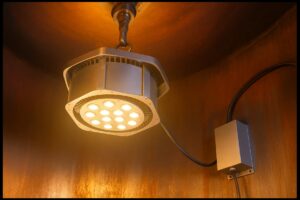
LED drivers are susceptible to heat just like the LEDs themselves. Drivers equipped with thermal protection features, such as overheat shutdown, current limiting, or automatic dimming under high temperatures, safeguard both the LEDs and themselves from thermal stress. In high-heat environments, drivers should be rated for the same or higher ambient temperatures as the LED modules to prevent early failure. Choosing drivers with protective circuitry ensures reliable operation and reduces maintenance costs over the system’s lifetime.
High-heat environments can exacerbate voltage fluctuations, which negatively affect LED performance. Constant current drivers maintain a steady current regardless of voltage variations, preventing overheating and overdriving of LEDs. Maintaining a controlled current reduces thermal stress and ensures consistent luminous output. Additionally, constant current drivers are compatible with derating practices, allowing engineers to reduce LED power output in extreme thermal conditions without compromising system stability.
Whenever possible, place drivers in cooler locations away from direct heat sources. Remote driver placement isolates sensitive electronics from high-temperature zones, reducing thermal degradation risk. Longer wiring may be required, but the trade-off in reliability and reduced maintenance outweighs the minor electrical losses incurred. Combining remote driver placement with temperature-protected circuitry provides a robust solution for high-heat industrial LED installations.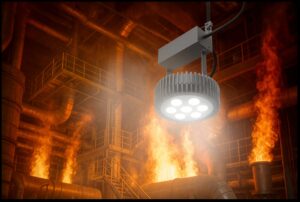
Industrial environments often contain dust, grease, or other particulate matter that can accumulate on heat sinks and lenses. This buildup acts as a thermal insulator, impeding heat dissipation and reducing LED efficiency. Scheduled cleaning is essential to maintain both thermal performance and luminous efficacy. Cleaning procedures should avoid abrasive materials that could damage LEDs, lenses, or thermal interface layers. Proper maintenance ensures that fixtures operate at optimal temperatures and maintain consistent light output over their designed operational life.
Integrating temperature monitoring allows proactive management of LED systems. Infrared sensors, thermocouples, or smart LED controls can detect hotspots, abnormal temperature rise, or fixture malfunction. Real-time monitoring enables automated responses, such as fan activation, dimming, or alerting maintenance personnel before critical failures occur. Temperature monitoring is a key component of predictive maintenance strategies, minimizing downtime and extending fixture lifespan.
Even with high-quality LEDs and thermal management, lumen depreciation occurs over time. Periodic measurements of illuminance (lux) across critical work areas ensure lighting levels meet operational standards. Comparing actual light output with design targets helps identify degraded fixtures, verify thermal management efficacy, and schedule timely replacements. Combining temperature data with light output measurements provides a comprehensive approach to system performance optimization.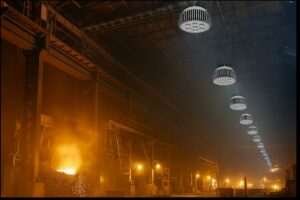
Practical implementations of high-temperature LED systems demonstrate the effectiveness of the strategies outlined. For instance, a metal workshop using COB LEDs with forced-air cooling maintained 90% of original lumen output after three years, significantly outperforming standard LEDs. In a food processing oven area, ceramic-based LEDs with remote drivers reduced maintenance visits by 60% due to improved thermal resilience. Similarly, a high-heat warehouse optimized fixture spacing and heat sink design, achieving a 40% reduction in system failure rates. These examples highlight the importance of combining LED selection, thermal management, strategic installation, and proactive maintenance to achieve reliable high-heat performance. Quantifiable benefits include improved energy efficiency, reduced downtime, lower maintenance costs, and enhanced safety for personnel.
Innovations in materials and control systems continue to enhance high-heat LED performance. Graphene and advanced ceramic heat sinks offer superior thermal conductivity compared to traditional aluminum, reducing junction temperatures even in extreme environments. Smart LED systems incorporate sensors and IoT-enabled controls to automatically adjust output based on temperature, preventing overheating while maintaining optimal illumination. Predictive maintenance and real-time monitoring enable early detection of thermal stress, reducing unplanned downtime. Integration with facility management systems allows adaptive energy management, balancing light output with operational requirements. These emerging solutions represent the next frontier in high-heat industrial LED lighting, combining materials science, electronics, and digital control to achieve unprecedented reliability and efficiency.
To summarize, engineers and facility managers should:
By following this comprehensive approach, industrial facilities can achieve reliable, efficient, and durable LED lighting performance even under extreme thermal conditions.
–The End–