
In hazardous industrial environments, lighting is often treated as a secondary system — until it fails. While dust, corrosion, vibration, and explosive atmospheres are commonly addressed in lighting design, extreme ambient heat remains one of the most underestimated risks.
In locations such as kilns, furnaces, steel mills, glass plants, and high-temperature processing workshops, ambient temperatures can easily exceed the operating limits of conventional LED luminaires. Even fixtures marketed as “industrial-grade” or “hazardous-area suitable” frequently fail when exposed to sustained temperatures above 80–100℃.
This is where 200℃ heat-resistant LED flood lights redefine what reliability means. These luminaires are not simply upgraded versions of standard flood lights; they are purpose-engineered systems designed to survive, operate, and maintain lighting performance in environments where heat itself becomes a safety hazard.
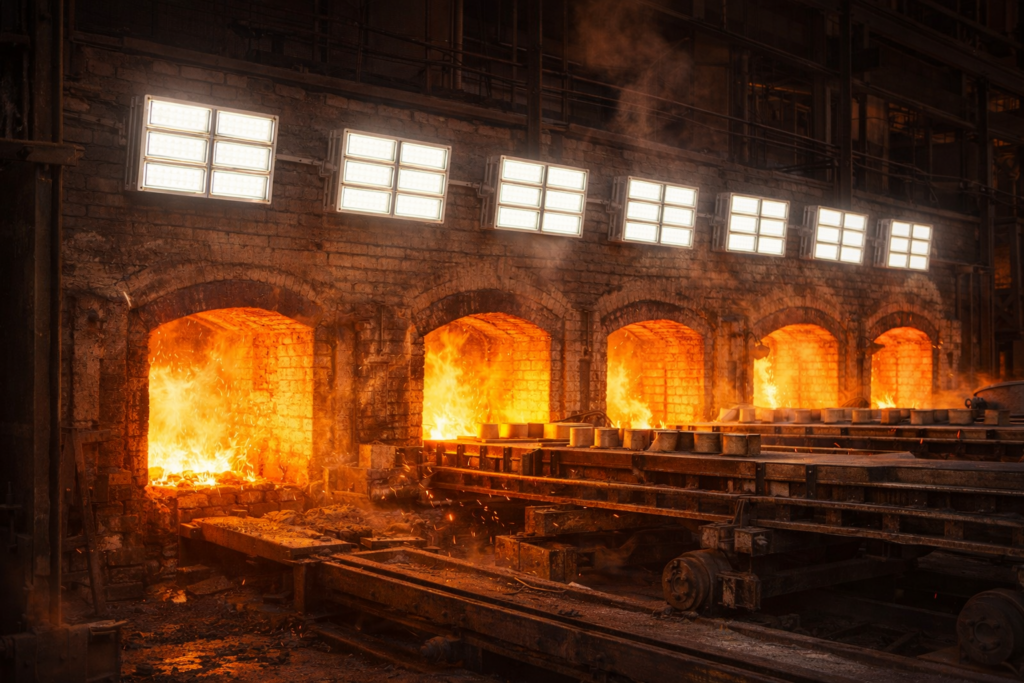
Hazardous areas are typically defined by risks such as fire, explosion, toxic exposure, or mechanical danger. In many heavy industries, extreme heat is the underlying factor that amplifies all other hazards.
Kilns and furnace halls
Steel production and rolling mills
Glass melting and forming lines
Heat treatment workshops
Chemical plants with radiant heat sources
Foundries and smelting facilities
In these environments, temperatures are not only high — they are continuous and uneven. Radiant heat from kilns and furnaces can elevate surface temperatures far beyond measured ambient air temperature, placing lighting fixtures under constant thermal stress.
Standard LED flood lights are typically designed for ambient temperatures up to 40–60℃. Even “high-performance” industrial LEDs often struggle beyond 70–80℃.
Driver Degradation
Electronic drivers are the most temperature-sensitive components. Elevated heat accelerates capacitor aging, voltage instability, and eventual burnout.
LED Lumen Depreciation
High temperatures rapidly reduce LED efficiency, causing sharp drops in luminous output and shortened lifespan.
Optical Material Failure
Plastic lenses yellow, warp, or crack under extreme heat, leading to beam distortion and reduced illumination quality.
Seal & Gasket Breakdown
Thermal cycling causes seals to harden, shrink, or crack, compromising ingress protection and safety.
Structural Deformation
Standard housings may warp or loosen under sustained thermal expansion.
In hazardous areas, lighting failure is not merely inconvenient — it can create operational blind spots, increase accident risk, and force dangerous maintenance interventions.
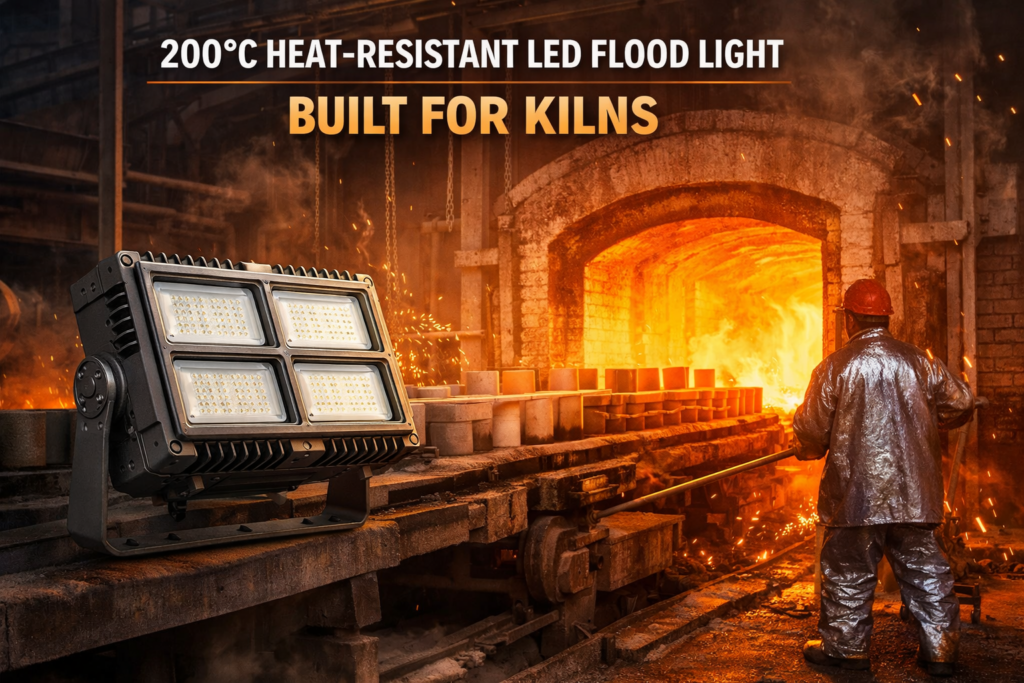
A true 200℃ heat-resistant LED flood light is not about cooling the fixture — it is about surviving heat without failure.
Components selected for thermal endurance, not just efficiency
Stable operation at elevated ambient temperatures
Predictable performance over long exposure periods
Mechanical robustness against thermal expansion and contraction
Instead of fighting heat, these luminaires are designed to coexist with it.
Material selection is the foundation of extreme-temperature lighting reliability.
High-temperature resistant aluminum alloys or reinforced metals
Surface treatments that resist oxidation and scaling
Structural designs that allow controlled thermal expansion
Heat-resistant tempered glass instead of polymer lenses
Optical materials that maintain clarity and beam accuracy
Protection against deformation under radiant heat
High-temperature silicone or equivalent gaskets
Fasteners rated for repeated thermal cycling
Seals designed to maintain integrity over time, not just initial installation
Every material choice is driven by one question:
Will this component remain stable at 200℃ — continuously?
In standard LED design, thermal management focuses on dissipating heat away from the LED junction. In 200℃ environments, this approach alone is insufficient.
Minimizing internal temperature gradients
Protecting sensitive components from radiant heat exposure
Separating or isolating drivers where necessary
Maintaining internal thermal equilibrium
The goal is not to cool the fixture below ambient temperature — which is impossible — but to prevent localized overheating and thermal shock.
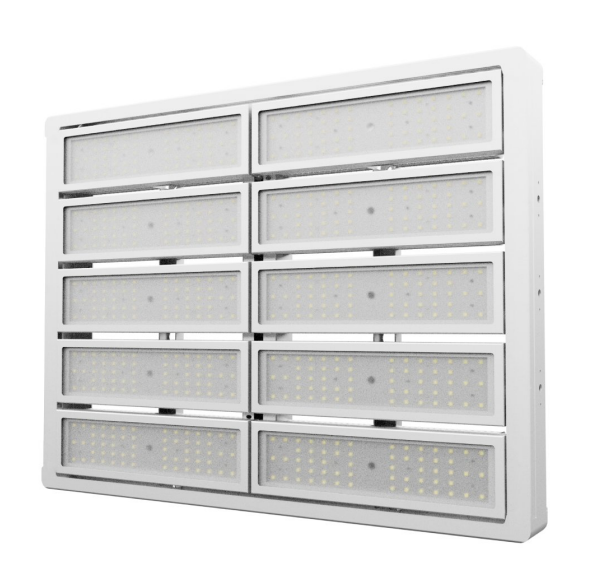
Lighting in hazardous areas must do more than survive; it must perform reliably.
Stable lumen output at high ambient temperatures
Consistent beam distribution for safety and visibility
Reduced glare in confined or reflective industrial spaces
Color stability despite extreme thermal conditions
In kiln halls and furnace zones, visual clarity is essential for:
Equipment monitoring
Process inspection
Operator safety
Emergency response
A lighting system that dims or flickers under heat stress compromises all of these functions.
Wall-mounted installation is often the most practical solution in high-temperature hazardous environments.
Keeps fixtures away from direct flame or material discharge
Allows better control of beam direction
Reduces mechanical vibration exposure
Simplifies maintenance planning
Proper spacing to achieve uniform illumination
Mounting height aligned with working zones
Avoiding oversizing fixtures that increase thermal load
Maintaining realistic fixture proportions for effective coverage
Correct layout ensures the lighting system enhances safety without introducing new risks.
Lighting reliability directly affects safety performance.
Reduced risk of sudden blackout
Lower maintenance frequency in dangerous zones
Improved visibility during high-risk operations
Enhanced compliance with industrial safety standards
In hazardous environments, maintenance itself is a risk. Reducing fixture failure rates significantly improves overall site safety.
These luminaires are purpose-built for environments where standard lighting cannot survive.
Kiln halls in ceramic and brick manufacturing
Furnace areas in steel and metal processing plants
Glass melting and forming facilities
Heat treatment workshops
Special hazardous industrial zones with radiant heat exposure
Each application benefits from the same core advantage: lighting that does not become the weak link in extreme conditions.
While 200℃ heat-resistant LED flood lights require higher initial investment, their lifecycle economics tell a different story.
Extended operational lifespan
Reduced replacement frequency
Lower downtime and production disruption
Fewer hazardous maintenance interventions
When total cost of ownership is considered, these fixtures often outperform conventional solutions by a significant margin.
In hazardous high-temperature environments, lighting must be engineered for reality — not ideal conditions.
200℃ heat-resistant LED flood lights represent a shift from generic industrial lighting toward environment-specific engineering solutions. They address the root cause of failure in extreme heat zones and provide stable, safe, and long-term illumination where it matters most.
For kilns, furnaces, and hazardous industrial environments, choosing lighting that can withstand 200℃ ambient temperatures is not just an upgrade — it is a critical safety decision.